by Inka Piegsa-quischotte
The name alone is pure poetry: Essaouira. Let the syllables roll of your tongue then listen to the sound as it is blown away by the wind. Because, you see, wind there is plenty.
Not for nothing is Essaouria called ‘City of the Wind’ as well as ‘The Moroccan Woodstock’. History, culture, art, crafts, music and a sin fin of water sport — all these things define the Moroccan port town on the Atlantic which has fascinated as diverse personalities as Winston Churchill, Orson Welles and Jimi Hendrix.
It’s a straight run from Marrakesh to Essaouira which makes for a great day trip if you are based in Marrakesh. The distance of 105 miles is covered by a nearly ruler straight highway which cuts through shrubs and the desert. This road is no coincidence though, because Essaouira is something of a historical curiosity.
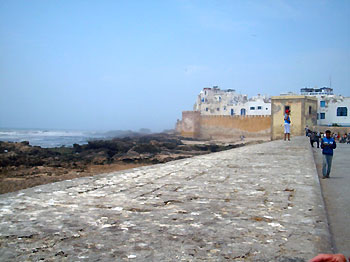
 The present city with its much admired walls and Medina is a creation, a purpose built sea port, commissioned by King Mohammed III during the 18th century. He wanted to develop trade with Europe and beyond and to establish a counterbalance to Agadir, whose inhabitants favored a rival of him. For twelve years, the king instructed and oversaw French engineer and architect Theodore Cornut, who designed the modern city, the medina and the international quarters. At the time, Morocco depended heavily on the caravan trade, which brought merchandise from sub-Saharan Africa to Timbuktu, then from there through the desert and over the Atlas mountains to Marrakesh and, finally, making use of the straight road, to the thriving port of Essaouira.
The word ‘highway’ has to be taken with a pinch of salt though. It’s fine for the first few miles out of Marrakesh, but then there are stretches which are so uneven and full of rubble, they make your teeth rattle. Our diver referred to that jokingly as a prime example for a Moroccan 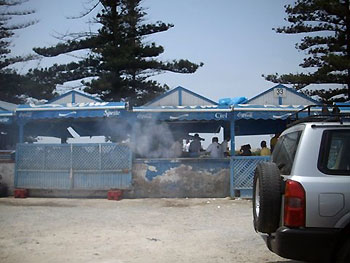
Despite the more recent design which gives Essaouira its present appearance, the city has a long, long history. Excavations have revealed a prehistoric settlement. The Romans left their traces and, most importantly, Essaouira, then called Mogador was already an important port town under Portuguese rule during the 16th century.
The French followed and finally the Moroccans. Although the importance of Essaouira as a sea port has been reduced when the caravan trade ceased, it’s still a fishing port. One of the first things to do when arriving, is to go to one of the many shacks along the waterfront which offer the latest catch. You walk along the display, point at what you want, sit down on one of the communal tables and enjoy eating with your fingers and chatting other tourists and locals alike.
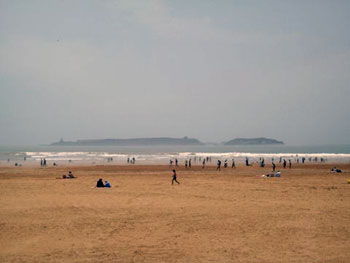
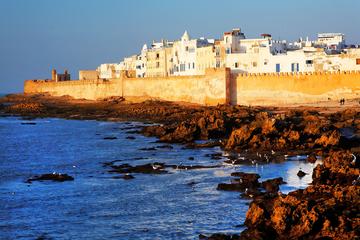
 The long stretched island of Mogador protects Essaouira from the strongest Atlantic winds, but there is still plenty around to make the place a paradise for surfers and kite surfers. The wide, white beaches invite to sunbathing, swimming and any other imaginable kind of water sport.
The medina proper is entered through a vast stone gate and then you find yourself in a labyrinth of small alleys, lined with galleries, craft shops of wood carvers, leather shops and tiny cafes. The difference to the hustle, bustle and noise of the medina in Marrakesh is striking. Not only do clocks run slower in Essaouira, they seem to not run at all. Whereas the vendors in Marrakesh run out and shout, sometimes even grab at you, their brothers in Essaouira just sit patiently in their shops, smoke, drink mint tea and generally couldn’t care less if you buy anything or not. Everything is slightly run down, paint is peeling, the odd window pane is broken and the ambience of a favorite hippie hang out it once was definitely lingers. I call it the’ decadent charm’ of Essaouira which, I think, describes the atmosphere.

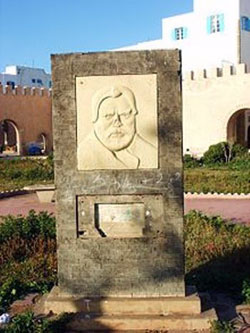
 Small wonder that this picturesque, sedate and slightly melancholic city attracted such divers personalities as Churchill, Welles and Hendrix. Orson Welles even got honored with a statue, although his nose is now missing.
Music plays a great part in Essaouira culture. Each June there is the gnaoua music festival which not only attracts performers of traditional Moroccan music but also international, contemporary singers and bands; hence the moniker ‘Moroccan Woodstock’.
Imdezan explained
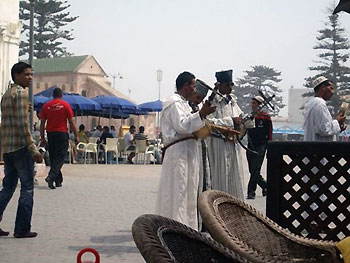
If you miss the festival, you can nevertheless enjoy Moroccan music on a daily basis. As typical as the fish, the imdezan are omnipresent in Essaouira. An imdezan is a group of four Berber musicians, with a lead singer and the others playing their drums and one string fiddle. They walk around the medina, from one café to the other and if you throw them a few dirham, they’ll be very happy indeed.
Full-Day Tour to Essaouira – The Ancient Mogador City from Marrakech
If You Go:
The best time to visit is between May and October. Due to the wind it’ll never be too hot and this is the time of year when it doesn’t rain much.
On your way to Essaouira, stop at one of the cooperatives which produce argan oil products. The argan tree is endemic to Southwestern Morocco and the oil is a luxury item difficult to obtain outside the region. It’s used in fabulous crèmes and lotions which you can buy in the cooperative’s shops. You can also observe the labor intensive process of extraction the oil from the fruit.
Bring your swim suit and make time for a spot of water sport on the fabulous beach.
If you want to spend more than a few hours, there are a few modern hotels along the beach and small, converted riads within the medina. Consult a list of hotels on www.tripadvisor.com.
About the author:
Inka Piegsa-quischotte is an ex-attorney turned travel writer and novelist. She writes for online travel magazines and has two novels and a travel guide to Galicia/Spain published. She lives between Turkey and Miami.
All photos are by Inka Piegsa-quischotte.
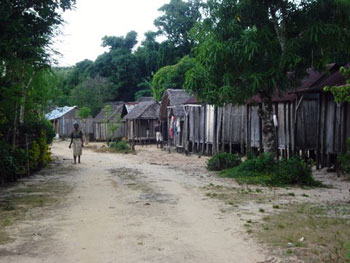 We were the only guests at Residence LaPasoa, as we would be elsewhere. There’s nothing quite like the threat of cyclones and a coup d’etat to keep the tourists away. After the coup, the journalists poked their noses into the pub, Ku De Ta, just for the name. It was all quite wonderful for us, but not for those gentle people who lived from tourism. But there was little to be nervous about. Life goes on; people go about their business because that’s what they have to do.

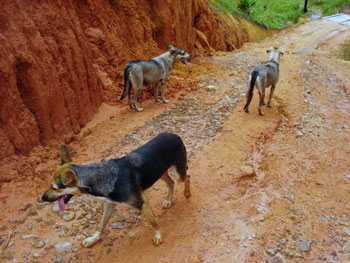 We had the dogs of La Crique with us, three of them, led by a little mutt who was a terror for chickens. With the emergence of a lanky Malagasy chicken from the rice or bush his ears perked and in two seconds the chase was on. The other dogs followed. They killed a chicken on that walk. I felt like I’d stolen from somebody. They weren’t even our dogs.
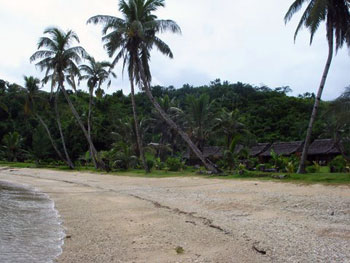 You get to the tiny island of Ille aux Nattes by pirogue, though you can walk the channel. The boatmen line up and beseech you to vote for their boat. We stayed at Baboo Village, next to a place owned by a South African, Ockie. He too had only two guests, Dutch with some business on Madagascar. They were aimlessly chilling with Ockie, watching DVDs on the widescreen in the evening and in the mornings sitting on the deck with coffee and whiskey watching the pirogues cross the channel with their cargo.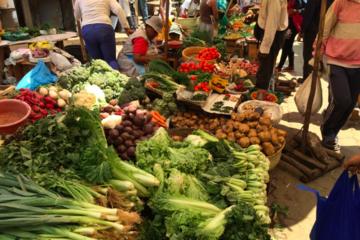
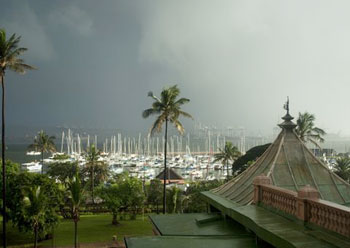
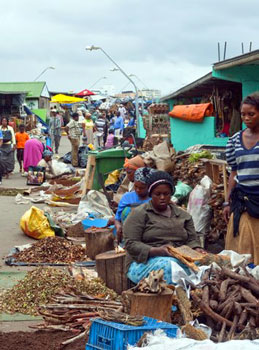 Durban throbs with the rhythms of Black Africa that are not as accessible on the typical tourist track. The aromas wafting from stalls and cafés are unidentifiable, but worth exploring. Street vendors sell everything from beadwork to biltong (spicy, dried meat). The African taxis, actually ten-passenger vans, clog the city streets hawking for business and owning the road. Women carry grocery bags on their heads and kids on their backs. It’s high energy here and crowded.
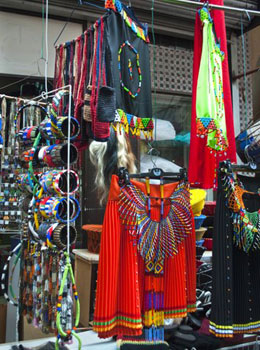 On day three, I take a city tour recommended by locals. Richard Powell and his Zulu assistant, Sthembiso, of Street Scene Tours treat me to a five-hour tour that costs under $40.00 including lunch. This is not your average tour, but an experience that exposes the beat of African Durban. The pair work as a tag team: Richard explains the city’s layout and history as we pass the colonial landmarks, and Sthembiso describes the African outlook and way of life as we meander through the Zulu markets and Muslim arcades.
 In the narrow, winding arcades nearby, I see brilliantly coloured skirts for Zulu virgins to wear at initiations, beads and weapons for young warriors, and vast quantities of housewares available to purchase for lobola or “bride-price.” Sticky and tired after wandering here for a couple of hours, Richard whisks me off for lunch in a Gujarati cafe.
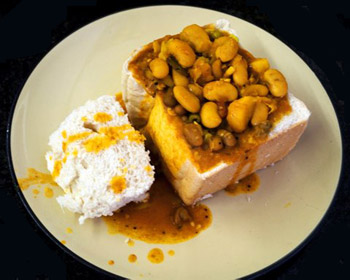 Since Durban was settled, the large East Indian population has offered its traditional dishes all over the city. Their most famous is Bunny Chow. The Indians who caddied at the Royal Durban Golf Club never had time to stop for lunch, so Mr. Bunny created a unique curry sandwich they could munch on the go. He scooped out the centre of half a loaf, filled the hole with a spicy curry, and stuffed the bread back on top. I eat mine with my fingers, mopping up the hot sauce with pieces of bread and loving it.
 The thatched Hilltop Lodge overlooks a wide valley and is blessed with all the amenities of an excellent hotel, including delicious breakfast and dinner buffets. As I push open the door of our roomy cottage, my first sight is a warning about marauding baboons – the robust grills over our windows speak volumes. Harmless Vervet monkeys gambol all around us.
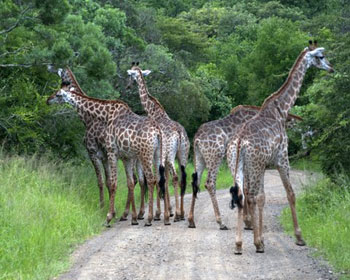
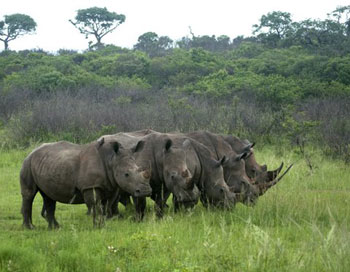 Abruptly the park ranger stops and points out a couple of Nyala (antelope) on a distant slope. Even with binoculars I can barely see them – is this as close as we will get to the game? Then over the next rise, a Black Rhino grazes not 50 feet away. We turn another corner and nearly run into a giraffe. After that, the game appears thick, fast, and close until the sun sets. But the best comes after dark, when we disturb a lion lying in the middle of the trail. He hightails into the bush but stops ten feet away and, with the aid of a spotlight, I can count his teeth when he yawns.
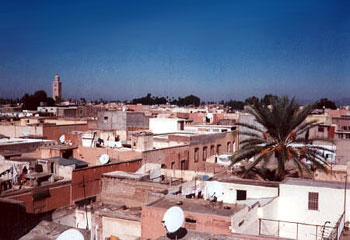
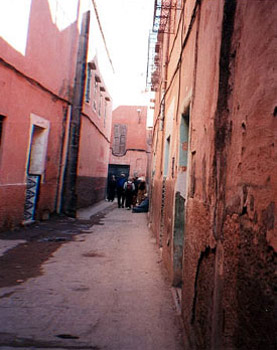
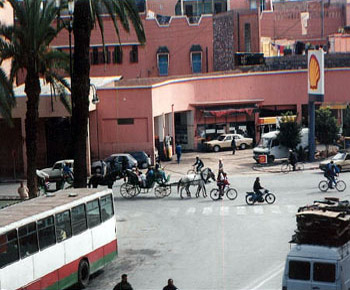 Marrakech is a spectacle of exotica. On a recent eight-day tour, I stayed at the enchanting old Hotel du Foucald, which is well situated for sightseeing in Marrakesch’s medina (old town). The hotel is just across from the famous Djamaa el Fna square with its labyrinth of side streets, hammams, caravanserai and bazaars. The souq is a maze of tiny covered walkways where everything is sold from embroidered saddles for camels, to potions for casting spells. On the bustling streets, donkeys are everywhere, some loaded with produce, others with pottery, some pulling carts heaped with mint for tea. The donkeys wear shoes made from car tires to keep them from sipping on the cobblestones. Weavers and coppersmiths work their trades. Herb doctors assure us their products are better than Viagra. You can buy almost any unusual medicine: goat hooves for hair treatment, ground up ferret for depression , and dried fox heads to use for magic potions.
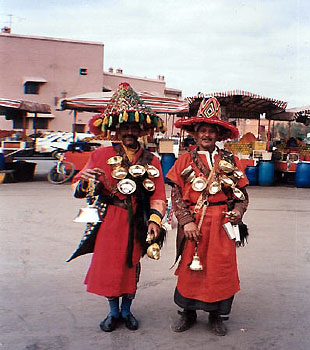
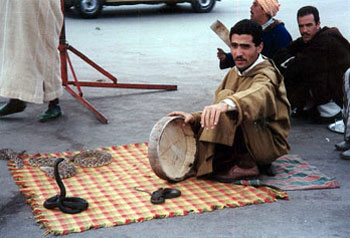 The busy Djmaa el Fna is a magic world of snake charmers, musicians, acrobats, water vendors wearing distinctive red suits and wide-brimmed hats and jangling bells, story tellers, ebony-skinned dancers in brightly hued costumes, boys with pet monkeys, and other assorted side-show attractions will entertain you — for a price. Don’t try to take photos of these colourful entrepreneurs without expecting to pay, and make sure you only pay no more than five dirham. Once you know your way around and have a feel for the place, it’s fun, and during the day not dangerous to wander on your own.
 After a morning of touring the historic sites, I took a calèche (horse-drawn carriage) to the Jardin Majorelle in the European quarter. This beautiful garden estate was created in the 1920s by the French Orientalist painter Jacques Majorelle and is now owned by fashion designer Yves St. Laurent. It’s a tropical paradise of tall cacti and palms set against pink towered buildings and grill-worked gateways. Bougainvillea, hibiscus and flowering potted plants line the cobbled pathways. The colours of the buildings and clay pots are dazzling brilliant blue, turquoise, pink, yellow, and orange, all complimenting the colours of the flowers. Birds twitter in the trees and trellises hang with flowering vines. Many different tropical plants grow in abundance. The artist’s studio has been converted into a small Museum of Islamic art and displays St. Laurent’s fine collection of North African carpets and furniture as well as Majorelle’s paintings.
 Later I got a sense of what it would be like to live in a Moroccan home when I visited the Maison Tiskiwin, a 19th century house once the home of a Dutch anthropologist. It now houses a stunning collection of jewellery, clothes, fabrics and carpets. Houses in Marrakech are windowless, with rooms opening to a sun-lit inner courtyard; the walls hung with woven tapestries and floors paved with lapis and turquoise tiles.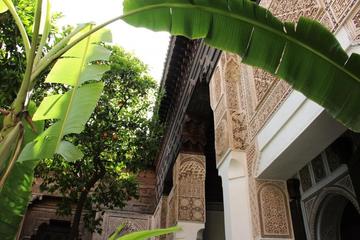


 is a small pocket guide published by AA World Travel Guides which I found useful in Marrakech. Both
  and
and  also have guide books on travel in Morocco.


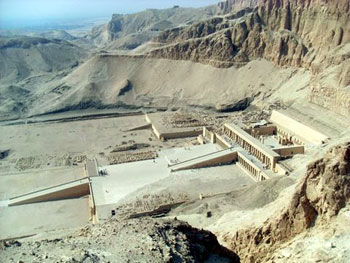

 For the more adventurous travellers, I would strongly recommend following in the workmen’s footsteps by taking the ancient desert track that leads from the south-west corner of the village, over the mountain ridge and down into their place of work, the Valley of the Kings. It is by no means an easy walk, with the track becoming quite steep and treacherous in places. Simply put, it should only be tackled by the physically fit and those with experience of traversing uneven and tricky terrain. For first timers, it is definitely advisable to seek out the services of one of the local guides, who will gladly offer the service of a donkey for those unaccustomed or unable to make the journey on foot.