Visit to the Fascinating City on the Nile
by W. Ruth Kozak
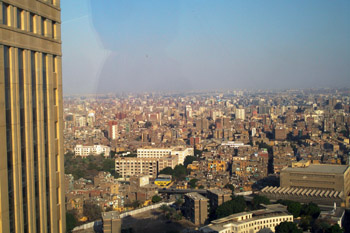 The first thing I noticed as we drove in Cairo from the airport, were the miles and miles of densely built apartment blocks, many of them half-finished stretching out from the Nile as far as you could see. Laundry fluttered from some of the balcony but there were just as many that appeared empty. The Egyptologist with our group of Canadian travel writers explained that this was part of the reasons for the first revolution – the overbuilding on green space, a corruption.
Cairo is the capital of Egypt, and the largest city in the Middle East with a population of about 7 million people. Of course there are areas of the city that look run-down. There are other more affluent suburbs of the city. Cairo’s modern ‘downtown’ is on the east bank of the Nile. It was built under the influence of French architects and there are many beautiful mosques as well as Coptic sights to see there. On the west bank of the river are the great Giza pyramids and farther south, the archaeological sites of Memphis and Saqqara.
 As a female solo traveler, I would not want to venture alone to Cairo, although I’d certainly not hesitate to return to this marvelous country in the company of a tour group. Did I feel any danger in Cairo? In spite of the two revolutions and the pending elections at the time I was there, and the spate of unfavorable media coverage about Egypt, travel warnings from embassies, that has diminished their tourism by 90%, I felt no sense of danger. In fact, there was good security in place everywhere. And what impressed me so much was the people. I have never met such gracious, generous, friendly people anywhere before. Young, old, men, women and children approached me and my travel companions on the street with smiles. “Welcome! Where are you from? Welcome to Egypt!” These are proud people, open and friendly, who walk with a noble stance, proud of their country and heritage and greet you with welcoming smiles.
The only real ‘danger’ in Cairo was the traffic. They drive like maniacs, weaving in and out with no regard for lanes or right of way, always with their hands on the horns blaring their way through the chaos. I learned not to look out the front of the van window after several heart-stopping moments. Our driver, Magdi, was an expert and managed to get us everywhere safely.
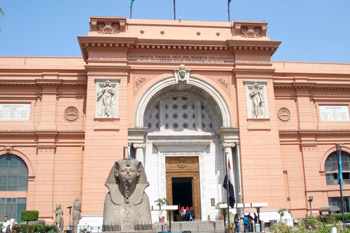 One of the main interest for me was the Egyptian Museum located right near Tahrir Square. The museum contains the world’s most extensive collection of pharanoiac antiquities. I saw the King Tut exhibit when it was in Seattle but those treasures were insignificant compared to what you will see on display here: magnificent golden chariots, precious jewelry, and countless other incredible treasures as well as coffins, mummies and other artifacts from prehistoric through the Roman periods The museum houses approximately 160,00 objects in total. I was told they plan to build a new museum so that more of the treasures can be displayed.
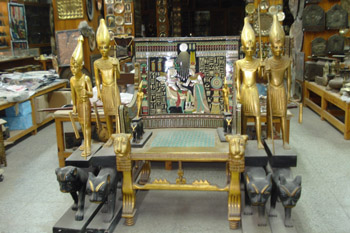
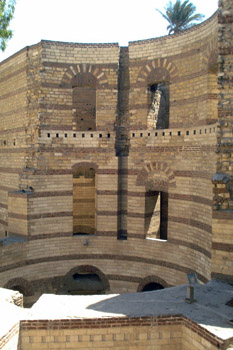 In Old Cairo we visited several churches including the oldest Greek Orthodox Church and the Ben Ezra Synagogue which dates from the 9th century and is the oldest Jewish place of worship in Egypt. We also visited the 4th century Hanging Church which is built on the bastions of the ancient Roman wall and ‘suspended’ above the level of the Nile. In one of the oldest Coptic churches in Egypt we entered the crypt-like area below where there is a small room that is supposed to have been where Mary and Joseph and the baby Jesus found shelter when they fled to Egypt. Old Cairo also had an excellent bazaar for buying souvenirs, some very expensive and others modestly priced including furniture and jewelry.
While we were in Cairo we visited several other important sites outside the city including Giza and the sphinx, Memphis and Saqqara.
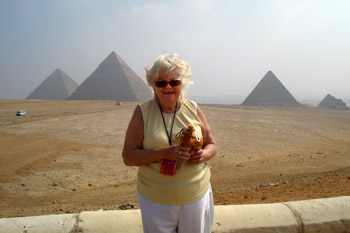 Giza is located to the west of Central Cairo not far from the ancient cities of Memphis and Saqqara. The pyramids include the great pyramid built for the pharaoh Cheops in the 4th dynasty and the slightly smaller Pyramid of Chephren date from around 2500 BC. There are also the Pyramid of Mykerinos and some smaller pyramids built for the kings’ families, The Great Pyramid of Cheops immortalizes the son of Snerferu and Hetpheres. This pyramid is the largest of the three, comprised of 2.3 million stone blocks each weighing an average of 2.5 tons. How on earth did they move these stones to build a monument so high as this? This is definitely one of the ‘wonders’ of the world! In fact, the pyramids of Giza are the last remaining Seven Wonders of the World.
Great Sphinx has stood guard over the pyramids for more than 4500 years. It is carved from an outcrop of rock and remains the ultimate symbol of Ancient Egypt with its lion’s body and human head.
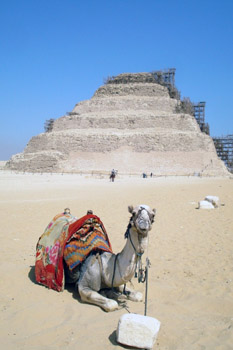 Most of the remnants of ancient Egypt lay scattered on the desert plateau south of Cairo. After visiting the amazing pyramids of Giza we went to see the amazing necropolis at Saqqara and the Step Pyramid of King Djoser. This is the largest necropolis in Egypt, extending for almost five miles. It’s a collection of pyramids, temples and tombs including the Mastaba tombs where the high officials of the Pharaohs were buried.
The Step Pyramid is the oldest pyramid found in Egypt, over 2,000 years. It is the oldest structure in the world build entirely of stone. It is 62 metres high and the base measures 109 by 125 metres. The burial chamber of the Pharaoh was located at the centre of the pyramid at the bottom of a large vertical shaft 28 metres deep. From here a labyrinth of rooms, corridors, chambers and passageways protected the tombs.
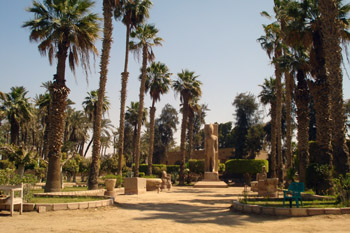 Farther south, is the ancient royal capital of the pharaohs, Memphis. According to legend it was founded by pharaoh Menes around 3000 BC and was the capital of Egypt during the Old Kingdom, remaining an important city throughout history. During the 6th dynasty it was a centre for the worship of Ptah, the god of creation and artworks. There is an alabaster Sphinx guarding the Temple of Ptah that is a memorial of the city’s former power and prestige.
When Alexander the Great came to Egypt he wanted to establish a city. Memphis was too far inland, south of the delta, so he chose the site by the sea that is now Alexandria. When Alexander died in 323 BC, his illegitimate half-brother Ptolemy came to Egypt to establish the city of Alexandria. For a time he kept Alexander’s body at Memphis but it was later moved to the new city. This began the Ptolemaic dynasty of Egypt. Ptolemy established the cult of Serapis in Egypt at Saqqara. Memphis thrived until the arrival of the Romans when it lost its importance in favour of Alexandria.
If You Go:
♦ I’d highly recommend the services on land and river of the Escapade Travel who offer professional, friendly service.
♦ I stayed at the Fairmont Nile City My room was on the 19th floor overlooking the river so I enjoyed the beautiful view and pleasant surroundings. The service at the hotel was superb and the staff most congenial and friendly. There is a pool on the roof of the hotel. There is also a spa and fitness centre, casino, exquisite dining rooms, bars, movies and shopping area.
About the author:
Ruth has been a travel journalist for over thirty years, and recently published her first historical fiction novel SHADOW OF THE LION: BLOOD ON THE MOON, Volume One of a two-book story about the fall of Alexander the Great’s dynasty, now available on Amazon.com. Her research included the founding of Alexandria. So when Ruth was invited on this special press trip, courtesy of Egyptian tourism, it was a dream come true. She saw all the sights from Aswan to the Red Sea and besides this fascinating stay in Cairo, she even had her own tour of the great city of Alexandria. See Ruth’s blogs at travelthroughhistory.blogspot.com, shadowofthelion.com and her website at www.ruthkozak.com
Photo credits:
Pyramids from Cairo by Brett Jordan on Unsplash
All other photos are by Ruth Kozak:
View of Cairo
Old Cairo Bazaar
Egyptian Museum
Hanging Church
Ruth at the Pyramids
The Step Pyramid
Memphis
Looking for a Spiritual Tour of Egypt? Check out the small group guided tours available from Body Mind Spirit Journeys
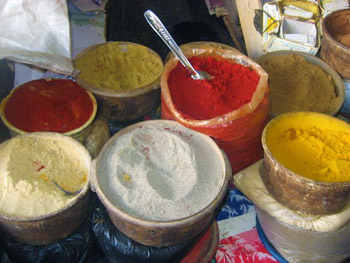
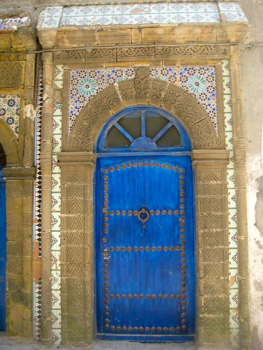 Some people will try to tell you that this is not Africa. Morocco, located on the continent’s northwestern edge, is something of an enigma in this regard. Its people are mostly descended from Arab invaders and indigenous Berbers, whose DNA and culture are closer to that of Mediterranean Europe than anything below the Sahara. But when the Gnaoua World Music Festival kicks off every June in Essaouira, on Morocco’s Atlantic coast, its African heart emerges – beating strongly to the rhythms of the drums and three-string basses of the West African slaves who arrived here centuries ago.
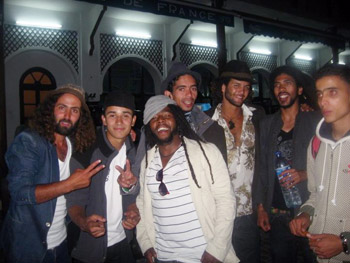 Gnaoua music is alive and well in Morocco today, though its spiritual origins have been somewhat lost through its own popularity. It’s not just the Sufis who perform Gnaoua music anymore. It’s played in clubs by fusion bands, and on world tours by famous musicians interested in cross-cultural connections. But most significantly, it has become the centerpiece of one of Morocco’s biggest festivals, a four-day event that takes place at the beginning of every summer.
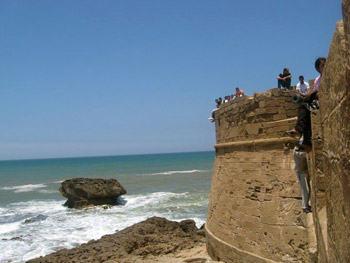 Some call it the Woodstock of Africa, while others claim it has become too corporate. Founded seventeen years ago, the Gnaoua World Music Festival (known officially by its French name, Le Festival Gnaoua et des musiques du Monde d’Essaouira) attracts over 300,000 people, who not only come to hear Gnaoua music, but also sounds from all over Africa. A lot of the crowd is European, not just hippie-types but also music enthusiasts, wind surfers, and those on cheap breaks. But there are a lot of Moroccans here too, who can afford to come because most of the concerts are free, running late into the night on the town’s beaches.
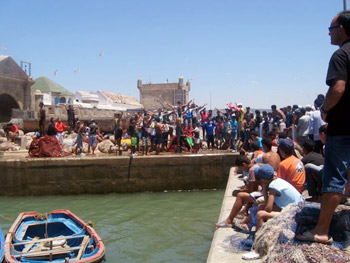 Essaouira is known as the windy city, though it bears other names too: the Portuguese, who laid the foundations for the town we see today, called it Mogador, and its Berber name simply means “the wall”. It’s a fortified city with walls that keep out the wind, and also much of modernity. The medina at its centre is labyrinthine and painted almost entirely in white and blue. Gnaoua music permeates the streets, even outside of festival time, and other hallmarks of Moroccan life are there too: traditional hammams (spas), markets, a souk devoted entirely to wood artisans, an old Jewish synagogue (a reminder that Essaouira was once 40% Jewish) and cafés that serve simple, yet delicious fare (always, of course, accompanied by mint tea). These are the best places to eat, especially if you’re on a budget and want to nosh like the locals. Bowls of lentils, spiced with cumin, paprika, and laced with meat, can be bought for as little as 6 dirhams (around 75 cents), and are served with bread, for free. White beans are a similarly delicious bargain, though if you’re feeling a bit more luxurious, fish is the best thing to eat in Essaouira. Kefta, traditional Moroccan meatballs, stuffed with onions and parsley, are delectable too, but sardines, bought fresh from the fishermen down by the beach are even better. Once bought, you can take the fish to a restaurant to be cooked on the spot, often with traditional chermoula sauce (a mixture of cilantro, parsley, chili, lemon, olive oil and spices).
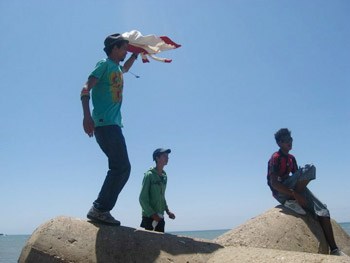 In festival time, the concerts mostly take place on the beaches, but also spill out into the clubs of the new city, located outside the old medina walls. There are events for every taste, though the biggest, most exciting shows happen outdoors on the free stages. Music runs pretty much all night, which not only creates a 24/7 party atmosphere, but also provides a welcome relief to the mid-day temperatures of the Moroccan summer. Essaouira is less hot than Marrakech, thanks to ocean breezes, but high noon temperatures are still nothing to laugh at. The nighttime is cool, perfect weather for dancing to the beats of the Sufi Brotherhoods or visiting world musicians. And dance you will. This is Africa, remember, albeit a much less traditional, more open-minded version of the continent than you might experience elsewhere. Vendors circulate throughout the concert space, selling donuts and other tasty treats. More savory fare can be bought from makeshift stands on the perimeter, selling corn, fish, hard boiled eggs with cumin and salt, and pastries. Alcohol is not obviously easy to procure, but despite what the hustlers might try to tell you (searching for a commission), there are several liquor depots in the new city where you can buy alcohol at a fixed price. It’s very common to see both tourists and locals imbibing on the beach, though usually out of water bottles, often containing the local firewater.

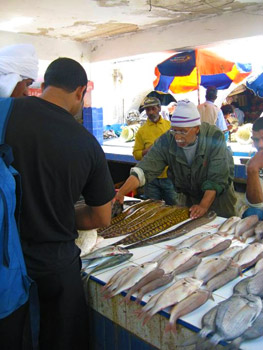 The festival atmosphere pervades the city, and not just at night on the beaches by the big music stages. It’s on the streets in the daytime too, in the official processions of the Gnaoua musicians, and in the unofficial parades of young Moroccan rastas, Spanish girls in harem pants, the old Djellaba-clad (a traditional Moroccan robe) hooked-nose man who haunts the medina and claims to have worked for Cat Stevens, and in the gentle giant dancing manically to the beat of his own drummer. In fact, the festival atmosphere begins the moment you step on the bus to Essaouira. Buses run regularly between Marrakech and the port, and tickets can be bought either directly from the ticket office inside the bus station, or from hustlers outside, who may or may not offer you a better price, albeit probably on a worse bus. But a lower class bus is not a guarantee of a bad experience. In fact, you’re more likely to meet locals that way, locals who, unlike many people you meet on the street, will give you advice for free. Some might recommend a place to stay or eat salty grilled fish, while others will try to convince you of their love for Bob Marley, or may even offer you hashish or wine mixed with cola – both of which maintain various levels of illegality for Moroccans, though each proliferate at the festival. But for most attendees, the music on its own is transcendent enough: beautiful and ancient as it floats above the storied corners of the medina, past the spice sellers and fishing boats, and out to sea.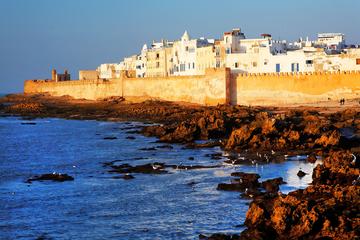
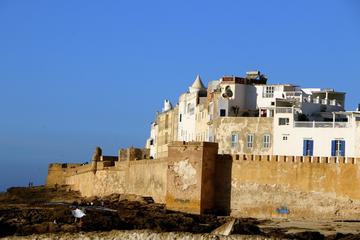
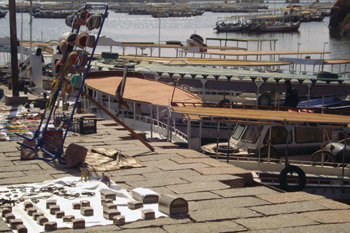
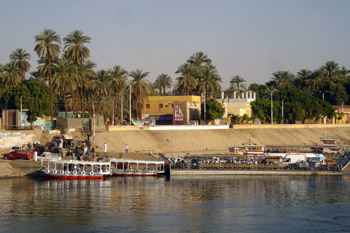
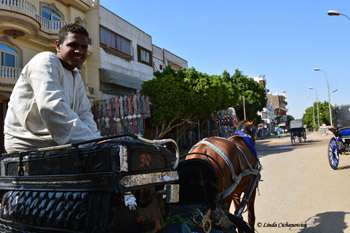 Unfortunately we have no time to bargain and buy souvenirs this morning. We’re on our way to board a boat that will take us to visit the island temple of Philae. Hanan, the Egyptologist explains, “These dark-skinned people are Nubians. They live in settlements along the river.” She tells us that because of the lack of tourists due to recent political unrest, these souvenir hawkers and boatmen are struggling to make a living. Hanan points out a settlement of yellow brick houses clustered under a sandy hill across the river. “That is one of their villages. They call it ‘Elephantine’, perhaps because the hill is shaped like an elephant.”
 With our handsome young Nubian boatman at the helm we sail down the river. These boatmen are renowned for their skill as skippers and fishermen. Most of the small craft including the feluccas that sail on the Nile are commandeered by Nubians. The Nile is a vast river, much wider than I’d expected, and fast flowing.
 Nubia was always a land of mystery and legend. Many of the pharaohs of ancient times were Nubians. At the site of Memphis and Karnak there are Nubian monuments. In 747 BC the city of Thebes, near Karnak, was besieged and the Egyptians called on the Nubian king for protection. Thebes was rescued and for the next 100 years Nubian kings ruled in Egypt. Archaeologists have worked to excavate as many ancient sites as possible and managed to save over 5000 Nubian objects but many of the Nubian treasures still lie beneath the waters of Lake Nasser. One of the archaeological sites that was rescued and restored is Abu Simbal, at the far end of Lake Nasser. Another is the Temple of Philae, restored on a small rocky island once known as Apo, which means “ivory”.
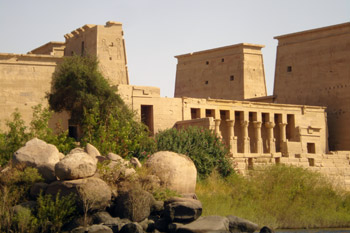 The boat rounds a bend in the river past a mound of giant stones that stand like a sentinel. Not far ahead I see the sand-stone buildings of the Temple of Philae fringed by a stand of palm trees.

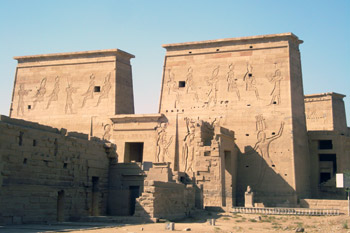 The temple complex was built during the Ptolemaic dynasty (380-362 BC). Its principal deity was Isis but there are shrines dedicated to other gods. The most ancient temple was one built for Isis, the goddess to whom the first buildings were dedicated. It was approached from the river through a double colonnade. Because it was supposed to be the burial place of Isis’s husband, Osiris, Philae was held in great reverence both by the Egyptians to the north and the Nubians in the south. Only priests could dwell there. On the walls inscriptions tell the story of Osiris and how he was murdered.
 The Philae temple was closed in the 6thcentury AD by the Byzantine emperor Justinian. After that it became a seat of the Christian religion. Ruins of a Christian church were discovered on the site. Many of the sculptures and hieroglyphics on the walls of the temple were destroyed or mutilated by these early Christian inhabitants. Most of Horus’s statues were left unmarred but in many of the wall scenes, every figure is scratched out except that of Horus and his winged solar-disk, perhaps because the Byzantine Christians saw some parallel between Horus, the god’s son, and the stories of Jesus.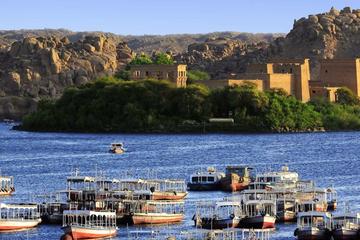
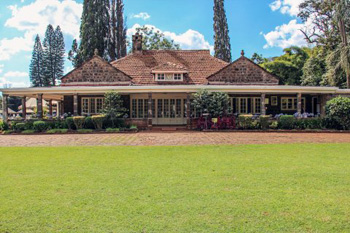
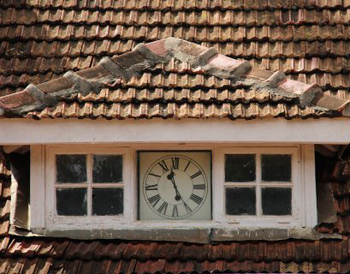 It took two hours to travel the twelve kilometers from downtown Nairobi to Blixen’s farm. The main highway, currently being re-built by the Chinese government, was under heavy construction. Whatever romance I had expected was wiped out by the intense drive. Horns blared. Thick smog reeked of car fumes. Engines idled without any forward movement. Men selling everything from magazines to bananas pressed up against the car. My driver advised me to keep my window closed so I wouldn’t be robbed. With one of the highest crime rates in Africa, Nairobi has the infamous nickname “Now rob me”.
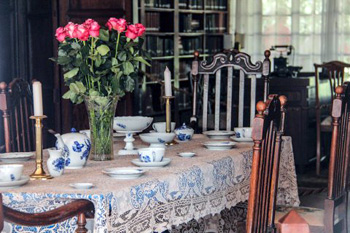 Still, as we drove up the laneway, my palms grew damp and I felt anxious, like I was meeting someone I had not seen in several years and was worried about making a good impression. Such is the odd relationship between a reader, a novel and the novelist. The reader feels a tenderness that is one-sided. Loving a novel is always unrequited.
 When I opened my door, the spicy smell of Cypress stung my nostrils. Norfolk pines and columnar cypress lined the immaculate grounds. Cultivated shrubs with fushia foliage bordered the front lawn. Delicate blue flowers opened to the cloudless sky. The wide lawn stretched across the front and the back of the house. There was a lot of activity as workers erected great white tents in the backyard for a craft fair on the weekend. The property is popular for weddings and special events.

 I walked into the bedroom. There was a tiny, white bed with a hard looking mattress. A pair of riding boots stood in the centre of the room. Several British tourists shuffled in behind me following their guide. They had paid for a tour and were fans of the 1985 movie, based on the novel, starring Meryl Streep as Karen Blixen and Robert Redford as Denys Finch Hatton, her lover. The guide began his spiel.
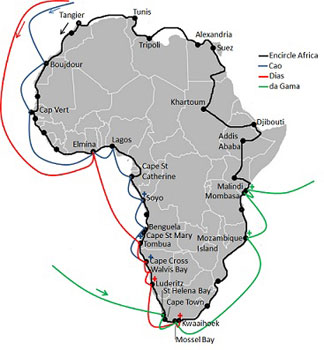
 The padrãos had several intentions, as did the voyages around the African continent themselves. Portugal, surrounded by hostile kingdoms, turned to the sea to find a new route to India’s spice trade that eliminated greedy middle men. The padrãos not only acted as navigational aids, but proclaimed the land around them as Christian, and belonging to the Kingdom of Portugal. They were also a handy source of ballast, generally only positioned on a voyage’s homeward journey. The carved inscription on the Cape Cross padrão reads: “In the year…1485 after the birth of Christ, the most excellent and serene king Dom John II of Portugal ordered this land to be discovered and this padrão to be placed by Diogo Cao”.Namibia’s Cape Cross was Cao’s journeys end. The next 15 years would see countrymen Bartolomeu Dias and Vasco da Gama forge a sea route to India’s Malabar Coast. Each explorer was dependent upon the discoveries of those who had gone before and the padrãos they had positioned.

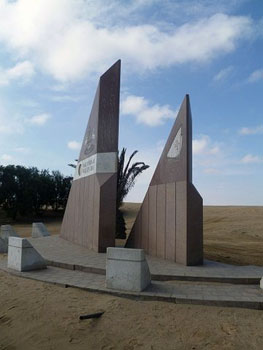 I didn’t get close enough to feel their influence until reaching Soyo on Angola’s northern border, the southern bank of the River Congo, four months after beginning. It took Cao about the same length of time by sail. Even then I was unable to find the fragmentary remains of his padrão which are said to exist.
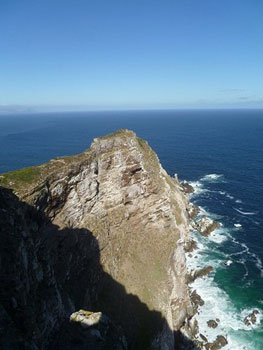 Dias used Cao’s discoveries to continue, taking anchor 75 miles further south at Walvis Bay, a town still dependent on ships anchoring today. On its outskirts, monumental stylized rigged ships celebrate the town’s earlier European visitor.
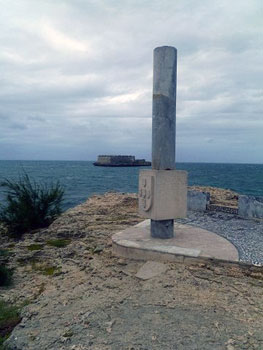 From Mossel Bay da Gama faced unknown seas, passing Dias’ endpoint on December 16 1497. It was coming up to Christmas, so the coast da Gama spotted on his left hand side was named Natal (birth). His four caravels continued up the East coast of Africa eventually reaching Mozambique Island. Here on the island’s eastern end, facing a small, later Portuguese fort, I encountered the remains of his padrão. This was the closest I had come so far to one of the original navigational aids.
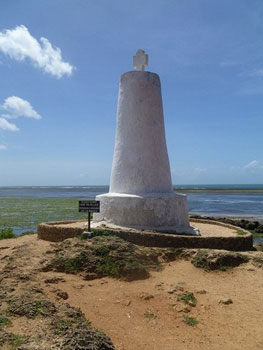 My search for the Portuguese explorers was finally over. I took a three-wheeled tuktuk to the padrão. The intervening years between me and da Gama had not been kind to it. Instead of the slim column of Lisbon limestone, it had been variously altered so it now resembled a giant white traffic cone topped with a Greek cross. Yet there it still stands on a rocky outcrop. One of the only original Portuguese padrãos I had been able to find during my own exploration of Africa 500 years on. From here da Gama went across the ocean to India. His mission complete, he returned home to report his successes to the king of Portugal. I still had to cross to Egypt, and follow the Mediterranean back to Tangier to Encircle Africa.