Samcheok, South Korea
by Lawrence Hamilton
I expected the worst from South Korea. Most prospective teachers of English As A Second Language (ESL) are fed horror stories about the monotony of life, of architecture, manners, and well really just about anything. In my head were impressions of traffic clogged roadways and a dour and demure populace. Research on websites and YouTube videos seemed to confirm a rather colorless existence. ‘Sacrifice a year and make the money’ as one message board post read.
Luckily I wasn’t sacrificing a year, merely five weeks to work in an intensive ESL summer camp. The pay was great and children were fun, but the hours were intensive, 8 hours a day 6 days a week, which left little time to explore the country.
 Despite the hours, a co-teacher and I decided to spend one of our short weekends out of town, and made a bee-line from our Seoul address to the town of Samcheok on the eastern coastline.
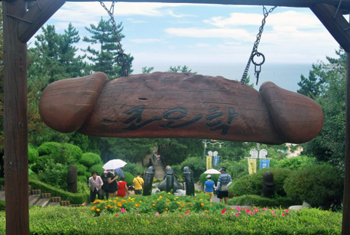
While I had read a lot about mundane industrial areas, I had heard next to nothing about South Korea’s coastline. I was surprised to find that it was beautiful and rugged, and even more surprised to find along that coastline a park filled with statues of penises. Not just a few penises, but lots and lots of penises. Stone and wood penises, penises with penises, penises with built in vaginas, the zodiac chart with penises, and finally just statues of Korean men…with really big penises.
The park is called Haesindang Park, and overlooks a pristine blue ocean. Even after the four hour bus ride from Seoul with the expressed interest of visiting a place literally called the ‘Penis Park’, it is hard to be prepared for the imaginative ways Koreans have thought of to demonstrate the penis’s power. A double-headed penis as a directional marker was a personal favorite.


 Outside of notorious areas in South East Asia, I had normally found traveling through Asia to be (at least on the surface) a sexually tame area. Tradition and protocol seem to dictate that people keep modesty and save face. So it was a bit of a shock to come across such blatant eroticism in South Korea and of course begs the question as to why these penises exist in the first place.
Local legend tells the story of a virgin swept out to sea in rough waters. Her lover fails to save her and she tragically drowns. The villagers are devastated, and when the local fishing industry goes to ruin, they believe a curse has been placed upon them. One day, a forlorn fisherman out in his boat masturbates, his semen falling into the ocean, and miraculously the villagers’ fortunes start to revive. They discover that the virgin’s restless spirit can be appeased and the townspeople set to work building sexually potent statues in view of the shore.
 We spent the day wandering among these outlandish statues, laughing and taking ridiculous photos. The dark colors of the penises blended beautifully with deep azure of the Pacific Ocean. After the park we walked along the beach and along with dozens of other families we frolicked in the shallow water, some cold beers in our hands. As the sun slowly set and we made our way back to the bus stand, our brief voyage into the world of South Korean dicks came to end. I pondered in my head how a park such as this would be received back in parts of the United States, and I realized that maybe South Korea wasn’t so prudish after all.
If You Go:
Samcheok is on the east coast of Korea and along with Haesidong offers scenic bike rides and nice beaches. Keep your eye out for the barbed wire fence that runs near the beach, a reminder of the ongoing division that affects the peninsula.
South Korea 8-Night Comprehensive Tour from Seoul
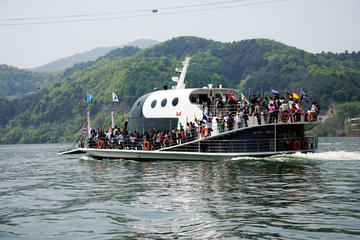
Magnificent tourist attractions in South Korea ! Nami Island & Petit France
About the author:
Originally from Kentucky, Lawrence Hamilton has lived in five countries and currently calls Australia home, although he is usually planning a trip to India. He is a regular contributor at VagabondJourney.com and you can follow him on Twitter @BuddsStBrewery.
All photos are by Lawrence Hamilton.
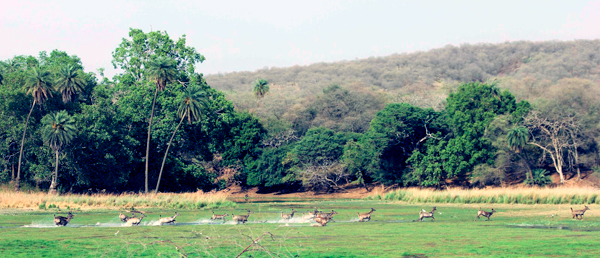
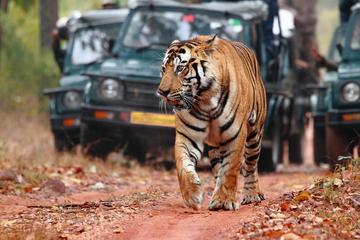
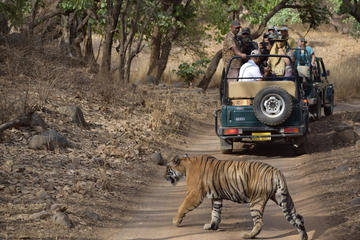
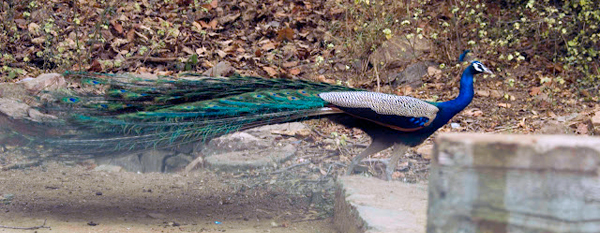 What a majestic creature! That hunts with Precision, Planning and Speed. We were very fortunate to see this majestic creature hunting in Zone- 3. Being there and observing the hunt from a distance, we could sense the fear that the prey (deer & sambars) felt while running for life in the lake. This bolt happened after one member from the herd made the call and informed others of the danger.

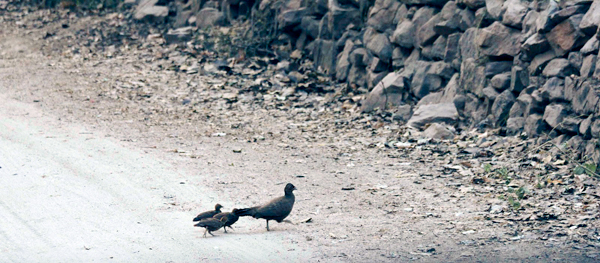
 Some of the animals and birds showed curiosity towards the tourists entering their territory and some behaved as if they have been eagerly waiting for you to click their pictures, especially the Langoors. An interesting thing to note about them was that all of them were so used to humans visiting their habitat that they were least bothered and continued doing what they were busy with.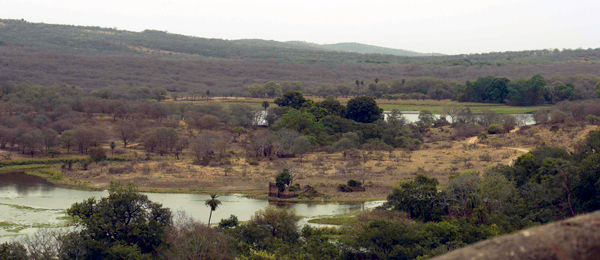
 After a 75-minute flight from Shenzhen, we arrive in Guilin, Guanxi Autonomous Region, taxi to our hotel and arrange our river trip through the hotel concierge. Luggage deposited, and ready for lunch, Snow suggests we b-line for one of many street shacks to enjoy some of Guilin’s famous rice noodles or mifen (mee-fnn). We dollop the noodles with our choices of self-serve condiments: soybeans, scallions, fried peanuts and pickled white radish in chili sauce. This bargain-priced specialty’s spicy, seasoned broth simmered for hours, makes it.
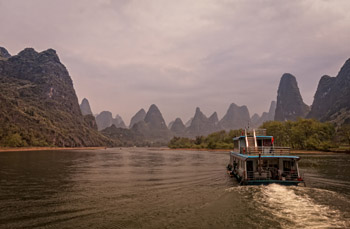
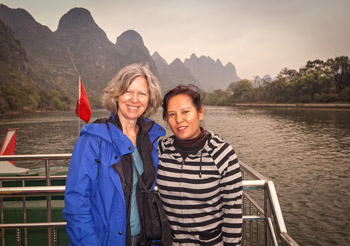
 We depart early for our four-hour river journey from Guilin to Yangshuo. Tourist vans and buses fill the adjacent parking lot. Hundreds line up for tickets. A fleet of boats nestled in the harbour braces for the throngs. Chinese tourists, as well as those from other countries, flock here. Once aboard, we navigate towards the front of the two-level boat where others gather, cameras clicking.
 The magical passage ends in Yangshuo where rows of open-air market stalls greet us: souvenir scroll paintings, bamboo items, ethnic minority handicrafts and vibrant pashminas.Yangshuo’s famous Xi Jie (West Street) oozes with shops for tourists to leave a few Yuan. Prices are flexible.

 The next day Zhao will take us to Xingping. His uncle has a raft there. We need to see the karst terrain up close and more personal before we leave.
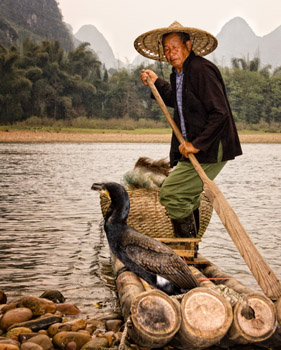
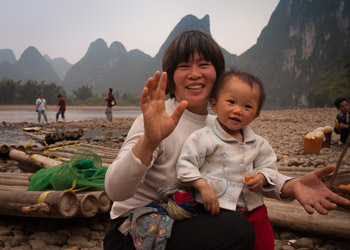
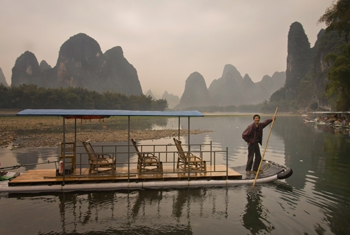 We board the Xingping minibus at Yangshuo’s bus terminal. A regional centre in 265 AD, Xingping was replaced by Yangshuo around 590 AD. We stride past architecture reflecting history – flying eaves and black tiles on sloping roofs dating back to the Qing and Ming dynasty. Goal-focused Zhao hurries us through narrow, uneven streets, heading for the pipe-raft docks along the Li River.
 After a tasty snack of dried fish, we motor back to Xingping. We pass the karst scene on the back of Chinese 20 Yuan note, a panoramic arrangement of taller karsts on either side of lower, background ones. We say farewell to Zhao’s uncle and race to catch the last minibus of the day returning to Yangshuo, again trying to keep up with Zhao.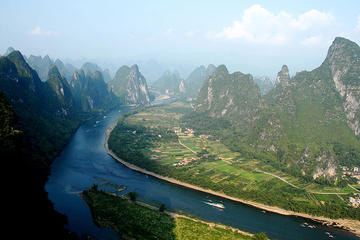
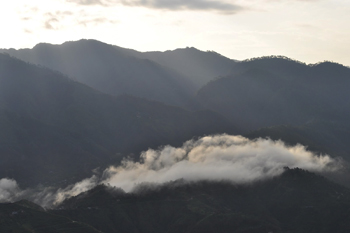
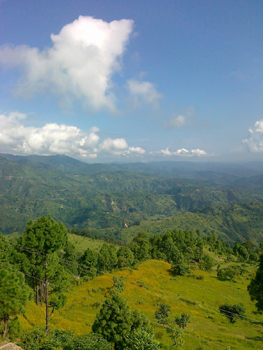 Still untouched by the modern tourism industry, this place was originally a popular hill station for Britishers (during pre-independence). Situated at an altitude of 1,706 metres (5,686 feet) enroute Kotdwar-Pauri road, it was founded and named after then Viceroy of India, Lord Lansdowne in 1887. Only 250 km from Delhi, this place is surrounded by tall, thick oak and blue pine forests. Lansdowne is not yet stained by tourists. Its tranquil and pristine beauty unlike other hill stations (like Shimla, Moussouri etc) is still intact. If you ask me, I would say it is an ideal place to ‘Do nothing’, just relax and spend time with your family or loved one. There are very few resorts n hotels which are situated a few kilometres prior to the hill station, all promising a mystique view of the valley. The one that we stayed at had a 180 degree view of the valley in front.
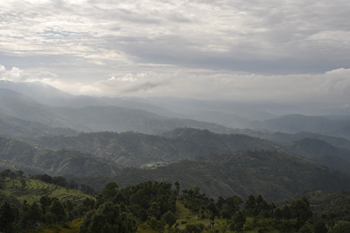 The sunrise and sunset are mesmerising here. Being born and brought up in city life, I never realized how beautiful and impactful these acts of nature could be. For me, it was this sheer magic of Nature that I thoroughly enjoyed watching. I used to get up around four in the morning daily so that I didn’t miss the sunrise. To me this was the time when one could see all the possible shades of LIFE present on earth. Valley view is awe-inspiring, especially this time of the day. The sound of wind blowing swiftly, pine trees moving to the rhythm of wind, the colourful flower beds; all this makes it so peaceful that one feels a sense of calm and tranquillity here. Truly, a get- away from the hustle- bustle of fast moving city life. Just to stress on the peaceful time-mobile phones and internet don’t work here.
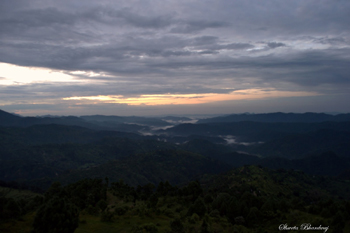 If you are a nature loving person who enjoys a trek to an unknown village down the hill, who likes the feel of being surrounded by huge mountain trees like-oak and pine, love waterfalls, zigzag mountain roads, then, this is the place for you. The magnificently changing colours in the sky during the sunrise each day that I witnessed, is still embedded in my memory. Sunrise every day seemed a different mix of colours, formation of clouds, surrounded by vibrant flower beds and mountains all around. And to describe about the view after the sunset- small individual houses scattered at a distance in the mountains and flower beds would change to ‘twinkling stars’ in darkness (lights of the houses in the valley as seen from far away gives this impression)
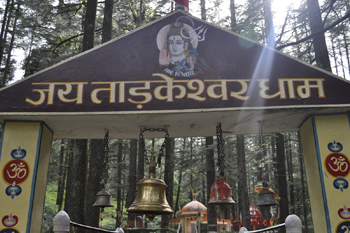 For those who are interested in sightseeing here, temples, churches, museum and a lake can easily be covered in a day. The famous Garhwal Rifles of the Indian Army has its command office here. The War Memorial at the Parade Ground of the Garhwal Rifles Center is another attraction for the visitors. Other places of interest around the city are ‘Tip-n-Top’ (one could see the mountain view of the western Himalayas from here), Santoshi Mata Temple, Bhulla Taal (a man-made lake), St. Mary’s Church, Tarkeshwar Mahadev Temple. The temple is 36 km from Lansdowne and is at a height of 1,800 m, this place is known for its temple dedicated to Lord Shiva. Surrounded by thick forests of deodar and pine, it is another aw-inspiring place because of the beauty of nature, it is believed to be one of the Siddha Pithas (ancient holy sites for Hindus). The temple place is surrounded by thick blue pine forests, oak trees and dense Deodars. The spectacular feature of this place is that even at this high altitude, there are many water pools, flowing continuously. My fascination here, were the bells surrounding the temple vicinity, both big and small. This gave a special identity to the temple.

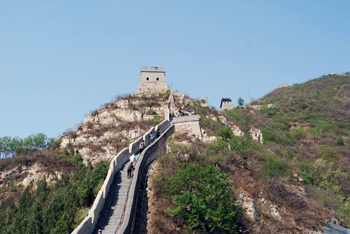
 Claims of visibility from the Moon are fanciful, too. Several astronauts have stated that’s erroneous … but in the 18th Century, nobody had been to the Moon, so couldn’t contradict Mr. Stukely.
 But, that early wall was not of the construction we’d recognise today. The wall builders generally used whatever resources were available locally … wood or stone, in areas in which it could be easily won; stamped earth where it wasn’t readily obtainable.
 In fact, reconstruction of the wall as we know it now, didn’t commence until 1348 … over 20 years after Marco Polo’s death … when the Ming dynasty came to power. They were especially troubled by the raids of the Mongol tribes from the north, and, as a defence against these, the wall was strengthened, and, in some places, re-aligned.

 In addition, of course, barracks, stables and armouries had to be provided at frequent intervals.
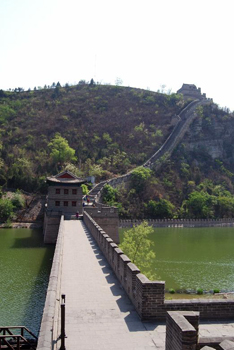 Naturally, the more easily accessible sections of the wall, especially around Beijing, were maintained and, if necessary, repaired. At least one guidebook grumbled that one stretch of wall ‘ … looked like it had been pointed yesterday’. It probably had.