Koyasan, Japan
by Anne Harrison
At the tail end of a Japanese summer, my daughter walked hand-in-hand with the Kobo Daishi, a monk who has spent the last thousand years waiting for the Buddha of the Future.
 Dusk fell as we wound through a cypress grove filled with some half a million graves. The faithful have been buried here since the Kobo Daishi died in 835 AD. Famed as a poet, painter and calligrapher, and for bringing Shingon Buddhism to Japan, the Kobo Dashi is of the most revered figures in Japanese history. He sits in repose in his mausoleum, the Oko-in, where monks still bring him food twice a day.
A mist rolled down from the mountains, bringing with it a sea of mosquitoes; we beat a hasty retreat, postponing enlightenment until daylight.
Sacred even before the Daishi established his monastic retreat here in 816, Koyasan is only two hours by train from Osaka. Speeding through the city’s outskirts, the futuristic landscape morphed into a maze of alleyways and traditional wooden houses, with vegetable plots and tiny rice paddies filling every spare space. Then the land opened into farmland, with the occasional dots of a village or even a small town.
The train came to an unexpected stop, and as everyone else melted into the countryside we were left standing on a deserted station. We dripped with sweat. Farmers with conical straw hats worked fields cultivated for centuries. It was a scene lifted straight from the anime of Hayao Miyazaki (famous for classics such as Spirited Away and My Friend Totoro).
Fortunately, a train arrived before we had emptied the ubiquitous vending machine of offerings. As the land climbed, the summer heat faded. Fruit trees heavy with blossom became primeval forests of pine and cypress. At Gokuraku-bashi Station, (where the train-line ends), monks, pilgrims and tourists alike were ushered into a cable car; it leapt into a wall of green, carrying us to the top of the Holy Mountain.
Buses transport everyone to the centre of town – including the monks with their robes of black covered with saffron shawls, for walking from the station is forbidden. The road pottered through the trees, its edge marked by moss-covered rocks. Everything held the colour of dark moss or grey stone; the trees, the road, the view down the mountain, even the air. As a result everything looked a little hazy, as if we saw things from a distant, slower time.
Despite both its age and being listed as a World Heritage site, Koyasan remains a lively mix of Buddhist monasteries, sun-drenched cypress groves and school kids running past workshops on their way home. In the main street stand supermarkets, restaurants, ceramic shops, even a chemist to sell sunblock and mosquito repellent. (The lady in the tourist office kindly wrote the names in Japanese for us, as the pharmacist spoke no English. His shop was filled with all manner of bottles housing dried flora and fauna.)
 The journey with the Kobo Dashi begins at a stone basin. Ubiquitous to Japanese temples, these basins overflow with running water, usually from a nearby stream. After ladling icy water over our hands, we bowed on crossing the graceful Ichinohashi Bridge; the Kobo Daishi then joined us. A lady in the shop opposite smiled and waved. The path then winds through the Okunoin, a grove of cypress and tombs. Tiny tracks stray from the main walkway, leading to even more tombs hidden in dells and forgotten grottos. The only sound was the chirping of crickets, or the ring of bells as white-robe pilgrims passed. Many of the tombs are simple stone plaques or wooden markers; others are the enormous mausoleums of shoguns. Animal shaped stones are popular, often with red cloths or little aprons tied around them.
Moss has eroded many of the markings. Shafts of sunlight tumbled through the ancient trees, and mites danced in the sunbeams. We walked through streams of light and shadow. The dead may have been waiting here for over a thousand years, but in one section workmen busily repainted markers while at another grave a monk chanted a service as pilgrims with their white robes and staves of bells walked by.
 After a thirty-minute stroll, the track opens onto Oko-in, the Kobo Daishi’s temple. Suddenly the place bustles, for another path (almost a road) comes straight from the huge car park where the daily buses grind to a halt, delivering tourists intent on achieving enlightenment in a few hours. On this walkway can be found many gaudy (and theologically suspect) edifices, such as the White Ant Memorial, built as a guilt offering by a pesticide company.
All this chaos is forgotten in the temple area. A stone bridge arches over the Takugawa River, which is dotted with wooden memorials for those who have drowned. Pilgrims ladled water over huge Jizo statues in offering for the dead before dedicating the ashes of loved ones. Candles and incense saturate the air, and many waft the fumes over themselves for spiritual and bodily well-being.
The Oko-in is truly the heart of Koyasan. A huge wooden temple, it’s tranquillity defies the crowds. Alone with the Daishi, we sat on some reserved wooden benches to spend awhile contemplating the road to Nirvana. Nearby is the Hall of 3000 Lanterns (the Toro-do), where two lamps have burned for over a thousand years without the need for fresh oil. Another hall houses Buddhist writings brought to Koyasan by Tripitata, the prince of Monkey fame.
 Despite hosting over a million pilgrims a year, Koyasan remains a spiritual place. Most leave by mid-afternoon, and by evening we walked deserted streets. Many of the temples lie hidden behind wooden gates and guarded by stone lions, with the occasional glimpse of a balcony.
Some fifty of the temples on the mountain offer shukubo, or temple lodging. A bamboo screen in our room opened onto a garden of contemplation; a sea of moss-covered rocks and sculptured azalea bushes, with white pebbles scattered around the larger stepping-stones. A stone lantern stood in one corner, as if it had rested there for centuries.
A deep bell summoned us from sleep, and the chanting of the monks flowed from the centuries-old temple into the mist of dawn. The flames of their offerings shot into the air, the light licking the wooden walls (perhaps the reason why only one hundred of the original thousand temples remain). Afterwards, an elderly monk explained the service in halting English. This was followed by a traditional Japanese breakfast.
A bus ride back to the station, then the cable-car back down the hill; it felt as if we were slowly returning from some distant land to the chaos of the present.
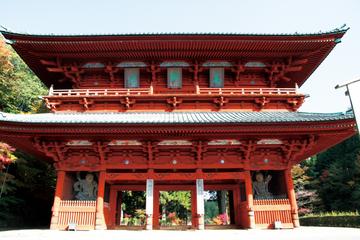
Mt Koya Day Trip from Osaka Including Okunoin and Danjo Garan Temples
If You Go:
Arriving: Koyasan can be reached by train on the Nankai line from Osaka. This takes around two hours. A cable car completes the journey. The Tourist Information Centre is in the centre of town, on the main street. They have numerous maps, including walking trails, information on the various temples and sights, and can help with accommodation. Public phones are outside.
Accommodation: Temple lodging can be organised at the Tourist Information Centre. The youth hostel (offering traditional style accommodation) is a ten-minute walk from the Tourist Information Centre, with a bus stop nearby.
Dining: There are numerous restaurants of all price ranges, with plastic models in the window displaying the food on offer. There is also a supermarket for self-catering.
Helpful websites:
♦ Japan National Tourism Organization
♦ Temple Lodging Japan: A guide to temple lodging across Japan


About the author:
Anne Harrison lives with her husband, two children and numerous pets on the Central Coast, NSW. Her jobs include wife, mother, doctor, farmer and local witch doctor – covering anything from delivering alpacas to treating kids who have fallen head first into the washing machine. Her fiction has been published in Australian literary magazines, and has been placed in regional literary competitions. Her non-fiction has been published in medical and travel journals. Her ambition is to be 80 and happy. Her writings are available at anneharrison.com.au and anneharrison.hubpages.com
All photos are by Anne Harrison:
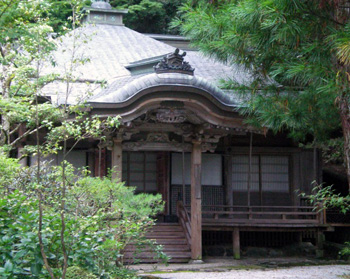
An ancient temple in Koyasan
Graves hidden amongst the trees
A deserted train station
A temple path, Koyasan
The Okunoin, a grove of cypress and tombs
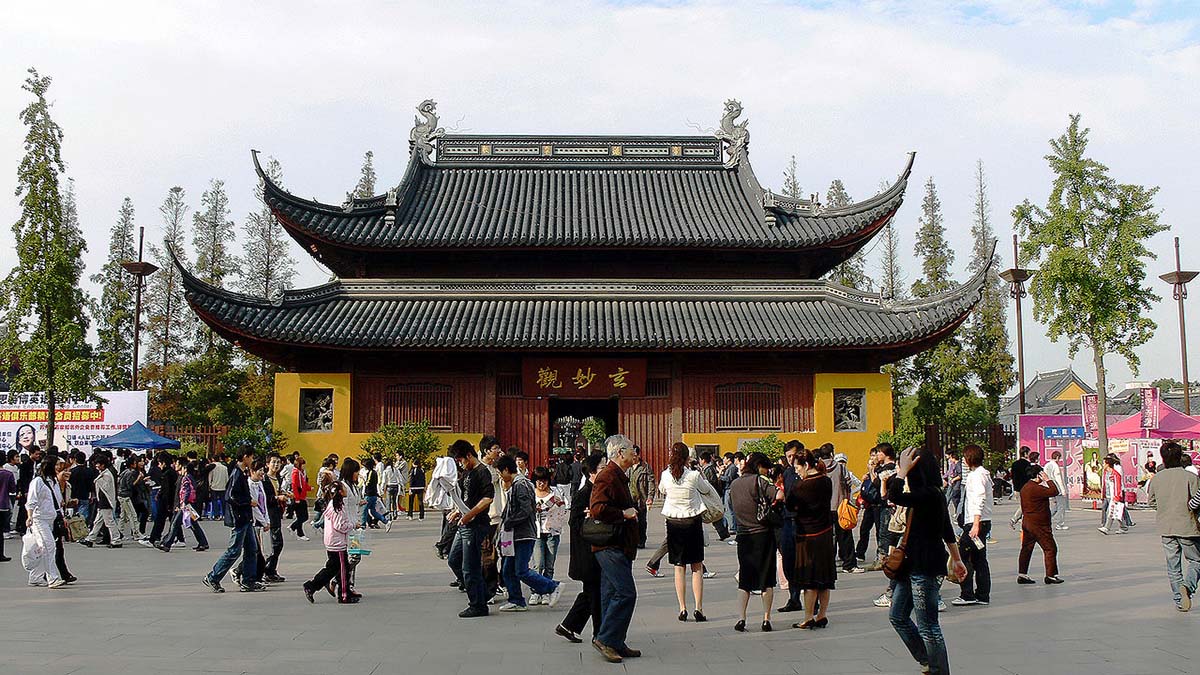
 Originally laid out in 1140 CE during the Song Dynasty, this garden was abandoned for six centuries before being restored in 1770 by a retired official in the Emperor’s court. This frustrated official indicated that he would rather be a fisherman than a bureaucrat which is how this garden derives its name – Master of Nets Garden. This garden of earthly delights is hidden inside the owner’s yard and was intended for his own pleasure.
 Grace mentioned that neighboring families would compete for the best garden. If one family had a pavilion constructed for a particular purpose like music or art, the other families, not to be outdone, would do the same and then downplay its significance.
 On the east side of the pond, you find the hexagonal Pavilion for the Advent of the Moon and Wind whose image reflects off the calm water. Find your way there by crossing the narrow one-foot wide bridge but be careful or you will become one with the pond.
 The Grand Canal, flowing from Beijing to Hangzhou, is 1,795 kilometers long. Segments of the Grand Canal were started as early as 496 BCE but it was only joined into one long artery during the Sui Dynasty (581-618 CE). Over the subsequent centuries, parts of the canal fell into disuse and became blocked up so it is not longer possible to travel to Beijing by water. Fortunately for you the Suzhou segment remains intact and the historic section of the city is still accessible by water. This is your opportunity to enjoy a 40 minute boat ride through some of the most scenic sections of this ancient city.
 Over the course of our gondola ride, the width of the canal varied from about 1.5 to 6 meters wide. Along the route, the height of the greyish side walls varied. In some locations, these consisted of the 5 meter high back walls of stone homes that were over 450 years old. Along the route I began to understand how a rat feels as it runs through a maze. This feeling quickly vanished as we passed under the first of several elegant stone pedestrian bridges spanning the canal.

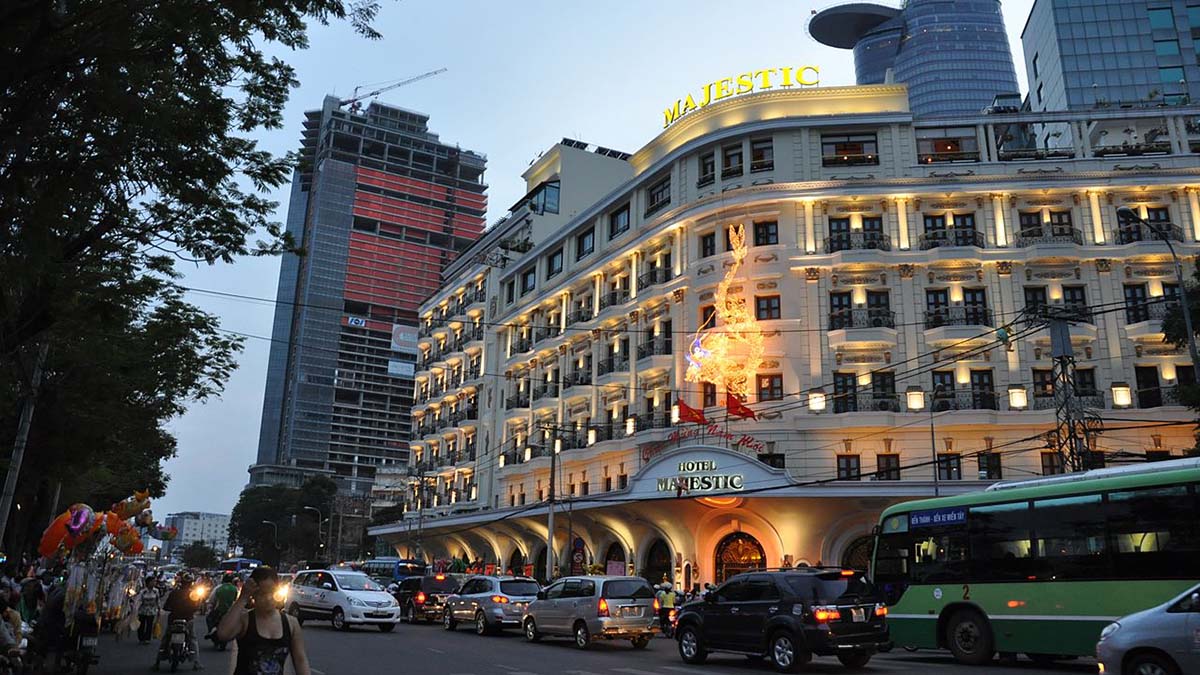
 After dinner I sat and waited for Pyle in my room over the Catinat.”
 Further along Duong Dong Khoi stands the Rex Hotel. Here the rooftop bar (complete with elephants) overlooks the heart of Saigon; perhaps this is why a bottle of champagne here comes with six waiters. The heavens of the wet season opened just as we sat down, so for an hour or so we had the place – plus waiters – to ourselves. After beginning life as a French garage, during the Vietnam War the Rex Hotel became home to the Press Corps, and probably the CIA. Now it is owned by the Communist Party.
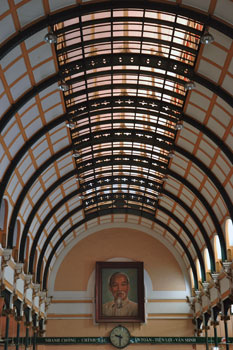 I had seen him last September coming across the square towards the bar of the Continental.”
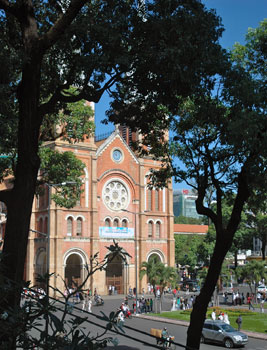 A few tree-lined blocks to the north of the Rex Hotel, the Cathedral Notre Dame and the Central Post Office face one another across a small square. Although Fowler was dismissive of the style, the cathedral is quite delightful, with each stone shipped from Marseilles, and the stained glass from Chartres.

 by Graeme Greene – essential reading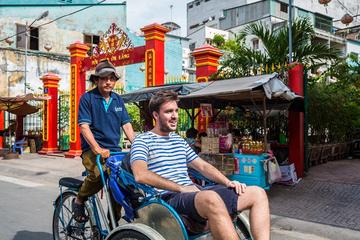


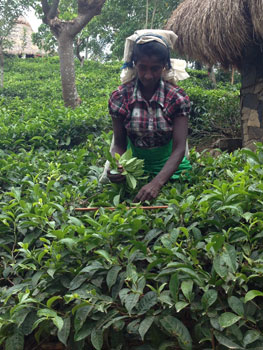 The train from Colombo had brought us nearly 2000 metres up into the Sri Lankan Highlands amid acres of tea plantations. For six hours we climbed higher and higher leaving the urban sprawl of the capital, travelling through tangled jungle to reach the patchwork neatness of the tea country. We left the train at Nanu Oya and bumped along the potholed road to Nuwara Eilya in a taxi, passing hillside tea plantations with names such as Edinburgh and Glasgow.
 Entering Nuwara Eilya the dilapidated race track was immediately in front of us. Our taxi driver assured us that two meetings a year were still held here although this seemed unlikely. In front of the down-at-heel grandstand the final straight was uneven and unkempt and the fence outside the perimeter of the track was falling down. Ponies available for tourist hire grazed on the track. The condition of the racetrack was a stark contrast to that of the nearby golf course which was immaculate.
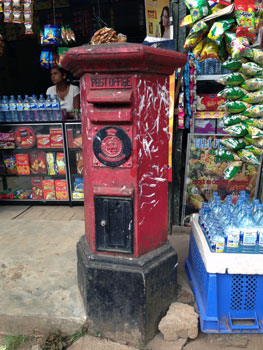
 Walking into the commercial part of the town we explored the shops and market before crossing the road to one of Nuwara Eilya’s most distinctive buildings to post a card home. Slightly elevated, the pretty Victorian brick post office has a tiled roof, gables and a clock spire. From the outside it reminded me of something from an English village and the lines from Brook sprang to mind ‘Stands the church clock at 10 to 3, and is there honey still for tea?’ but inside the somnolent air was dispelled by the eager and noisy customers.

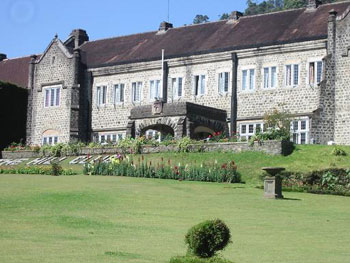 Sheltering from the rain we took a tuk tuk up the hill to the gothic looking Holy Trinity Anglican Church built in 1863. The church has a cemetery full of the graves of British civil servants, soldiers, diplomats, planters, their wives and children. Although cared for this corner of a foreign field felt sad and lonely, marking forever the resting place of those who remained behind long after their families had left for Home.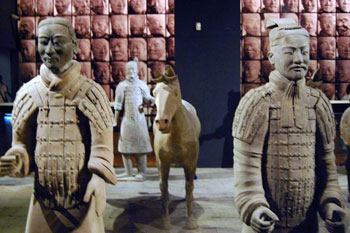
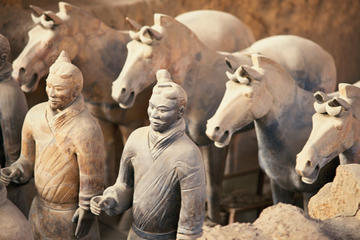
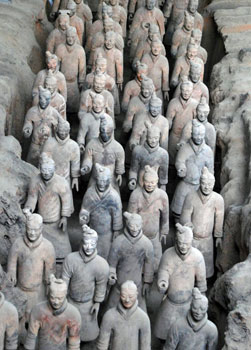 Instead of water, they came face to face with a soldier. Not a miniature soldier, but a life-sized models, in terracotta. And, there were more. The size of the models varied with the status of the soldier being modeled; the officer was always taller than the foot-soldier, and the Generals were tallest of all.

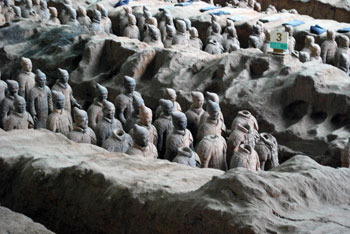
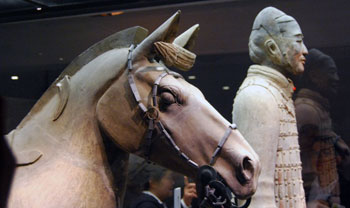 There was much more than the few figures that the farmers found. Here was rank upon rank of model soldiers, each one different; it was believed that actual soldiers had acted as models for each piece. If this was the case, their facial characteristics, and differences in their dress and equipment show from what a large area the soldiers were recruited. There were archers, cavalrymen, charioteers and foot-soldiers. Most of them held real weapons; some of these still exist, but many of these have either decayed over time, or been looted in the past.
 Originally, the figures were brightly painted, but this has faded almost to nothing over the ages. It’s believed there are many more still to be discovered; some estimates put the total figure at over 8000. But any further excavation has been put on hold, for it’s thought that any still to be discovered figures may have retained their original colours, so they’re waiting until such time as a method of fixing those colours can be devised.
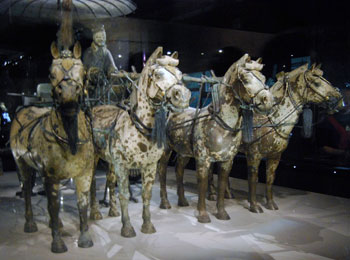 The public aren’t allowed into the pits themselves. That’s a privilege normally reserved only for trained archaeologists and visiting Heads of State. There’s a balcony around each pit, though, from which they can be viewed. But, if you want some close-up images, there’s a gallery within the museum in which some selected figures are displayed in glass cases … most spectacular of which is the bronze chariot, provided to convey the Emperor in the afterlife.