Nara, Japan
by Anne Harrison
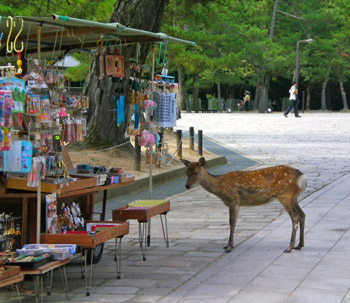
I don’t know how old the lady was. She may have been fifty, but more likely she approached a century. Standing, she barely reached my shoulder. Her stall was filled with food for tourists to buy and feed the deer. Remarkably tame, over one thousand deer (or shika) stroll freely through Nara Park.
Founded in 710, Nara was Japan’s first permanent capital. (Until then, each new emperor established a new capitol.) Known as Heijo-kyo (or Citadel of Peace), Nara rapidly became one of Asia’s most splendid cities, despite being the capitol for only 74 years. It also became a major centre for Buddhism, for the mountain range here divides Heaven and Earth, creating a home the gods. For many, this area of Japan is sacred.
As are the deer, for they are the messengers of the gods.
 One of the delights of staying for a few nights in a place, rather than visiting for a day, is having the time for unexpected discoveries. We passed the night in a youth hostel, and breakfast came courtesy of the vending machine: a variety of different flavored minute noodles. Another machine offered a range of both hot and cold coffees, all served in a can, the temperature indicated by the color. The man on reception even made us some green tea in a gorgeous ceramic pot.
Our walk from the youth hostel led through a largely residential area. Old houses stood amongst immaculate gardens with perfectly manicured trees. Many had stone fences, and many had a statue of a beaver near the front door (for good fortune), often wearing a colorful apron or silly waistcoat. Being summer, gardens were awash with flowers.
We entered Nara Park through the little-used Tegamon Gate, which was literally hidden at the end of the street. It felt as if we had strolled into a local park; despite being the height of tourist season, the grounds seemed empty. Nara Park is some 1300 acres of parkland in the centre of the city; more than enough for hordes of tourists to lose themselves. Within its walls reside some of Nara’s most ancient and sacred buildings.


 Everywhere we walked, the deer were relaxing in the shade, nibbling the grass, or simply wandering at leisure.
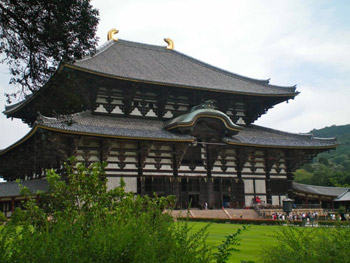
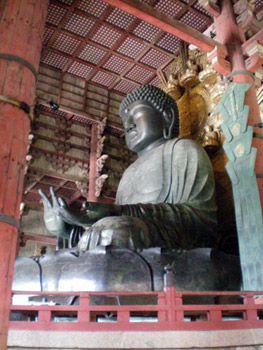
The Todai-ji temple complex comprises the Daibutsuden (or Buddha Hall), sub-temples, halls and pagodas. The great southern gate is 19m high, whereas the temple itself has a striking roofline of up-turned lintels with golden tips. Within the Daibutsuden is the Great Buddha; at 16m, it is reputedly the world’s largest bronze Buddha. Cast in 752 AD, its size is best appreciated when being cleaned, when it is not uncommon to see four or five monks standing in the Buddha’s outstretched hand.
A victim of earthquake, fires and wars, the Buddha’s head dates to 1692. In a wooden pillar behind the Buddha is a small hole; it is said anyone who can squeeze through it will reach Nirvana.
A grand flight of stairs leads from the Sarusawa Pond to the Kofuku-ji Temple and Treasure House. This temple complex was founded in 669, although many of the original 175 buildings no longer remain. The current temple, a five-story pagoda, has been destroyed by fire several times; this building dates to 1462. It is the second tallest pagoda in Japan. The Eastern Golden Hall (or Tokondo) was constructed in 726 by Emperor Shomu (who also constructed the Todai-ji Temple) to speed the recovery of the Emperess Gensho. Along with the Treasure House, it has several priceless images, including a 12th century wooden bodhisattva of wisdom. There are also Buddhist paintings, scrolls, calligraphy and sculptures, many dating from the Nara and Heian periods.
There are numerous temples within the park, but not to be missed is the Kasuga Grand Shrine. This is one of Japan’s most photographed Shinto shrines. Originally built in 710, it was demolished and an identical shrine rebuilt every 20 years, in accordance with Shinto strictures of purity and renewal. The current building is relatively modern, dating to 1863.


 The walkways around the shrine are lined with some 3000 stone and bronze lanterns. These have been donated over the centuries as tokens of thankfulness and faith. During festivals in February and mid August they are lit: a spectacular time to visit. You can also buy a slip of paper (omikuji) with your fortune; if unfavorable, simply tie it to one of the trees to negate its effects. Behind the temple is the Rokuen, a botanical garden preserving Japanese plants, and famous for its wisteria, plus its Homotsuden, a hall displaying costumes, swords and ancient armor.
Visiting Nara Park is walking back into the Japan that once was. As we left the park, the deer were using the subway to cross under the main street. From the roof of a nearby building we looked back over the park itself, with its primeval forest in which the trees have not been felled for hundreds of years. I felt I was not only looking back into time; I gazed over a sea of tranquility so often lost in this modern age.
And there are the deer. We finally succumbed to their doe-eyes, and bought a bag of wafer-biscuits. Suddenly they were no longer shy. They instantly surrounded us, demanding their share, and more than ready to head-butt us in the back should we hold out on them. One had the temerity to approach the food stall; immediately the tiny old lady whipped out a broom and chased it away. The deer may be sacred, but they don’t get a free feed.
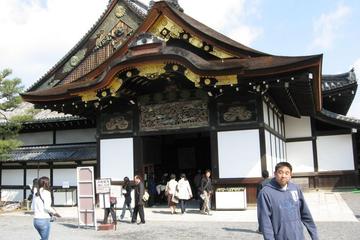
Nara Afternoon Tour of Todaiji Temple, Deer Park and Kasuga Shrine from Kyoto
If You Go:
♦ Reaching Nara: From Kyoto Station, either the JR Nara Line or the Kintetsu Limited Express (both under an hour)
♦ From Osaka Namba Station: Kintetsu Nara line, approx. 45 min
♦ Tourist Information: Offices are at both major train stations in Nara
♦ Japan Tourism
♦ Nara Youth Hostel
♦ Japan Hotels and Ryokan
About the author:
Anne Harrison lives with her husband, two children and numerous pets on the Central Coast, NSW Australia. Her jobs include wife, mother, doctor, farmer and local witch doctor – covering anything from delivering alpacas to treating kids who have fallen head first into the washing machine. Her fiction has been published in Australian literary magazines, and has been placed in regional literary competitions. Her non-fiction has been published in medical and travel journals. Her ambition is to be 80 and happy. Her writings are available at anneharrison.com.au and anneharrison.hubpages.com
All photos are by Anne Harrison:
A deer investigating a food stall
The Todai-ji temple
The size of the Buddha is hard to appreciate
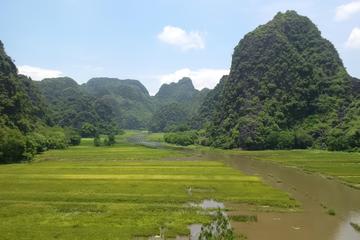
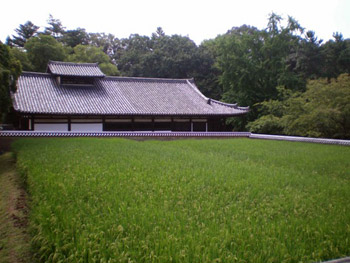
A rice paddy in the temple grounds
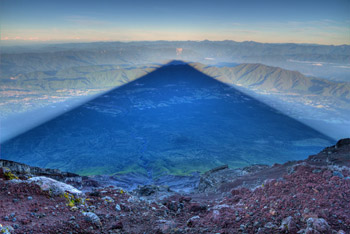

 There are two ways to climb Fuji san. The most popular way is to climb up the mountain to the 7th or 8th station’s inn and sleep until a few hours before sunrise. This even gives you time to rest and even cook a small meal in a space oven. The other way is to climb up the mountain all night and down the next day without stopping. Guess which we opted for?
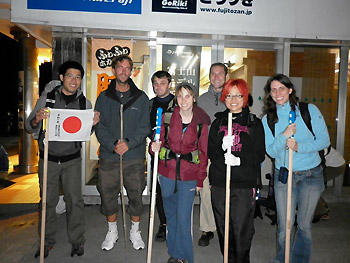 The spirit of Mt. Fuji had some surprises in store for us. The first hint this would not be a pleasant climb came when our leader, Daniel, informed us the weather forecast said “tokidoki ame” or “scattered showers.” Despite this news, our group headed into a large shop in the 5th station, with an air of naïve excitement. I put my valuables in a locker and purchased a souvenir wooden walking stick. Walking sticks can be branded for a few yen at each station. Each stamp is unique.
 Maybe this angered Sengen-Sama. Next thing I knew, I was drenched, despite having raingear, and clinging to black, slippery rocks etched into the mountainside. The wind was strong. I worried one of us would be launched off the path in a strong gust. This was tokki dokki ame?
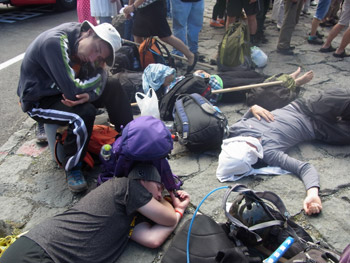 With Mt. Fuji behind us, I rode public transportation back to my home in Mito, Japan. We must have looked strange to the commuters. Everyone in our group was dripping with water, caked in mud and aching from head to toe. Trails of dirt mapped our movements. I continued to rely on the support of our walking sticks while climbing the stairs in the subway. I had suffered from a minor case of altitude sickness on the way down the mountain. Sick and sleep deprived, I was able to sleep sitting, standing up or lying on the floor while waiting for the bus. Despite being dispirited, two of my friends and I agreed to try the climb again next year, when the experience was not as fresh in our minds.
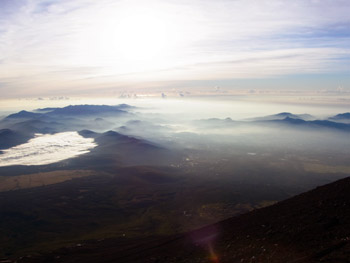 Two years later, I sadly packed my belongings to leave Japan. Japan had been my home for so long, and I had to leave quickly due to rough personal circumstances. I had no idea how to get my Mt. Fuji walking stick on the plane. It was too long for my suitcases. Airport officials would not be amused if I took it through check in. But I did not want to part with it. The stick represented my determination despite the blackest of circumstances and physically grueling of challenges.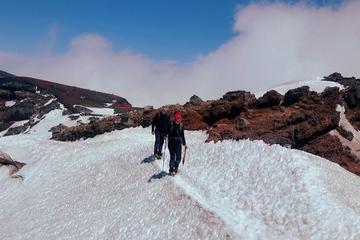
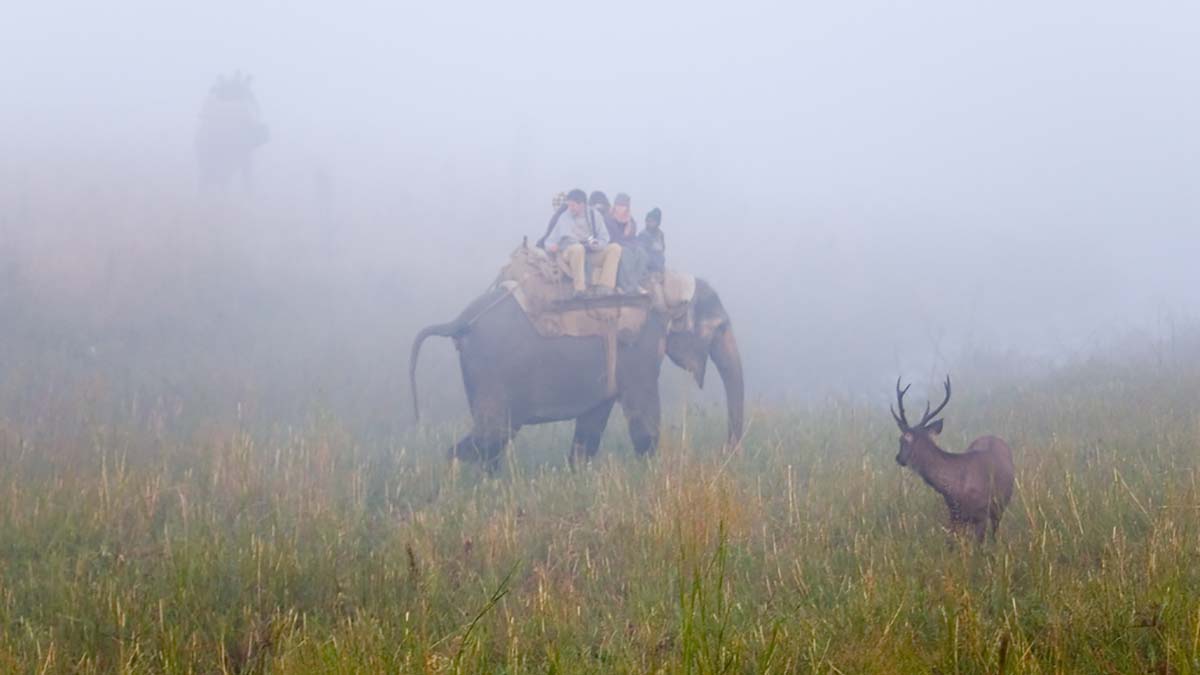
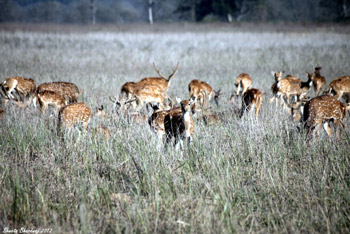 Initially established as Hailey National Park in 1936 to protect the Bengal Tiger, Corbett forest and jungle are home to many different other species of fauna. A heaven for bird enthusiasts. It is also one of the best bird watching area in India. Surrounded with different habitat types: mountains, saal trees, grassland, it has a splendid landscape and a diverse wildlife. In 1956 this national park was renamed after Colonel Jim Corbett, who is considered the ‘missionary of wildlife conservation in India’. This oldest national park in India has following major zones: Bijrani, Dhikala, Durga Devi, Jhirna and Sitabani. This park was the first to come under the Project Tiger initiative in India.
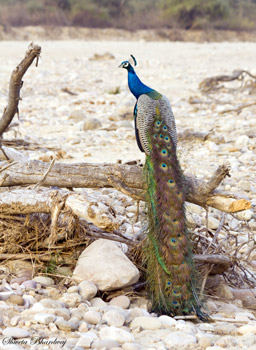 This was the magical influence of my jungle trip where I learned to spot different species of flora and fauna, very rare, yet particular to different zones and seasons. It was one of the highlights of my trip. The experience of observing nature from so close left a mark on me. I became more conscious of natural life around me.

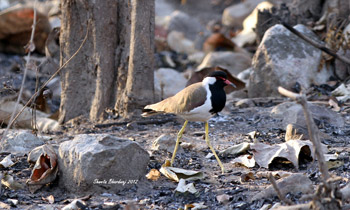 Our naturalist, who led our walk, was an expert and made sure that we returned back to the resort on time before dark. We took a two and a half hour walk in the jungle that day. The elephant herd that I mentioned in the above paragraph was spotted during this walk only. They were unaware of us and were busy grazing in the trees. Watching them from so close was worth taking that walk. The resort that we stayed at was inside the buffer zone and daily past midnight we could hear calls and tiger roars, as if the tiger wanted to remind us that it was nearby. Very diligently, all tourist activities are generally stopped after 6:30 pm as the animals, especially the flesh eating animals become active after dark. The retreat’s fences were also solar electric so that tigers or any other wild animal do not venture inside the resort or other human habitation nearby. Spotting huge tiger pug marks (sometimes male and sometime female) early in the morning was our favourite daily activity during our stay there and was proof enough that this beautiful beast did come near during the night.

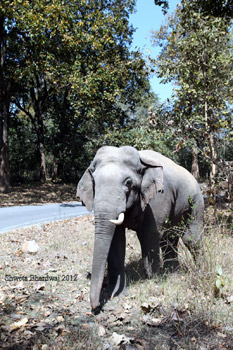 We spotted lots of deer, sambhars, elephants in herds at both Durgadevi and Dhikala but the highlight of this day was something else that we encountered at the highway. A one toothed mast Tuskar on the road very near to Dhikala zone. Taking picture of this huge mast elephant while it charged at the vehicles (including ours) was one wildlife experience that I won’t forget. I actually got terrified as it came very near to our jeep while charging. With a heartbeat pacing at the speed of a bullet train, I started shouting loud, not knowing what would happen next. The driver was prudent enough to move the jeep away on time. Otherwise the person sitting at the back (for that matter our entire jeep) would have surely been subjected to elephant’s anger.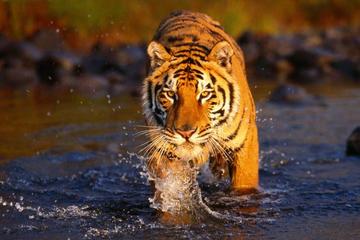
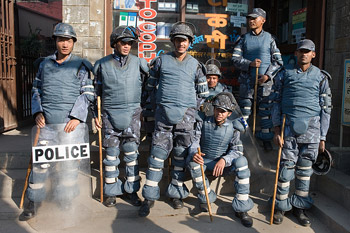 As I walked through the streets of the ancient city a resting group of riot policemen posed for a candid picture. This was a time when civil war was on the mountain kingdom’s doorstep. Every day rioting took place in the capital of Kathmandu. It looked as though the country was about to self-destruct.
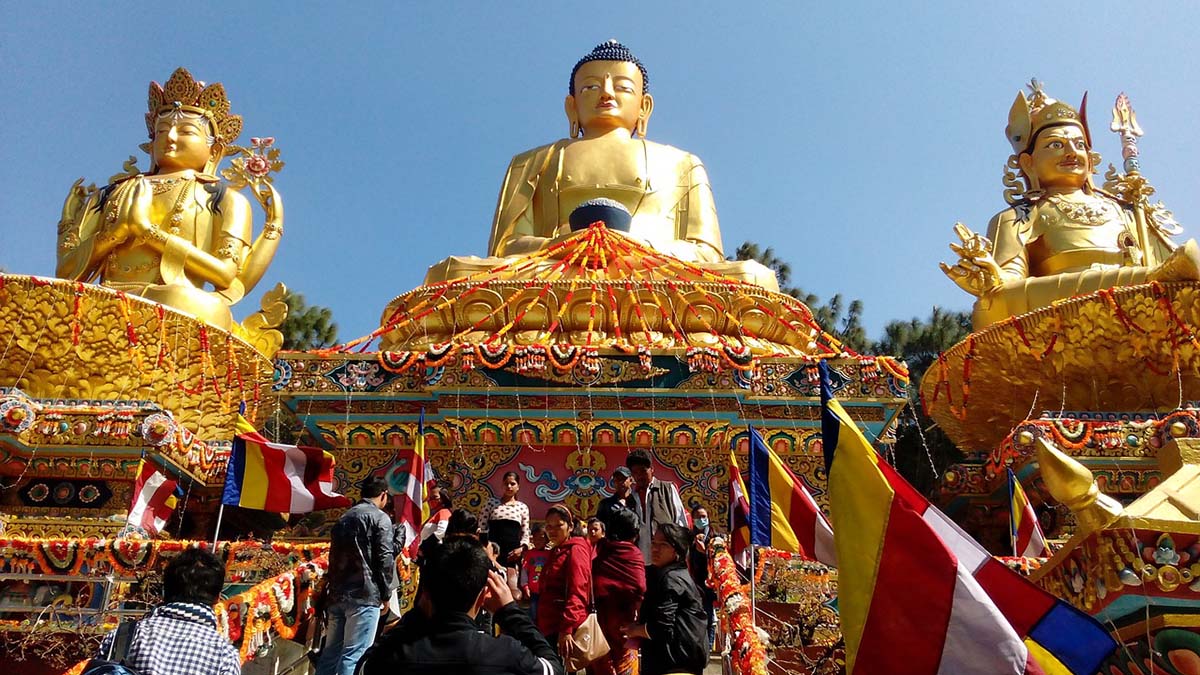
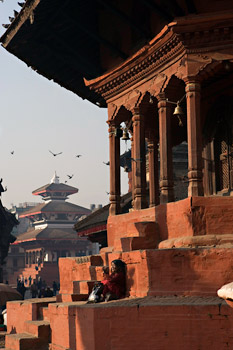 I think a lot about those sites now. My hotel was close to Durbar Square in Katmandu – being only a brisk 10 minute walk in the cold December morning air. The first morning I arrived just as the hawkers were setting out their antiques and replicas for sale on large tarps in the outskirts of the square. Many invited me to bring them good luck by being their first sale of the day. As I walked around the square it was like stepping back hundreds of years. Beautiful temples washed in a deep red pigment paint and tile roofs in deep burnt umbra color above gave it a true organic feel. The early morning air was impregnated with the rich smells of temple incense and fresh cut flowers as the first orange colored beams of sunlight took the chill away. Ladies, dressed in traditional colorful mountain village clothes, sat on large plastic mats selling strings of brightly colored marigolds formed into necklaces and headbands.
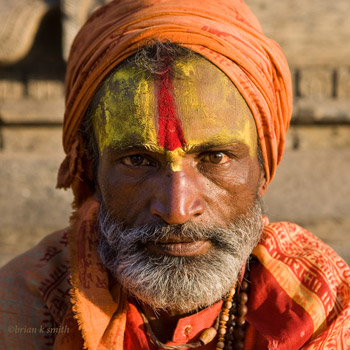 In the afternoon we traveled to the Hindu temple of Pashupatinath. As we came around a corner onto a stone carved staircase and ashram there he sat. I can never forget that moment – the thousand mile stare of the Sadu as he looked through me as if I wasn’t there. With his legs crossed in a yoga pose, he was looking over the ceremonies on the other side of the river. Here the recently departed were being bathed in the holy water from the Bagmati River, dressed in colorful silk and placed on carefully stacked wood funeral pyres for their cremation. The holy man did not blink, move, or change any expression. It all seemed surreal me – like I was in a dream. Here I was in the holiest of Hindu temples in Kathmandu, Nepal. A week earlier on my flight to India I had not even planned to visit Nepal as part of my tour. It was close enough to my destination of Varanasi, in eastern India, that the tour company had recommended it as a side excursion during my month long road trip.
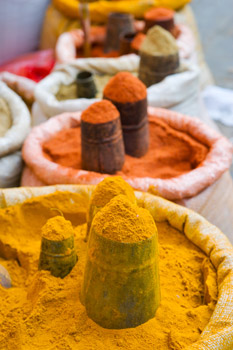 Along the streets of the old city, mixed with temples, were the fruit and vegetable sellers. Everything looked freshly picked even though the temperatures dipped below freezing at night time. Spices were overflowing out of huge containers – cumin, turmeric, and curries. The air had the smell of fragrant local food from the small portable stalls that sold all kinds of savory items. It was a feeling of being alive in those streets – excitement, anticipation, exotic smells and tastes.
 I had never been to a wedding in Nepal, and it seemed obvious they were happy to have us. After all I was the only white person there – so maybe it was a sign of good fortune for them as I was not an invited guest. Part of our plan had been to have dinner at the night market, so we were very hungry. In the main area under a tented roof was seating for 1000 or more. At the front was a huge buffet with a wonderful assortment of food. We helped ourselves to a sampling of many items on the 30 foot long table. Part way through eating our dinner, a line formed beside us – it was the families of the bride and groom getting in line for dinner. We realized that we had really crashed the wedding in style! The family members smiled and greeted us as they moved past. Now Ali was really desperate to leave. I suggested after dessert would be a perfect time to head back to the hotel. On our way out I thanked the bride and groom and took pictures with them. They seemed to be very happy with our chance meeting.
 by Anne Harrison

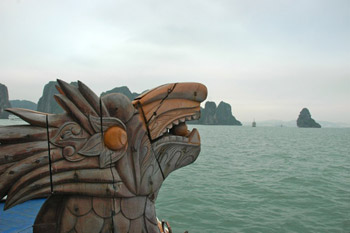
 Yet to discover the true town, I had to be brave and run the gauntlet. Passing through the chaos I wondered if this was where the belly of the dragon had scalded the land. It certainly seems so. Or perhaps his fiery breath so scorched the earth nothing of beauty could grow.
 Further up the hill, some half hour from the port, a tiny laneway opened onto the local market, which had been somehow hidden from view despite its size. Once inside it felt totally chaotic, but with a mood completely opposite to the turmoil down by the water. With the stalls run largely by women (for the men are down by the port, scamming tourists), the place is roughly divided into sections: clothes, hardware, household items, fresh fruit and vegetables, then a wet market which stretches forever. The range of seafood is incredible – and largely unrecognizable.

 Nourished and refreshed, we headed back to the water. After all, this is why people come to Halong Bay. The afternoon began in a whirl of noise exploring the islands on a boat about the size of the African Queen, and about as sea-worthy. A trip amongst the islands is a rather crowded affair, but by now I had adapted to the chaos. Standing on the bow, I enjoyed the spectacle as our boat assumed ramming speed to gain prime position at any mooring. With all the boats covered with old tires, the moorings resound to the thuds of collisions, and the creak of wood as the boats jostled among themselves.
 The first stop was Thien Cung Grotto – or Palace of Heaven. After climbing some 100 steps, a crowd of us went along a dark tunnel to the cave proper. Some hold this is the actual cave where the dragon sought refuge. It was simply huge. Neon lights of all colors highlighted the various formations: a dragon with a small man riding his back, elsewhere a pair of angel wings. Small rivulets ran down the stones and into vast chasms of nothingness. A dragon could easily live here – as could dwarves or a horde of orcs. There was a perfect cave for Gollum.
 I sat in the bow of our boat as it potted among the islands. Each one, it seems, has a name such as Island of The Two Hens or Tea Pot Island. Many caves open straight onto the water as the islands rise straight form the sea to tower over everything, their tops covered with lush vegetation. The Surprise Cave was not discovered until 1901, and was used by the Viet Cong as a hide-out. At Ba Hung Cave, featured in the movie Indochine, a small grotto opens onto a lagoon inside the island, surrounded by walls of steep jungle.