Uzbekistan
by Neil Middleton
A part of the world’s collective fantasy, Samarkand has always glittered somewhere in the far distance. The magical Silk Road city all the world came to, yet distant enough to have something of the mythical about it. Despite modern transport the city still entices with the allure of the great city in the middle of nowhere. Now, Samarkand and its history sit at the heart of attempts to forge an identity for the young nation of Uzbekistan.
The first thing I noticed, what can’t be missed really, in Samarkand is the collection of massive mosques and madrasas which form the skyline. A series of tall minarets, blue domes and towering arches rise up to create a skyline out of an otherwise one story city. This is the legacy of Timur (1336-1405), a medieval conqueror who traversed much of the world during a long and violent life. After leaving a trail of destruction through Afghanistan, India, Iran and Turkey, the conqueror always returned to Samarkand, dragging the best artists and architects the world had to offer with him. The result is an array of buildings whose staggering proportions made Samarkand the wonder of Central Asia. More than two decades after independence from the Soviet Union, Uzbekistan seeks to resurrect Timur as a symbol of nation identity. Whatever the rights and wrongs of hero worshiping a man said to have built pyramids out of the skulls of dead enemies, the presence of the fourteenth century conqueror is everywhere.
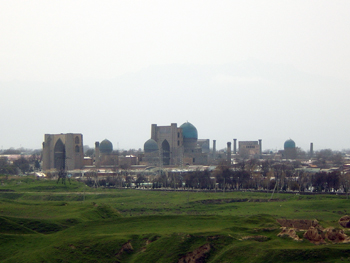
The largest of the complexes is the mammoth Bibi-Khanym Mosque. A huge entrance arching up to a height of 35m stands before a courtyard with a domed prayer hall at the far end. The style of architecture created for Timur and his successors, Timurid, is all about size. Not content with simply large buildings, Timur wanted huge edifices to display his might and power. Whilst the architecture may be heavy, the decoration is intricate as patterns of blue and turquoise tiles increase in complexity as you get closer. Paid for by ransacking the Indian city of Delhi, the towering entrance still serves its main purpose as I felt very small indeed walking below the arch.
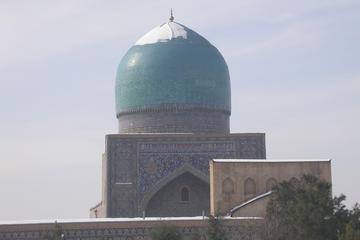
 Amazingly one of the largest mosques in Central Asia was built in just five years as Timur rushed in architects to finish the job. This lack of patience, as well as humility, fatally undermined the building and as large cracks appeared in the masonry it fell into disuse before an earthquake in 1897 leveled a significant section. The mosque is still in this semi-ruined state. The main prayer hall sits beneath a light blue dome which crouching behind another large tiled entrance façade. The sky blue dome is now crowned by a growth of moss and along the outside walls parts of the tiled covering have crumbled away littering the ground with dark and light blue fragments.
Impressive as the Bibi-Khanym is, to get a sense of the megalomania which drove Timur I had to head out of Samarkand to the town of Shakhrisyabz. Across a low misty range of mountains 80kms from Samarkand, was the site of one of Timur’s greatest buildings, the Ak-Sarai (White Palace). Approaching the ruins, it wasn’t so much the size of the building which struck me but the evident connection people felt to Timur. In the middle of a small park around the foot of the ruins the warlord stands atop a red marble plinth. The larger than life statue is, oddly, the favoured back drop for wedding photos. I counted at least six brides and grooms lining up and giving rather controlled smilies to the busy photographers. It took some effort to weave my way through the press of suited and dressed up happy families toward the palace.
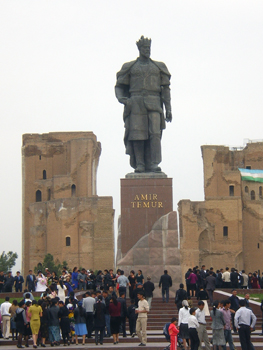 Only a small part of the Ak-Sarai is left but it’s enough to demonstrate the scale of the palace. Two towers of brick would have been connected into a giant arch but are now separated. Standing at 65m the towers dwarf anything in Samarkand. Whilst now two huge piles of brick, at the time the towers would have been awash with the ubiquitous blues and turquoise of Timur’s other constructions. Some traces of this beauty are found on the walls lining the gulf between these two towers. Hesitantly I climbed the interior stairs to reach the flat open air top. At first there was little I could do but stand in the middle of the platform gazing at the flat green country around. When I nervously approached the edge and took a quick look over a low wobbly fence to the distant ground below a sudden bout of dizziness quickly made me step back.
Back beneath another of Samarkand’s light blue domes rest the mortal remains of Timur. The Gur Emir mausoleum sits a short distance from the city centre. Though unmistakably in the same style as the Bibi-Khanym and Ak-Sarai, the mausoleum is shorter in stature and displays a more delicate touch of decoration. There is still a large entrance portal flanked by minarets and a central dome but it has been scaled down to something approaching human scale. The dome is ribbed rather than smooth. Its light blue tiles are studded with diamond patterns making it one of the city’s gems.
Under the dome the interior space is bright and colourful. Every inch of the walls and ceiling are painted. Against a dark blue backdrop golden Arabic inscriptions reflect the light dangling from the roof. A collection of long narrow tomb slabs are gathered around a dark bloc of Jade in the centre. Perhaps the world’s biggest single piece of Jade, the black stone marks the tomb of Timur. From the side it’s possible to see a number of huge cracks in the single bloc said to have been made by invading soldiers long after Timur’s death. The other stones around are those of the conqueror’s family and successors. Legend was that should anyone disturb Timur’s tomb a much worse evil will swiftly follow. Disregarding such stories Soviet archaeologists opened the tomb in June 1941. The next day Hitler invaded the Soviet Union.
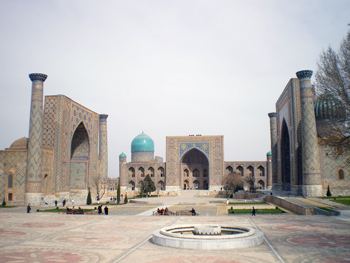
 The most famous set of buildings in Samarkand are the three madrasas standing together on Registan Square. Once again I was staring up at large brick structures over laid with an array of blue tiles. Here though it is the decoration rather than the size which was meant to leave an impression. The three buildings form a square with one side left open, perhaps meant to be filled by a line of astonished onlookers. The area between, the ‘Sandy Place’ (Registan), was the main public square of Samarkand. The three madrasas seem to lean in and shrink the already small square.
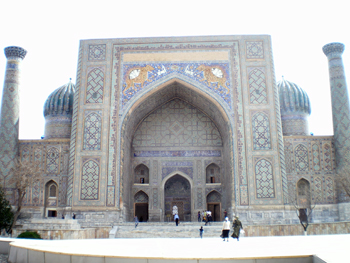
Standing in the middle of the square it is difficult to know which way to look first as each of the buildings are covered with a mass of intricate details. To the right the Sher-Dor madraseh is a vision of perfect symmetry from the 17th century. Drawing an imaginary line down from the apex of the entrance arch, each side mirrors the other exactly. Two tigers, a break with the Islamic prohibition on depicting living things, walk toward each other along the top of the arch. Each side of the mirror like structure has a small ribbed dome and minaret. Past the façade a small courtyard is surrounded by two storeys of dormitory cells for the students who once studied here.
 Opposite, the 15th century Ulugh Beg Madrasa presents lighter colours, with yellows and purples adding to the traditional blue and turquoise. On the third side of the square sits the madrasa of Tilya Kan with a light blue dome poking up on the left side. Each of the buildings would be a major landmark on their own were they to be separated. Together they form an utterly unique space. Yet as I crisscrossed the square from one building to another there was the sad feeling that the space is a little too well restored. The cleaned and polished buildings, missing not a single inch of tile despite being several hundred years old, bear the hallmarks of a professional but perhaps overly zealous restoration.
Much of historic Samarkand feels the same. The shopping street leading away from Registan Square is not the teeming chaotic market of the Silk Road but a swept street lined with souvenir shops. The monuments form little historic islands around which flow a network of cleaned, empty Soviet era avenues. These wide avenues, found across the former Soviet world, create large voids between spaces and people and make the place seem empty. This effect is amplified in Samarkand by the huge Timurid monuments which dwarf the few people walking below.
The flows of world trade may have shifted away from Samarkand and left the bustling Silk Road city amidst a post-Soviet grey zone but as the sun shines and reflects off the pale blue domes there is still a hint of the city’s magic and glory.
Overnight Tour of Samarkand and Shakhrisabz
If You Go:
♦ UNESCO World Heritage Sites: Samarkand, Crossroad of Cultures
♦ Travel Guide: Samarkand, Uzbekistan
Persian Gardens of Samarkand on Silk Road Small Group Tour
About the author:
Neil Middleton is an archaeologist with a degree in Ancient History and Archaeology from the University of Manchester. As well as working on excavations in Greece, Cyprus and England he has travelled around historic sites in the Middle East and Central Asia and is now living in Athens, Greece.
All photos by Neil Middleton.
 Despite the hours, a co-teacher and I decided to spend one of our short weekends out of town, and made a bee-line from our Seoul address to the town of Samcheok on the eastern coastline.

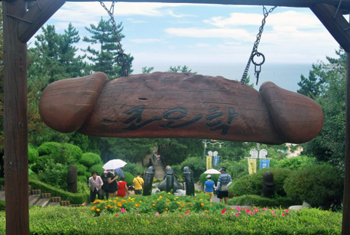
 Outside of notorious areas in South East Asia, I had normally found traveling through Asia to be (at least on the surface) a sexually tame area. Tradition and protocol seem to dictate that people keep modesty and save face. So it was a bit of a shock to come across such blatant eroticism in South Korea and of course begs the question as to why these penises exist in the first place.
 We spent the day wandering among these outlandish statues, laughing and taking ridiculous photos. The dark colors of the penises blended beautifully with deep azure of the Pacific Ocean. After the park we walked along the beach and along with dozens of other families we frolicked in the shallow water, some cold beers in our hands. As the sun slowly set and we made our way back to the bus stand, our brief voyage into the world of South Korean dicks came to end. I pondered in my head how a park such as this would be received back in parts of the United States, and I realized that maybe South Korea wasn’t so prudish after all.
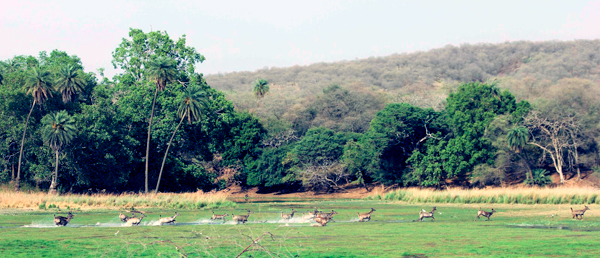
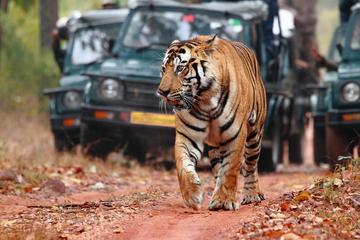
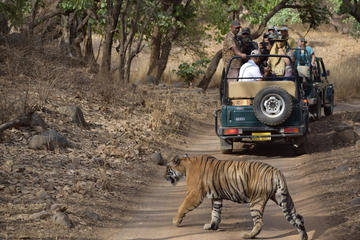
 What a majestic creature! That hunts with Precision, Planning and Speed. We were very fortunate to see this majestic creature hunting in Zone- 3. Being there and observing the hunt from a distance, we could sense the fear that the prey (deer & sambars) felt while running for life in the lake. This bolt happened after one member from the herd made the call and informed others of the danger.

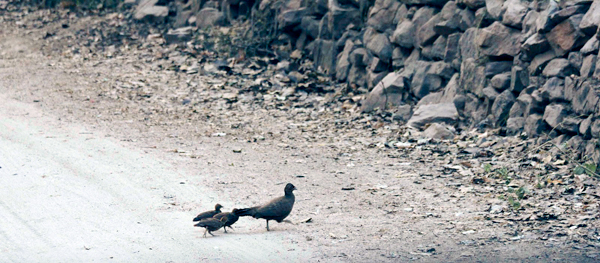
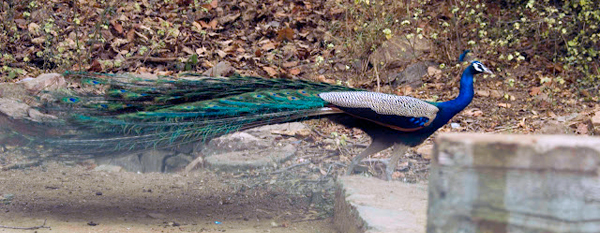
 Some of the animals and birds showed curiosity towards the tourists entering their territory and some behaved as if they have been eagerly waiting for you to click their pictures, especially the Langoors. An interesting thing to note about them was that all of them were so used to humans visiting their habitat that they were least bothered and continued doing what they were busy with.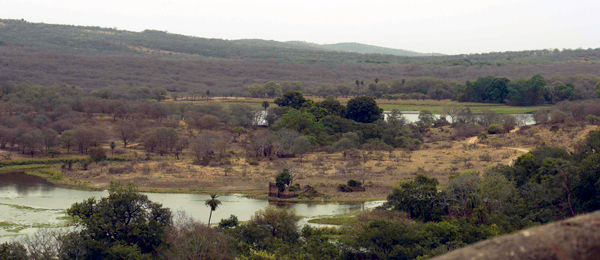
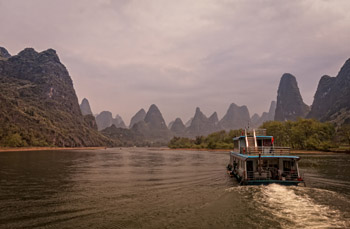
 After a 75-minute flight from Shenzhen, we arrive in Guilin, Guanxi Autonomous Region, taxi to our hotel and arrange our river trip through the hotel concierge. Luggage deposited, and ready for lunch, Snow suggests we b-line for one of many street shacks to enjoy some of Guilin’s famous rice noodles or mifen (mee-fnn). We dollop the noodles with our choices of self-serve condiments: soybeans, scallions, fried peanuts and pickled white radish in chili sauce. This bargain-priced specialty’s spicy, seasoned broth simmered for hours, makes it.
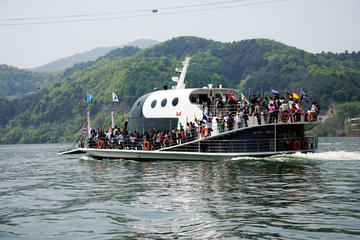
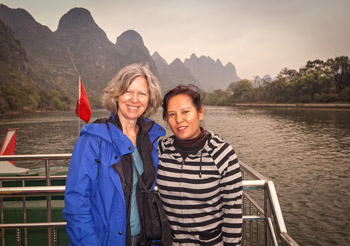
 We depart early for our four-hour river journey from Guilin to Yangshuo. Tourist vans and buses fill the adjacent parking lot. Hundreds line up for tickets. A fleet of boats nestled in the harbour braces for the throngs. Chinese tourists, as well as those from other countries, flock here. Once aboard, we navigate towards the front of the two-level boat where others gather, cameras clicking.
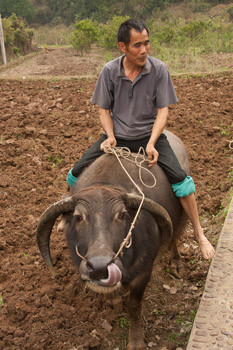 The magical passage ends in Yangshuo where rows of open-air market stalls greet us: souvenir scroll paintings, bamboo items, ethnic minority handicrafts and vibrant pashminas.Yangshuo’s famous Xi Jie (West Street) oozes with shops for tourists to leave a few Yuan. Prices are flexible.

 The next day Zhao will take us to Xingping. His uncle has a raft there. We need to see the karst terrain up close and more personal before we leave.
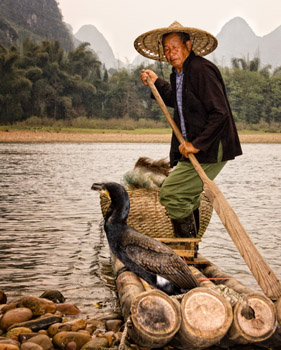
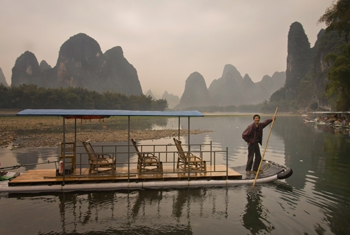 We board the Xingping minibus at Yangshuo’s bus terminal. A regional centre in 265 AD, Xingping was replaced by Yangshuo around 590 AD. We stride past architecture reflecting history – flying eaves and black tiles on sloping roofs dating back to the Qing and Ming dynasty. Goal-focused Zhao hurries us through narrow, uneven streets, heading for the pipe-raft docks along the Li River.
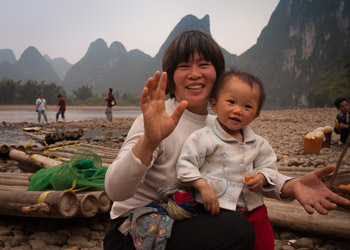 After a tasty snack of dried fish, we motor back to Xingping. We pass the karst scene on the back of Chinese 20 Yuan note, a panoramic arrangement of taller karsts on either side of lower, background ones. We say farewell to Zhao’s uncle and race to catch the last minibus of the day returning to Yangshuo, again trying to keep up with Zhao.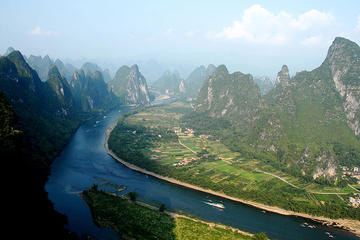
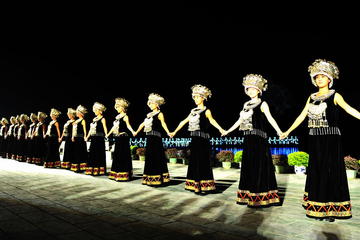
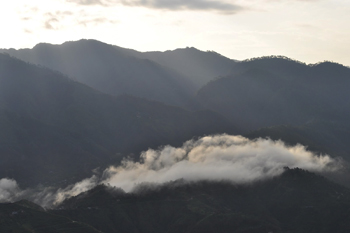
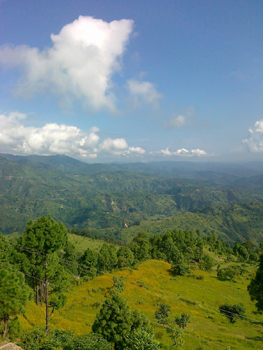 Still untouched by the modern tourism industry, this place was originally a popular hill station for Britishers (during pre-independence). Situated at an altitude of 1,706 metres (5,686 feet) enroute Kotdwar-Pauri road, it was founded and named after then Viceroy of India, Lord Lansdowne in 1887. Only 250 km from Delhi, this place is surrounded by tall, thick oak and blue pine forests. Lansdowne is not yet stained by tourists. Its tranquil and pristine beauty unlike other hill stations (like Shimla, Moussouri etc) is still intact. If you ask me, I would say it is an ideal place to ‘Do nothing’, just relax and spend time with your family or loved one. There are very few resorts n hotels which are situated a few kilometres prior to the hill station, all promising a mystique view of the valley. The one that we stayed at had a 180 degree view of the valley in front.
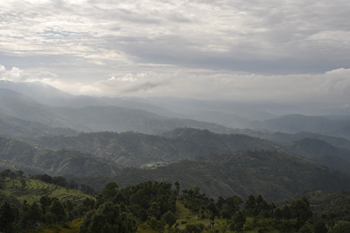 The sunrise and sunset are mesmerising here. Being born and brought up in city life, I never realized how beautiful and impactful these acts of nature could be. For me, it was this sheer magic of Nature that I thoroughly enjoyed watching. I used to get up around four in the morning daily so that I didn’t miss the sunrise. To me this was the time when one could see all the possible shades of LIFE present on earth. Valley view is awe-inspiring, especially this time of the day. The sound of wind blowing swiftly, pine trees moving to the rhythm of wind, the colourful flower beds; all this makes it so peaceful that one feels a sense of calm and tranquillity here. Truly, a get- away from the hustle- bustle of fast moving city life. Just to stress on the peaceful time-mobile phones and internet don’t work here.
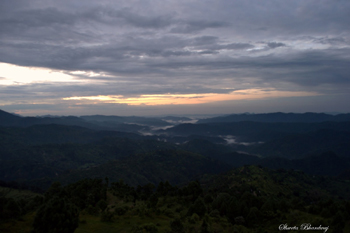 If you are a nature loving person who enjoys a trek to an unknown village down the hill, who likes the feel of being surrounded by huge mountain trees like-oak and pine, love waterfalls, zigzag mountain roads, then, this is the place for you. The magnificently changing colours in the sky during the sunrise each day that I witnessed, is still embedded in my memory. Sunrise every day seemed a different mix of colours, formation of clouds, surrounded by vibrant flower beds and mountains all around. And to describe about the view after the sunset- small individual houses scattered at a distance in the mountains and flower beds would change to ‘twinkling stars’ in darkness (lights of the houses in the valley as seen from far away gives this impression)
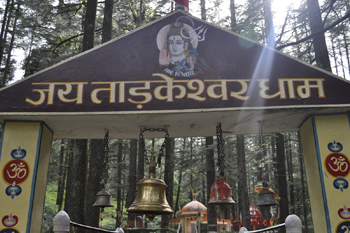 For those who are interested in sightseeing here, temples, churches, museum and a lake can easily be covered in a day. The famous Garhwal Rifles of the Indian Army has its command office here. The War Memorial at the Parade Ground of the Garhwal Rifles Center is another attraction for the visitors. Other places of interest around the city are ‘Tip-n-Top’ (one could see the mountain view of the western Himalayas from here), Santoshi Mata Temple, Bhulla Taal (a man-made lake), St. Mary’s Church, Tarkeshwar Mahadev Temple. The temple is 36 km from Lansdowne and is at a height of 1,800 m, this place is known for its temple dedicated to Lord Shiva. Surrounded by thick forests of deodar and pine, it is another aw-inspiring place because of the beauty of nature, it is believed to be one of the Siddha Pithas (ancient holy sites for Hindus). The temple place is surrounded by thick blue pine forests, oak trees and dense Deodars. The spectacular feature of this place is that even at this high altitude, there are many water pools, flowing continuously. My fascination here, were the bells surrounding the temple vicinity, both big and small. This gave a special identity to the temple.