Burma (Myanmar)
by Brian K. Smith
Having seen photos of this beautiful country for many years, it was impossible to resist any longer – I had to go to Burma. Many of my photographer friends spoke of this troubled country as a goldmine of spectacular images just waiting to be captured. I have to admit that in late 2007 I was nervous about travel there, as just getting a tourist visa to Myanmar was incredibly involved. Many guide books gave recommendations of how to help the local people by doing tours privately – not pre-booking. This avoided the situation of half the money for a tour ending up in corrupt government hands. Heeding their advice, I arrived in Yangon and privately negotiated a twenty day tour in a Volkswagen van with a driver that spoke very little English. I needed local Burmese money (Kyat) to pay for the driver, hotels, and food. As there were no public banks in Burma, illegal money exchanges took place in back alley basements in Yangon and every other city I traveled to.
 To help my travels go smoothly, I invited my hotel assistant manager as a guide for fourteen of those days. She met up with us in Kalaw, an old outpost from the days of being a British colony. With an overnight hike to stay with a traditional mountain village family, and visit to the Pindaya Caves, where there are thousands of Buddha’s, our three day stay in Kalaw was very busy. Departing from the small town, it was less than a one day drive to Inle Lake, at a very relaxed pace. We had lots of time to stop and take in the beautiful breath taking scenery.
When we arrived at the main town of Nyuang Shwe, on the north end of the lake, we found a wonderful hotel and did some exploring on the first afternoon. Cascades of beautiful flowers covered the plaster and brick walls of the town and a cool fresh breeze from the lake flowed gently down the streets and alley ways. There are a total of five villages around the lake with a population of 70,000. Most of the people are Intha, with the remaining a mix of seven other ethnic groups, including the Karen People. Each village holds a market rotating through every five days.
The next day we headed out for a full day tour of the lake. In late December, the early morning air was cold to our exposed faces, as our boat raced up the channel towards the open water. Mounted in the back of our long cigar shaped boat was what looked like a V6 Chevy engine, with a long five meter shaft and a twelve inch propeller on the end. Although incredibly noisy – it seemed like the most common way for all transportation on the lake.
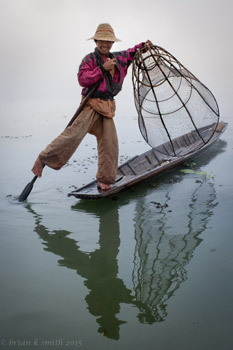
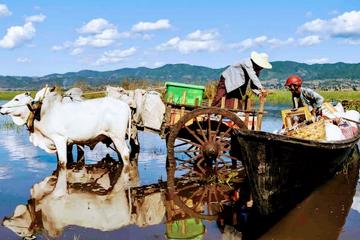
 Fog obscured the sunlight, making it hard to understand where the boundaries of the dead calm lake met the surrounding shoreline. Our first stop along the way was to observe the local fisherman. The men stand at the back of their shallow skiffs and use one leg and foot to paddle the boat while balancing on the other. Setting their unique horn style fluted woven nets – they wait patiently for lake carp to fill them. It was fascinating to watch them – so incredibly agile. As we headed further down the lake, the grey wall of fog started to glow a beautiful golden color. The sun had risen above the mountains and was spreading its warmth across the lake. By late morning we had arrived at the far end of the lake where the market was being held in Palaung Village. Boats, similar to ours, lined the shore and spread out ten deep into the channel. To get to the shore we had to jump from one teetering boat to another, with the feeling at any moment they would capsize and throw us into the murky water.


 The market was a combination of local food and crafts. We stayed for lunch, eating a local gourmet treat from the lake. The popular fish dish, htamin gyin, is incredibly tasty. After finishing the first plate all too soon, I had to order another helping. With our appetites satisfied, we located our captain in the quagmire of boats and headed off towards the west side of the lake. We were searching for the high-light of the day long trip.
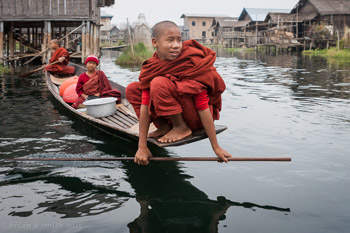
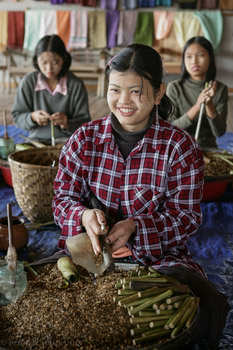
On the way we visited many small stilted villages, including Nampan. Access to traditional slat wood single room homes is only by boat. The lake can change in depth from four meters in the rainy season, to two meters in the dry season, making it necessary for construction on stilts. During our visit we saw production of crafts from weaving and jewelry to a small cheroot factory. I do not smoke any substance, but it was fascinating to watch the young girls make one after another of the perfectly shaped cigars.
Long Neck Women
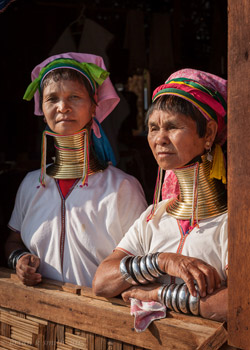 Mid-afternoon we approached a waterway full of small huts. Our captain pulled over to one of the stilted huts, suspended above the water and my guide indicated we had arrived. A little stunned from the intense mid-afternoon sun – I was not sure where we had arrived, until I lifted my head and saw the ladies above us. Looking out of a bamboo framed window, two Long Neck women waved at me. Not believing my eyes, I wondered for a brief moment if this was a dream? This was why I had traveled half way around the world! The women were friendly and proud of their brass rings that appeared to elongate their necks high above their shoulders. They were selling crafts and doing traditional weaving inside the hut. Full of smiles and agreeing to pose for photographs, it was the best outcome I could have hoped for.
The Long Neck Karen People of Inle Lake belong to the Padaung, Kayah. They are a sub group of the Karen. Brass neck rings are thought to be a sign of wealth and beauty. The weight of the rings actually pushes the collar bone down giving the appearance of a long neck. Years of wearing this adornment does weaken the neck muscles and eventually makes it a necessary 24 hour a day commitment for life.
There are very few opportunities to see these people in Burma as the military government has closed the area that these people live in due to conflicts between the ethnic minority and government forces. There are many different stories as to why these conflicts exist – as an international traveler I prefer to keep myself out of political conflicts and away from opinions. An opportunity to see these people is also possible in Thailand, but most tour companies stay away, as these are captive displaced people, who live in refugee camps.
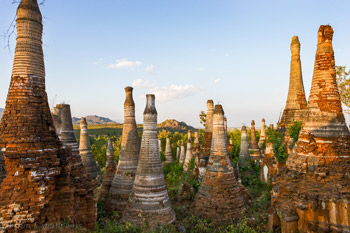 After our visit we had just enough time to visit an ancient site of stupas, dating back to 13th and 14th centuries, on the west side of the lake near Inndain Kone Village. The sun was setting as we reached the top of the hill to see the crumbling stupas bathed in warm evening light. This had been a day with as many rewards as I had hoped for in a whole trip. The air rapidly cooled, as we sat huddled in our boat, racing back in the dwindling twilight, towards the town where we had started from early that morning. As we headed up the canal in almost complete darkness the motor on our boat sputtered. Our speed dropped immediately and the captain steered towards the thick reed lined shore. We had run out of gas. Boats raced past us at full speed up the channel. I was relieved we were not a sitting duck out in the middle in the inky darkness. After 20 minutes the captain successfully signal to a passing boat for help. Throwing a rope to our rescuers, we were towed back home. Exhausted, but at the same time elated, I treated everyone to a beer at the local bar to celebrate a wonderful day of success!
Private Inle Lake Excursion to Kakku Full Day
If You Go:
♦ Major carriers with departures from North America can supply one-stop flights to Yangon, the capital of Myanmar (Burma) – including Air China, China Eastern, Cathay Pacific, Dragonair, Air Canada, and many other airlines.
♦ In country arrangements can be made through many listed companies on the internet.
♦ For more information on private travel, contact Adventurocity.com or Brian K. Smith at 604-837-7576.
Inle Lake Nature Trek and Local Community Immersion 3 Days
About the author:
Brian Smith has traveled to more than 41 countries around the world. His favorite destination in the last 7 years has been Asia with 7 trips to China, including Tibet. He is a seasoned adventurer and is co founder of Adventurocity with his business partner Rick Green. Their motto is ” Why take a trip when you can have an adventure”. www.adventurocity.com Brian is a career professional photographer, with a Masters of Photographic Arts (PPOC).www.brianksmithphotography.com – Twitter: @fotocraze
All photos are by Brian K. Smith:
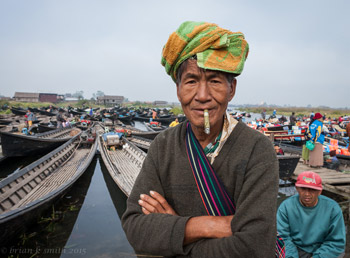
Captain of our boat at Palaung market
Fisherman on the lake at daybreak
Traveling through Nampan – a west side village on stilts
Making cigars
Padaung, Kayah – Long Neck Karen women
Ancient 13th and 14th century Stupa ruins
 by Lawrence Hamilton
 Leaving Australia and returning to China meant being away from the allures of Chimay Blue and the latest in Pacific Northwest IPA’s, I guessed that being force fed the Chinese equivalent of Budweiser for 2 1/2 months would at least force me into some sort of limited sobriety. The only thing worse than being sober, is being drunk on Chinese alcohol, or so I thought.
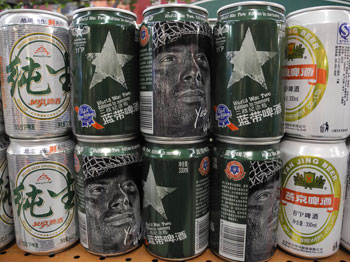 A small shopping centre near the ‘ghost city’ of Zhengdong introduced me to the family of Big Bear beers. Ranging from 4.7% to 12%, these beers could keep Siberia chugging through an Artic winter. I drank a can on the train back to my Kaifeng. The flavour was dark and intense. It would be best described has having the malty backbone of a brown bear and the hoppy skeletal system of a field mouse.
 Once the trapdoor of Chinese beer is opened, turning back becomes impossible.
 by Brian K. Smith
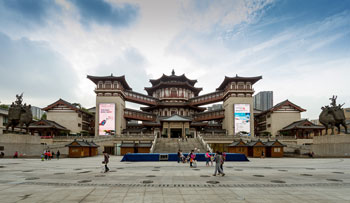
 In modern times part of that history still lives on Xi’an. Over the last decade the ancient city wall has been restored back to its splendor of over 600 years ago. Within the city walls lives a large population of Muslim descendants of the Silk Road days of trade. Along with their unique customs also comes their unique food.
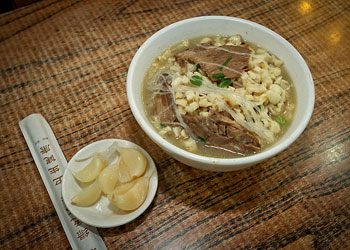 There is something about comfort food that is immediately recognizable – and this dish hit the spot. Made from pita bread, sweet potato noodles, mutton, and broth – rich with flavour and creamy in texture, it instantly makes you feel cozy and warm. Add some pickled garlic and pepper to your taste. The dish goes back to the days of the West Market at the terminus of the Silk Road. Hungry and exhausted traders arriving after months of travel could enjoy this dish in celebration of a long journey’s completion. Today a short bus ride from anywhere within the city walls will deliver you to this treat of the past. Add a local beer as your companion to this dish to complete the experience.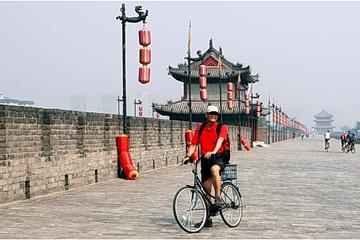


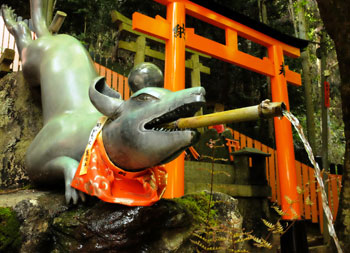
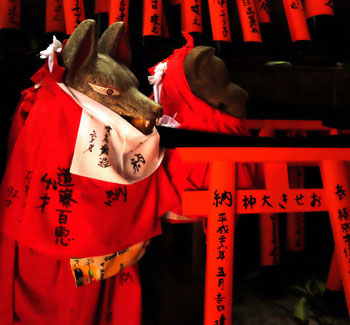
 Fushimi Inari is a shine dedicated to Inari, the god of rice and his messenger the kitsune or fox. Fox demons are good omens in Japan, charged with warding off evil. These ethereal foxes can have multiple tails. More tails mean an older fox of greater power. Along with being messengers for Inari, who is often depicted as a large white fox, fox demons are tricksters. According to legend, foxes take humans forms for deceitful purposes. The cruel, proud and greedy were all targets. Often these crafty spirits became beautiful women. They would win the hearts of men and lure them from their families. Foxes were even known to bewitch humans, entering women under their fingernails or through their breasts.
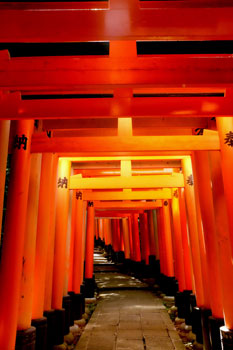
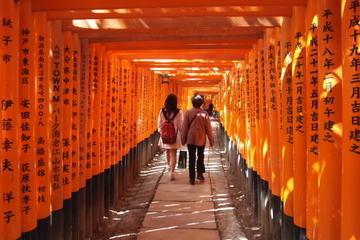
 I stepped into the courtyard at the base of the temple. My friend was not wrong. The place was completely empty. Or was it? Like many holy places, the shrine had a feeling of presence, eyes watching. There was nothing malevolent. I felt curious and excited. It was like entering another world, a very orange world. Fushimi Inari has thousands of orange torii gates. The sea of orange gates seemed to glow in the last light. Two fox guardians stood at either side of the entrance. It was hard to believe they were not watching.
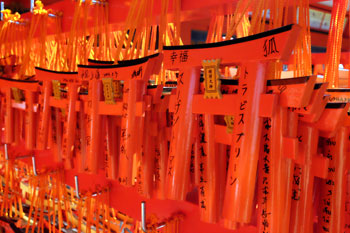
 The whole shrine smelt of the evening and incense. I poured cold water from the small water basin onto my hands and into mouth. This is a Japanese ritual of purity, and I hoped that I was doing it correctly. I looked around. Hanging on lines, carefully folded, were the paper fortunes of hundreds of worshippers. Folding and hanging a paper fortune means you want it to come true.

 I felt uneasy when I heard the screeches in the dark. Something rustled in the bushes. Could it be foxes? Fox demons? I know now that it must have been monkeys, but things seem different in the dark. Paranoid, I started thinking about Japanese mythology. Crazy thoughts sprang up before my logical brain could dismiss them. What if the fox spirits possess me?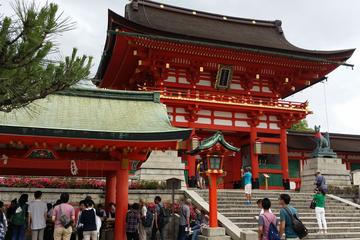
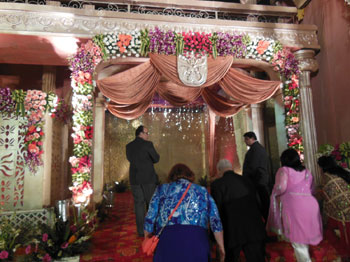
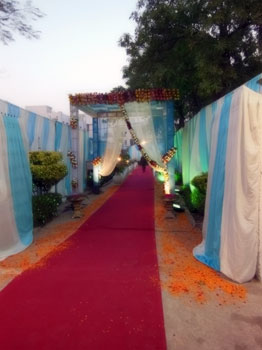 We had accepted the gracious invitation of our dear friend and former professor, Mohan, to attend his niece’s wedding in New Delhi. He assured us that a traditional Indian wedding was an experience not to be missed. Typically lasting the better portion of a week, it is a lavish celebration. Family and friends come from all parts of the globe to commemorate the nuptials, as well as catch up with those living in distant lands. Parents plan and save for weddings from the time of their child’s birth. Marriages are frequently arranged by parents; however the couple are allowed the final choice.

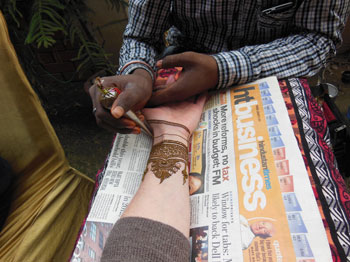 The official engagement party was to begin at 8 pm; we arrived at 10pm, about the same as the hosting groom’s family. Again it is over-the-top decor, flowers and twinkle lights, food galore, and an open bar. The bride’s family present gifts of jewelry, cash and sweets; a Hindu pundit (priest) blesses gifts and the exchange of rings, which seemed a bit perfunctory given all the glitz. The band cranks up and dancing begins. Jean is a desired dance partner and the only female at the hookah station. We leave exhausted at 3 am, and there are small children still dancing.
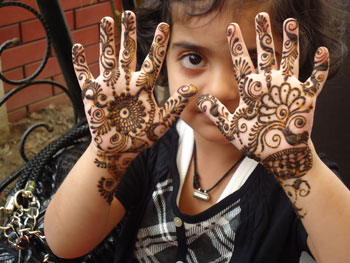 Our hennaed hands are dark, dramatic souvenirs of the mehndi. Held in the front courtyard of the bride’s parents’ home, the henna application is an informal family event. People move in and out of the house, children play, delicious smells come from the kitchen–lamb kabobs and goat curry. We sip chilled mango juice as we wait our turn with the henna artists; one of the aunts plays a drum and soft singing follows. What a privilege it has been, being folded into the family. At last night’s party, we were asked if we were relatives from Kabul! Tonight is another twinkly function of food, drinks, flowers, hookah…is that Mohan in a conga line with a basket on his head? He deems it the “Punjab Soul Train”.
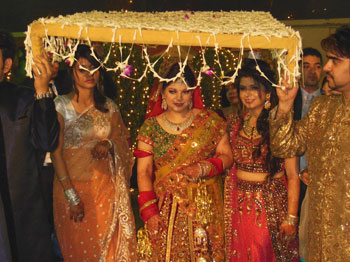 We are introduced to IST: Indian Standard Time. Nothing starts on time, everything takes longer than expected, punctuality is not a prized virtue. The official wedding day has arrived. Traffic is heinous, so we are over two hours late. However, we are among the first of the 800 or so guests to trickle in. The decor of flowers, fabric and lights is amplified for tonight; an army of waiters laden with trays of hot hors d’oeuvres and drinks resembling mojitos descend as we enter. A great ruckus draws us back outside; the groom and his family have arrived.