by Keith Kellett
“This mighty wall of four score miles in length is only exceeded by the Chinese Wall, which makes a considerable figure upon the terrestrial globe, and may be discerned at the Moon” wrote antiquarian William Stukely, in the mid-18th Century, when he visited Hadrian’s Wall, in northern England.
However, comparison of Hadrian’s Wall with the Great Wall of China is a bit fanciful for, although there’s some disagreement on the length of the latter, the length of the actual wall is at least almost 4000 miles long. This figure disregards the ditches and trenches, and natural defensive boundaries such as hills and rivers, which add a further 1500 miles to the total.
 Claims of visibility from the Moon are fanciful, too. Several astronauts have stated that’s erroneous … but in the 18th Century, nobody had been to the Moon, so couldn’t contradict Mr. Stukely.
There had been defensive walls of some kind ever since the 7th Century BC, but not a continuous one. They generally surrounded the separate kingdoms, sometimes known as the Warring Kingdoms, of which the China of the day was made up. It wasn’t until 220 BC that the leader of one of these kingdoms, one Qin Shi Huang, united them, and declared himself the first Emperor.
Indeed, since Qin is pronounced ‘chin’, it’s not impossible that the name ‘China’ is derived from this gentleman.
One of his first decrees was that the walls defending the former kingdoms should be partially demolished, to impose his central rule, and to discourage any resurgence that might be considered. The remaining defences would be joined together to form one Great Wall, to deter any incursion from outside. This work was largely completed by 206 BC.
 But, that early wall was not of the construction we’d recognise today. The wall builders generally used whatever resources were available locally … wood or stone, in areas in which it could be easily won; stamped earth where it wasn’t readily obtainable.
As a defence, it wasn’t really successful. It didn’t stop Genghis Khan, in the late 12th Century … he is reputed to have said that a wall is only as good as the courage of those manning it. But, it did make for effective communication, either by using the top of the wall as an elevated roadway, or by signals between the watchtowers.
When Marco Polo visited China in the late 13th Century, several people pointed out that he failed to mention the Great Wall at all; some even took it as an indication he’d never actually been to China, and had based his accounts on hearsay. But, it’s possible that, by this time, the earthworks had eroded to insignificance, and he just didn’t think them worth mentioning.
 In fact, reconstruction of the wall as we know it now, didn’t commence until 1348 … over 20 years after Marco Polo’s death … when the Ming dynasty came to power. They were especially troubled by the raids of the Mongol tribes from the north, and, as a defence against these, the wall was strengthened, and, in some places, re-aligned.
In the time of the Emperor Qin, his capital was at Xi’an, where he is buried. By the time of the Ming dynasty, the capital had moved to Beijing, its present location, about 600 miles to the northeast.
So, the most fortified stretch of the wall was built to protect that city, and, these days, the best-preserved parts are easily reached from there.
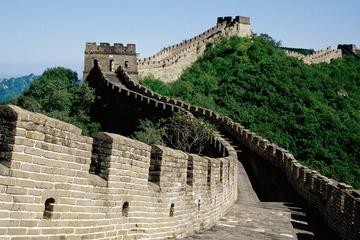
This time, stone, bricks and tiles were used in the construction. From the top of the wall, guards could survey the surrounding land, and easily communicate with each other by way of watchtowers and signal towers. There were estimated to be about 25,000 of these along the wall’s length.


 In addition, of course, barracks, stables and armouries had to be provided at frequent intervals.
In spite of these formidable defences, the wall was unable to prevent the invasion of the Manchus in 1644. This brought the Ming dynasty to an end, and established the Qing Dynasty, which ruled China until 1912.
It also extended the borders of China, to include Inner and Outer Mongolia, thus rendering the Great Wall largely superfluous.
Word, however, was starting to reach Europe about the Great Wall; several missionaries and explorers mentioned it in their accounts. But, it wasn’t really until the early Victorian era, when China opened its borders to foreign visitors, that the tourists arrived in any real numbers.
A problem was that the accounts they brought back were sometimes somewhat exaggerated; for many years, the myth persisted that the Ming wall was the same as that originally built by the Emperor Qin.
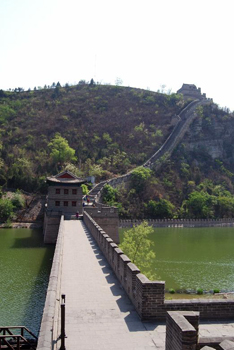 Naturally, the more easily accessible sections of the wall, especially around Beijing, were maintained and, if necessary, repaired. At least one guidebook grumbled that one stretch of wall ‘ … looked like it had been pointed yesterday’. It probably had.
But, if they wanted to see crumbling and overgrown, they only needed to go a little further afield, to where erosion, weathering and local people treating it as a quarry for ready-dressed stone have taken their toll.
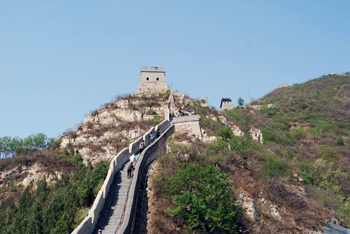
The section we visited was at the Juyong Pass, where the wall, zig-zagging crazily over the hills, swoops down to cross a river, then almost immediately ascends again. It really is a picturesque place, with the ornate towers at frequent intervals.
Mao Zedong once said: ‘You cannot be a great man until you have walked the Great Wall’. That’s easier said than done here. The problem is not so much the steepness, but the awkwardly-sized steps … presumably, to slow down the enemy if they ever got to the top of the wall? I’m six feet tall, but found the going extremely uncomfortable.
So, I wonder if the few hundred metres I did manage qualify me for “greatness?”
Private 3-Day Beijing Sightseeing with Great Wall
If You Go:
♦ For information and tours: Travel China Guide: Great Wall of China
Private 2-Day Beijing with Great Wall, Forbidden City
About the author:
Having written as a hobby for many years while serving in the Royal Air Force, Keith Kellett saw no reason to discontinue his hobby when he retired. With time on his hands, he produced more work, and found, to his surprise, it ‘grew and grew’ and was good enough to finance his other hobbies; travelling, photography and computers. He is trying hard to prevent it from becoming a full-time job! He has published in many UK and overseas print magazines, and on the Web. He is presently trying to get his head around blogging, podcasting and video. keith-kellett@tinyworld.co.uk.
All photos by Keith Kellett.
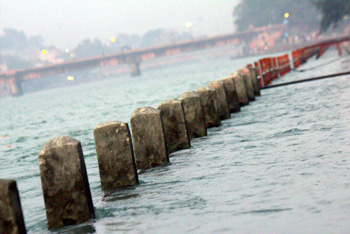
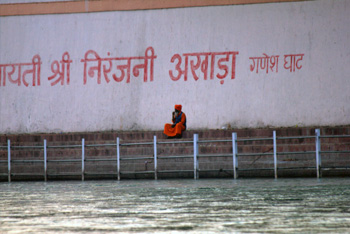 It is also the city where the strong and mighty river Ganga (after emerging from the mountains) touches the plains and runs in a calmer flow. Lots of people come here to find their inner peace. Some stay for longer period in various Ashrams (spiritual monastery) and follow Yoga and study ancient Hindu scriptures. Some like me, prefer staying for 2-3 days and soak in whatever that this place offers. Every time I visit Haridwar, I prefer to simply sit quietly at the Ghats (a series of steps leading down to the holy river water) in the mornings and evenings. Sitting there and dipping your feet in the cold river water compels you to sort of meditate and turn over in your mind. Believe me it is a feeling that forces you to yearn for calm & peace. The touch of cold river water, gentle breeze and Sadhus meditating, helps to take you to the state of tranquil & quiet. Early mornings have a serene calmness about this city with prayer chants being sung almost everywhere you look.
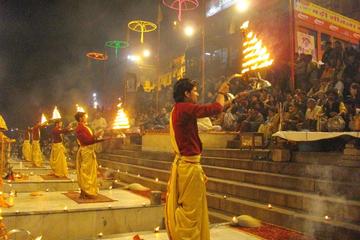
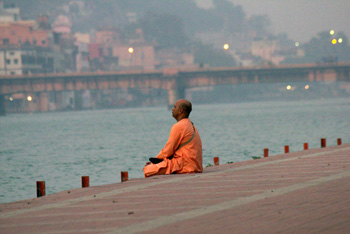 Haridwar has been a centre of attraction for learning various arts, science & rituals for many ages. Home to multiple small temples scattered all over the city, Haridwar is famous for its evening ‘Ganga Aarti’ (ritual of worshiping river Ganga) that happens daily around 6:00 pm at the main Ghat called ‘Har ki Pauri’. If you are there, then you must head towards ‘Har ki Pauri’ (footsteps of God) in the evening and attend the ‘Ganga Aarti’. It is a prayer that is sung to River Ganges every evening as per Hindu rituals.
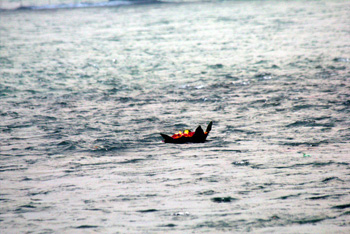 Watching Aarti here is an indescribable experience that one can understand only if one experiences the same. It is a beautiful spectacle of sound, light and prayer recitals that definitely compels you to ponder thoughts like – God and you! Supreme almighty’s impression/presence in things around you! As soon as the aarti starts, the lamps, recitals and the entire atmosphere takes you to a more spiritual level. After it finishes, people present their offerings of flowers and diyas (lamps) into the river and within minutes the Ghats lit with tiny diyas floating into to river.

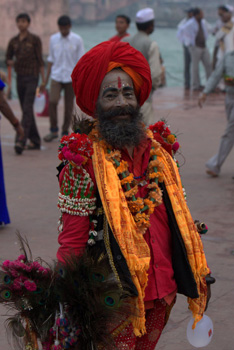 I had heard a lot about these rituals from my father earlier. So, during one such visit with the family at Haridwar, I was ready with my camera and reached the famous Ghat on time. There were lot of people around, tourists (who could be distinctly identified holding their camera), locals who come daily to attend the aarti, Sadhus and Pundits. While waiting for the Aarti to start, I noticed a funny looking man dressed in bright red and orange clothes, holding peacock feathers in his hands. He was walking aimlessly yet smiling at every person. He wore a vibrant coloured pagri (head gear) on his head, wore kajal (kohl) in his eyes and long tika (mark) on his forehead and stood out differently to the rest of the crowd. I requested him for a picture and he gave a broad smile, gestured with a stately pose for my camera and then went away.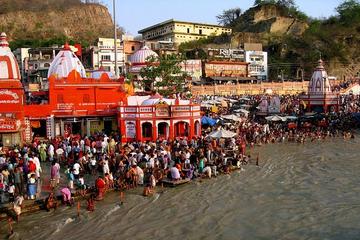
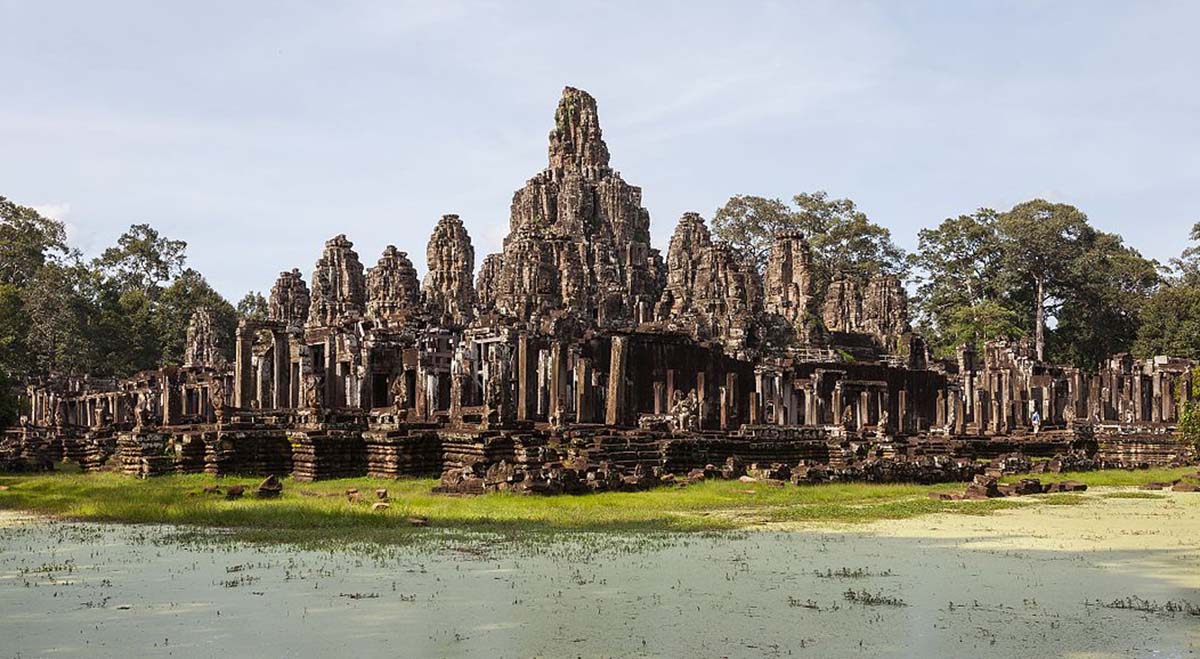
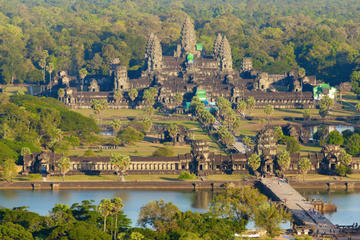
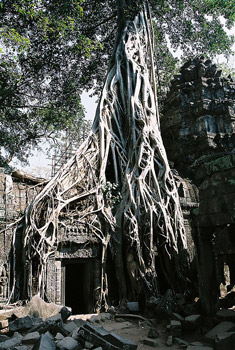 The entry towers at Angkor Thom are among the most photographed relics in Cambodia. Stuck in traffic on the causeway bridge leading to a towered entrance, Lee told us about how the statues—fearsome demons on the right of the bridge, confident gods to the left—had been decapitated only a few decades ago by the Khmer Rouge. Simulating a dagger across the neck, he alleged thieves are still smuggling pieces across the border to Thailand for black market sales.
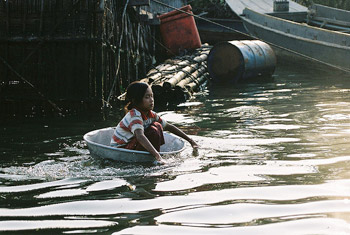 It would be difficult not to notice the intense poverty and hardship of Cambodia, even in an area like Siem Reap, exploding with resort hotels. People beg in heartbreaking fashion. Tuk-tuks are kitted out with signs to notify that this particular driver will not take passengers to underage sex dens. The maiming effects of the Khmer Rouge are evident everywhere. For us, the extent of poverty didn’t fully resonate until the ride south to the waterways of Tonle Sap: Houses along the roads were simply raised platforms with roofs, no walls to block us from seeing in.
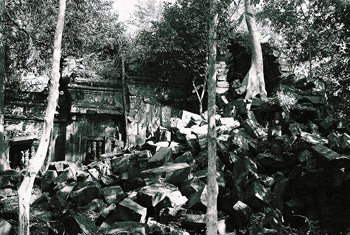 Lee tried to talk us out of it, but he conceded to our wishes. The progression of places we’d chosen that day meant that he was going to have to use a pot-holed dirt road rather than a new, nicely paved one. And, we got a flat in…somewhere, Cambodia. Lee unhooked the trailer, and a roadside worker carted it off by hand. We were not in Siem Reap anymore. From the depths of a dirt road to nowhere, a bike drove by with two full-sized upturned pigs strapped to the back, grunting over each pothole. There was no other traffic for the hour it took to get back on track.
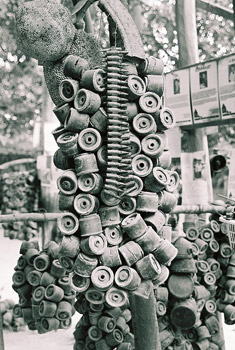 Leading up to our trip, Emma and I had read an incredible memoir, ‘First They Killed My Father’, about a young girl who survived capture by the Khmer Rouge and life in camps where kidnapped children were forced to be soldiers, brainwashed and made to do unspeakable things. Aki Ra was one of these child soldiers, but in 1997 he went back to villages where he had once set up thousands of mines and, working by hand and homemade tools, started defusing them.
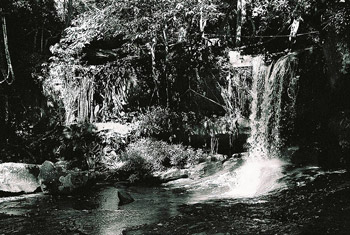 When we reached the end of the pavement, Lee pulled over, unhitched the tuk-tuk, and told us to climb on the bike with him. The road ahead was far too rough, so there we were, Lee on the front, Emma squeezed between us, and me with my hands vice-gripped to the back of the seat. Truth be told, the road was so rough that, for the bulk of the ride, Lee drove in the ditch and on the embankment running alongside the street. I don’t really remember how long the ride took—less than an hour—as I was concentrating on not popping of the back.
 After four days of chauffeuring us around, Lee dropped us off at the front of our hostel for the final time. Both Emma and I, at the beginning of our trip, prone to bonding a little more readily than a local tour guide might be, had tiny lumps in our throats. We asked him how much for the week, and in true Southeast Asian style, he replied, “What do you want to pay?” I guess he’d seen it all before.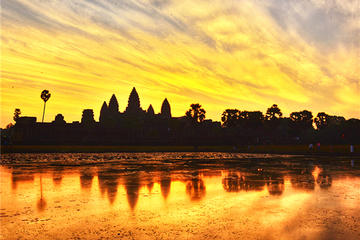

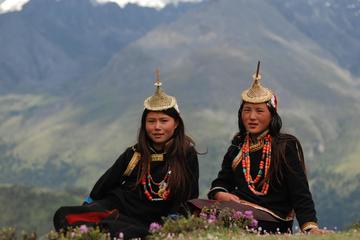
 I arrived in the Kingdom of Bhutan, a land-locked country sandwiched in between the giants of India and China, expecting to capture images of a gentle country where Buddhist traditions and conventional culture trump modern materialistic trappings. This is a nation known for its varied terrain: from the subtropical plains and forests in the South to the lofty snow-drenched Himalayan foothills and mountains of the North.
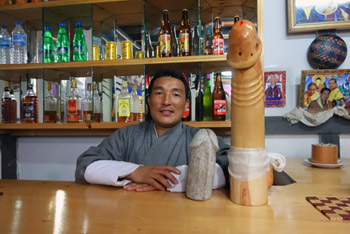
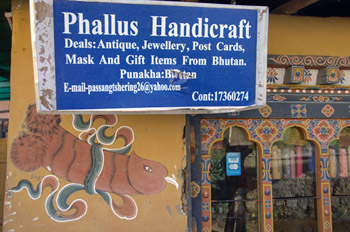 I’ll admit to not recognizing the structure of a giant penis on a commercial building at first, thinking it was some elaborate design that I just didn’t get, but a fellow photographer soon pointed it out and identified the ejaculating phallic symbol for me. Initially, I was somewhat taken aback by the penile projectile, but then I began to philosophically contemplate why decorated penises adorned many buildings and homes, and what could it possibly mean. I soon found out from our Bhutanese guide.
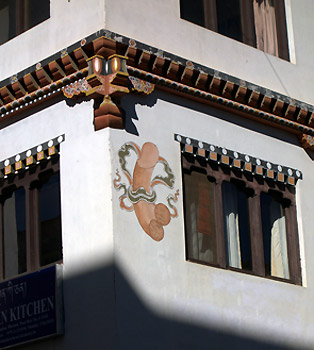 Turns out there was a certain individual called Drukpa Kunley, aka the “Divine Madman” a Buddhist master who lived from 1455 -1529 A.D. He is fondly remembered for his most outrageous teachings that were designed to challenge preconceptions. He taught that the ‘divine thunderbolt of wisdom’ comes by way of shock value; an unorthodox combination of drinking, sex rituals, and provocative humor and dance. Because of this, he used his penis quite often to achieve insight and eventually became known as “The Saint of 5,000 Women” due to his penis prowess. In other words, he offered blessings to women in the form of sex. He didn’t discriminate with women as it didn’t matter if she was married or not, virgin or experienced.
 It is important to note that the ubiquitous phallus paintings and wood carvings are not considered as pornographic or erotic symbols to the Bhutanese, rather they are imbued with protective qualities that ward off evil spirits. After all, the penis proved to be a path for spiritual nourishment and enlightenment for the much revered Divine Madman and his ‘Flaming Thunderbolt of Wisdom’ was used much like a sword to conquer evil spirits as well. A nifty combination.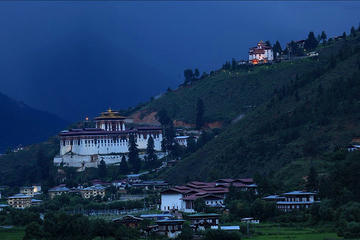
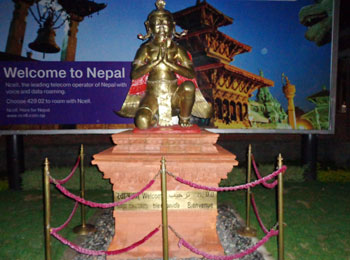


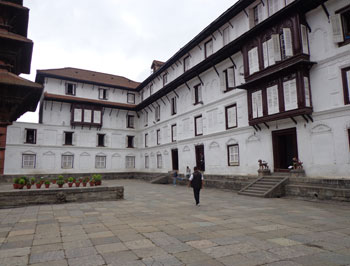 The next morning we decided to take a walk in Kathmandu. Durbar Square was our first and natural destination. The word Durbar Square may be equivalent to German Marktplatz. Several Nepalese cities have Durbar Squares, which are usually made up of royal and religious buildings. The Kathmandu Durbar Square, which is not free of charge for foreigners to enter, can present a variety of royal courts, temples and monuments (most of them belong to different historical periods), as well as numerous guides and street sellers, who would stalk you all the time and offer their goods and services. Tourists who have some understanding in history and religion, especially that of Indian subcontinent, can be very happy to explore every corner of the square. But even if you do not posses this kind of information, no worries at all. Dozens of guides are always ready to lead you by explaining the history and meaning of each edifice.
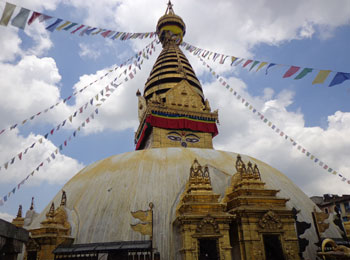 Although the Durbar Square contains a lot of historical buildings, it would take too long to explain each of them. But one should certainly visit the Kumari residence. Kumari is a living goddess mainly worshipped by Hindus. In Nepal Kumari is a pre-pubescent girl regularly determined as a result of interesting and complex selection process.
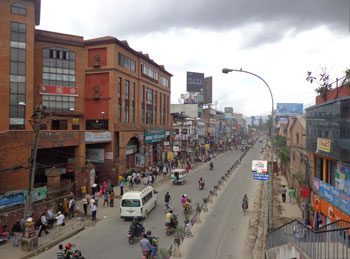 For people, who are eager to see Mt. Everest and some other peaks, I would highly recommend you to take a mountain flight operated by a bunch of domestic airlines in Nepal. As I mentioned above, even small hotels can arrange mountain flights, which can make your job more convenient. You will be taken very high, above the clouds, to the Roof of the World. Kind stewards will show and explain you every of a dozen Himalayan peaks. You can even get a chance to enter to the pilot`s cabin, where an indescribably wonderful and magnificent view will open in front of you. I am sure this mountain flight will be one of the most memorable moments you will recall with a pleasure the rest of your life. But Nepal is not only the Everest. Proud of their history, every Nepalese may tell you their country is the birthplace of Gautama Buddha. The founder of Buddhism was born in 6th century BC in Lumbini, a small town in the southern part of the country. Today Lumbini is a worshipping place, where many Buddhists from all over the world, not only from Nepal come to pay their tribute.