Uttarakhand, India
by Jessica Frei
Everyone deserves a break from the monotonous lifestyle and I am no exception to it. With having said that, there is an exception in my definition of ‘a break’. I want my break to be full of adventures; no sitting back at home, no chit chat with long lost friends, all I want is thrill. And this hunger for thrill took me to Jim Corbett National Park.
Located in the foothills of Uttarakhand, this is the oldest established National Park of India and this is was another reason for my visit over there. So finally, last month I headed off for my expedition to the wilderness of Corbett. However in my over excitement, I forgot to take my camera on the safari and this I only came to know after leaving the resort, ‘too late to realize’. Nonetheless, being an optimistic person I decided to capture every bit through my eyes. The best part is that I succeeded in it, if I would have clicked images, then they would have been tasting dust in some corner of my drawer. But the memories clicked through the eyes are stored in my heart and today I am pouring my heart out here.
From Delhi to Jim Corbett National Park
I hired a cab and left for Corbett early in the morning at 4′ o clock. Please see, I hate getting up this early in the morning, but that day was an exception. So, after the cab driver tuned in his radio the journey began with a spiritual song and in next ten minutes I guess I was wandering in my dreamland. (I woke up at 4:00 AM, I deserved a quick nap). The next time I opened my eyes I saw the long stretched road, on my query the cab driver told we were at NH24. Meanwhile the cab stereo was playing some dancing beats and I wished good morning to myself.
Then the twists and turns of the road took me to Garhmukteshwar, where people take holy bath in River Ganga. I was surprised to see so many people taking a dip in the river, as if the entire India was there for a bath. From there on we headed to Gajarula. There the cab had its share of tea, I mean fuel and we (me and the driver) had ours. Our fuel was served in the form of hot tea and butter dipped Aloo paratha at the Tadka Dhaba, located just behind the fuel pump. I still can feel that taste in my mouth. Thereafter, with a heavy tummy we went back into the cab, while I was making myself comfortable at the back seat for another quick nap, the stereo gave a wake up call with some more dancing beats. With that music we crossed Muradabad, then Kashipur – the place where the famous Surya Roshni Limited is located, complete industrial area. By the time we reached Ramanagar, I could feel the aroma of the forest. Finally around 10 AM, I was there at the Corbett Leela Villas, the resort I had to stay in.
 Corbett Leela Vilas
While I was making online booking for a wildlife resort, I read a lot about the Corbett Leela Vilas. On reaching the resort I realized that all those adjectives used for the resort were not sufficient, as the resort was much more splendid than what I read. The luxury of the resort complimented by my cab lag (when there can be jet lag, why can’t be cab lag), insisted me to spend a lazy day at the resort. So I checked in, made myself comfortable, took a shower and ordered the meal, sorry royal meal. The food was just awesome, I am no big foodie but for a meal like that I am ready to turn into one. I was so engaged in licking my fingers that didn’t even realize the time, it was 2.30 PM. After that tasty treat I spent a few hours relaxing in the room and then, went for pool refreshment. By the time it started getting dark, I knew I had to travel the next day, so very quickly I finished my dinner and went to bed. The next morning was the big day and that’s why I left the bed sharp at 4.30 AM. The resort arranged a drop to the Durga Devi Gate of the Park, where an elephant was getting ready to take us on the wildlife safari.
The Elephant Safari
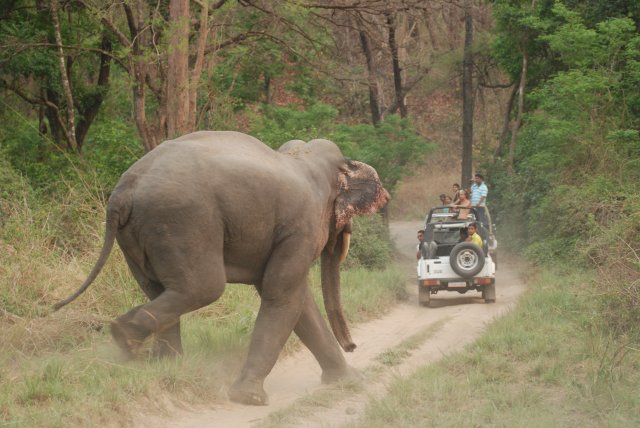
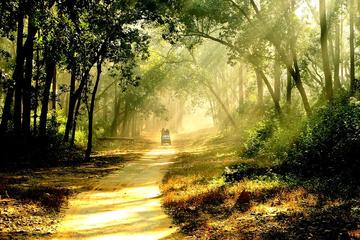
I remember the last time I sat on an elephant, I was just nine years old. After a big leap, it was the time to climb on the back of the huge mammal. I wasn’t afraid, after all I love adventure; however, this was my first visit to a national park and I just got overwhelmed by seeing an elephant welcoming me. Meanwhile, the Mahavat and the travel guide were trying to accommodate everyone (I was accompanied by a group of other tourists) over the elephant. Once everyone was on their seats, the giant mammal took his course of action. We entered the Dhikala Zone of the park and meanwhile I was simply amazed by the sites that fell in the way. The foremost thing was that I was on an elephant and from that height I was able to get a very nice view of beautiful birds. Earlier I only used to hear their chirping, but that day I saw them from a close angle. I wanted to capture them in the camera that I unfortunately forgot in the resort, so I decided to let them fly in my eyes. The blue sky was filled with numerous colorful birds, as if a painter has sprinkled his entire color palette on the canvas.
My pleasurable moments of bird watching got disturbed when the tour guide indicated towards a herd of Spotted Deer. They were so beautiful; I couldn’t get my eye off from their sharp features. Their big innocent eyes were so compelling, especially the little baby deer were too adorable to take home. But, I gave my sentiments a break and told myself “you are not at zoo, it’s a safari in Jim Corbett”. Thereafter, we witnessed various other wild species especially the monkeys who were climbing from one tree to another, making highly annoying noise. Meanwhile other tourists were using their cameras for capturing the wild; I was just capturing the memories of the wild in my heart. Amidst all this chirping of the birds and noise of the monkeys, everyone paused by a big roar! The tiger was somewhere nearby!


Spotting the Majestic Cat – Tiger
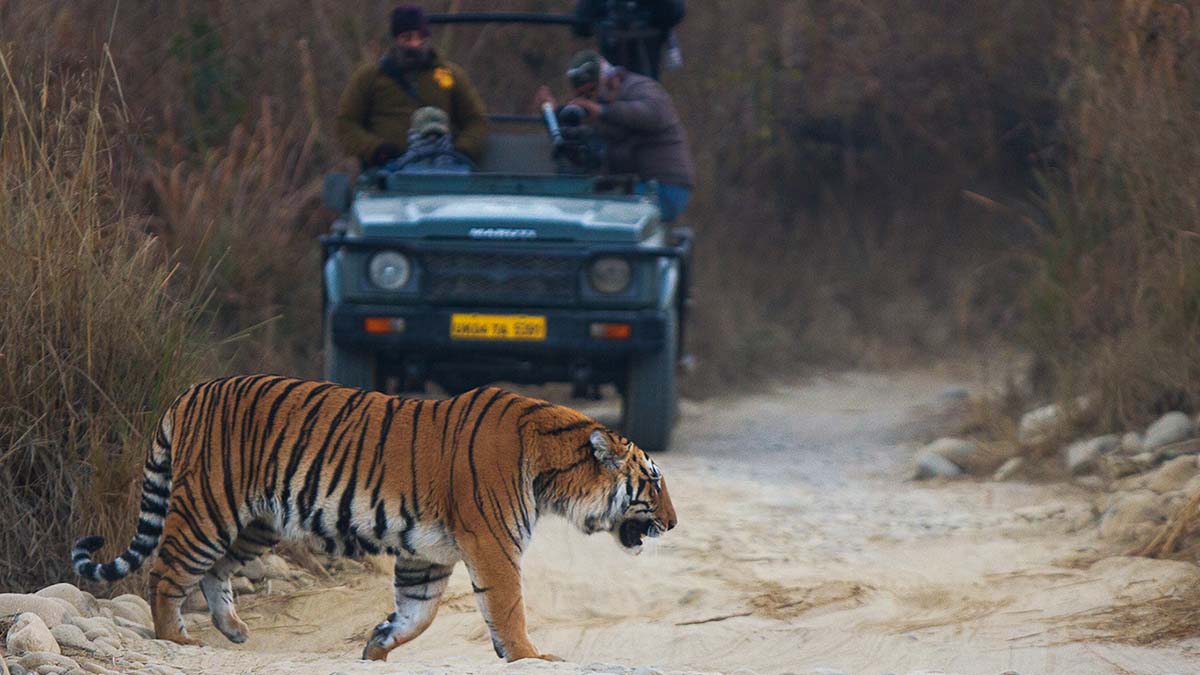
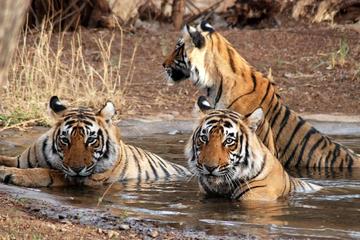
Tiger, before visiting Corbett I had only heard and read about these big cats. But that day the royal cat was right in front of my eyes. Due to safety reasons, the elephant was standing at a distance from the furious predator, but I was able to see the tiger clearly. My heart and mind were going through mixed emotions; I was excited, happy but at the same time I was a little scared. With every single step of the tiger, my heart missed a beat. The perfect physic, that royal walk, that carefree attitude in eyes that glow of the fur coat; every detail of the tiger made me deaf towards the guide. I hardly paid attention to the guide as I was busy capturing the tiger in my eyes. The way he roared everyone understood that the entire forest is his kingdom. Though the tiger is a furious predator and his roar gives me goose bumps but his unmatched royalty made me his aficionado. He is undoubtedly the most beautifully dangerous wild creature. Before I could have thought of more adjectives for the big cat, he left us and vanished in the bushes. My eyes wanted more of him and I will be visiting Corbett again just for getting a mere glimpse of him.
The Memories
During my first encounter with the tiger, I actually even forgot that I had a camera or not. However once he went out of sight, for the first time I cursed myself for leaving the camera at the resort. Meanwhile it started getting dark and we moved back to the resort. I was too tired to write a blog about my experience but was too happy to share. Therefore, I ended up writing this piece of story.
3 Days Corbett Tiger Safari Private Tour from Delhi
If You Go:
LINKS TO SAFARI
Resorts in Corbett
Corbett National Park
Private 3-Day Corbett Safari Holiday Tour From Delhi
The entry and exit timing varies with seasons.
WINTER TIMINGS:
ENTRY:
Morning Safari: 0730 hrs
Evening Safari: 1500 hrs
EXIT:
Morning Safari: 1030 hrs
Evening Safari: 1700 hrs
SUMMER TIMINGS:
ENTRY:
Morning Safari: 0630 hrs
Evening Safari: 1600 hrs
EXIT:
Morning Safari: 0930 hrs
Evening Safari: 1800 hrs
About the author:
Jessica Frei is a wildlife enthusiast and a traveloguer too, she likes to travel different national parks and wildlife sanctuaries all over the globe. She is currently in India for her wildlife tour. She always shares her experience through articles and blogs.
Photo credits:
Tiger by Soumyajit Nandy / CC BY-SA
Elephant at Corbett National park by Vikram Gupchup / CC BY-SA
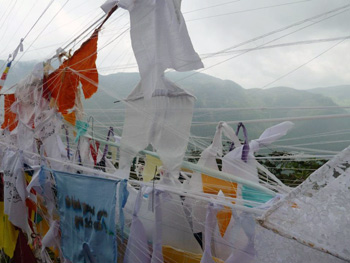
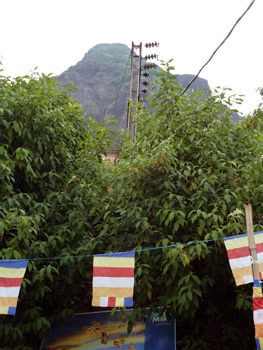 This is Sri Pada, also known as Adam’s Peak. It may not have the notoriety of Mount Everest (as the highest mountain in the world) or the elegant beauty of Mount Fuji, neither does its history go back as far as Mount Sinai’s, but it is the only mountain in the world to be venerated by four major world religions: by Buddhists, Hindus, Muslims and Christians.
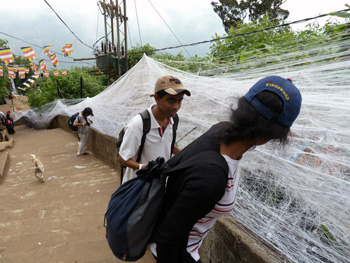 All human life has come to this place across the centuries: rich and poor, kings and paupers, religious leaders and non-believers, young and old, strong and weak, sick and the well, disabled and able-bodied.
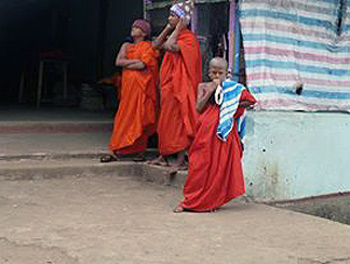 At the entrance to the mountain we stop again. A Buddhist priest blesses us. For us first-timers (all but Dimuthu’s father) we are given a white cloth with a good-luck coin wrapped inside. Dimuthu’s father ties each wristband on our right arm. A red mark is placed upon our foreheads, giving us Saman’s protection, one of the four guardian deities of the mountain.
 Amila and I climb the steps to the shrine of the footprint. He bows down, head to the ground. I close my eyes and reflect on my own thoughts. Then we remove our white strips of cloth from our wrists and tie them to a pole.
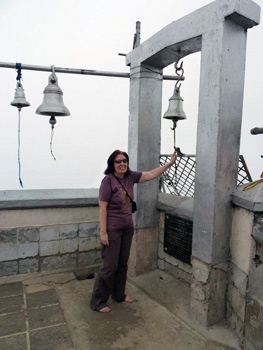 “Make a wish,” Amila says.
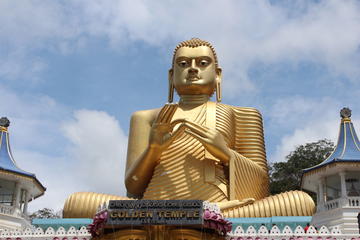
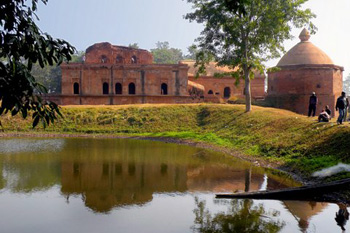
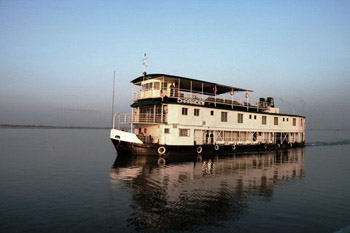 This monastery, founded in the 17th century, is among some 25 on Majuli Island, a long stretch of land in the broad Brahmaputra River in India’s remote northeastern state of Assam. It is home to 350 monks of the Vaishnivite sect, known for its commitment to social equality and brotherhood among differing castes and tribes. Our visit is one of the memorable shore excursions that my wife Annie and I enjoy during a 10-day small-ship cruise along a mighty stream that discharges more water than the Mississippi.
 One of the subcontinent’s least-visited regions, Assam has great ethnic and cultural diversity. Joined to the rest of India by a narrow neck of land, its majority population is racially and historically closely linked to Burma. Several minority tribes derive from migrations out of the Himalayas to the north. Assam was founded in the 13 th century when the Ahom kings arrived from the Burma-China border area. Adopting Hinduism, they successfully resisted the islamic Mughal invaders, who conquered so much of India. One side trip is to an ornate Ahom royal sports pavillion and the ruins of an enormous palace.
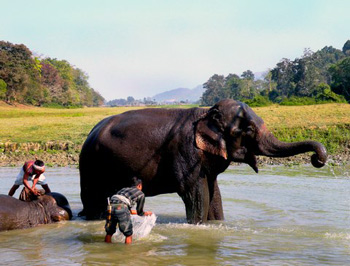 We settle into a leisurely shipboard pace, gliding smoothly downstream with the current between scoured low shores and barren sand islands, miles-long stretches of fine silt deposits that give the water a milky look. The geography often resembles a moonscape, made all the stranger and more alien by the mists and morning fogs of the winter season.
 Others eke out a living by harvesting swamp grass for thatch or animal fodder. Or by working under contract to the government river authority, building and repairing long, low structures made of woven bamboo and affixed to pilings in the shallows. These divert the river’s flow and create a deeper navigable channel. Like the seasonal fisherfolk, they live in crude, temporary encampments on the bleak sandbars.
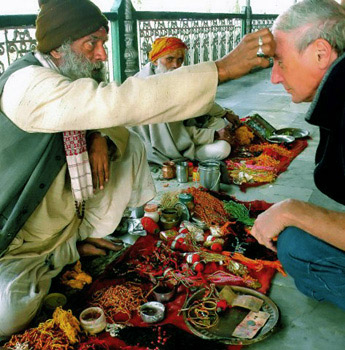
 In the courtyard of a temple devoted to Shiva, I kneel to receive the blessings of a holy man, who puts the red spot on my forehead and ties a coloured string around one wrist. We follow as devotees enter the dimly lit inner sanctum with offerings of food, money or marigold flowers. They chant a mantra as a priest blesses them with splashes of holy water.
 An economic mainstay is tea cultivation, Assam’s most notable export. We see extensive plantations, row on row of the little shrubs, and enjoy lunch at a magnificent tea estate owned by the same family for more than a century. Another specialty is silk production and weaving. In the courtyard of a cottage-industry workshop, three women squat on the ground. One turns a crank, while the others, with dexterous fingers, coax filaments of naturally golden, and exceptionally rare, muga silk off silkworm cocoons that float in a pot of water. The resulting thread is then used by highly skilled weavers at hand-and-foot operated looms to create gorgeous fabrics with intricate patterns. Mahatma Gandhi once said that Assamese women “weave dreams in muga silk.” The prices for shawls and tailored garments are embarrassingly modest.
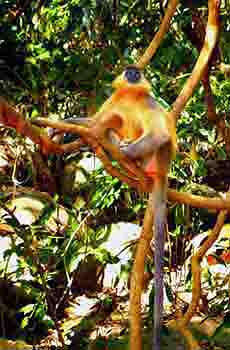
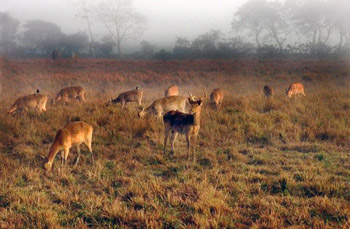
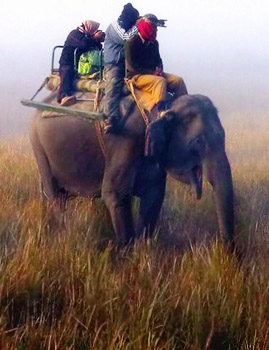
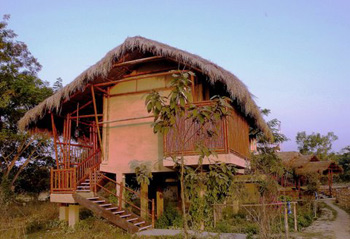 Two half-day excursions into rugged Kaziranga National Park offer some of the world’s richest and most rewarding wildlife-viewing. We ride on the back of an elephant to get up close and personal with some of the park’s 2000 huge one-horned rhinos, as well as water buffalo and swamp deer. We bounce along jungle trails in an open jeep to train our binoculars and cameras on ospreys, eagles and storks. Agile langur monkeys leap through vast banyan trees festooned with orchids, while mynah birds flit about.
 The river is so shallow that Charaidew runs aground repeatedly. A government navigation boat leads us through the sinuous and shifting main channel. On one grounding, however, we hit so hard that a rudder is damaged and will need to be removed and repaired in a shipyard. With apologies, our voyage must be cut short.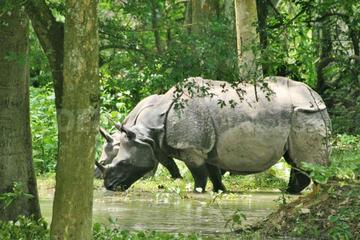

 About the author:
 or directly from koppel@saltspring.com (signed and dedicated)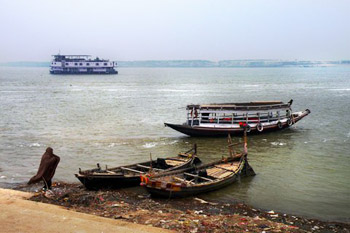
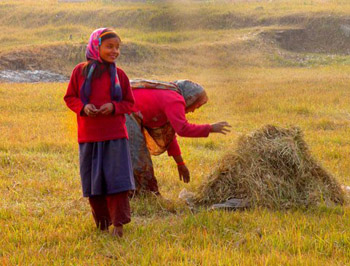 During our deluxe small-ship cruise, passengers gain a wealth of insights into the religious, historical and cultural world of the subcontinent’s largely rural and small-town heartland. Many of the encounters could never be had on a land-based group tour. It is the ideal way to experience the rich tapestry of life along the central artery of northern India.
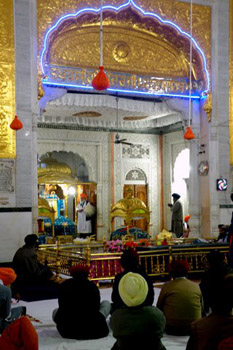 At a major Sikh temple, we remove our shoes, cover our heads and join the congregation while an elder reads from the book of scriptures. Devotees bow, foreheads touching the floor, and leave offerings. Sikhs believe that nobody should go hungry. A communal kitchen is preparing breakfast for scores of local people. A cheerful team of women and men grill parathas to serve along with dal and chai (milky tea).
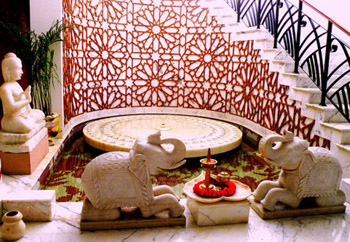 A young, bare-headed Jain woman in stylish contemporary clothing asks in impeccable English where we are from. She hands a friend her cell phone, eager to have her photo taken with a couple of visiting Canadians.
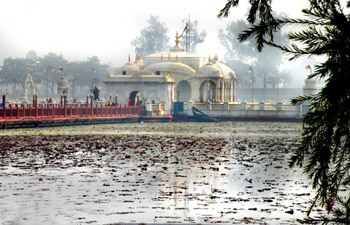 Hindu temples and other sacred sites, old and modern, are everywhere. At one hot spring, people bathe or simply sprinkle holy water on their heads. We become familiar with the many incarnations of Vishnu and other deities, such as Ganesha, with the elephant head, and Hanuman, the monkey god. Our daily outings also offer unique opportunities to mingle with villagers, rub shoulders with cattle auctioneers and shop for local crafts.

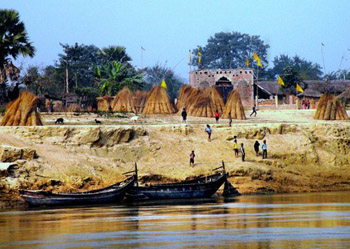 Winter low water enables a large population of nomadic peoples to eke out a riverside living in transient, seasonal encampments of thatched huts that have to be abandoned when the monsoon comes. We get to see this busy subsistence economy in its full and fascinating complexity.
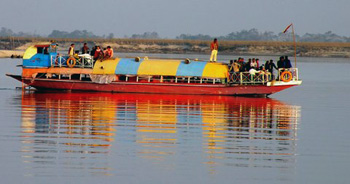
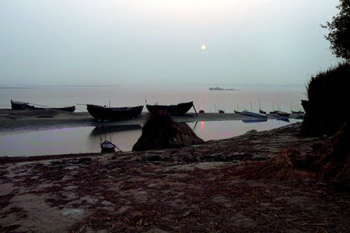 Local passenger ferries crisscross the river from one crude landing spot to another, heavily laden with bicycles, goats, firewood and bundles of thatch. Adults wave as Sukapha sails by, and kids race along, shouting and trying to keep up. Where the bank is high enough, there are larger, flood-free permanent settlements. One Moslem village has an ornate mosque and a boatyard where dozens of large wooden vessels are pulled up for storage or repairs. Nearby, a game of cricket is being played.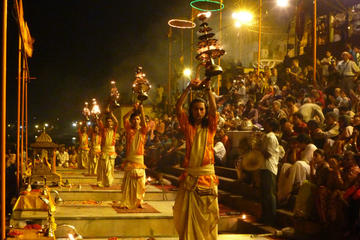
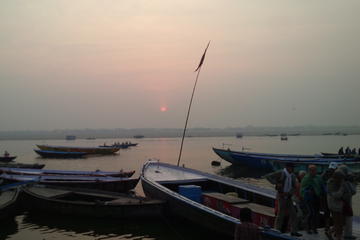
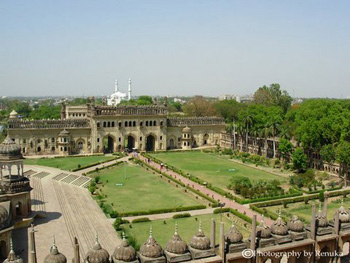
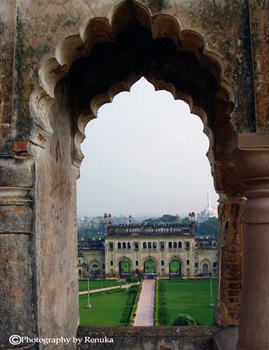 The mystery, the hidden truths and the mystic, all of it put together defines Lucknow’s Bada Imambada. Bhool Bhulayah (a part of the Imambada) is a fascinating labyrinth built by Asaf-ud-Daula (Nawab of Lucknow) in the 17th century. It’s located in the old area of Lucknow. To begin with, it’s one of the most underrated historical sites in the world!
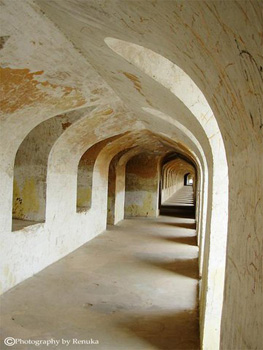 It is not a regular monument with exquisite beauty to appreciate – it is way ahead of that. From its walls, windows to the rooftop, everything has a story and purpose. Nothing is ordinary. As the name suggests, it’s a labyrinth, where you may get lost! Yes, it is true. There are four sets of identical staircases in four different directions to confuse you; however, one of them leads you to the top of the Imambada. Unless you are with a guide, you cannot figure out the right way on your own!