by Sarah Humphreys
Pistoia, an almost forgotten corner of Tuscany, has only recently begun to feature on the tourist trail. Thanks to Pistoia’s status as Italian Capital of Culture 2017, and being on Lonely Planet’s top ten list of places to visit in 2017, the city has finally begun to receive the recognition it deserves.
The origin of the name Pistoia seems to originate from the Latin “Pistoria”, which refers to an oven for baking bread. Situated on a major road junction between Florence, Lucca and the Apennine Mountains, travellers and pilgrims often stopped to stock up on supplies. Due to its strategic position, Pistoia still makes an ideal, and economical, base to explore the local area. Many tourists come for day trips, but the city has plenty to offer, without the hustle and bustle of more famous Tuscan destinations.
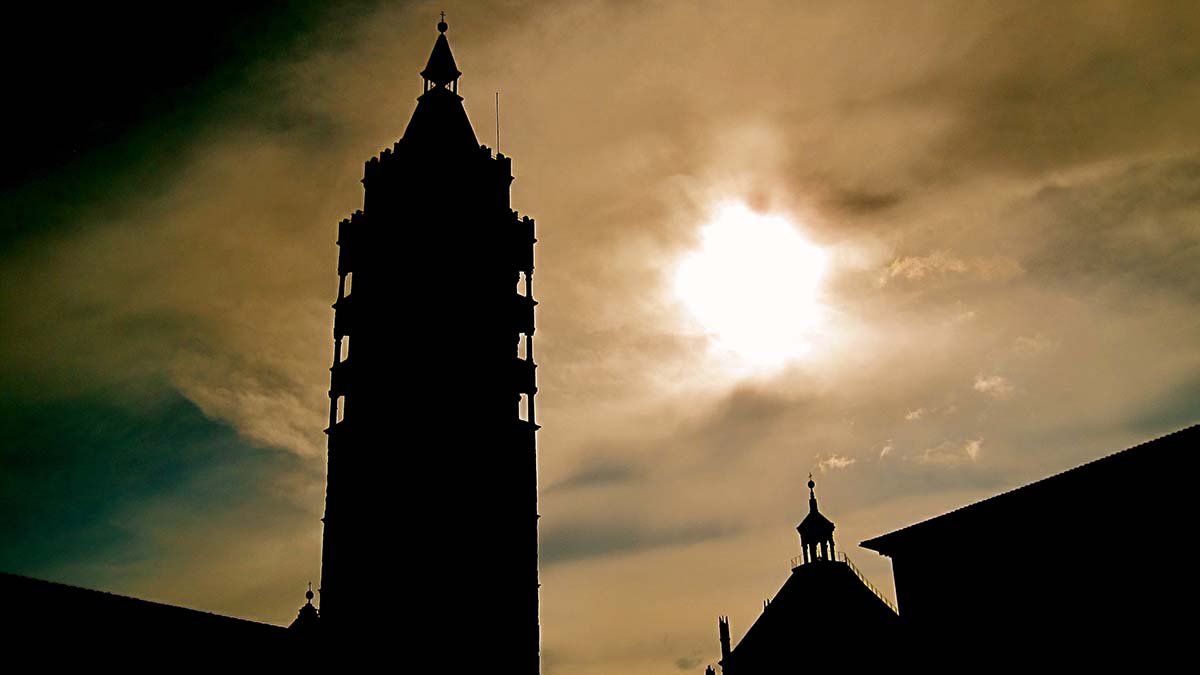
Pistoia has an extremely well-preserved historical centre, which can be easily explored on foot, and is full of splendid buildings dating back to Roman times. Piazza dell’Duomo, one of the most impressive squares in Italy, is home to the 12th century Romanesque Cathedral of San Zeno, which contains the magnificent solid silver altar of St James. Worked on by Filippo Brunelleschi, it features 628 figures depicting scenes from the Old and New Testaments and the life of the saint. For spectacular views, the 200 steps of the 67m bell-tower can be climbed by the energetic. The octagonal 14th century gothic style Baptistery, built from Carrara and Serpentine marble in a simple green and white pattern, sits opposite the Cathedral looking like a beautifully decorated cake. From within the historical centre, it can almost be easy to miss the Basilica of La Madonna dell’Umilità, topped by a 59 meter high dome, the third largest in Italy.


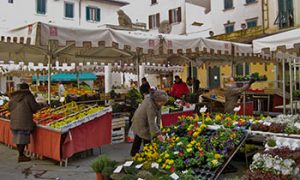 The real heart of the city is the bustling Piazza della Sala, which dates from the 12th century. The characteristic well, “Il Pozzo del Leoncino” (Well of the Little Lion), makes an impressive centre piece to this charming square, which hosts a daily fruit and vegetable market and is surrounded by tiny shops brimming with Tuscan delicacies such as cheese, fresh pasta, delicious bread and a variety of meat products. Lining the square are numerous bars and restaurants, which form the hub of the “movida Pistoiese” and attract hundreds of people of all ages in the evenings, particularly in summer.
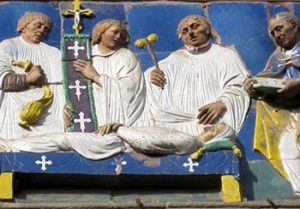 Apart from typical Tuscan attractions including splendid striped churches, ancient city walls and the fortress of Santa Barbara, built by the Florentines in 1331, Pistoia also has some more unusual monuments. The ancient hospital, dating form the 13th century, features an unmissable glazed ceramic frieze created by various artists, including Giovanni Della Robbia, which depicts the seven works of mercy. Underneath the hospital itself, you can follow a fascinating itinerary where you can see artefacts used by plague victims, an ancient laundry and olive oil mill and finally end up in the smallest anatomical theatre in the world.
Fans of contemporary art will find plenty to see, including Palazzo Fabroni, a well-stocked museum, a museum dedicated to Marino Marini, and on the outskirts of the city, Fattoria Celle, an open-air site specific collection displaying works by artists such as Sol Lewitt, Daniel Buran and Dennis Oppenheim.
If all this isn’t enough, you can visit the lively street market on Wednesdays and Saturdays, take a trip to the local, well-kept zoo or just relax with a glass of wine and try some of the local delicacies.
 Pistoia really comes to life in the summer and hosts The Pistoia Blues Festival in July, where artists such as B.B. King, Buddy Guy, Bob Dylan, Lou Reed and David Bowie have played. The 25th July is the feast of the town’s patron St James, and the streets fill up with a medieval procession displaying stunning costumes, flag waving and music, which culminates in a jousting tournament in Piazza del’ Duomo.
There is a local saying “Pistoia fa conca”, which means Pistoia is a hollow, implying it is difficult to leave. You may just find this is true and you want to extend your visit, mine has unintentionally lasted twenty years.
 If You Go:

By Air: The nearest airports are Amerigo Vespucci Airport, Florence and Galileo Galilei, Pisa.
By Train: Pistoia is on the Florence-Lucca-Viareggio line. The journey from Florence is about 40minutes. For more information see: www.trenitalia.it
By Bus: Buses from Pistoia to Florence leave from outside the main stations and are run by BluBus.
By Car: Pistoia is on the A11 “Firenze-Mare” Highway.
Photographs by Sarah Humphreys
Piazza dell’Duomo
Piazza della Sala
Detail of Ceramic Frieze, Ospedale del Ceppo
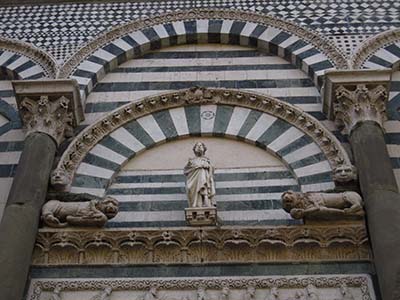
Sant’Andrea Church
About the author:
Sarah Humphreys is originally from near Liverpool, UK and has lived in Canada, The USA, The Czech Republic, Greece and Italy. She currently lives in Pistoia, near Florence, where she teaches English, writes freelance and is a part-time poet. She has been writing since she could hold a pencil and her passions include Literature, poetry, music and travel. Follow her on twitter: Sarah Humphreys@frizeytriton.





 Photo Credits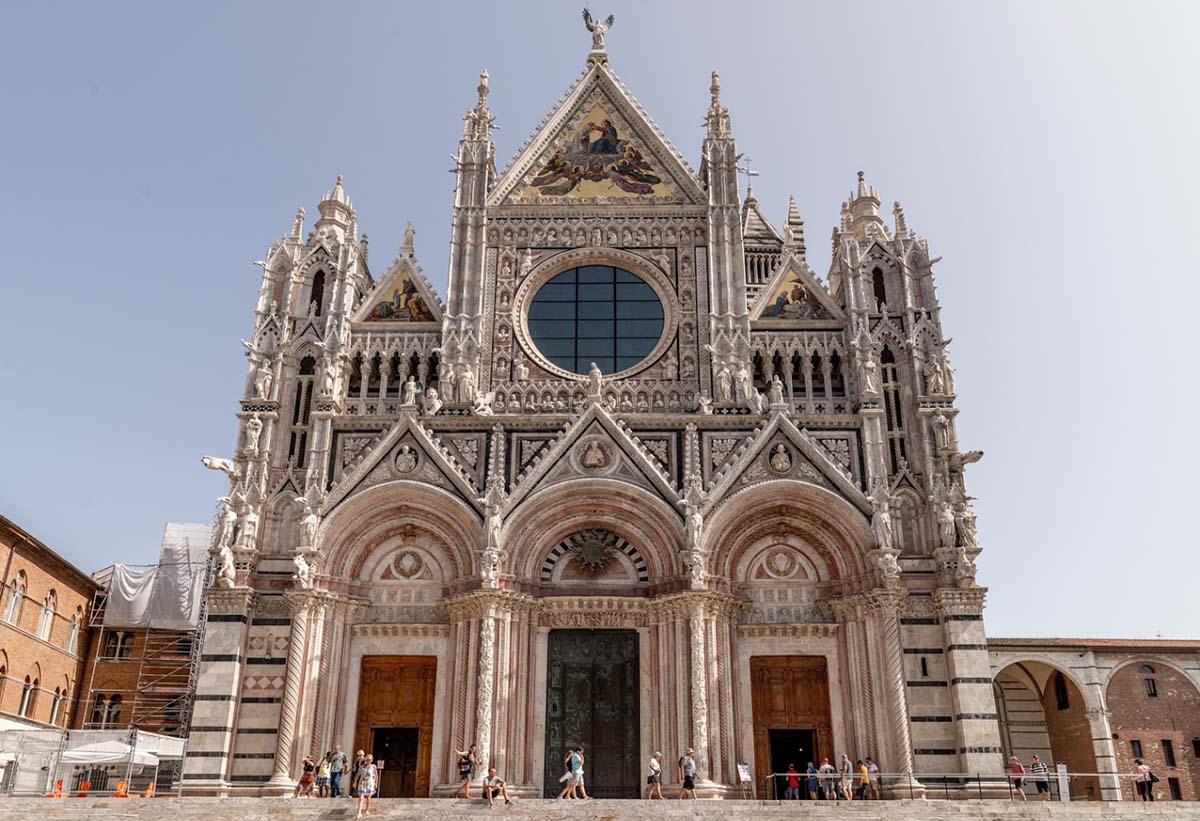


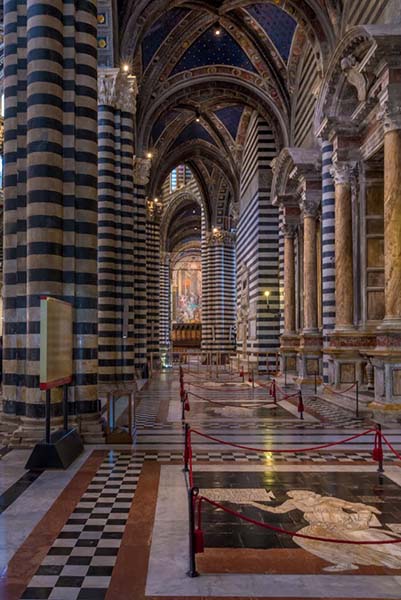 Prepare to be amazed as the Wow Factor will captivate your senses the moment you enter the doors of this historic Gothic Cathedral. The black and white marble stripes on the walls and columns immediately captivate the eye. Black and white is seen throughout Siena and are the city’s symbolic colors.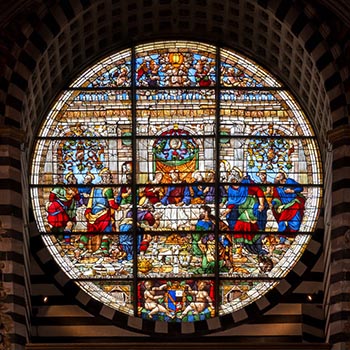




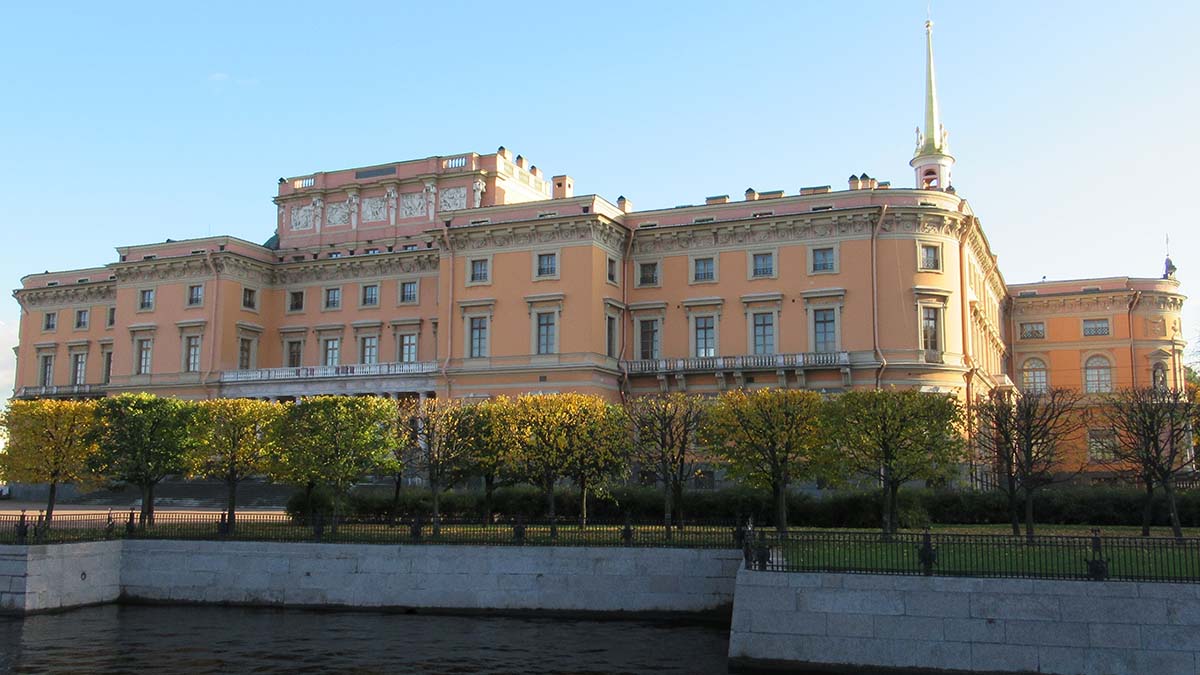

 Crime and Punishment Locations
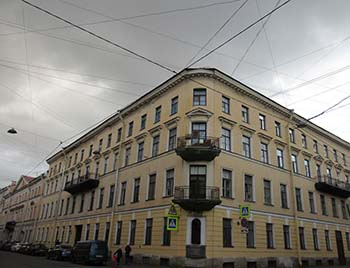 I found Raskolnikov’s house, a big yellow apartment building, on the corner of Stolyarny Lane, 5, and Grazhdanskaya Street, 19. This rectangular structure with an inner yard has been built according to a typical architectural design of the 19th century: since the land was expensive, architects had to create the biggest possible house to occupy the lot. In 1970s, after remodeling, this “high, five-storied house” described by Dostoyevsky was turned into a four-storied one. [5] However, there is still the loft where Raskolnikov rented a room: “It was a tiny cupboard of a room about six paces in length … and it was so low-pitched that a man of more than average height … felt every moment that he would knock his head against the ceiling.” [6] The entrance to the house is locked to prevent tourists and literary journeys’ lovers, like myself, from disturbing the tenants.
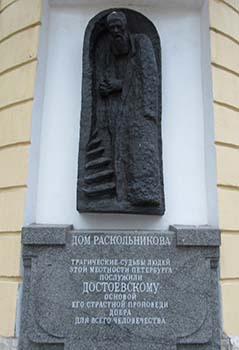 As I walked around the house, I saw the commemorative high relief of Dostoyevsky and the plaque with the inscription: “Raskolnikov’s House. The tragic lives of people of this neighborhood of Petersburg served for Dostoyevsky as a foundation of his passionate sermon of goodness for the entire humanity.” [7] There is an interesting tradition in St. Petersburg: on the first Saturday of July (events described in Crime and Punishment happened in the beginning of July), Dostoyevsky’s enthusiasts gather in this neighborhood to celebrate Dostoyevsky Day. Many bring flowers to place at the bottom of this relief, but some put here … axes, because Raskolnikov used an axe as his murder weapon. (Another reason for tenants of this house to keep the entrance door locked!)
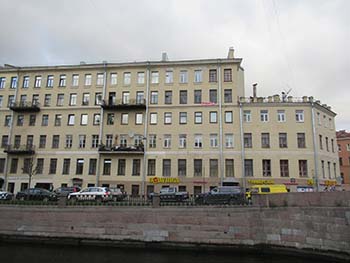 After having found the house of the murderer, I need to find the house of his victim, an old woman, a notorious pawnbroker Alyona Ivanovna. The book presented her dwelling place as “a huge house which on one side looked on to the canal, and on the other into the street.” [8] The building fitting this description is located on the Griboedov Canal Quay, 104: one long side stretches along the Griboedov Canal, another – along Srednyaya Podyacheskaya Street, and the short side looks into Rimsky-Korsakov Street. Dostoyevsky gave another key for locating the old woman’s house – the number of steps that Raskolnikov made while walking there: “He had not far to go; he knew indeed how many steps it was from the gate of his lodging house: exactly seven hundred and thirty.” [9] Dostoyevsky, as a military engineer, was used to measuring distances in steps, and, knowing his obsession with precise details, we can presume that the writer gave us the correct number of steps.
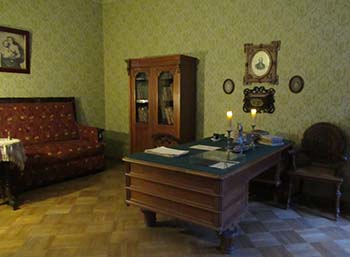 Now I had to take the subway to reach the Dostoyevsky Museum located on Kuznechny Lane, 5. Dostoyevsky rented twice apartments in this building: in 1846, at the beginning of his literary career, and in 1878, three years before his death. The main attraction of the museum is Dostoyevsky’s cabinet where he had written his novel Karamazov Brothers. On the massive desk there is an issue of the magazine, Russky Vestnik, with an extract from Karamazov Brothers, Dostoyevsky’s letters, and one of his favorite novels, Eugene Onegin by Alexander Pushkin. Everything on the table is at the particular place because the writer “paid a great attention to this pedantic order” [13]. There are two candlesticks with candles because Dostoyevsky disliked table lamps and preferred to write by candlelight. Since the writer worked a lot, being constantly in dire need for money because of his gambling problem, he often slept in his cabinet on the sofa. Above the sofa there is a reproduction of Dostoyevsky’s favorite picture, “The Sistine Madonna” by Raphael, presented by Sofia Tolstoy (Leo Tolstoy’s wife). Anna, Dostoyevsky’s widow, wrote: “How many times, during the last year of Fyodor Mikhailovich’s life, I found him standing in front of this great picture in such a deep adoration that he did not hear how I had entered.” [14] On February 9, 1881, Dostoyevsky died on the sofa in his cabinet.
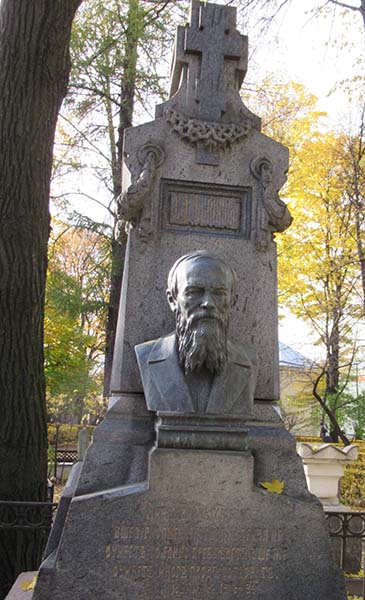 Dostoyevsky was buried at one of the most famous cemeteries of St. Petersburg – the Tikhvin Cemetery at the Alexander Nevsky Monastery. The tombstone consists of the Orthodox cross and Dostoyevsky’s bust placed on two books. The cross is adorned by a garland of thorns symbolizing the writer’s sacrifices and hardships. The bust bears a resemblance to the writer because Dostoyevsky’s death mask was used for its creation. Two books, representing two parts of the Bible, symbolize his devotion to the Russian Orthodox Church; additionally, books symbolize his literary career. The tombstone’s inscription in Old Church Slavonic language is a quote from John 12:24: “…unless a grain of wheat falls into the ground and dies, it remains alone; but if it dies, it produces much grain.” This tomb is one of the most visited, and it is often adorned with fresh flowers.
 Footnotes:

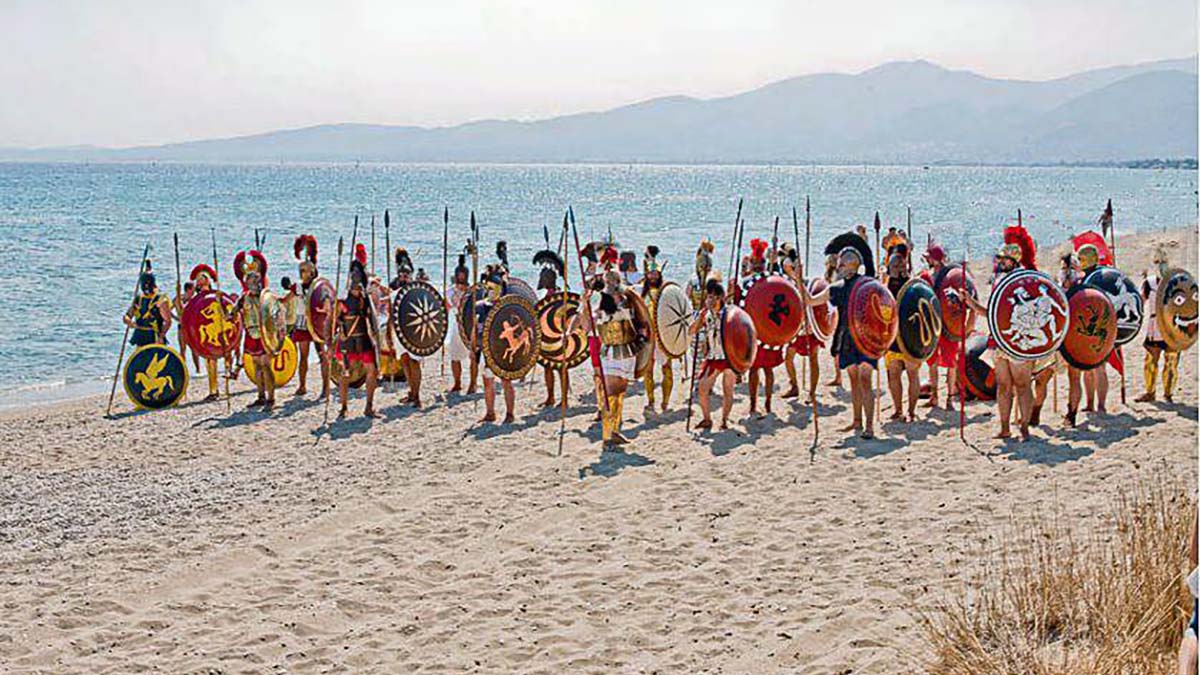


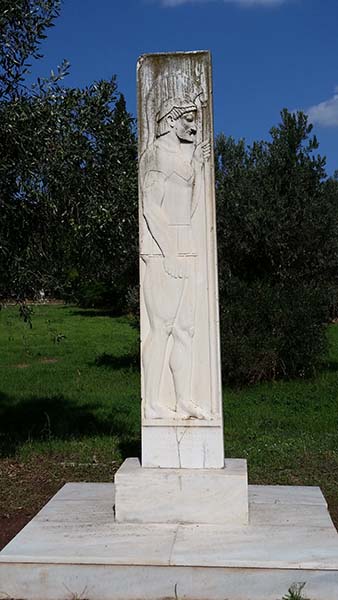 A short walk from the beach, in a pastoral setting surrounded by a grove of trees, 190 young men of Attica are buried where they fell, heaped in a common grave mound, guarded by a marble relief of the Warrior of Marathon. The tumulus is located five kms from Marathon village. The high mound is blanketed with a carpet of grass, surrounded by what was once the battlefield that covered the swampy ground between the beach and Mt. Pentilikon. Several miles inland there is an archaeological museum devoted to artifacts found in the area. Nearby is the grave mound of the eleven Plataeans who died in the battle, including that of a ten year old boy, the youngest fatality of that fateful day
 Shortly before the battle took place, the Athenians knowing they were vastly outnumbered, had sent Pheidippides, a soldier and experienced runner, to Sparta to ask for help. The 140 mile course from Athens to Sparta was rugged and mountainous. Pheidippides ran the course in only 36 hours, but the Spartans agreed to help only once the moon was full, due to religious laws. So Pheidippides ran back to Athens to deliver the disappointing news and immediately afterwards join the small Athenian army to march to the plains of Marathon.
 There is a gallery of women runners too. The first woman to run a marathon was from Syros. She was known as “Melpomene” and she ran 40 kilometres of the 1896 marathon the day after it was officially run. She had been denied permission to run in the official race so she decided to run alone. She asked a priest to pray for her protection but he refused, saying he would only bless official athletes. Her finishing time was 5.30 hrs. Today hundreds of women participate in marathons which are held not only in Greece but world-wide.

 tell the story of the fall of Alexander the Great’s dynasty.
 Photo Credits:


