 by Mara Baudais
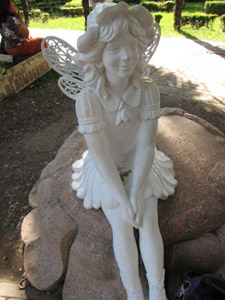 Suddenly it appeared … the fairy wishing well which held the Russian currency we had been looking for! My companion had greatly wanted Russian coins for his grandson’s collection back in Canada. We had been thwarted at every turn. The banks and exchange kiosks were all closed on Sunday. But just as suddenly as the coins had now appeared, a policeman now also appeared, watching as my companion quickly reached forward to exchange American currency for Russian currency from the wishing well. I held my breath, imagining my companion being dragged off to the police station. However, in his hand were the coins he had wanted for his grandson’s collection and, if anything, had given much more than he took.
It was a very strange feeling I had never experienced before. We were in a new country with no local currency nor any way to get any. We had just emerged from a short strip mall of small shops with the same problem facing all of us in the group. So my companion and I finally had to become content to just meander the pathways of the park with no intention of purchase.
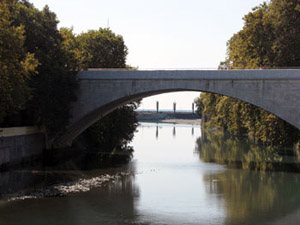 Besides this experience with the fairy wishing well, a few other memorable times are remembered. The pool and fountain housed a single gorgeous pink water lily. A simple foot bridge with a gentle brook below it was graciously set against the afternoon sun and the waters of the Black Sea. We had a great time admiring a portrait artist’s work in the park and befriending a father and his child with our smiles and nods of acknowledgement.
It was a quiet, peaceful time without anything of great consequence happening other than the policeman encounter at the fairy wishing well. It was a simple restful time with local Russian folk and I felt renewed as others before me had probably also felt. And above all, I felt I had set foot in Russia, the homeland of my great grand-parents.
Designed in l898 this park was originally established for the pleasure of Russia’s Tsars who would enjoy extended vacations in Sochi. The subtropical climate of Sochi, on the Black Sea, is the furthest area south in Russia.
 It is favourable climate — April to November — with summer — July and August — being around l8 degrees in temperature. The warmest sea temperature for swimming is in July and August at 26 degrees. Many subtropical plants flourish—magnolia, eucalyptuses, palm trees, oleanders, rhododendrons, azaleas and yuccas. Citrus such as tangerine and lemon also grow here.
Today both locals and tourists spend extended times in Riviera Park to enjoy nature. One of the favourite areas of the park is the ‘Glade of Friendship’ or ‘Friendship Alley’ established in l960. It is mainly a magnolia grove which was planted by a Sochi-born cosmonaut to promote peaceful space exploration. There is also a botanical garden next to the park which contains trees and shrubs from around the world.


If You Go:
♦ Sochi, Russia on Wikitravel
♦ Visa: Not necessary by cruise ship or ferry; otherwise visa necessary which takes several months.
♦ By Air: Moscow and St. Petersburg as well as flights from Vienna and Istanbul.
♦ By Water: Ferry from Trabzon, Turkey, three to five hours May-Oct. twice a week; from Batumi, Georgia, 4.5 hrs., daily
♦ By Train: 2.5 hrs. from Moscow
♦ By Car: Through Ukraine and Turkey, 1660 km from Moscow

Private Arrival Transfer: Sochi Airport to Sochi Arrival Hotel
All photographs by Mara Baudais:
The fairy wishing well holding Russian coins
The footbridge from the harbour to the park
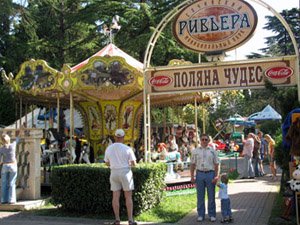
Entrance to amusement section
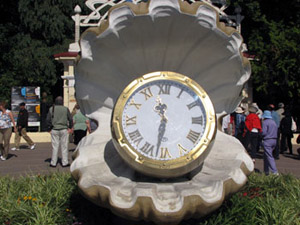
Clam & Clock – Statue
About the author:
Mara Baudais writes creative non-fiction, travel articles, philosophical essays, memoirs and poetry. These are mainly based on traveling and/or a deeply insightful experience. Besides extensively traveling in Europe, she has visited North Africa, Thailand, Israel, Turkey, China, Inner Mongolia, Tibet, Sri Lanka post-tsunami, Guatemala, Canada (coast to coast), local areas of the B.C. coast and the Yukon. Recently was a six month trip from Great Britain to the eastern Mediterranean and the Black Sea countries. The most recent trip was to Russia with a river cruise, Moscow, St. Petersburg and Sergiev Posad, a medieval pilgrimage town. An upcoming trip is a four month trip to Mexico and the Caribbean.
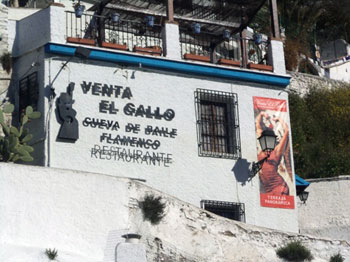
 “Tourist traps,” `he sniffed,” and anyway the performances are only at night”. Little did he know what I found.

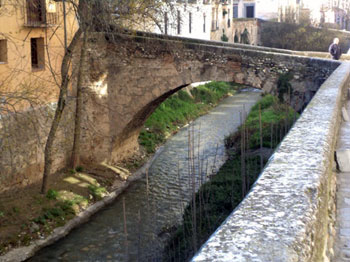
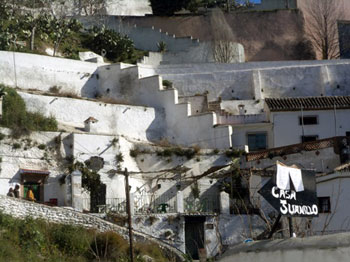 Many of these caves, warm in winter, cool in the summer, are still inhabited today, well appointed and furnished. Climbing white washed stairs from one level to the next, I came past many tablaos, the venues where nightly performances of Flamenco take place and which earned Sacromonte the byword of tourist trap. Up to a point this is justified, but if you know what to do and where to look you get to experience the real thing.
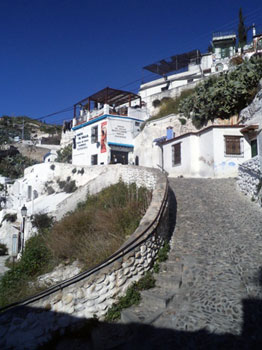 They waved me inside and I was the recipient of a performance just for me and definitely a spell bound spectator to the real thing.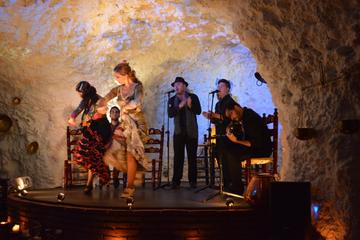
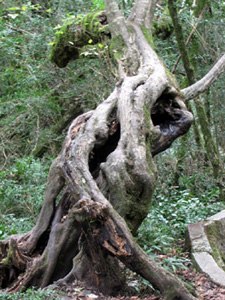 Thunder, then lightning flashed above the forest. Light rain fell, then more. My group, all passengers from my ship that had docked at Sochi, had quickly scampered ahead at the first crack of thunder. Somehow, suddenly it had happened…I was on my own, on increasingly slippery granite, limestone steps, roots and uneven chunks of clay.
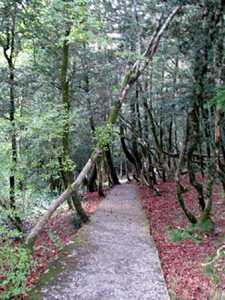 It had become impossible for me to keep up with this very mobile group. At first I found it quite amusing to see the guide on the steps with her wobbly spiked red heels. After the third trip to see if I was still alive, she never returned to me again. That was not quite so funny! I was alone somewhere in this Reserve with a storm brewing and the dusk increasing.
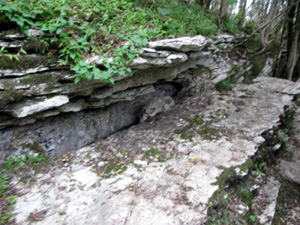
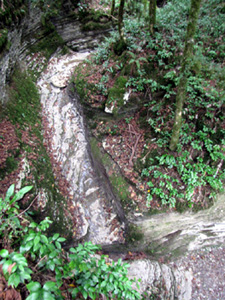 I gently touched the fossils, lingering as long as I could with thunder, lightning and gentle rain as my companions. I fingered the ancient layers, marvelling that at one point in prehistory these same crustaceans below my fingers were once part of a sea. I tried to capture the eternity they held. I now knew being alone was a gift with which to experience this ancient place and I was so grateful for this solitary time.
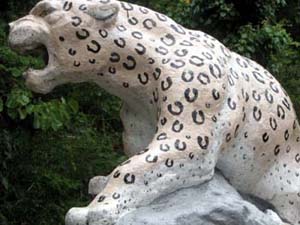
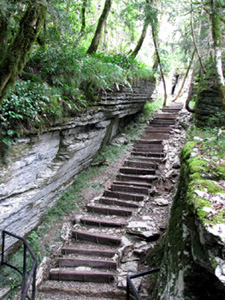 I carried on, into darkness now. Surely it couldn’t be much further. Where was the rest of the group? I passed a lone statute of a leopard as if leaping. My steps quickened. Why was this statue here? I later learnt that this area is home to the Persian Snow Leopard, an endangered species.
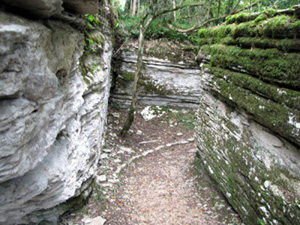 Human habitation goes back 500,000 years and there are undisturbed remnants of 150 prehistoric villages. The area was a prince’s hunting reserve called ‘Kuban Chase’ in the l880s. In 1906 the area was returned to settlers. In 1924 the area was referred to as the Kavkazskiy Reserve. In 1999 it became a UNESCO Natural World Heritage Site, 120 km east to west and 50 km north to south.
 nhabiting this area are 384 species of vertebrates. There are 60 mammal species including wolf, bear, lynx, wild boar, deer, chamois and reintroduced European bison which are globally endangered. There are 246 species of birds, some endangered as well as l5 species of reptiles, 7 of amphibians, 12 kinds of fishes and 2500 recorded insect species from a projected total of 5000.

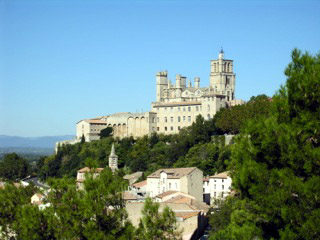
 Beziers is ancient. It has been settled since neolithic times, predating the arrival even of the wide ranging Celts. The Phoenicians are credited as being the first settlers and the city itself takes its inception as 575 BC, only 25 years younger than ancient Marseille. The Romans re founded the city in 36 or 35 BC as a settlement for retired veterans renaming it Colonia Julia Baeterrae Septimanorum. Even the Islamic Moors had a short reign as rulers here from 720 to 752.
 With difficulty, amid the winding streets of the old city where we actually came upon a sign pointing in two separate directions to the cathedral, we eventually found ourselves in a shaded square staring high up at the steeple of Saint Nazaire. To say it is awe inspiring is saying the least. It oozed poignancy; I half expected the stone to speak or ghosts to stare down from its heights.
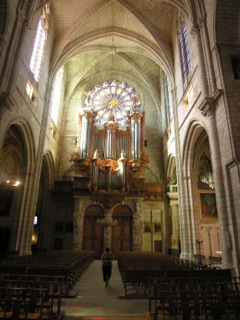 The Albigensian Crusade was initiated by Pope Innocent III, a most ironic title at best, in 1208, against a growing religious splinter group known as the Cathars ( from the Greek Katharos meaning pure). The crusade was to persist until the last of the Cathar “parfaits” was burned at the stake in 1321. What the crusade missed the Inquisition finished. The Cathars, who have been referred to as the Buddhists of Christianity, held there were two gods at play in the world and the world of man was created by the evil god, the satanic god, and the only way to escape was to live a pure life and after several incarnations one would exit the vicious cycle. As part of the purity were such requirements as vegetarianism and celibacy. Of highest esteem were the “parfaits”, those who were most achieved in their quest for heaven.
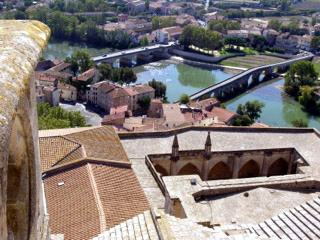 On July 21, 1209 the crusaders appeared at the doorstep of the city and sent word the Catholics could leave and be spared the fate of the resident Cathars. In a remarkable display of loyalty the Catholics chose to stay with their friends and neighbours. The forces of the Crusaders quickly overran the defences and fell upon the inhabitants like wolves. None, neither man woman nor child, Catholic or Cathar, were spared.
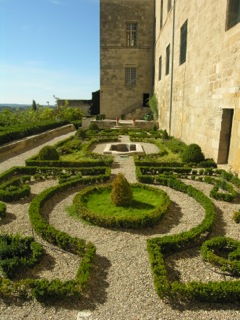 Clambering down we emerged at the square below the heavenly directed spire. An emblazoned plaque sits as a silent reminder of the dark deeds of so many years ago. To be remembered. That is good.

 The cheery pedestrian ways, squares and cafe’s brought us back to the present and the witnessing of the fact life goes on. And under the Sun of southern France colour and liveliness are even more rampant. Beziers is like its urban kin throughout southern France. It is beautiful and a treat to explore.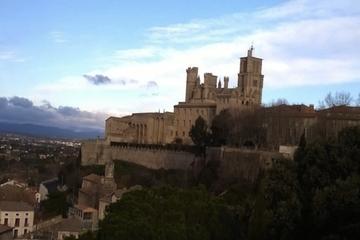
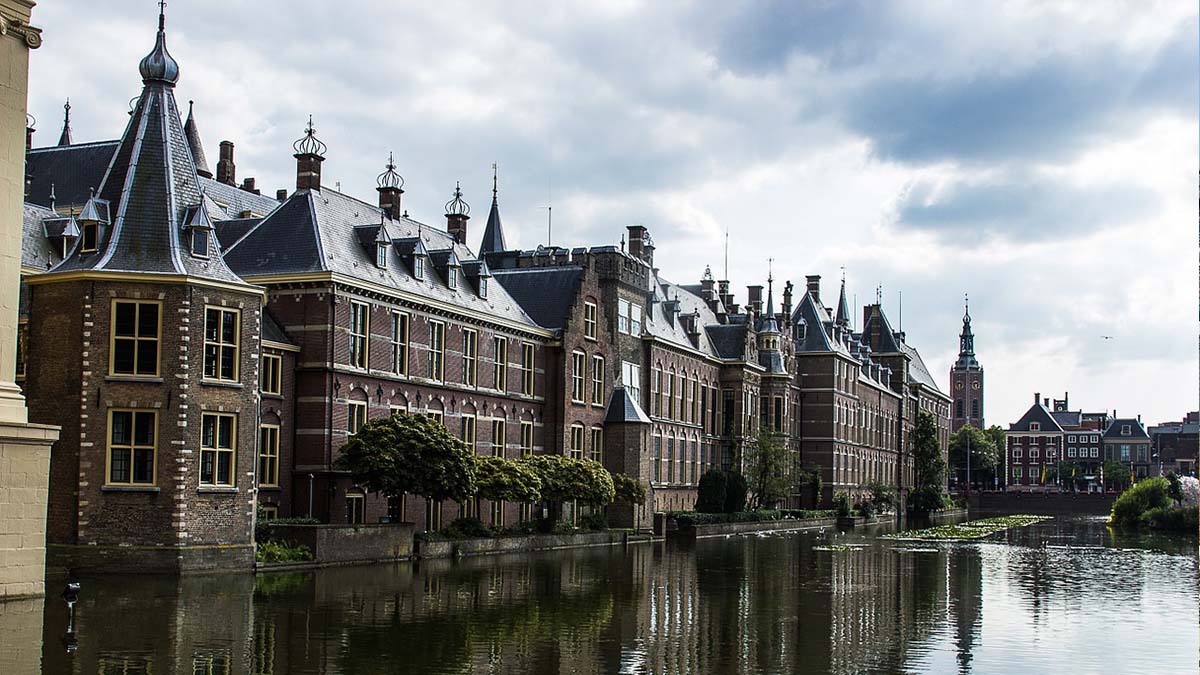
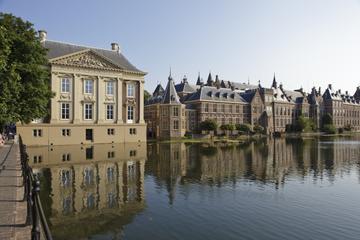
 If you enjoyed the liberalism, museums and art galleries of Amsterdam, why not continue on less than an hour’s train ride away in the far less touristy yet decidedly more international ‘city of peace and justice,’ Den Haag (‘The Hague’)? As well as these kinds of attractions, Den Haag’s human rights law courts – the International Criminal Court, International Criminal Tribunal for Former Yugoslavia, and International Court of Justice – offer free, extraordinary experiences that can’t be had anywhere else in the world. Den Haag is also home to the
 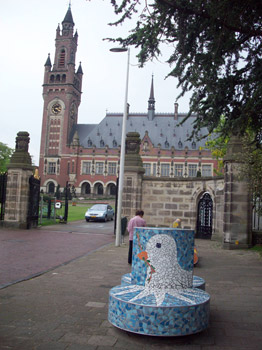 Most people visiting Den Haag visit the Peace Palace. Currently celebrating its 100th anniversary, the Peace Palace established Den Haag as an international centre for human rights. At the visitors centre, Tuesday – Friday, 10 – 5pm (4pm in winter), you can enjoy a free short film and interactive exhibition about all that is housed here: the International Court of Justice (United Nations court that settles legal disputes between the 192 United Nations member states), the Permanent Court of Arbitration, the Peace Palace Library and the Hague Academy for International Law (visit takes 30-45 mins). On weekends, you can tour the palace and its courtrooms for €8.50. Book tickets
 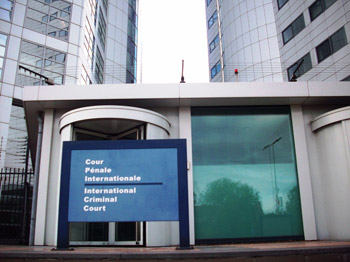 Over in another area of Den Haag, the International Criminal Court – which places on trial alleged perpetrators of crimes against humanity – also offers free tours: Tuesday to Friday, 10am – 12. Incredibly inspiring, the tour gave me an amazing insight into the lengths the court goes to, to enable victims of human rights abuses to testify: from organising visa-free travel to Den Haag, to teaching victims about computers and court rooms, giving them psychological counselling, and allowing them all the time they need to share their experiences with the court. BOOKING IS REQUIRED 1 MONTH ahead (2 months for groups of 5+) by emailing in the form found here. You can also watch cases. No need to book – just remember your passport. Check the
 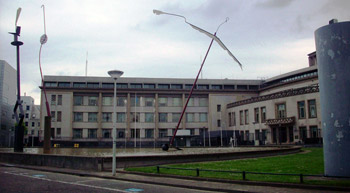 I watched a case, actually two – not at the International Criminal Court but at the International Criminal Tribunal for Former Yugoslavia (ICTY), the first international war crimes tribunal since WWII. If you’ve travelled to Bosnia, Croatia, Serbia or Kosovo, you’ll be very aware of the 1990s conflicts that went on within these regions. Or perhaps you remember the horrific images in the news? Serbian soldiers holding the Bosnian city of Sarajevo under siege for almost 4 years, of refugees fleeing their newly declared nation of Kosovo, of mass slaughter upon mass slaughter. Perhaps while Europe suffered another genocide, you were in a classroom learning about Nazi Germany or in a movie theatre watching the newly released Schlinder’s List? The ICTY is today’s Nuremburg Trials.
 Infamous war criminals such as Radovan Karadžic attract visitors, but for the little-known, I was pretty much it. After passing through security, I was escorted to a small room with a large window into a court room. Watching a live court case of this magnitude was fascinating: two men charged with genocide, a policeman either side; an American lawyer; a British judge; two additional judges; a witness; the British judge instructing the witness to refrain from looking at the accused every time he began to speak; simultaneous language translation into English, French and Bosnian-Croatian-Serbian; the American lawyer defining the word ‘payment’ as a catch-all term in English as opposed to its more specific meanings in Bosnian-Croatian-Serbian.

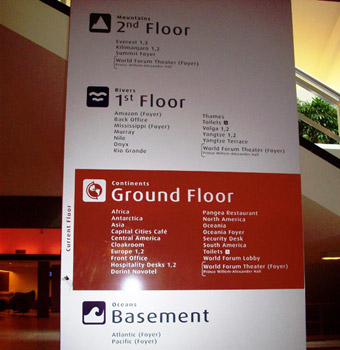
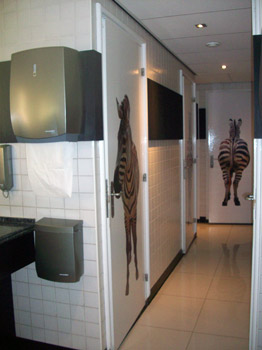 Leaving the ICTY, I notice the World Forum Convention Centre next door and decide to check it out. Glad I did. The interior is very, very interesting! There’s a world map carpet, zebra toilets, a basement themed by the world’s oceans, a ground floor themed by the world’s continents, a first floor themed by the world’s rivers, and a second floor themed by the world’s mountains. Den Haag has a lot of novel surprises like that. Effort seems to be put into making things that extra bit fun, revealing another way the city cultivates all that is good about humanity. You can see it everywhere: in the bike and pedestrian culture, in the bustling historical squares full of cafes and bars, in the parks and forested areas (outnumbering those of any other Dutch city), and in the culturally diverse shops and events. There are so many things to do that I haven’t even mentioned. Visit the