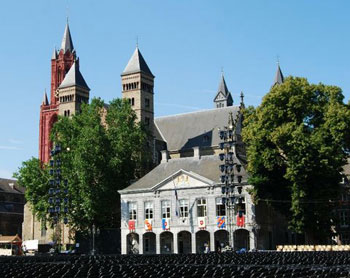
Maastricht, The Netherlands
by Keith Kellett
I was sitting in a café in Maastricht, and was rather intrigued by the name. Grand Café D’Artagnan. Of course, I was familiar with the name; the hero of Alexandre Dumas’ trilogy of novels, Twenty Years After, The Viscount of Bragelonne and, of course, The Three Musketeers. Even if you haven’t read the books, the name has been familiar to movie-goers ever since Douglas Fairbanks buckled his swash across the silver screen in 1921.
But, what was the connection with Maastricht?
Further enquiries revealed that he’d been killed here, during the Siege of Maastricht in 1673, during the Franco-Dutch War, and his statue still stands in Maastricht.
 It appeared that he was a real person, one Charles de Batz, who joined the Musketeers in 1632, using his mother’s maiden name, D’Artagnan. There, the resemblance ends, for Dumas fictionalised and romanticised his character heavily.
The city lies on a narrow appendix of the Netherlands, squeezing between Belgium and Germany. Indeed, when the railway first came to Maastricht, the first station down the line to the east was Aachen, in Germany; to the west, Liège, in Belgium. Nearly thirty years were to pass before it had a rail connection with any other city in the Netherlands.
 The reason for this is its important strategic position on the River Maas, where the Romans, in their progress across Europe, built a bridge, around which grew a town which they called Mosae Trajectum, or ‘Maas Crossing’, from which the name Maastricht is derived.
The Netherlands, as we know it now, did not exist until 1815; before that, Maastricht changed hands many times. In the Middle Ages, it came under the joint rule of the Duke of Brabant and the Prince-Bishop of Liège, until it was conquered by the Spanish in 1579 during what was to become known as the Eighty Years War.
In 1632, the city returned to Dutch hands, as part of the ‘Republic of the United Netherlands, but only held for less than forty years, before the French took it in the Franco-Dutch wars in 1673. Their troops occupied it until 1678, when it was returned to the Dutch.
 But, the French came again; briefly during the War of Austrian Succession in 1748, and, for a longer time, by the forces of Napoleon in 1794, who regarded it as a part of France until its restoration to the Netherlands in 1815.
That wasn’t the end of it, though. The ‘United Kingdom of the Netherlands’, as it was called also included provinces which are now Belgium. In 1830, these provinces revolted, and seceded from the United Kingdom of the Netherlands to form their own country, Belgium. Some European countries informally recognised the new country straight away, but it was not until the London Treaty of 1839 that Belgium became ‘official’. But, Willem I, the King of the Netherlands, mindful of Maastricht’s important strategic position, gave orders that the narrow strip of land was to be held for the Netherlands at all costs, regardless of the wishes of its citizens.
 Perhaps it was this central position which led to its being chosen as the meeting place for Europe’s leaders in 1992. They discussed the mechanism by which the European Community became the European Union, and laid the groundwork for Europe’s common currency. At the end of their conference, they signed the Treaty of European Union, better known as the Maastricht Treaty.
Some well-known people made Maastricht their home. One noted citizen was Jan-Pieter Minckeleers, the inventor of the gaslight. His statue stands in the Markt, holding a wand from which issues a gas-fuelled flame.
But, a more famous citizen is the charismatic violinist and orchestra leader André Rieu. Although he tours the world with his Johann Strauss Orchestra, he gives an open-air concert in his home town every year. And the world comes to Maastricht to see and hear him.
He is, the people of Maastricht say, the best thing ever to happen to their city. His fame has spread far further than that of Minckeleers, of whom few people have ever heard. Or, even D’Artagnan!


If You Go:
www.holland.com/uk/tourism/Cities-in-Holland/Visit-Maastricht.htm
en.wikipedia.org/wiki/Maastricht
www.online-literature.com/dumas
About the author:
Having written as a hobby for many years while serving in the Royal Air Force, Keith Kellett saw no reason to discontinue his hobby when he retired. With time on his hands, he produced more work, and found, to his surprise, it ‘grew and grew’ and was good enough to finance his other hobbies; travelling, photography and computers. He is trying hard to prevent it from becoming a full-time job! He has published in many UK and overseas print magazines, and on the Web. He is presently trying to get his head around blogging, podcasting and video.
All photographs are by Keith Kellett.
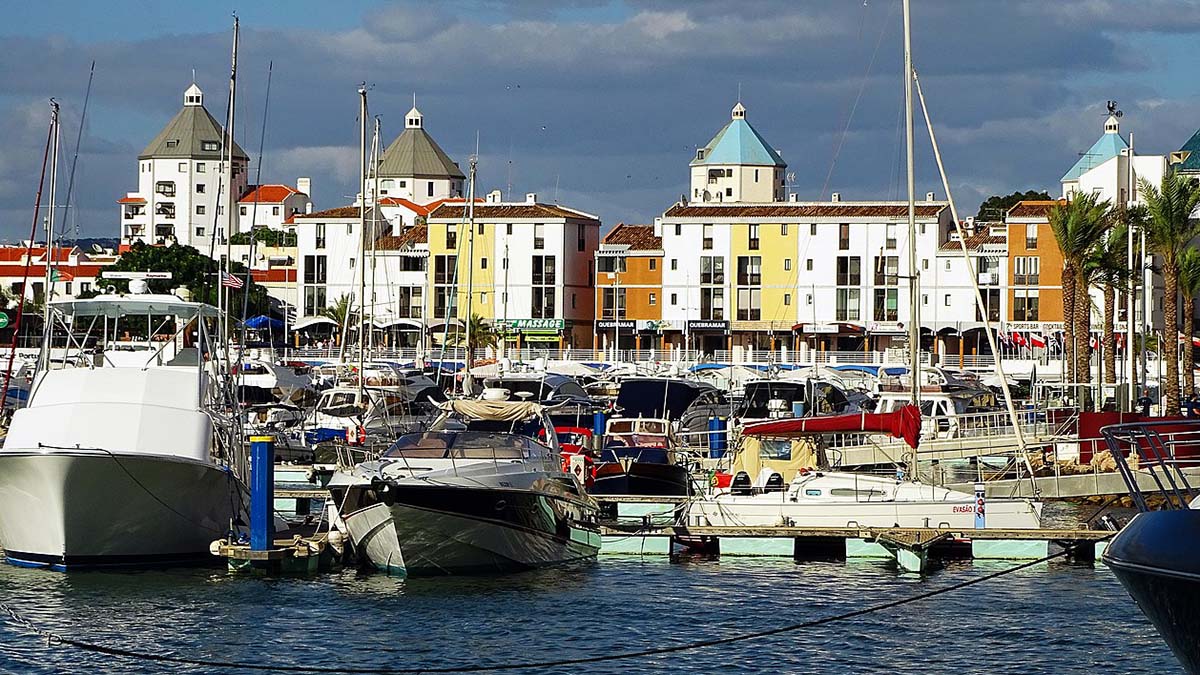
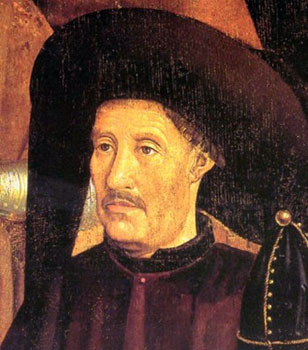 In 1418 Henry the Navigator became Governor of the Algarve, although at the time he was only plain Prince Henry. He founded a School of Navigation in the town of Sagres, which helped to put Portugal on the map in terms of seafaring and plotting long voyages on the ocean waves. Sadly the school was destroyed by the army of Sir Francis Drake in 1587. Henry the Navigator’s other achievements were to discover new territories in Cape Verde, Madeira, Sierra Leone and the Azores.


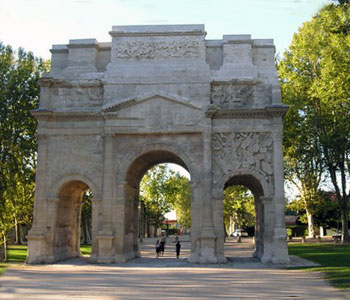 Sun washed Arles comfortably incorporates its dynamic vestiges of Rome into an appeal which draws throngs for a wealth of experiences. To all that is southern France, the food, wine, music, ambience, is also added the unique Van Gogh walking tour which takes toes wandering through town and discovering sites where Van Gogh created many of his greatest paintings.

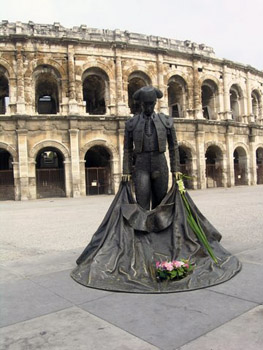 From its earliest days it was a haven for Celts worshiping at its natural springs. It became a Roman colony around 28 BC and bestowed upon it were edifices yet existing and functioning. The hand of Rome lay heavy upon this city.
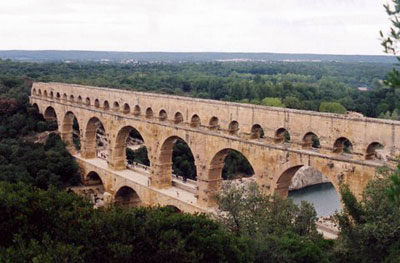 Though you cannot see it from the tower there is a seemingly unimportant ruin within the old city. A ruin that is the terminus of an amazing aqueduct system which once brought life giving waters 51 kilometres away from Uzes. Its most compelling attribute is the UNESCO World Heritage site at Pont du Garde. Here the aqueduct spanned the wide valley of the River Garde and though water no longer courses through its arteries it remains as a stunningly awe inspiring site. Its three arches rise high over the valley where once 200 million litres of water per day passed from Uzes to thirsty Nimes. It is claimed the system may have remained in use into the 9th century. Its continued use as a toll bridge helped the incredible structure survive. Today over 1.3 million visitors annually are drawn to the site and its associated museum.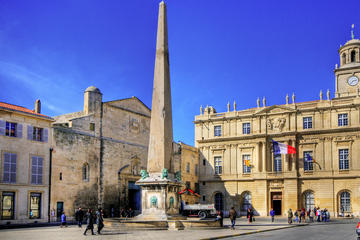
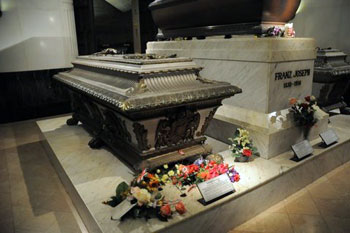
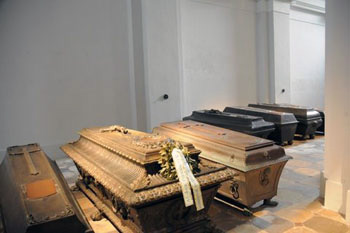 There, in that church crypt, is most of the royalty that led the Holy Roman, and Austro-Hungarian empires. The history of those several hundred years, 1618 to 2011 (the last Habsburg to make it in was laid to rest in July 2011), shaped Europe and the Americas. It wasn’t a well-defined, clearly delineated empire that the Habsburgs governed. At various times they ruled 44 nations, duchies, and a variety of ethnic gatherings; some were part of the Holy Roman Empire, some were not – such was the political jigsaw puzzle of Europe back then.
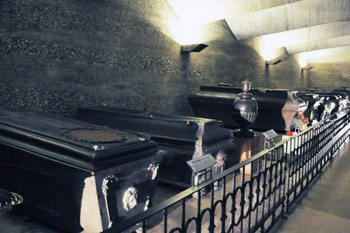 Anna, in her will, written in 1617, set aside funds to begin building that crypt. Good thing she did – she died a year later. Her husband died the following year. Politics and war put off the crypt building until 1633. Their burials were the beginning of a practice that reached its royal conclusion this year. On July 4, 2011 Otto von Habsburg, also known as Otto of Austria, “former head of the House of Habsburg and Sovereign of the Order of the Golden Fleece (1922–2007) and former Crown Prince (1916–1918) and, by pretence, Emperor-King (from 1922), of Austria-Hungary—or formally, of Austria, Hungary and Bohemia, of Dalmatia, Croatia, Slavonia, Galicia, Lodomeria and Illyria, and of Jerusalem…” (There’s more, but you get the idea.) — died. He was 98. And that should pretty much do it for the House of Habsburg.

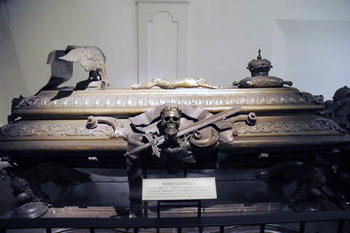 From 1618 on, casket after casket was put in place, making it necessary to expand, creating rooms for more Habsburg royalty. One huge room was designed just to hold the gigantic, highly embellished tomb of Maria Theresia, probably the most famous of all the Habsburgs. The artwork on Maria’s tomb is astonishing. The practice of interring organs in one church, the heart in another, and the body in the crypt of the Capuchin church began with King Ferdinand IV of the Romans in 1654. He left orders that his body was to go to the Capuchins; his heart to Augustinerkirche; and the urn with his viscera to Vienna’s St. Stephens. A few urns remain with the Capuchins. It’s tad ghoulish, to be sure, but a custom – unique to the Habsburgs – that exists to this day. The last three-stages of separation took place July of 2010 for Otto von Habsburg.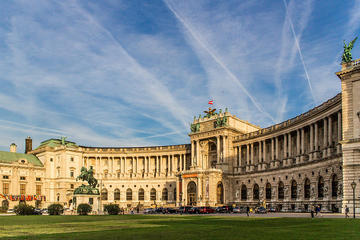
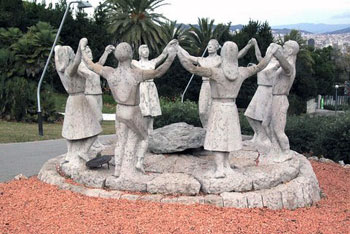


 I had read in a guidebook that on Sundays at noon local Barcelonians gather together to dance the Sardana in the square by the Barcelona Cathedral in the Gothic Quarter where my hotel was conveniently located. The Sardana was on my “to-see” list, but I only had one Sunday in Barcelona and I wanted to spend the day hanging out in Gaudi’s “must-see” Parc Guell on the other side of town.
 When I wasn’t watching the dancers’ feet in exasperation, I found myself alternately intrigued by an elderly man in one of the larger circles and two young couples who had formed their own circle on the periphery.
 While tourists streamed in and out, I stayed for the entire performance that lasted almost two hours. At one point a Sardanista, who “worked the crowd” to solicit donations for the local Sardana organization, accidentally hit me in the back with her foot. I was fine, but profusely apologetic, she kept coming back to me every fifteen minutes to assure herself that I was okay. After the performance she told me, through her French-speaking friend (I know some French), that I must return the following day (Sunday) at noon for the next Sardana performance.


_(43587417970).jpg)

