Salzburg, Austria
by Jessica Peter
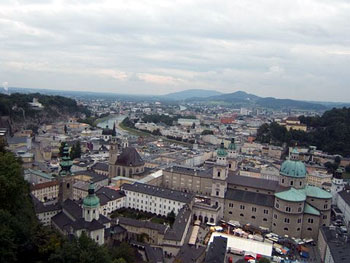
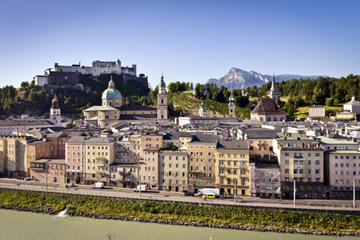
My congested breath puffs out in visible clouds as I lumber down the trail from my hostel. In my hazy, fever-induced state, it takes me a while to clue in that large groups of people are headed in the same direction, toward Salzburg’s Altstadt (Old Town). I write them off as other tourists braving the cold to see the heart of the city. My first glimpse of the village through the trees tells me otherwise, and it isn’t just my fever. Underneath the looming hilltop fortress, the town is quaint, baroque, and lit up like Vegas.
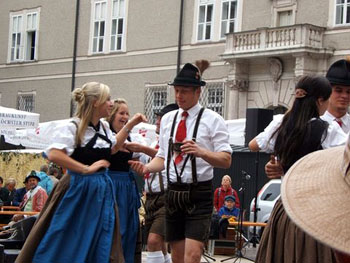 Spinning rides and vendor booths pack the central square. They are selling wooden toys and traditional crafts and that curious gingerbread that seems to be a fixture of the German-speaking festival: heart-shaped with endearments printed in icing, meant to be worn around the neck. There’s music in the streets, and a group has gathered around to watch an old couple who is dancing a slow waltz. I’m surprised to see how many people have arrived wearing the traditional lederhosen and dirndls. As I squeeze my way between hordes of carousing Austrians, I feel as if I have arrived in the wrong city. I hadn’t pictured the town of Mozart’s birth to have such activity.
But then the smells reach my nostrils and it doesn’t matter. There’s the salty warmth of pretzels, the tang of sauerkraut, and a deeper scent that just says food. I dig into a giant cheesy pretzel as an appetizer, and then find the cluster of food booths. Sausages and schnitzel seem to be the main order of the day. I make my way to a schnitzel booth and dig right in, rubbing my hands together to keep warm between scooping massive forkfuls of the tender breaded veal.
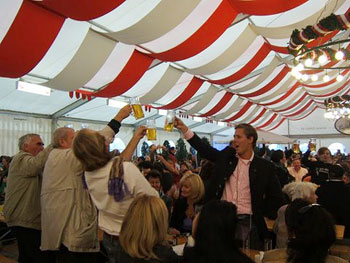
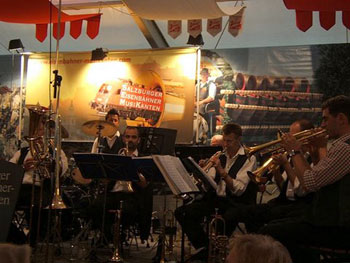
Though it’s only late September, I’m shaking with the chill by the time I’m finished. I use my own cold as an excuse, and try to make a guilty return back to the hostel. But then I hear music that to my ears could only be described as oom-pah-pah coming from the large red-and-white-striped tent I had somehow missed on my walk in. Inside, a folk band in lederhosen plays to hundreds of spectators singing, eating, dancing on benches, and clanking giant steins of beer. There’s also the element I was most desperately missing: warmth! I feel like I’m the only non-Austrian in the


 The older gentleman sitting across from me tries to engage me in conversation, so I bust out my best German – in my poor imitation of the Northern German accent I had learned in school. I might as well have been speaking gibberish to the Austrian, so we settle on my native tongue. A pair of women join the stilted English conversation, and I finally learn that September 24th is the Feast of St. Rupert, the patron saint of Salzburg. The festival in town occurs on the weekend each year closest to that date.
 But then the three Austrians start a new game that I can only describe as ‘inebriate the foreigner’. A second beer from my new friends is in order, but that isn’t all. I’m obliged to accept a glass of Sturm, a young red wine that tastes amazingly like grape juice. Dangerous for a heavy drinker, but very tasty. A wink from the man and scrunched noses from the women tell me I’m in trouble at their next plot. A girl wearing both a long dirndl dress and a barrel comes by our table. The Austrians hand the girl money, and a single shotglass of clear liquid is placed in front of me. All eyes turn my way and I feel a twinge of foreboding.
“Schnapps,” the man says ominously, with delight twinkling in his eyes.
It burns all the way down, but clears my sinuses on the way. The women howl with laughter at the faces I make and I have to turn down the offer of a second shot. Just one was enough to warm me all the way back to the hostel after eventually saying ‘Auf Wiedersehn’ to my Austrian friends.
Private Tour: Salzburg City Highlights Tour
If You Go:
The feast day of the patron saint of Salzburg, St Rupert, is September 27. St Rupert’s Fair occurs on the nearest weekend (September 22-26 in 2010). However, many European cities celebrate the feast day of their patron saint in various ways. Find the patron saints of the cities you’ll be visiting with this list from Wikipedia and be sure to check if you’ll be in town during their feast day.
About the author:
Jessica Peter has deep-seated obsessions with writing, crafting, and travel. Some of her favourite travel experiences include watching busking bands, searching out street art, and sampling local food. On her “Bucket List” is travel, pretty much everywhere. Find her at her creativity blog, jessdoesstuff.blogspot.com or on Twitter twitter.com/jessicapeter1
All photos are by Jessica Peter.
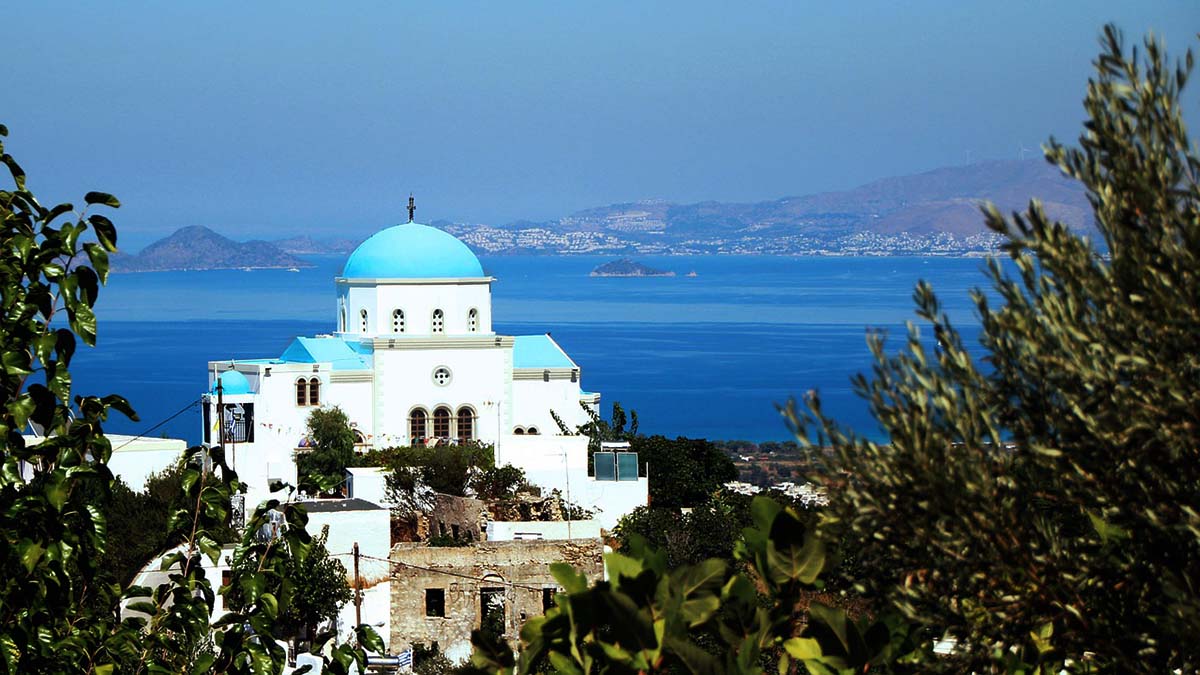
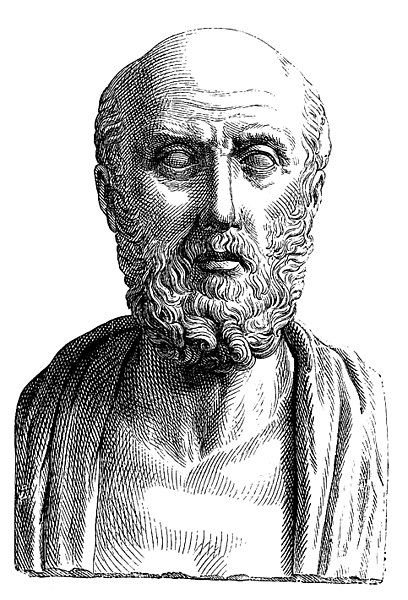
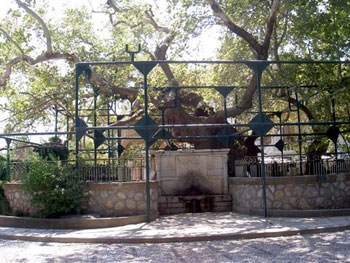 Hippocrates Tree is located in Kos Town. It is said Hippocrates stood under this plane-tree and lectured his medical students. Although it is unlikely that it is the actual tree under which Hippocrates stood, a far more plausible explanation is that the current tree is a descendant of the one under which Hippocrates lectured. Many health establishments around the world have taken cuttings from this tree and planted them in their own grounds. Hippocrates tree is easy to distinguish as it is supported by a large metal framework. I could not help but feel impressed that a man to whom medicine owes so much might have once stood in this same spot.

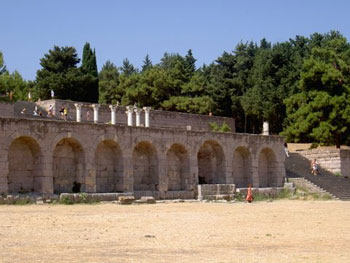 The sick would visit the Asklepion which was staffed by several therapists, priests and later doctors. The patient stayed for a few days and might take part in massage, gymnastics, bathing and follow a special diet.
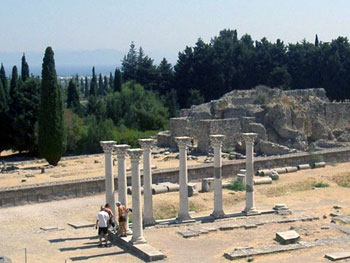 As you approach the Asklepion it opens out in front of you and you can clearly see the three levels that make it up. Naturally, the main temple to Asklepios is at the top. I made my way slowly to the top, partly due to the heat but also so as not to miss anything on the way. My guidebook informed me that the lower levels were once accommodation and that the second terrace contained smaller temples, including one to Apollo. The authentic columns, arches and stone steps still look impressive and make you wonder about the people who used the Asklepios as a centre of healing all those years ago.
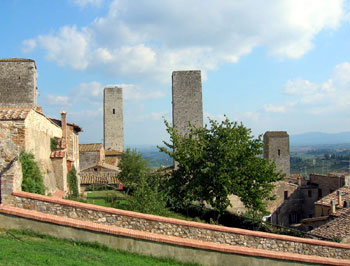
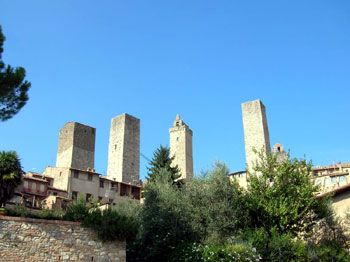
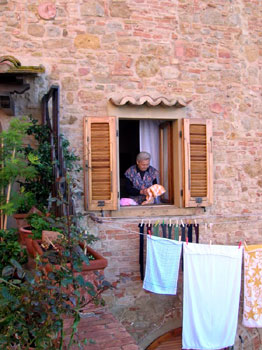 The first written records of this Estrucan village are from 929 AD. Named for the former Bishop of Modena in the 10th century San Gimignano is a Unesco World Heritage site and is also known as the city of beautiful towers. During The Middle Ages while at the peak of it’s influence this town boasted fifty-six towers, some standing more then fifty meters tall and visible from anywhere in the Elsa Valley. These towers were not only status symbols to local families as well they served as a medieval early warning system should would be invaders approach. Because of war, the Black Plague in the 14th century, urban renewal and other catastrophes only fourteen of the towers remain and only one, The Grossa tower was open for our viewing.

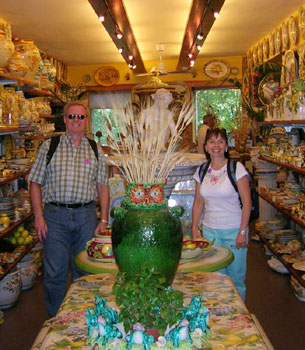
 Being surrounded by so much history can be a little over whelming so we took a time out to clear our heads and check out the terra cotta and glazed pottery. Crafts and pottery that have been produced by local artisans are abundant in the open-air market and shops along Via Giovanni. I couldn’t resist bringing a handcrafted ornament home for my grand daughter.
 Fattorio Lischeto boasts a restored rustic farmhouse where we enjoyed the best of Tuscan cuisine and the company of fellow travelers from around the globe. The panoramic views of the surrounding farmland, Cypress groves, rolling hills and valleys could only surpassed the crispy crostini and pancheta, organic pecorino cheese, panchino tomatoes freshly picked from the garden and a drizzle of virgin olive oil. I still smile when I think of the organic Chianti.
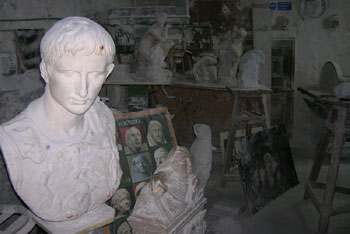 While San Gimignano is a busy tourist destination Volterra is what I had envisioned when I thought about an ancient Estrucan town. The City of Alabaster as it is known became important in the 18th century in part because of the quality and transparency of the alabaster in the region. To this day craftsman work in the dust filled workshops where you can watch them work and spend whatever amount you desire large or small for your memories. In celebration of their history of carving Volterra’s Museum of Alabaster boasts over three hundred original pieces, displayed in a 17th century convent.
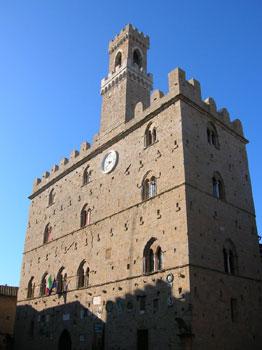 Early Roman influence is apparent in Volterra with the recent (in Tuscan time) discovery of the ruins of the Theatre of Vallebona from the 1st century and spa buildings from the Augustun age (5th century). Many of the archaeological finds from digs in and around Volterra and the Elsa Valley are displayed in the Guarnacci Museum, one of the first public museums in Europe that was founded in 1761 while the Romanesque style church of St. Agostino is the home to remnants of famous frescoes.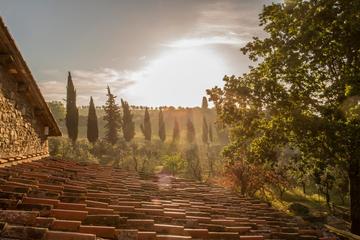
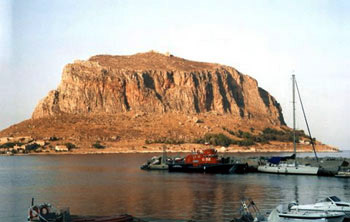
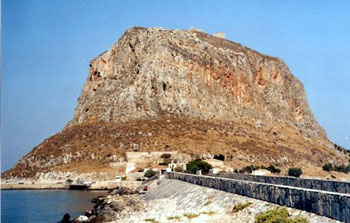 Hidden on the slopes of a great rock known as the Gibraltar of Greece, Monemvasia is one of those rare treasures that tourists usually by-pass. It’s a magical experience visiting this little medieval site. The entire town is walled and invisible from the shore. The steep rock, crowned with its Venetian fortress, is connected to the mainland by a narrow causeway. Motor vehicles are prohibited, but a mini bus takes you free of charge to the old city gates.

 From Monemvasia I took the early morning bus heading for Koroni, another Venetian town. After a circuitous route through Sparta, I arrived at Koroni that evening. The castle of Koroni was lit by a mystic green light. Above its turrets, Mars blinked its red beacon; a crescent moon illuminated the sky over the twinkling lights of the village; little kaikis bobbed on the moonlit sea.
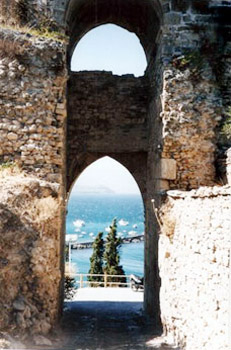 The old town of Koroni has long since fallen into ruin, but the Venetian architecture has been preserved, with wrought iron balcony railings, arched windows and doors. The largest, two-storied mansions and public buildings are on the waterfront, while higher up are the smaller Laika (folk) houses with small inner courtyards. One distinctive feature of the Koroni houses are the curved tile roofs and unusual terracotta eave decorations: instead of the usual palmettes, these are like small winged angels.
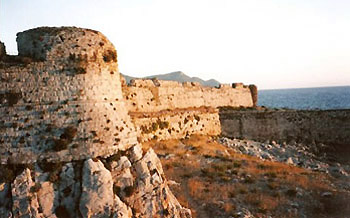 Which set of the many instructions, bus schedules, and info that I was given by Greek locals would prove to be the right one? After various suggestions I decided to go with the English speaking baker who even drew me a map to explain which village to get off to catch the bus to Pylos/Methoni which, he said, went past every hour. According to his directions, I disembarked at the cross-roads at a village called Rozymalos and waited at a kafeneion for just over an hour until the bus finally arrived.
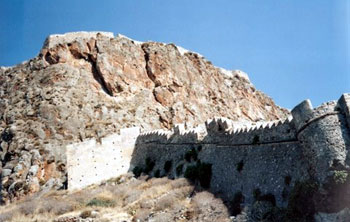 Methoni’s 15th century Venetian fortress expands over the whole area of the south west cape. Built over ancient walls, it was the prize of many invaders over the ages. The walls loom imposingly over a setting filled with memories of the past. The castle has a protective moat on the land side and is surrounded on three sides by the sea making it impenetrable.
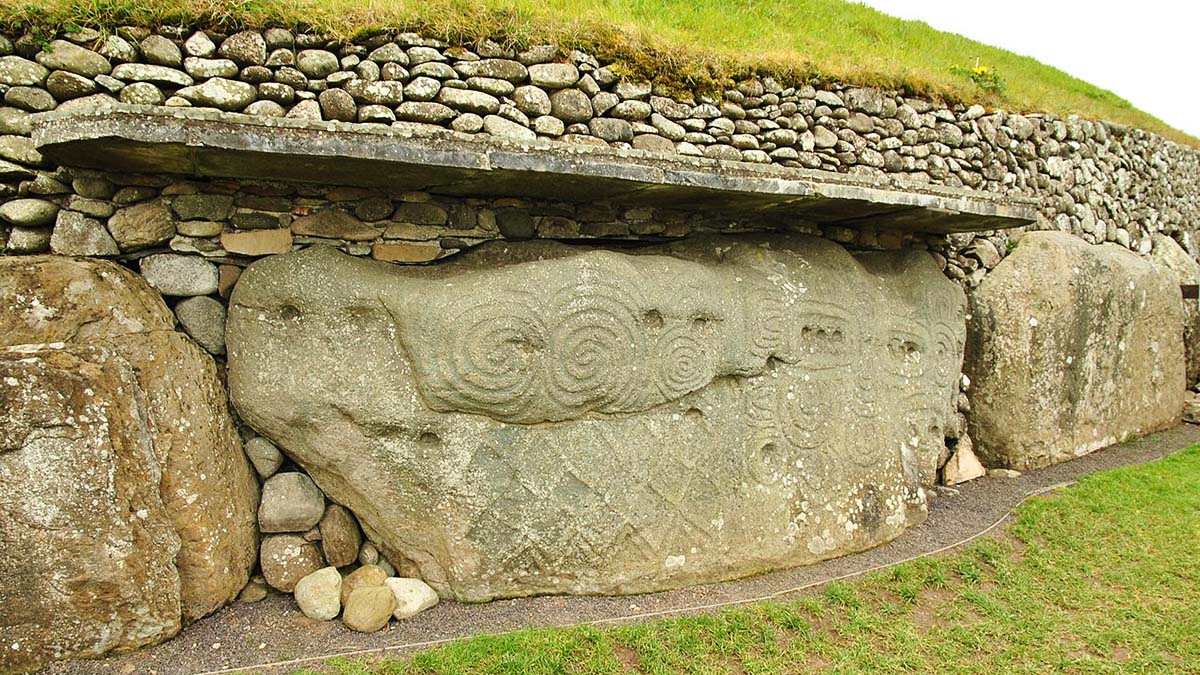
 Rising seventy metres on a black shale bench above the glacial silt plains of the River Boyne sit three megalithic tombs of the Neolithic or Late Stone Age also known as Passage Tombs or burial tombs. They date around 4000-2500 BC – Newgrange, Knowth and Dowth being the major ones – and are situated midway down the east side of Ireland.
 Passage Tombs have several common features: a mound in the shape of an egg called a tumulus. It is 85 meters across, 13 meters high and covers one acre. It is defined by a ring or kerb of 97 stones, a passage way and a chamber. I knew without doubt that this is where we got our word, curb which has the same basic use today – to define a certain boundary The building of the three Passage Tombs above the River Boyne seems to have developed over several hundreds of years, the design finally climaxing in the shaping of a cross. With a central space at the end of the passage way it also has a chamber on each side and also beyond it, making a very crude cross shape.
 It is also thought that since such immense energy and time was given to the etching on these stones that some sort of celebratory social ritual took place in a circular movement around the outside.
 Waiting for my group of ten to enter the passage way, I wandered around the outer path surrounding this UNESCO World Heritage Site. Returning to the opening I suddenly found myself alone. The site’s guide and the group had disappeared into the Tomb. I had to find a place to leave the umbrella and luggage and strapping my knapsack onto my chest I ducked low under the stone lintel of the entrance. All was darkness. I had to move sideways for most of the passage was very narrow. I could hear voices ahead. I was well aware that I was walking where my Irish ancestors had walked, where they had brought their dead to cremate. I finally came out to a dimly lit rounded chamber where a large three-spiral stone sat in a recessed part of the earth floor. Small chambers opened off the larger chamber to roughly take the shape of the cross. Three large stone basins, each about one metre wide were thought to have been used in cremation ritual. The tomb was plundered in the late 800’s AD by Viking raiders and after its recent excavation there is nothing left but the stone structure.
 During the early days of Newgrange’s excavation there was a growing belief that the rising sun, at some unknown time, used to light up the three-spiral stone at the end of the passage. Finally on December 21st, 1969, the excavating crew investigated this idea. They recorded that the sun appeared above the horizon and a small shaft of light about the width of a pencil entered the roof-box. It was an aperture like as in a camera, l meter by 0.25 meter, and had been built behind the first lintel and below the second. This very narrow shaft of light shone along the whole passage to reach to one of the basin stones in the end chamber. Quite quickly the light widened to a 17 cm shaft and swung with a life of its own across the end chamber and the tomb was entirely lit. Shortly this 17 cm band of light narrowed and finally ceased to shine at all into the tomb. The tomb was again in darkness. For seventeen minutes, it was recorded, direct light entered Newgrange, not through the main door but through the specially designed slit which laid under the roof-box at the outer rim of the passage. It was most obvious that a specialized ritual of bringing the light into the tomb during the winter months was established. Since the burial tombs were a place of reverencing the dead, it is thought that the purposeful entering of the light was possibly symbolically giving the dead a passageway to the afterlife. Six thousand years ago, our ancestors had developed a ritual honoring the winter solstice—the sun’s rising on the shortest day of the year. I was in awe at the knowledge these ancient ones had possessed and had passed to us. I stood where ancient ritual had taken place and felt part of the eternal link that connected us all and I felt gratitude.


.jpg)