by William Taylor
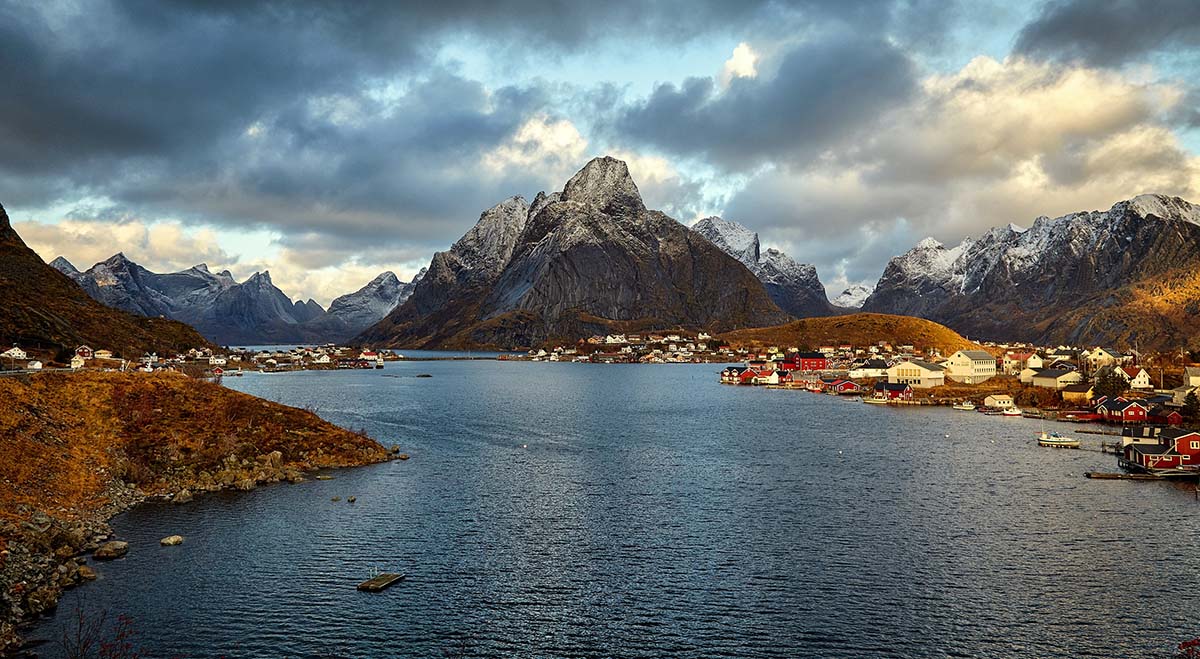
Norway is a beautiful country which offers a wide range of experiences; there is almost certainly something to interest you regardless of what you enjoy. There are a huge number of museums and a huge range of cultural and historic activities to indulge in. The country is one of the most prosperous in the world as well as having some of the most spectacular landscapes.
Rail Routes
One of the best ways to travel around Norway and enjoy the stunning scenery is to use the reliable train service. Despite the huge number of mountains the rail system manages to cover the entire country; with the aid of seven hundred and seventy five tunnels and over three thousand bridges! The best place to start is Oslo as you can reach almost any destination from there.
Hurtigruten
 This is a ferry service which runs every day of the year and covers the farthest parts of this beautiful country. You can catch a ship from Bergen and enjoy a twelve day voyage which stops at dozens of fascinating places en route. If you love adventure you can use the ferry service like a bus and hop on and off at each of the ports to explore.
Geirangerfjord
Norway is well known for its fjords, huge expanses of water surrounded by snow capped mountains and grassy fjords. It is a picture perfect setting and something that must be seen at least once in your lifetime. One of the best views is from the top of Dalsnibba which stands at 4,905 feet and offers spectacular views of the world below.

 The Arctic Circle

 The Arctic Circle
Part of Norway is inside the Arctic Circle and this means there are two impressive sights to witness. The first is in the summer months where the sun never sets; it is a bizarre and slightly surreal sensation! In the winter months the opposite is true, the sun never really rises, and the best days have a dull hue casting shadows across the land. This is also the best chance you will have of seeing the Northern Lights; the sky will transform into a myriad of different colors. It is, to say the least, entrancing.
 National Day
 National Day
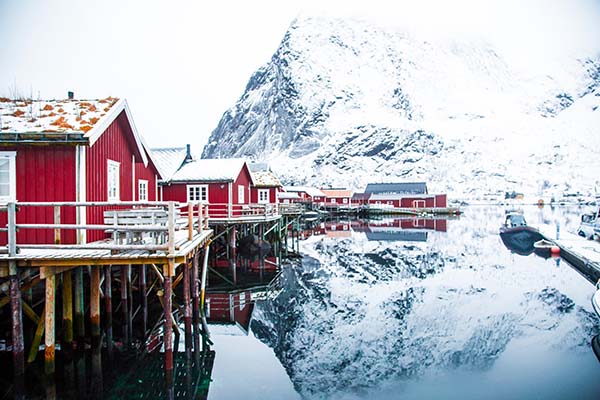
This is a national festival and is as important to the Norwegians as Independence Day is to the Americans. It marks the day the country gained its independence from Denmark. There are celebrations, concerts, festivals and fireworks across the country. The atmosphere is electric! May 17 is Norway’s National Day. And if you’re planning a visit during this time of the year, then you’ll be happy to know that the weather is quite pleasant too.
Lillehammer
Lillehammer is a year round tourist destination. It is located at the south of the Gudbrandsdal valley and consists of a museum which includes one hundred historic houses, Peer Gyants Cottage and, most importantly, some of the best ski slopes in the world. The 1994 Olympics were held in Lillehammer and there are literally hundreds of opportunities for skiing, snowboarding or even skating.
Atlantic Ocean Road
This stretch of coastal road is just five miles long but it is an essential link between hundreds of small islands. It is a mecca for those who love the sea, whether fishing, diving or just looking. The views are fantastic and there are plenty of fascinating villages to visit on the way.


Jotunheimen
The Jotunheimen area of Norway is home to the highest mountains in Norway. It covers 1,351square miles and is also home to a wide range of wild animals. Reindeer are one of the most popular and common sights around the vast lakes and glaciers in this region.
Guided sightseeing trip in Lillehammer area
If You Go:
Norway is not a cheap country to travel around in but it is worth saving the money to make this special trip. The scenery and the experiences this country offers will be remembered by you for a lifetime! Get to know more about Norway’s fascinating people and historical background by exploring the museums. The best and most impressive are in Oslo. The Viking Ship Museum for example, will reveal a lot of fascinating details about the country’s past. Make sure to check it out, and turn your Scandinavian adventure into a memorable experience.
Self-Guided Norway roundtrip: Oslo to Oslo
About the author:
William Taylor is a traveling freak from his teenage and has traveled many destinations around the world. He also loves writing about his traveling experiences and sharing about the places he has explored. He writes for www.baltictravelcompany.com, which specializes in Baltic holidays, Eastern Europe, Scandinavia and the Nordics.
Photo Credits:
Reine Norway by Vidar Nordli-Mathisen on Unsplash
Hurtigruten ferry by Richard Mortel from Riyadh, Saudi Arabia / CC BY
Arctic fjord by Conor Sheridan on Unsplash
 by Christine Sarikas
  Years later, on the eve of my next trip to France, a friend I was meeting sent me an e-mail that contained three words: Château de Fontainebleau? Some quick research told me Fontainebleau was a palace used by French royalty, about 45 minutes from Paris. I was skeptical, feeling that visiting would mean long lines and vast car parks, but my friend insisted, so to Fontainebleau we went.

 A château first stood on the site during the 12th century and served as a hunting lodge for the kings of France. In 1169, Thomas Becket, the exiled Archbishop of Canterbury, consecrated the site’s chapel to the Virgin Mary and Saint Saturnin. Numerous French kings visited and expanded the château, and in December of 1539, Fontainebleau, by then far larger and more luxurious than a simple hunting lodge, played host to Charles V, the Holy Roman Emperor. His son, Henry II of France, was a frequent visitor, and Henry’s wife Catherine de Medici gave birth to six of their children within the château. Hunting parties continued to be held at Fontainebleau, marriages were arranged and conducted, a peace treaty between France and England was signed on 16 September 1629, and over a century later Louis XVI signed a trade agreement with England, effectively signaling the end of the American Revolutionary War. Monarchs, royals, and heads of state all visited the château, but Fontainebleau’s most famous resident did not arrive until 1803.
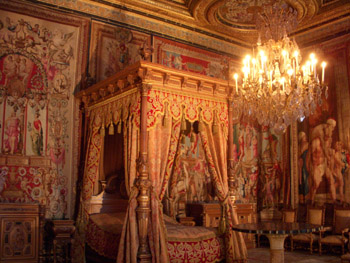
 Napoleon first visited the Château de Fontainebleau to inspect the newly finished military academy, École Spéciale Militaire. By the beginning of the 19th century, the château had fallen into disrepair; the vast majority of its furnishings had been sold during the French Revolution, and Fontainebleau was left empty and neglected. Napoleon chose to leave Versailles–with its Bourbon links–vacant and instead turned his attention to transforming Fontainebleau once again into a home and symbol of power.

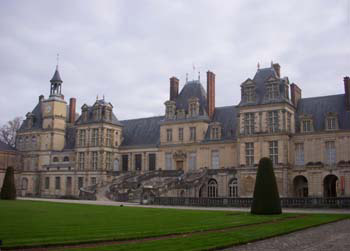
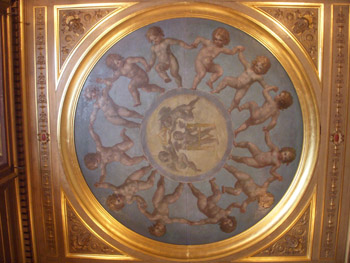 Less widely known and visited than Versailles, Fontainebleau still offers the same degree of beauty and splendor. Its long history and renovations by generations of rulers has meant that Fontainebleau’s sprawling palace showcases examples of French architecture from the 12th to 19th centuries. Its most defining feature is its grand horseshoe staircase, commissioned by Louis XIII (who was born in the palace) and built by Jean Androuet du Cerceau. The majority of the château’s current buildings were constructed in the 14th century under Francis I, whose architect Gilles de Breton created much of the Cour Ovale, the château’s oldest and most central courtyard.
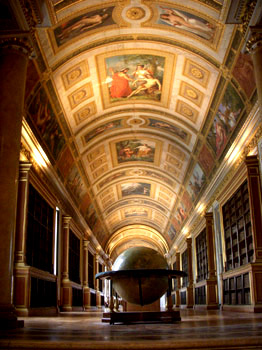
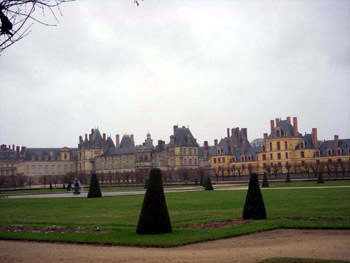 Fontainebleau, with its combination of Italian and French artistic styles, is considered by many to be the birthplace of the Renaissance within France. Much of the palace reflects the Italian Mannerist style, popular during the later years of the Renaissance and now widely known as the “Fontainebleau style.” The palace’s Gallery of Francis I, which is dominated by Florentine artist Rosso Fiorentino’s series of frescoes, was the first large decorated gallery to be created in France. Other Renaissance painters who contributed to the art at Fontainebleau include Francesco Primaticcio and Benvenuto Cellini; the latter’s Nymph of Fontainebleau is now housed at the Louvre.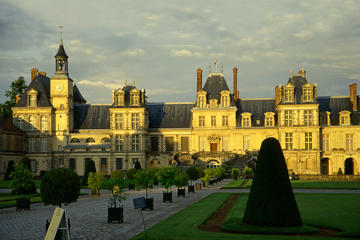

 About the author:
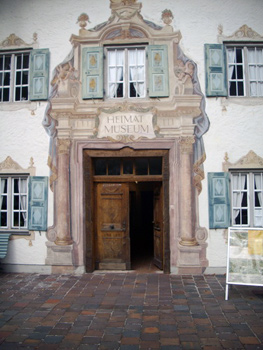 It was the second week of December and I sat on the train from Munich to Salzburg with the intention to visit the Austrian Christmas market and to do some shopping. The sky was blue, snowflakes were falling softly, dusting the dense pine forest on both sides of the line.
 Actually, no sign was needed. I only had to follow the wafting scents of Gluehwein and Bratwurst and the sounds of Bavarian horns and German Christmas carols to find the market.
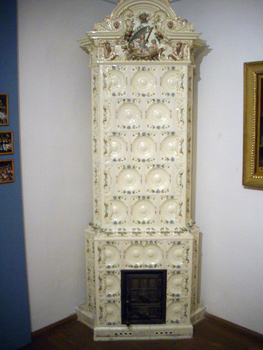 I got lucky insofar as I was the only visitor, the majority of people were enjoying the market and its delights, something which I reserved for later. The lady who sold me the ticket and acted as curator was so pleased to have something other to do other than sit at her desk, that she personally lead me around and told me story after story about the customs and traditions of this part of Bavaria.
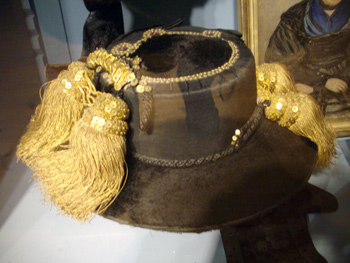
 The 16th century wardrobes, carved with the finest details, are called Chavari and were used to store a bride’s trousseau. One such chavari is kept in the museum and filled with traditional clothing as well as examples of another art: gold embroidery. Bridal headgear and lace is made from real gold thread, an art which my friendly guide herself is skilled in, as proven by a growing strip of gold lace which she was working on whilst waiting for visitors.
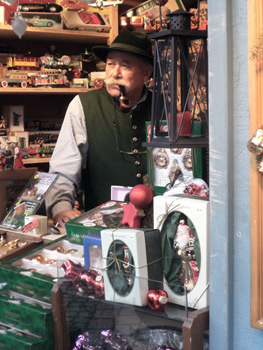
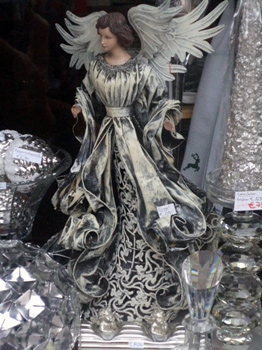 Plenty of visitors were around, but it felt rather like a huge family. Everybody seemed to know everybody else and as soon as they noticed that I wasn’t ‘einheimisch’, they explained the specialties to me and directed me to the stalls with the Rauschgoldengel and other beautiful Christmas decorations.
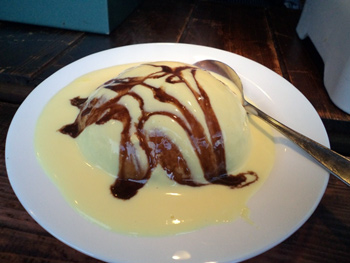 Next was Dampfnudel, which literally translated means steam nudel but has nothing to do with pasta or steam. It’s a huge lump of sweet dough, covered with vanilla custard, whipped cream and chocolate sauce. I could never have managed one on my own, but my new best friends from Prien, standing next to me and putting the sweet away in incredible amounts, gave me a spoon and let me have a few mouthfuls.
 About the author:
 won Reader’s Favorite Award 2009 in its category in the USA in 2009. Her travel articles have been published in literary traveler, GoNomad, travel with a challenge, Smithsonian magazine, Europe up close, Europe a la carte, Lighthouse Digest, Off Beat Travel, and BBC/Travel. Her blog is called:
 Our appetite satisfied, we line the streets with the throng to watch a parade of marching bands and representatives from local organizations carrying flowers to the Inmaculada Church in the main town square for the traditional Floral Offering. Caught up in the excitement, we follow the parade to the square.
 A large Christmas Belen, a Bethlehem Nativity scene, is set up in the main square. This amazing display depicts scenes from the life of Jesus including day to day life, local businesses and of course a wonderful nativity. The details are incredible, from a little girl on a swing to hens in the yard. The Belen is up until January 7 for everyone to enjoy at no cost. Every time I walk around the display I notice something new.
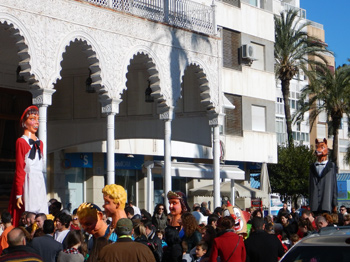 Just as we are about to call it a day, we stumble upon a parade of unique paper mache giants and big heads outside the Casino. Delighted adults and children of all ages follow along. Monday is a holiday, Dia de la Inmaculada Concepcion, beginning with an early morning parade and ending with a solemn evening procession with the statue of the Inmaculada Concepion. The procession stops at the Casino for a fireworks display before returning back to the church. A perfect ending to a fabulous weekend of festivities to start the Christmas season.
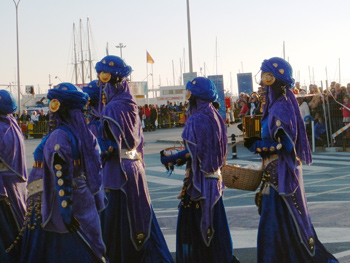 In Spain, the most important date in the Christmas season is not December 25. It is January 6, Epiphany, the day Three Kings from the east brought gifts to the infant Jesus. Fiesta de Los Tres Reyes Magos (Three Kings Day) starts on January 5 when the Three Wise Men arrive and parade through the streets handing out candies to all the children eagerly waiting. The parade ends at a church where the kings become part of a human nativity scene. That night the children put out their shoes and in the morning, if they have been good all year, they find them filled with gifts from the Magi. They leave out treats for the kings and water for the camels. Like children in North America do for Santa Claus and his reindeer.
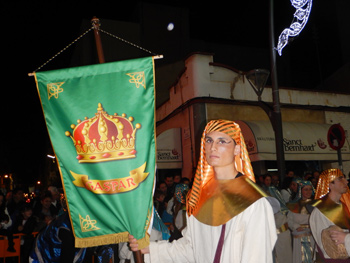 Along with their entourage, the kings participate in the traditional Epiphany parade that winds its way through the town. It is quite a spectacle with a variety of participants including Mary, Joseph, baby Jesus, Roman centurions, Egyptians, dancers, decorated riders, royal pages and a menagerie of animals. Excited children line the streets holding out bags for the many candies they receive from the participants in the parade, including the Three Kings. We enjoy the pageantry and spirit of the evening. Some of the children share their sweets with us.

 , England and Alberta, where she always has an adventure. Darlene divides her time between the west coast of Canada and the Costa Blanca of Spain. Visit
 Before the meal can start, the Christopsomo, or ‘Christ-bread’ must be broken and offered round. There is a small ceremony, where the eldest member of the gathering places a towel on the head, with the bread on it, and a young child breaks it in half. It is put straight into a basket and offered round. This is the signal that two things can begin: the meal and the dancing. Greek folk dancing can be very energetic, and I was glad that I was prepared. As a visitor, I did not know all the steps, but the local people were happy to see me join in and very welcoming. Nobody minded the odd mis-step.
 Santa Claus in Greece is known as Ai Vasilis,or St Basil, and he comes at the New Year. In Alexandroupolis, his coming is heralded on New Year’s Eve by a wonderful street pantomime involving two people dressed as a camel, complete with hump, and a third person who wears a strange sheepskin suit that tapers to an almost triangular point above the head. This is the camel driver, and he chases the camel around, mock threatening it with a stick, to great hilarity from the spectators. While this is going on, a group of people dressed in traditional costumes and with traditional instruments put on a display of folk dancing. The camel and companion go around the dancers, sometimes directly in their path, but somehow it all works out and no one falls over. Some years, Ai Vasilis will put in an appearance and march through the town, followed by the camel and driver as he leads them away at the end.


.jpg)