by Glen Cowley
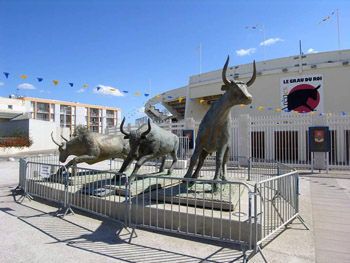
It was one of those storms of which legends were made; a wrathful sea god reshaping the Mediterranean coastline of France. The fury of 1570 carved out a new six kilometre long canal, between the salt water marshes and the sea; giving France a new access route to the Mediterranean. 1640 saw the town that grew upon its shores named Grau du Roi. In 1772 two stone breakwaters were constructed and in 1845 the natural canal was reinforced in stone. And so it remains.
 Since its birth fishing and transport have given it purpose and do so to this day, but it was to be the extension of the Nimes-Aigues Morte Railway to the town in 1909 which opened it up for tourism as a major economic driver. The president of France himself declared Grau du Roi a beach resort town in 1924.
German occupation and beach fortifications during World War Two set tourism back and many residents fled the community but at the war’s end tourism returned with a flourish. Beaches which had seen hoards of sunbathers give way to barb wire and minefields were reborn. The Sun returned with a flourish to shine all the more brilliantly on these favoured shores.
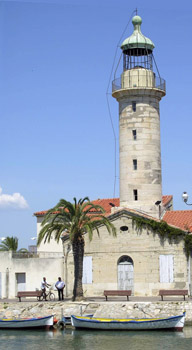
Today its beaches, quais, shops and cafes lend it a happy party atmosphere. It is a place to come to swim, soak up Sun, enjoy cafe’s and restaurants in a seaside environment and shop for inexpensive wares. Arriving by car, train or bus lands you within walking distance of beaches and the old town core running either side of Chenal Maritime, itself thrust deep into the Mediterranean and marked, sea side, with facing lighthouses.
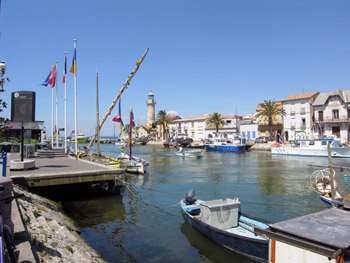 Quai Charles de Gaulle and Quai Colbert occupy either side of the canal and offer a host of cafes and restaurants facing upon a canal full of moored craft of all sorts from recreational through to commercial fishing boats. Water traffic is constant and colourful. In fact colour is inescapable and enhanced under a smiling Mediterranean Sun.
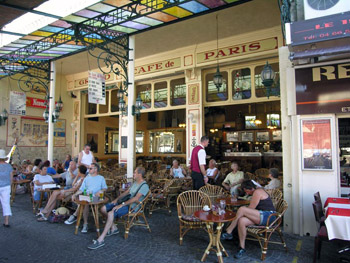
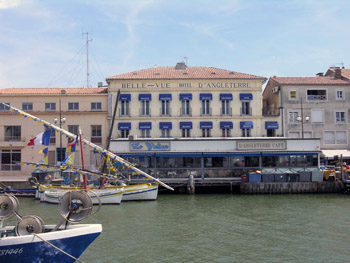
After arrival by bus from Nimes (only 1.50 Euro, one-way) and a short walk to the canal we stopped for a coffee at the open air Cafe Paris with its high ceilinged lounge adorned with posters and plaques, open to the passing throngs. Slowly savouring our cafe a l’onge we watched the parade of visitors and locals, a lightness filling the air. Our quai-side walk later took us by the hotel Belle-Vue-d’Angleterre, once favoured by Ernest Hemingway during his stay here (his posthumously published The Garden of Eden was set in Grau-du-Roi), and stretched on to breakwater end with its lighthouse and Mediterranean vista. There we spied a fishing boat plying methodically toward land harried by masses of squawking seagulls. Our journey was a corridor of shops to the left, boats and open air cafes to the right and Sun above.
 Where the canal meets the sea either shore stretches long and sandy to the left and right with Plage de Riv Gauche and Plage de Riv Droite. Shallow beaches afford a vast playground for waders and swimmers with ample shore space for sunbathers. Families, knots of chattering teenagers, a few topless strollers and more share the beach with hawkers advertising cool treats as they work their cumbersome wheeled kiosks across the beach. Sun screen and water socks are a good investment and more than a few bathers were spotted doing the hot sand dance across the beach.
Far to the east and west of old Grau-du-Roi, with its heritage remembrances, rise the modern developments, both residential and maritime, of Les Grand Mottes and the Camargue Marina.
The tourist information centre is located close to the beach on Rue de l’Anciene Poste off of Boulevard de Marechal Juin which runs along Plage de Riv Gauche. Well worth the visit to pick up brochures and the touring map.


Biking and hiking trails lead out from town alongside the salt water marshes where you are certain to spy flamingoes (flamant rose), stoically posed, and fishers patiently testing the waters with super long fishing poles.
 Restaurants abound and we took in a pleasing meal at reasonable fare at a seasonal outdoor restaurant colonizing, with others, a tree shaded enclave; serenaded by by a chanteuse and her accompanying accordion player. The coolness of welcome shade, music and a fine meal reinforced the aura of southern France by the Mediterranean. Walk weary feet drank in comfort.
Returning to the narrow but tidy streets crowded with shops touting their colourful wares from confined spaces we meandered, as much taken by the buzz and colour as by products. Unabashed tourism assails the senses and with it a sense of light frivolity; this is a place exuding fun for everyone from individuals to families.
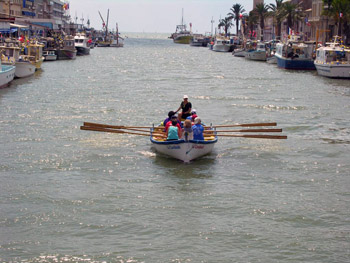 The other, workaday, side of town is revealed in the docks and moorings of craft toiling at sea with care taken towards functionality rather than appearance. Even so there is an aura about this long lasted foundation of the local economy. A business indifferently sharing waters and canal with recreational craft of varying opulence. Crossing Pont Tournant we stopped to watch an 8 man dory, six oars pushing water, making its way inland; its chanting rowers, ladies all, moving as one.
When our feet tired of pavement we took them to the waters, wading seemingly forever along the beach. Behind us Grau du Roi spread its arms merging in the distance with modern towers and marinas yet holding its own. The waterfront playground of Nimes and Montpelier.
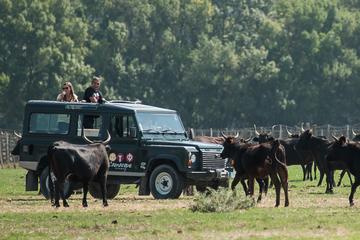
Small-Group Tour Camargue 4×4 Safari from Le Grau-du Roi
If You Go:
You can readily drive here and there is parking relatively close to the beaches but train and bus are so inexpensive it is hard ignore. Subsidized rates of 1.50 Euro will take you by bus or train from the Nimes train station to the town’s heart and, for the same price, whizz you back. You can spend a day at the beach and still use Nimes or Montpelier for meals and lodgings or savour the same at Grau du Roi.
A great general site is the tourism Camargue webpage.
For transportation take a look at www.voyage-sncf.com (trains) and www.edgard-transport.fr for bus.

Since 1994 Glen Cowley has parlayed his interest in sports, travel and history into both books and articles. He continues to explore perspectives in time and place wherever his travels take him. From the varied landscapes of British Columbia to Eastern Canada and the USA, the British Isles, Germany, Switzerland, the Netherlands, Greece and France he has found ample fodder for features.

All photos are by Glen Cowley.
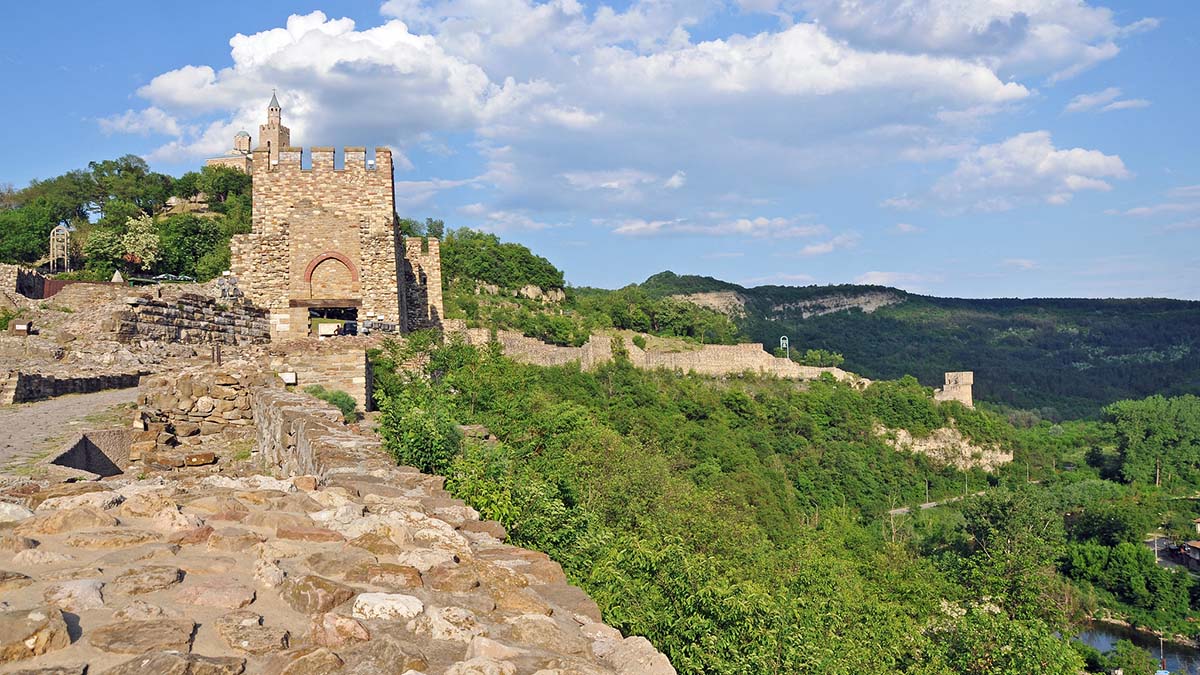
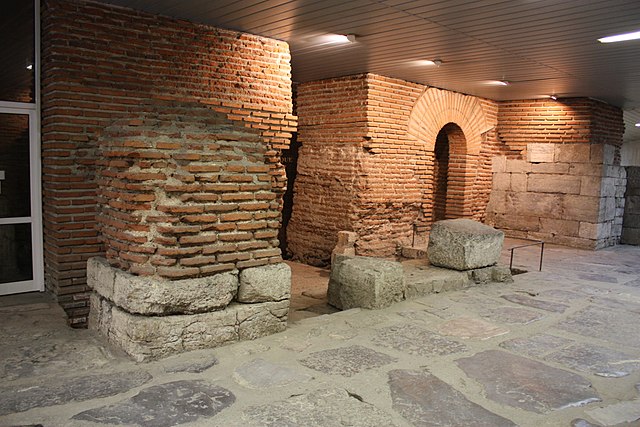 As a history lover, I found several sites of interest, with their unique archaeological heritage. The country is rich in ancient relics, from Neolithic Age to Greek, Roman and Medieval times, the symbol of the ancient grandeur of one of the most well-documented people of antiquity, the Thracians, recognized as one of the most powerful people in the Ancient World. All cities have their own museum with Thracian, Hellenic and Roman treasures of amazing quality and interest, irrespective of many Orthodox churches and monasteries. It is difficult to leave Bulgaria without being held spellbound by its beautiful view.
 Many Bulgarian towns still bear important traces of their Thracian past, such as Kazanlak. Archaeological excavations carried out near Kazanlak, in the famous area of the Rose Valley, discovered substantial remains of tombs, shrines, and other important remnants of Thracian culture. The Odriss Kingdom of the Thraces had its splendid capital at Sevtopolis, ruled by King Sevt III [also known as Seuth], which was submerged and then discovered between the modern Kazanlak and the village of Koprinka. The tomb of King Seuth III was found within the Golyama Kosmatka Mound, near Kazanlak, and it contained a vast treasure including paintings, ornaments, one golden crown, one golden mask and the statue head of the same King Seuth III.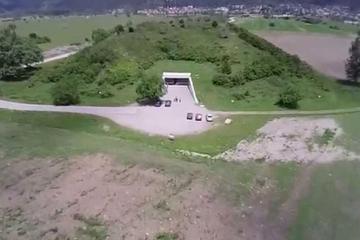

 About the author:

 by Sarah Humphreys
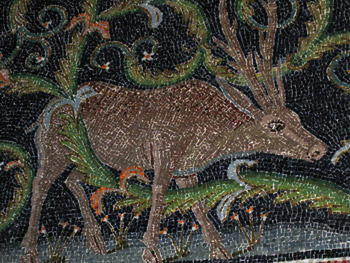
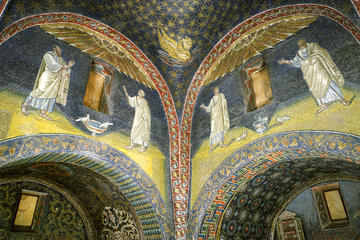
 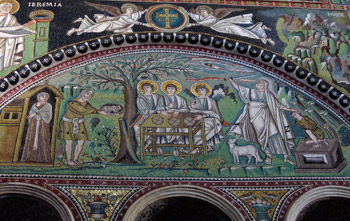 An unknown architect finished the Basilica of San Vitale in 547 on the spot where St Vitalis was martyred by being buried alive. Richly ornamented mosaics inside depict scenes from The Old Testament, including the Sacrifice of Isaac, Moses and The burning bush and Cain and Abel. Decorative leaves, fruit and flowers encircle the Lamb of God on the vault of the presbytery. Glittering mosaics pay homage to the Emperor Justinian I and his Empress Theodora.

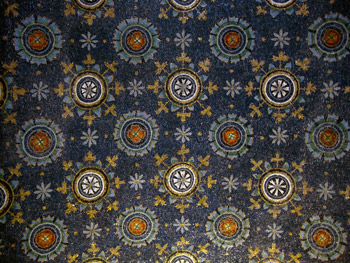 Exiting from the back of San Vitale, you will come across a small, ordinary-looking brick building, which contains Ravenna’s finest treasures. The powerful Roman Empress Galla Placidia, who wielded extreme power as regent for her young son Valentinian III, probably commissioned the tiny Mausoleum which bears her name. Shaped like a Greek cross, the building has sunk 4.5 feet into the ground due to subsidence. The limited space within the structure means visits are restricted to five minutes only, guaranteed to be intense moments.
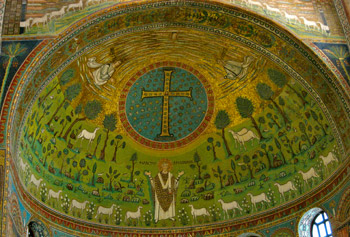
 The Basilica of San Apollinare Nuovo houses a series of impressive mosaics dating from 500 under rule of the Arian King Theodoric, which show scenes of Christ’s miracles, parables and The Passion. The lower rows of mosaics date from 560, when Ravenna was under Christian rule, and feature saints, martyrs and a procession of Virgins led by The Three Magi, sporting animal-print leggings. According to legend, Pope Gregory had the earlier mosaics blackened to prevent worshippers from being distracted, and many of the original Arian mosaics were removed. It is still possible to see some disembodied limbs that evaded destruction.
 The Chapel of St Andrew, housed in the Archbishop’s museum, is the smallest private early Christian oratory to have survived until the present day. Dazzling mosaics create a shimmering tapestry of saints, angels and decorative motifs and 99 species of birds are shown against a splendid starry sky. Christ is shown as a warrior, crushing the figures of a serpent and a wild beast.
 The only UNESCO World Heritage Site not to contain mosaics is the Mausoleum of Theodoric. Its unusual structure, consisting of two decagonal parts topped by a monolithic dome, is formed from Istrian stone blocks. The combination of Roman, Barbarian and Medieval architecture fascinated The Romantics and The Mausoleum was popular with tourists on The Grand Tour.
 Other notable sites include the extraordinary underwater crypt in the cathedral of San Francesco, complete with goldfish, and the “House of Stone Carpet”, the remains of a Byzantine house complete with huge decorative floor mosaics. Just next to the Cathedral is the final resting place of Dante, who died in Ravenna in 1321. Although exiled form Florence in his lifetime, the city has continuously appealed for the great poet’s remains to be returned. Ravenna has constantly turned down this request. On the 2nd Sunday in September, olive oil donated by the city of Florence, is brought to Ravenna to light the lamb that hangs over Dante’s tomb.
 Although the main sites in Ravenna could be seen in a day, it is well worth spending longer in this peaceful city. The place where Dante finished his “Divine Comedy” and Byron started writing “Don Juan”, was recently voted the number one place to live by “Il Sole 24 “ financial newspaper and it surely won’t take you long to see why.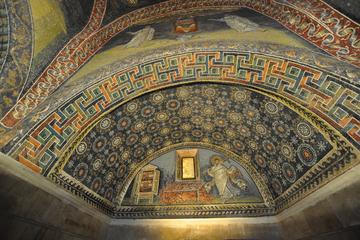
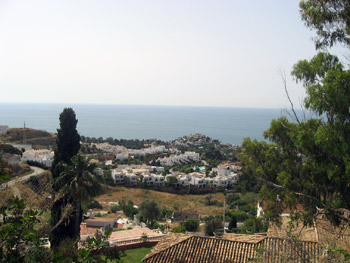 The whitewashed village, lined with narrow cobblestone streets overlooking the Mediterranean Sea, is the oldest of the three as it was founded by the Moors. I was fortunate enough to be in Benalmádena Pueblo in June for the major celebration of Corpus Christi where thousands of locals and tourists gather on the streets to watch the holy procession honouring the Body of Christ. On the eve of this festivity, hundreds of locals congregate to elaborately adorn the altars and decorate their balconies and windows in the brightest coloured tapestries. The community also collaborates in transforming the main street into a work of art by arranging 78,000 vibrant flower blooms in the form of a fabulously designed floral carpet. Meanwhile, the smaller streets are strewn and perfumed with palm leaves, rose petals, lavender, and aromatic herbs such as rosemary and thyme.
 Once the procession was over, I decided to indulge my curiosity by exploring what some have described as “the most beautiful place on earth.” I only knew that the Castillo Monumento Colomares was about a 15 minute walk from the center of the pueblo. However, no indication as to its whereabouts could be found anywhere along the remote area and I began to get discouraged in the blazing heat of the afternoon sun. Fortunately, after asking for directions several times, a cyclist appeared who knew how to get there.
 Nearly an hour had passed since I left the pueblo and I found myself gasping in delight when it finally appeared around the corner amidst isolated trees and bushes on a small curvy road.
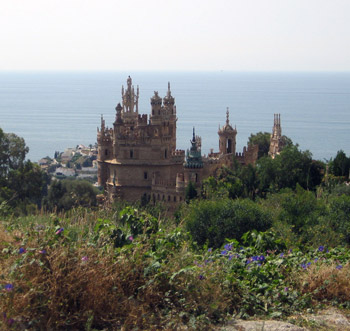 This enchanting structure was built during the late 20th century in memory of Columbus and the Discovery of America. The castle is actually the largest monument in the world dedicated to the Italian explorer. Seven years of work it took with the help of two bricklayers who incorporated several styles of architecture designed by a doctor. The castle, advertised as “a fantasy made by stone”, has 16 points of interest that include Isabella’s Castle, the Oriental Tower, and the Christmas Fortress of 1492. The complex also houses the smallest church in the world as listed in The Guinness Book of Records. The views of the Mediterranean Coast from this hidden gem adorned with decorative fountains, spiral staircases, and ornamental gates are magnificent, and I left wondering why the castle was not better promoted.
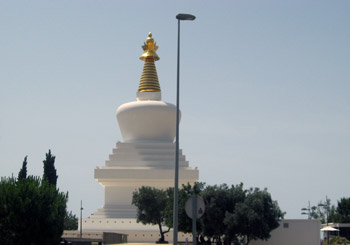
 A 20 minute walk from the Colomares Castle is the Mariposario de Benalmádena or “Butterfly Park.” Known as the largest one of its kind in Europe, this tropical garden paradise set inside a Thai temple is home to over 1500 exotic butterflies. More than 150 different species reside here among cascading waterfalls, floral gardens, and tropical plants.
 This urban residential town, nestled between the mountains and the sea, is home to several major family attractions and theme parks. Selwo Marina Delfinarium is the only one of its kind in the Andalusian region where you can feed penguins and swim with dolphins and sea lions. Tivoli World is a popular theme park known as the largest on the Costa del Sol. Across the entrance is the Teleférico or cable cars that take you to Mount Calamorro in 15 minutes where you can savour views of the coast and on clear days, Gibraltar and North Africa as well.
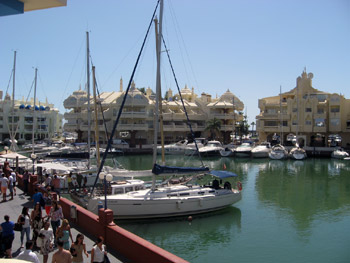 Paloma Park is a vast and serene gated area perfect for an afternoon stroll by the great lake on paved walkways adorned by plants, gardens, statues, and fountains. Peacocks, roosters, geese, ducks, pigeons, doves, and rabbits all call this park their home.
 By the entrance to the Marina stands the Moorish lookout tower, Torre Bermeja (Reddish Tower), the oldest of three that remain along the coast of Benalmádena. These cylindrical towers were raised to warn against the enemy ships approaching from North Africa. Although reconstructed during the 16th century, the tower first appears in documents dated to the 13th century. Of 16th century Christian origin are Torre Quebrada (Broken Tower) and Torre Muelle (Dock Tower) in the nearby, namesake suburbs of Torrequebrada and Torremuelle respectively.
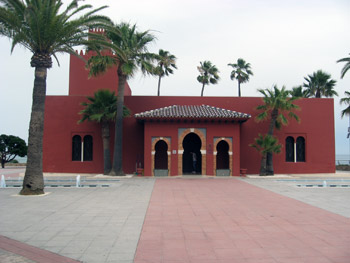
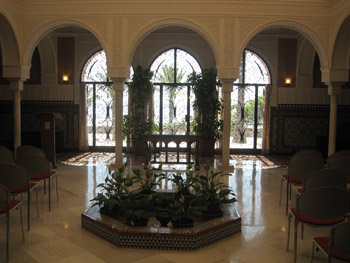 However, the main landmark of Benalmádena Costa is the stunning, burgundy palace known as the Castillo El Bil-Bil. The Moroccan-style structure was built on the seafront in 1930 for a wealthy Spanish-French family. Seven years later it was purchased by an American family who lived here for 30 years. When asking about the curious name, Salvador, the caretaker informed me that the names of the American family were Elsa (El) who was married to William (Bil) and both had a son together also named William (Bil.).
 Within the lovely gardens of El Bil-Bil is the monument to Ibn al-Baytar, an illustrious scholar born in Benalmádena during Moorish rule. The commemorative plaque reads in Spanish and English; Ibn al-Baytar – The distinguished botanist and pharmacologist born in Benalmádena: Benalmádena 1197 – Damascus 1248. Al-Baytar became one of the most renowned scientists of the Middle Ages. He is further immortalized and remembered as the most famous personality in the history of Benalmádena.
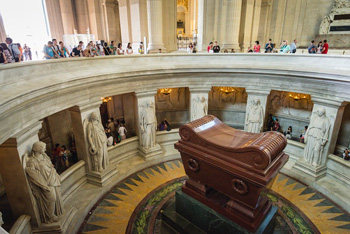
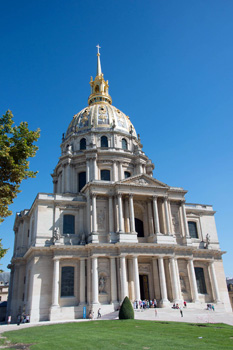 Beneath the golden vault of the Eglise du Dome Church lie the remains of the slight statured Corsican who became France’s greatest soldier. Within his massive crypt, Napoléon’s mystique looms large in death as it did during his lifetime. Hitler was so moved by his visit that as a tribute to the French emperor, he decreed that Napoléon’s son’s coffin be moved from Vienna to lie beside his father.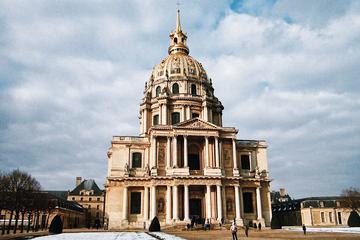

 About the authors:

