by Sarah Humphreys
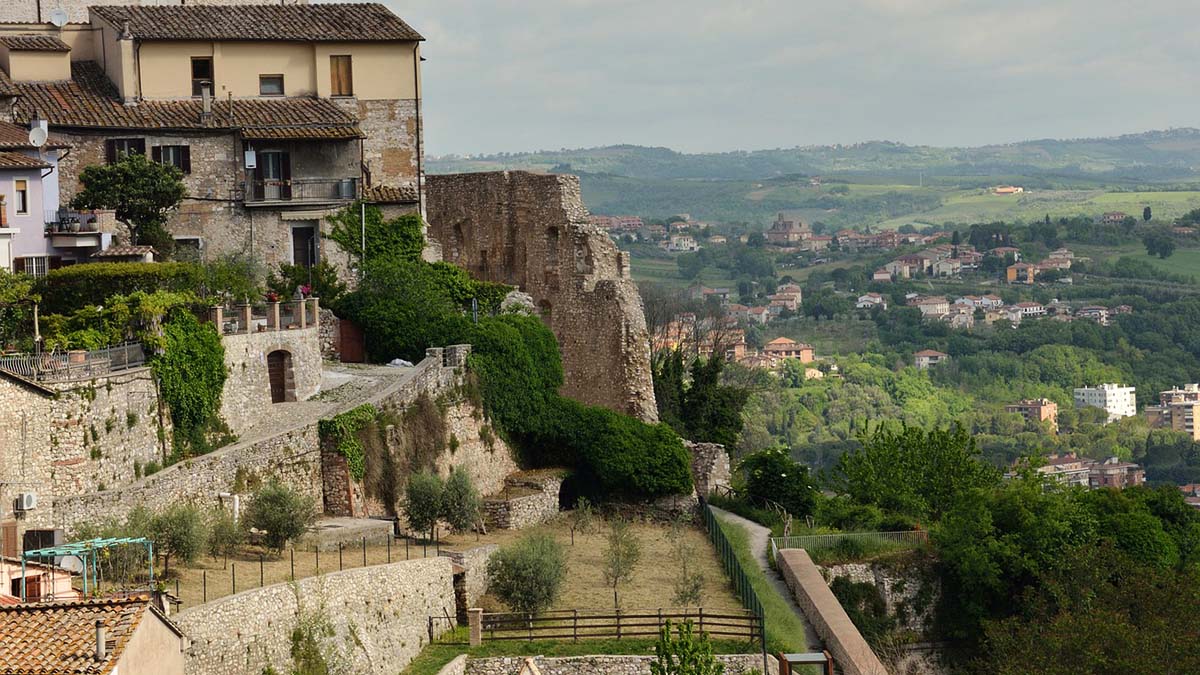
 The delightful medieval town of Narni in Umbria would perhaps have gone almost unnoticed, apart from being considered to be the exact geographical centre of Italy, if it hadn’t been for C.S.Lewis. While examining a Latin atlas of Europe, he came across the name Narnia, which soon took on a whole new meaning. Although Lewis never visited Narnia, or Narni, as it is now known, it may not be pure coincidence that the tomb of Blessed Lucy of Narni can be found in the town’s impressive cathedral. Images of mythical beasts in stone and iron decorate the ancient buildings and streets. The lion features prominently.
However, horrors more evil than The White Witch and her army of beasts lurk beneath the stones of this ancient town which were only unearthed relatively recently. In 1979, a group of young potholers began to explore a crevice in the ruins of an abandoned convent, on the suggestion of an old gardener who suspected there may have been something hidden there. The young friends were astonished to discover an underground grotto containing a well-preserved thirteenth century church.
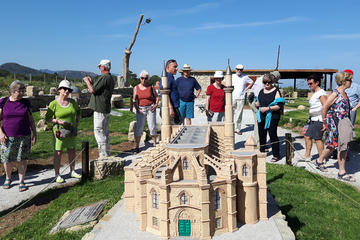
 Guided tours of Narni Underground nowadays begin in the church, which was consecrated as “Santa Maria delle Rupe”, although the discovery of a copy of a fourteenth century contract revealed the church’s original name as being Chiesa di Sant’Angelo or S. Michele Archangelo (St Michael The Archangel). Although the church has sustained considerable damage, due to water infiltration, beautiful frescos of Christ on the Cross and symbols of the evangelists still adorn the walls and the ceiling is painted with stars and a symbol of The Lamb of God. The Archangel Michael features fighting a dragon and weighing souls. Several skeletons were found in tombs in the floor of the church, which has still not been completely excavated.
Beyond the church, the friends came across the remains of a Roman domus (house) with a cistern which today houses replicas of a groma, a tool used by surveyors in Roman times to trace out roads and divide the land, and a corobate, which was the Roman equivalent of a spirit level. Both these tools were used to construct Narni’s Formina aqueduct in the 1st century AD, which was still in use until shortly after World War II.
 Convinced there was still more to discover, in May 1979, the young potholers, whose efforts to draw attention to their discovery were largely ignored, found a blocked up door in a garden on the other side of the wall. Being denied permission to try and open the door, the friends took advantage of boisterous festivities, during the local medieval celebration the “Corsa all’Anello”, to cover noise while they made a hole in the door. They were stunned by what they discovered. A short passage led to a large windowless chamber, which later came to light had been used by The Court of the Inquisition to “extract” confessions from those accused of polygamy, blasphemy, witchcraft and adultery- crimes which labelled them as heretics. “The Room of Torment” now contains models of gruesome torture instruments used on these ill-fated souls, including the rack and Judas cradle. Beyond the chamber, the group came across a tiny cell, completely covered in mysterious graffiti. The inscription “Santo Uffizio” (Holy Office), was the key to leading them to understand the area had been used by The Inquisition.
 The graffiti in the prison cell appears to have largely been the work of one desperate prisoner, Giuseppe Andrea Lombardini, whose name is inscribed on the wall under the date 1759 and the remains of the word “Innocent”, which was erased by his guards. Lombardini left a series of cryptic messages and mysterious symbols ,made from a mixture of brick dust and urine, that seem to have a peculiar mixture of origins. Masonic symbols, such as a triangle with a dot, symbolising the eye of the Grand Architect of the Universe merge with strong Christian symbols such as crosses, religious monograms and a representation of the legend of St Nicolas. An image of a tree surrounded by doves is thought to symbolize the tree of life. A sinister falconer catching birds under the tree may represent the church, or the Inquistion itself, destroying freedom. The sequence 7, 24, 42, 70 is repeated in 3 areas within the cell. The sum of the interior numbers is 66, whereas that of the exterior numbers is 77, therefore implying the battle between good and evil. It is interesting to note that the graffiti artist deliberately replaces the letter D with the letter T in his inscriptions, which is believed to express hatred for the Dominican order who ran the Inquisition. Suns, moons, ladders, Jesuit and cabalistic images leave secret messages that have still not been completely deciphered.
The name Andrea Pasqualucci, with the date 1811, is also inscribed on the walls, bearing witness to the fact that the cell was once again used as a prison, by Napoleon’s troops, when the original convent was transformed into a barracks. The Inquisition in Narni officially ceased to exist in 1860 when the town was annexed to the Italian state. The tale of a certain Domenico Ciabocchi, who was accused of bigamy and imprisoned in the cells in Narni, was revealed in a document, found in Narni’s Town Hall Archives, dating from 1726. Ciabocchi eventually managed to escape by strangling his guard but confessed his crime to a priest, who immediately turned him over to the authorities. The unfortunate fellow was condemned to row in a galley ship until his death.
 In 2004, it was discovered that Trinity College, Dublin housed a number of important documents referring to the Inquisition including transcripts of the trial of Domenico Ciabocchi, confirming the existence of The Inquisition in Narni. Following this discovery, Robert Nini, one of the intrepid potholers and now president of Narni Underground, wrote to Cardinal Ratzinger (later Pope Benedict XIV) who granted him permission to consult the secret archives in the Vatican.
In Roberto’s words, “The emotional impact of entering the Vatican archives was nearly as great as when we discovered the underground chambers.” Amongst other documents, Nini found a map of Narni prison dating from 1714 and papers verifying the imprisonment of Giuseppe Andrea Lombardini, once an officer of the Inquisition, who was seemingly incarcerated for letting a prisoner escape and on suspicion of being involved with heretics. Lombardini spent three years in exile and was later pardoned.
In other areas of the museum, it is possible to see a Napoleonic toilet, the skeleton of a young woman found during excavations, information on the grisly torture methods used by The Inquisition, fragments of Byzantine mosaics dating back to the 6th Century and a copy of the document relating to Domenico Ciabocchi. The volunteers of Narni Underground have recently celebrated the twentieth anniversary of the official opening to the public. However, their work is not finished. Further excavations have been planned and the search for the truth continues. The horrors of one of Umbria’s darkest chapters of history may have been hidden away for centuries, but their victims have not been forgotten.


If You Go:
♦ The nearest airports are Rome’s Fumicino International Airport and Ciampino Airport where Ryanair and Wizzair operate from.
♦ The closest station is Narnia-Amelia. Trains on the Ancona-Rome and Perugia Rome lines stop there.
♦ By car take highway A1 Roma-Milano- The exit is Orte if you are coming from the North or Magliano Sabina if coming from the South.
♦ Entrance to Narni Underground Museum is through the public gardens of S.Bernardo, just off via Mazzini.
♦ Entrance costs €6 with reductions available for groups of over twenty and children aged 6-14 years. Children under 6 enter free. The ticket allows for 10% discounts at some hotels and restaurants.
♦ For opening times and further information visit Narni Sottereana
About the author:
Sarah Humphreys has been writing since she could hold a pencil. She is originally form near Liverpool in the UK but has lived in the USA, Greece, Czech Republic and Italy. She has been living in Pistoia, near Florence for 15 years, where she teaches English. She is passionate about poetry, literature, music and travel.
Photo credits:
Top photo of Narni, Italy by Marco Molena from Pixabay
Photos 2 & 3 are by Sarah Humphreys
Photos 4-6 are courtesy of Narni Sotterranea
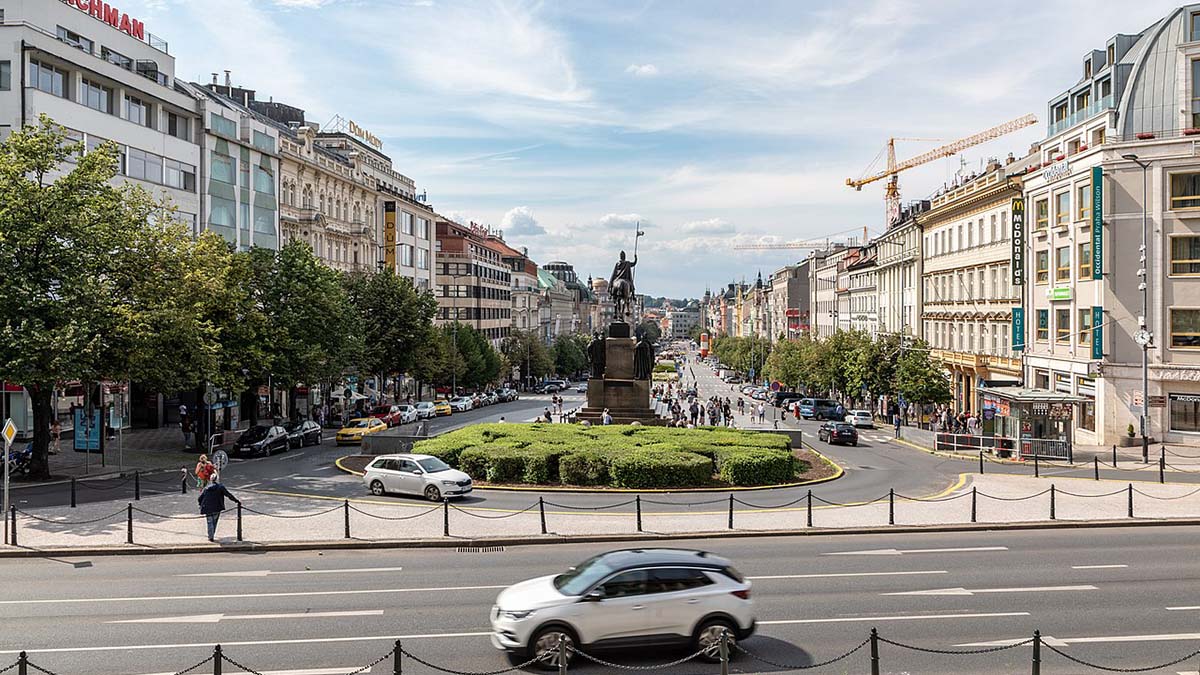
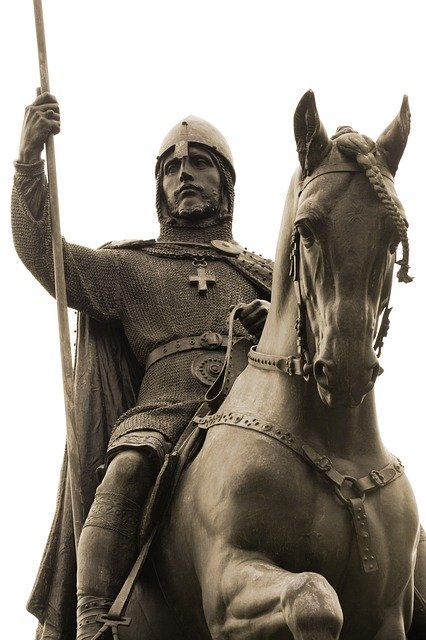 Wenceslas Square, one of the most legendary squares in Central Europe, in Prague, Czech Republic, has played host to a number of fitting names as well as false names. In tandem with the Czech people daily traversing its dark cobblestone, political subjugation in the 20th century led to cultural suppression and the great Wenceslas Square- named after a beloved Czech Saint and hero- was known momentarily by other names. Wenceslas Square (Vaclavske Namesti in Czech) was victimized by names and ideals forced upon it first by Adolf Hitler and then by Josef Stalin.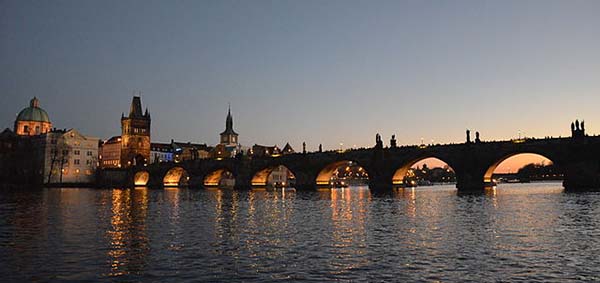

 I imagine Saint Wenceslas Square to be like a Czech person itself. She is (for I see her as a woman-elderly and strong) as much a part of Czech history and cultural identity as any other momentous figure- like say Saint Wenceslas himself, or King Charles for whom the oldest bridge in Europe was constructed, or the famously brilliant and brave Vaclav Havel.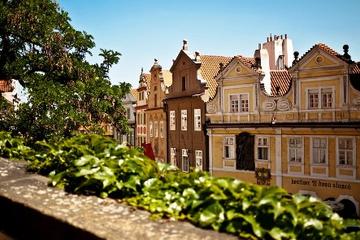
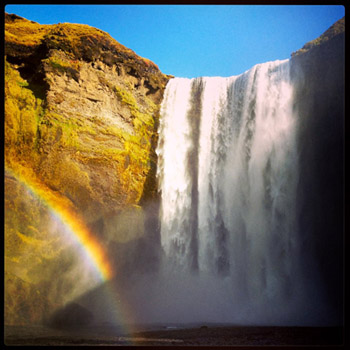
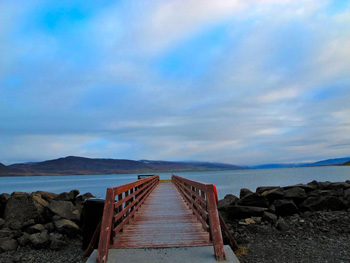 I am writing this brief tour of the Icelandic Poetry Tradition from a loft in New York, where I am being visited by a poet I met in Iceland, HEK. He is also a musician, and was just signed yesterday. Not bad for five days in New York. The assessment of the current poetry scene in Iceland comes from HEK. The summary of the tradition comes from careful Googling.
 Icelandic Skaldic poetry tradition was written by skalds, which referred to Icelandic poets. Skaldic poetry was sung to honor nobles and kings, and to recall historic events or battles. Many are satirical and witty, using employing quirky language and humor. These poems are known for their complexity. Each has eight lines, each with six syllables and the lines are rhymed utilizing, alliteration, half rhyme and full rhyme.
 Before Skaldic poetry there was the Eddas, which is an Old Norse word that means great-grandmother. These were written in the 10th century and are a collection of poems of Norse mythology and legends.
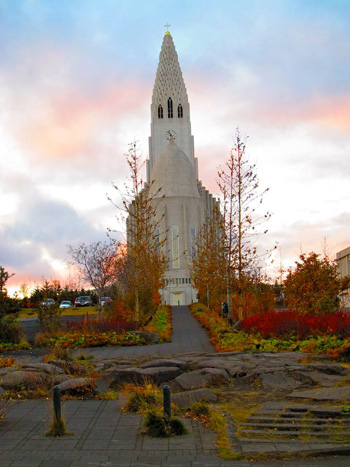 But in the 19th Century the romanticism that was invading the world arrived in Iceland and poetry returned in full force to the elf swept lands. The tradition in this period developed from the Old Icelandic Poetry before it. These poems utilized alliteration, steadfast rhythm, and a coherent length of line and stanza. Imagery comes from old mythology and medieval literature.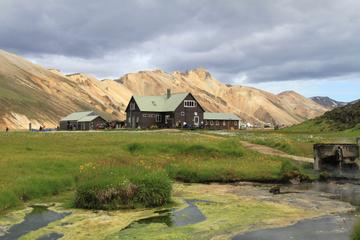


 On the climb to the entrance of Font-de-Gaume, we are told Cro-Magnon man was not so different from us. If he was in a suit and got on a bus today, you would not think twice about it, the guide delightedly relays. In the cave, one of the last in France with polychrome paintings still open to the public, the guide constantly reminds us to not touch the walls or brush against the paintings. Many have deteriorated with age and some are marred by graffiti. It’s dark and damp but when the lights shine on a frieze, there are audible gasps of appreciation at the vitality, colours, and exactness of scale of the animals. Some outlines are engraved while others make use of the rocks’ curvatures to give depth. Bison, reindeer, mammoths, and little black-brown horses are mixed with a variety of undeciphered symbols. Some figures are static and others portray motion quite effectively. A favourite scene features a long-antlered reindeer licking the head of another kneeling opposite in a moving display of tenderness. After leaving the darkness of Font-de-Gaume, we meander northwards along the Vézère River to Lascaux II, a cave near Montignac.
 Grotte de Lascaux’s streams of ochre and black bison careening over its walls are the classics of cave paintings. They are the earliest known examples of representational art at a mind-boggling 17,000 years old. Access to the originals is highly restricted as the cave was closed to the public in 1963 to protect the paintings from further deterioration caused by visitors’ body heat and breathing. The French government built Lascaux II nearby, a precise centimetre-by-centimetre replication of two galleries of the original cave. The public can again browse the tableaux detailing the story of a hunt. In some places, entire sections of the walls and ceiling are teeming with stampedes of stags, horses, ibexes, and long horned bulls. As stunning as the display is, it is difficult to forget we are not in the original and the visit feels somewhat stilted. I want another “real” cave to visit.
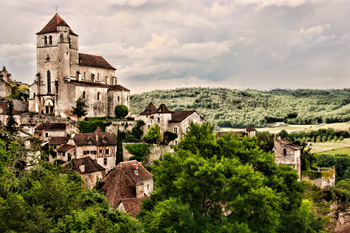
 We head for Grotte du Pech-Merle by the Lot River. Photo 2 On our way south, we pass through towns perched precipitously on hilltops; golden-stoned Turenne and the pilgrimage destination of Rocomadour. Photo 3 & 4 The region is known for truffles and foie gras so food is elevated, as only the French can, to almost impossible culinary standards. Even small country restaurant menus have one or both of those luxurious ingredients prominently featured. Did our prehistoric relatives hunt for truffles to garnish their bison?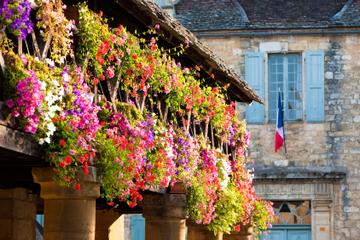



 I believe the title of that conference couldn’t have been more appropriate and topical. The island of Cyprus is divided into two parts, despite the international community does not approve this division. The north has been occupied by the Turkish army in the Seventies, and since then there is a government that totally depends on Ankara.
 Later on, the south of the island gained its independence but Turkey never gave up the northern territories despite the international community condemned the occupation. That’s why no international flights are scheduled to Northern Cyprus (complete name: Turkish Republic of Northern Cyprus) and Ercan Airport is not listed in any official document that regulates the international air traffic. All the flights to Ercan originate from Turkey and, according to the international law, they technically invade the air space of a sovereign country (the Republic of Cyprus, member of the European Union) and land there illegally.
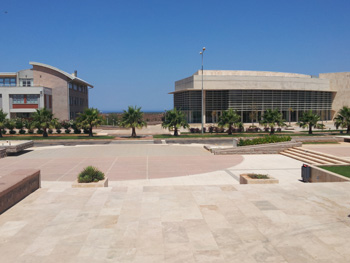 Early in the morning I walk from the guesthouse to the conference center. At eight o’clock it is already warm and the valley which extends beneath the campus towards the south seemed a strip of desert painted in watercolors that gently merged with the Troodos mountains. To the west, the deep blue of the Mediterranean Sea pops up from a remarkable distance. The sunbeams reflected by its surface must have looked exactly the same way 10.000 years earlier when human settlements were already spread throughout the island, making it one of the oldest signs of civilization.
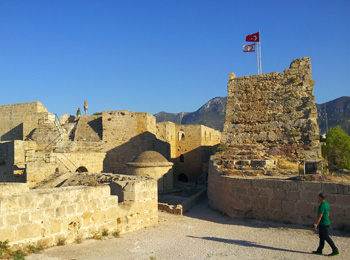 Kyrenia is probably the Cypriot town that better shows this extraordinary heritage at once. On the initial slope of the mountains located right on its back, an imposing Gothic structure known as Bellapais Abbey offers a 3 miles view over an unexpectedly luxuriant vegetation, white villas and turquoise sea. Bellapais is also famous because it’s linked to the British novelist Lawrence Durrell, who lived in that village for some years while he wrote an autobiographical work titled Bitter Lemons of Cyprus.
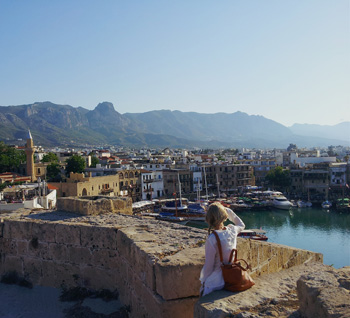
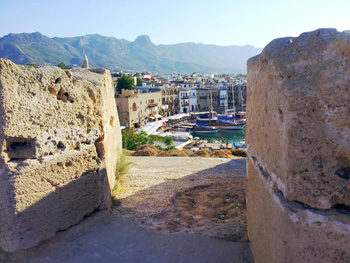
 The inner courtyard of Kyrenia castle is vast and adorned by blossoming plants and palm trees, which grow at the margin of a dusty field. Somewhere, in a privileged position, it is possible to spot two imposing loggias with lancet arch from which the king and the queen used to watch the games organized on this big open space. The first level of the castle hosts the living quarters, a shipwreck museum and some amazing rooms that offer an authentic medieval atmosphere. Finally, from the circular bastion on the upper level it is possible to admire the picturesque harbor, usually full of ships docked next to the terraces of many bars and restaurants. It’s a lively image of people and colors, hectic tourists walking back and forth or lazy patrons sprawled on wicker chairs sipping cocktails in the mid-afternoon.

 Once the conference was over, it was time for me to fly back home. The taxi drove along the motorway through the countryside. The dominant color was due to the yellowish vegetation; the light outside was blinding even despite the tinted glasses of the car. I passed the security check and boarded. The plane took off and climbed out of Ercan’s runway. I tried to spot from that height the campus, the castle and olive groves but something else caught my attention instead: a pair of giant flags drawn on the mountains. The drawings depicted the Turkish flag on the left and, next to it, a rectangle with reversed colors that has been adopted by the Northern Cyprus as their national symbol. A motto accompanied the flags: Ne mutlu Türküm diyene (“How happy is the one who says I am Turkish”).