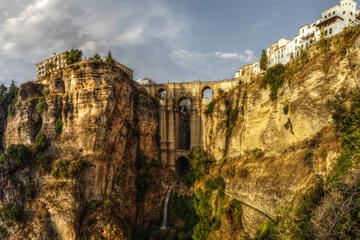
by Darlene Foster
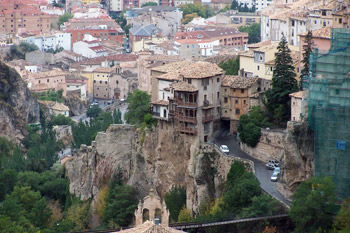
My first thought upon observing the houses of the Spanish city of Cuenca, was that I wouldn’t want to be a sleep walker if I lived in one of them. This unique city, tucked away in the mountains of Castilla-La Mancha, is famous for its casa colgadas, or hanging houses, perched on top of cliffs surrounding a deep gorge carved out by two rivers. Due to limited space, the former inhabitants of the old city built their houses close to the edge, on a rocky mountaintop. Over the centuries, the relentless wind eroded the lime stone cliffs leaving some houses clinging precariously to the edge. A few balconies actually jut out over the ravine, which would make sleepwalking indeed dangerous.
Originally built in the 14th century, the remaining hanging houses are tall, narrow, rectangular stone structures, with two to three floors. They have been renovated and refurbished over the years and recently been reinforced for stability. No one actually lives in them anymore but some are home to “The Museum of Spanish Abstract Art”; a collection of art banned during the reign of Franco.
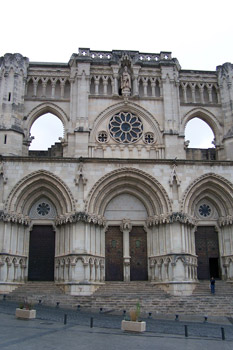 The hanging houses are the draw to this remote city but the old part of town itself is worth exploring. We take a short walk downhill from a lookout point to the Plaza Mayor where the Cuenca Cathedral is located. Dating from 1177, the building is impressive with its three arches. The Gothic Anglo-Norman façade is the only one of its kind in Spain with construction on the cathedral continuing for 300 years and never quite completed. I enjoy wandering the medieval cobblestone streets that wind past old stone houses, adorned with colorful plants spilling over the balconies and climbing up stairways.
Our trek brings us to Puente de San Pablo, a pedestrian bridge that crosses the ravine, providing remarkable views and photo opportunities of the city and the perilous hanging houses. I have an eerie feeling that one of them might topple down into the chasm before my very eyes. The devilish wind whips around, daring me to cross the bridge. I suggest not looking down if you are at all afraid of heights.
Once on the other side of the bridge, we find a good place to get something to eat at the Cuenca Parador, a government run hotel that was a former Dominican Monastery. I relax on the high backed overstuffed couches and sample the region’s traditional recipes. The food is tasty and not overly expensive. The original convent dates from the 16th century, with period furniture and works of art adorning the rooms. The ceilings depict religious scenes. The quaint confessionals are now telephone booths. The ambiance alone is definitely worth the visit.


 We spend the night at Hotel Cueva del Fraile or The Cave of Friars, an enchanting place seven kilometers up the road. This 16th century building hidden in the rugged mountains was once a monastery (for the devout), later a workhouse (for the poor) and now a luxury place of refuge (for the weary traveler). I get lost finding my room as I wander the myriad of stairs and hallways, which only adds to the charm. The structure has stayed true to its original construction and surrounds a peaceful courtyard. The rooms, with high ceilings, thick stone walls and wooden beams, have no doubt been made more comfortable since the days of the friars. Antiques depicting former times are found throughout the building. The hotel restaurant features delicious, authentic Castilian cuisine for dinner and breakfast. It’s impossible for me to resist the thick, creamy hot chocolate and chocolate filled croissants on offer. Staying at Cueva del Fraile is a memorable experience for someone with an overactive imagination. Rumour has it that there is even a hotel spook!
The return trip back takes us through Cuenca, now a UNESCO World Heritage Site, where I once again marvel at the houses that tempt fate by hanging bravely on the precipices with a sheer drop to an unforgiving abyss.
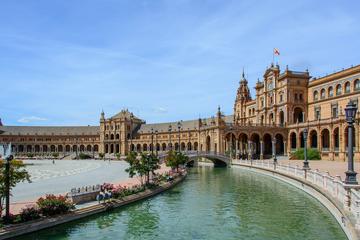
6 Nights guided tour in Andalusia, Valencia and Barcelona from Madrid
If You Go:
♦ Cuenca is 140 kilometers south east of Madrid, about one and a half hours by car, on the N400 turning northwest on the A3 at Tarancón.
♦ A number of buses leave Madrid daily for Cuenca, €9.80 for the two hour ride.
♦ For more information on Cueva del Fraile visit: www.hotelcuevadelfraile.com/en
3 nights guided tour Cordoba, Seville, Granada and Toledo from Madrid
About the author:
Darlene Foster is the author of the Amanda travel/adventure books for children, various short stories and travel articles. Brought up on a ranch near Medicine Hat, Alberta, she dreamed of traveling the world, meeting interesting people and writing stories. She has made it her mission to discover the uniqueness of places and write about them. She lives in Tsawwassen, BC with her husband and black cat, Monkey. Visit her website at: www.darlenefoster.ca
All photos are by Darlene Foster.
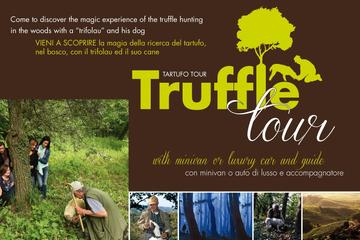
 What faithfully happens, as summer turns to autumn in Tuscany, is that people come down with a pernicious fever – let’s call it ‘acute funghiosis’ – which causes a delirious devotion to truffles. Truffles are discussed with the same intensity and fervor usually reserved for Plato. They are hunted, worshipped, prized, prepared and savoured — after which, the experience of hunting, worshipping, prizing, preparing and savoring is again examined with near-religious ecstasy. This epidemic grips the palate of anyone who eats, and can be cured foremost with a generous serving of taglierini alla tartufo.
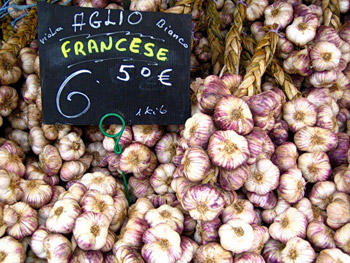 Now, this is also Olive Oil season, with capital ‘O’ s , and everywhere you go is the promise of 42 extra-virgins in heaven. Hand picked, hand pressed, home bottled, first run, double extra, organic, small batch, cottage industry silken oil flows more vigorously and greener than the Arno. Beautiful handblown bottles with delicately drawn artisanal labels beckon you from shop windows and market stalls with their liquid treasure of early fresh earthen green oil. Sadly, by the time it hits our shores, its colour and flavour have mellowed and that newborn nutty taste is but a memory of the motherland.
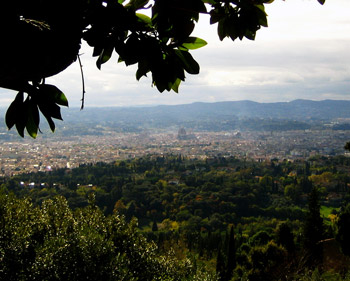
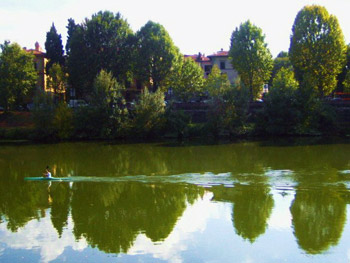 The next day, with late October sun on the city’s shoulders, I headed by local bus to the nearby borough of Fiesole, perched high in the emerald hills overlooking Florence. There is a spectacular hotel here, The Villa San Michele, of the Orient-Express group, that delivers luxurious vistas of the Florentine valley while dining al fresco. Skipping an overnight stay, I opted for the ‘express’ route of lunching like a local.
 Seated on the wide veranda, seduced by breathtaking views and splendid food, I felt fully intoxicated by all that seemed an enchanted illusion. It occurred to me then : Could this be a condition for which there is no cure ?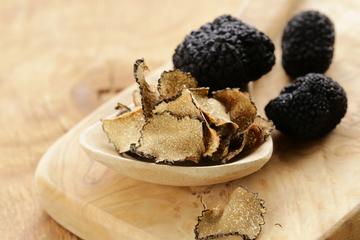
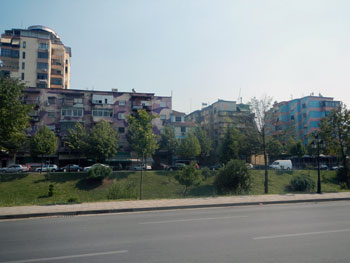
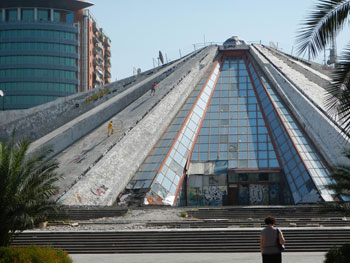 Another intriguing sight is the city’s huge pyramid, built in 1988 as a museum dedicated to the life of Enver Hoxha – the harsh dictator ruling Communist Albania from 1941 until his death in 1985. With the end of communism in 1991 it became a conference and music venue (you can still see the fading signage on the door of its defunct club). War in Kosovo saw it repurposed as a NATO base, and its current use is as TV broadcasting center…and climbing wall…and canvas for graffiti. The future plan is to demolish it to make way for a new parliament building. Climb up it, admire the artwork on it, and then get a bird’s eye view of it – as well as a generally spectacular view of the city – (preferably at dusk) from the Sky Hotel’s breath-taking revolving bar/restaurant .
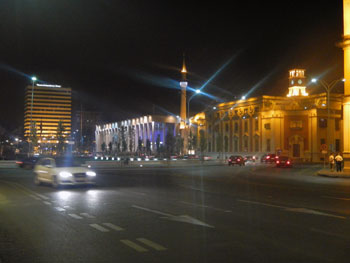 Move onto Tirana’s cultural centre, Skanderbeg Square, where you can admire the statue of Albania’s national hero, Skanderbeg, and the following:
 From Skanderbeg Square, catch a free, comfortable shuttle bus to either of the two recently established shopping malls. The 20 minute trip allows you to see the outskirts of Tirana and is a great way to meet people. Just act like a tourist when getting on, i.e. ask passengers whether you’re on the right bus or what time the last bus leaves. Doing this, I met a guy who worked at a university and a Japanese engineer who’d been in Albania for 3 years establishing a sewerage plant. Two fascinating conversations. Then, when you’re at the shopping centre, you can ‘people-watch’ while you ‘donate’ to Albania’s developing economy.
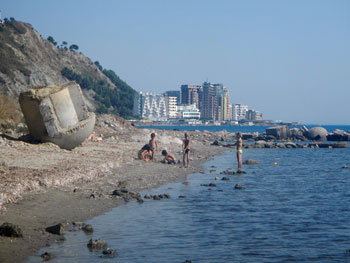
 Durres isn’t the nicest of beaches. Go to the south of Albania if you want a nice beach. What Durres is good for is bunkers. In fact, you can find these all over Albania (although often on privately owned land), a legacy of Hoxha’s paranoia that built 700 000 of them to guard against anticipated nuclear attack. Another Durres oddity is its inundation with resort hotels and bars named after world famous beaches and backing onto crumbling village huts. Chickens are the last things you expect to see at the beach, but there they are ruffling their feathers in the sand! There’s a lot of atypical juxtapositioning like that in Albania: sheep graze around Tirana’s train station, universities stand side by side with car dealerships and industrial plants. Prepare to think you’re ‘seeing things.’
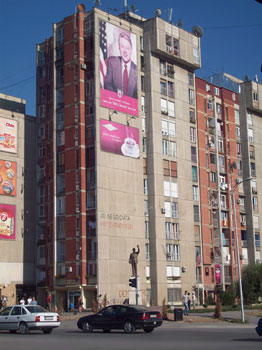 Everyone’s patriotic about their new country. Kosovo and Albanian flags wave proudly down the street, the words ‘Kosovo Republik’ are graffitied on every blank space of concrete, and there’s even Kosovo-brand Petrol stations (with Kosovo’s flag as its logo). Giant letters spelling the word NEWBORN celebrate Kosovo’s recent independence. What a spirit in the air! And, again, it was refreshing to be somewhere where it’s not fashionable to hate America. Indeed, in Pristina, it’s possible to go down Bill Clinton Boulevard and see a giant waving statue of former US President Bill Clinton!Clinton gained hero status among Albanians for launching NATO’s bombing campaign against Serbian forces attacking a newly independent Kosovo.

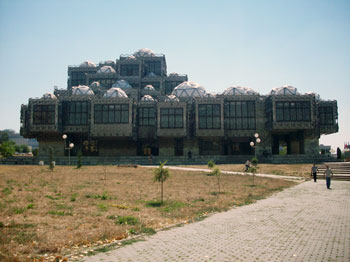 Nearby, you can see pacifism Communism-style in the curious looking Monument of Brotherhood and Unity (facing imminent demolition). And check out the equally unusual looking National & University Library of Kosovo, which includes, among its collections, an American Corner of English resources, events and conversation classes.
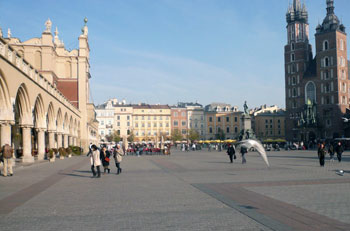
 The main function of the Rynek Glowny through the centuries has always been commerce. During Krakow’s early history, citizens were not allowed to sell goods on the street, only in the Rynek Glowny. It is still surrounded by old brick buildings (kamienica) and palaces, almost all of them several centuries old. The first plans were drawn up in 1257 and have been retained to this day.

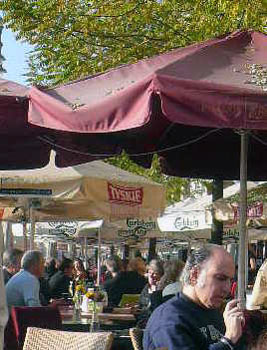
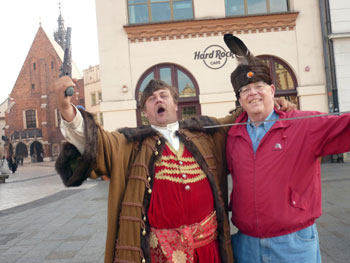 Even though it was November, the venders on the Square, were holding court amidst the yellow umbrellas and tables. Outdoor eating was in full swing. A young man popped up in front of us and handed us a list of his restaurant specials for the day. There is no problem if it is a chilly day, the heat lamps are simply turned on. Should the temperature really drop, blankets are brought out.
 If visitors tire of walking around the Rynek Gwony they can simply seat themselves at one of the numerous outdoor cafes and view the relics of history around them. One side is taken up by the many arched Cloth Hall (Sukiennice) It is considered the world’s oldest shopping mall, The present Renaissance structure dates from 1555 and features in its interior many food stalls, small shops, terrace cafes and flower stands The two-storied structure is a bonanza for souvenirs, handmade Polish crafts and stalls of flowers. The Gallery of 19th Century Polish Paintings is an interesting find on the upper floor. If you get tired, another café is just around the corner. Items tend to be more expensive here than in the Rynek Glowny itself.
 After ordering bowls of cabbage soup (with sausage) my husband Kent and I settled ourselves under one of the heat lamps to take it all in.. Sipping and people watching is the norm. Nuns in habits rounded the corner, while across the Square stood a line of buggies and horses patiently waiting for fares. Their drivers were perusing the daily newspaper. School children, wearing neon vests, filed by led by their teacher. The pretzel and cotton candy sellers were doing a brisk business with pigeons busy picking up crumbs on the cobblestones, Outdoor art exhibits added to the flavor along with impromptu musicians.
 Today Kazimierz is mainly a blue-collar neighborhood. With communism’s fall, Kazimierz has changed beyond all recognition. Buildings such as art galleries and cafes have been renovated and museums opened. There has also been a reawakening in the importance of the Jewish settlement in Krakow. The film, Schindler’s List, was largely shot in Kazimierz in spite of the fact that very little of the action historically took place there.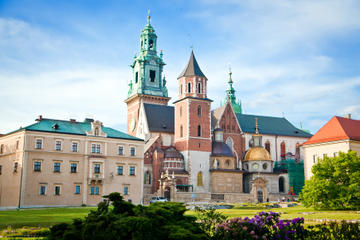
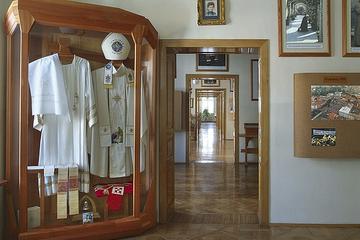
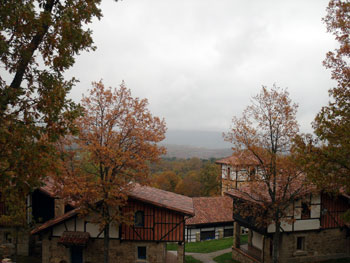
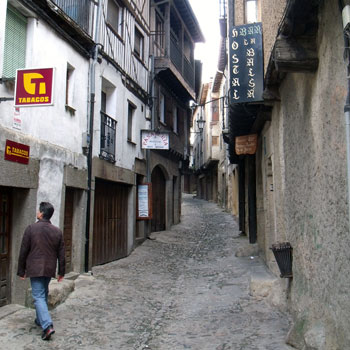 It had been five long years since I had participated in the program at the hotel-resort Abadía de los Templarios Hotel, a 15- to 20-minute walk from the town center of La Alberca, which is located in the western Spanish province of Salamanca amid the Sierra de Francia mountain range.
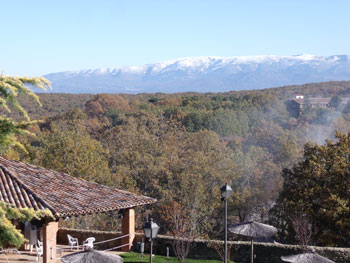 The program officially started on Friday morning in Madrid, where some 36 participants (including myself) headed to La Alberca via a three hour-plus bus ride (or personal automobile for some Spaniards) through rolling pastures and farmlands after leaving the urban sprawl of Spain’s capital city. On the bus, Anglos and Spaniards were paired up, so the latter could begin their intensive language exposure.
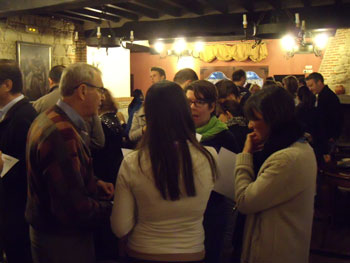 Who are these Spaniards who are there at the behest of their company or their own volition? Typically, a group is made up of professionals from various fields such as IT, production, and other fields. They are generally in their 20s or 30s, but some are older. One such Spaniard, Angel, an IT professional, was actually on his fifth program. Before taking part in Pueblo Ingles, he commented, “I didn’t understand anything,” but the intensive exposure time had increased his confidence and understanding of the language’s nuances. Another Spaniard, Rocio, who works for an energy renewal company, had studied English since high school, but remarked on her primary reason for coming, “My biggest problem is my listening. My listening is very bad.”
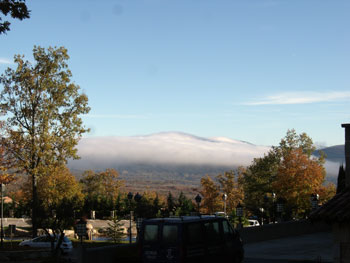 Rick, a 74-year old former teacher and coach who’s taught English in China, heard about the program via word of mouth when he was in Germany (the method which has brought many Anglos to the venues). He emanated a common sentiment among the Anglos, “I want to learn more about the Spanish culture, the food. I want to help them speak English.”
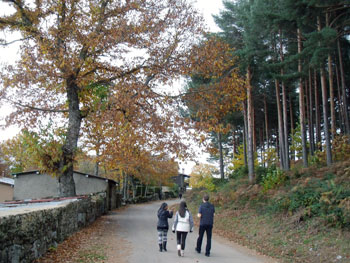 During one of our two-hour siestas and one of the one-to-one sessions, we took walks to the center of town, full of half-timbered houses and shops where one could obtain many things, from a can of Coca-Cola to a scarf, hat, and gloves, the latter three which my new Spanish friend found himself in need of. Our brisk walking on winding roads amid the captivating autumn foliage kept us warmer as chilled afternoons gave way to darkness. He gave me more insights on the activity since his ability to run 26 miles-plus puts my ability to run only around six miles daily to shame. As we walked back on the road leading back to the hotel through woodlands, pasture, and small farms, we could hear the soundtrack of baaing sheep and oinking pigs.
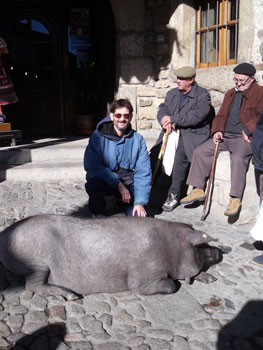 Ignacio and I were lucky enough to catch a common spectacle of a pig that’s allowed to run freely around town to garner handouts from the 1,000-plus locals (plus tourists) as it fattens up so it can be raffled off. We saw some girls being chased by the pig after they stopped giving it handouts. Salamanca is an area where ham products, especially from the limbs of the pig, are considered delicacies.
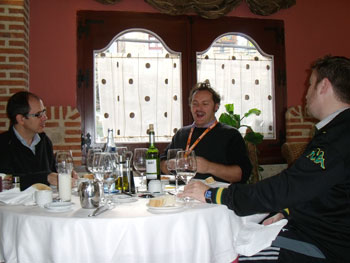 Some of the most connective moments between the participants take place during the meal times, where the table wine (lunch/dinner), tasty cuisine and conversation generously flow. Breakfasts can be a bit more laid back, given the Spanish penchant for kicking up one’s heels well into the wee hours of the morning with willing Anglos. After all, to a Spaniard, 8 p.m. is still considered “afternoon.”
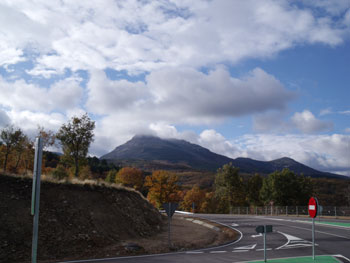 As a seasoned veteran of this program, I couldn’t get over just how perfectly put together this group was, which is credited to the Anglos Dept. in Madrid, who do their best to match the participants up based on the application they must fill out online to be considered for a holiday that sees their room and board covered over the course of the program for their volunteer service.