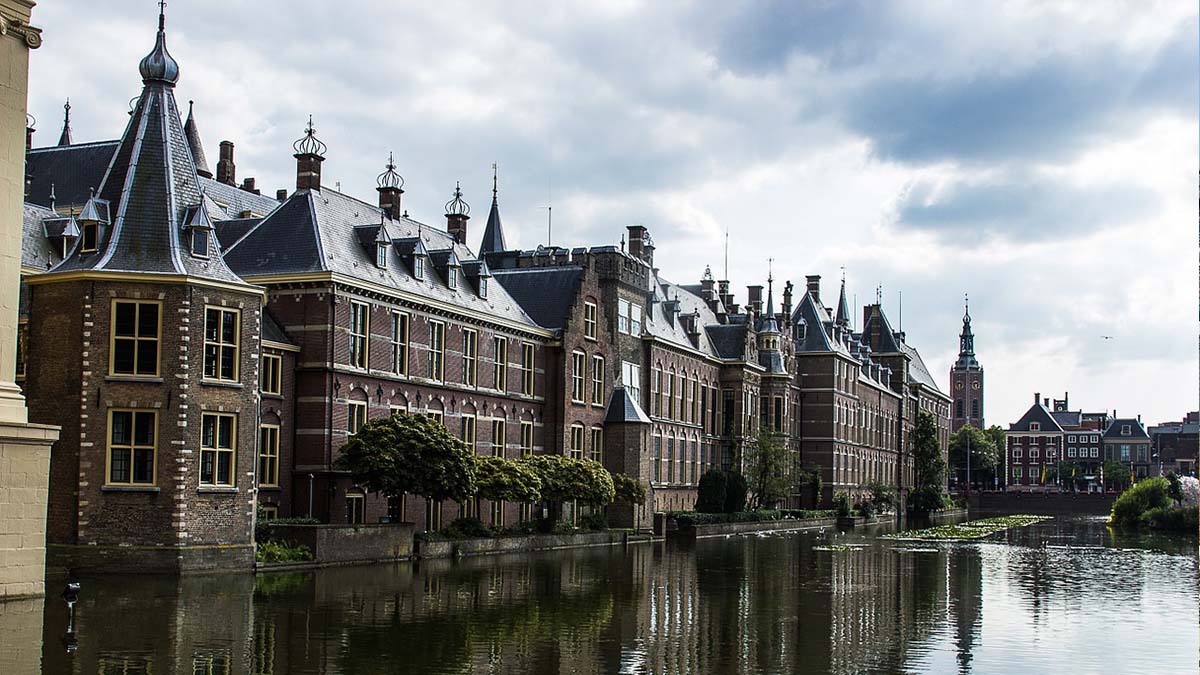
The Netherlands
by Angela Lapham
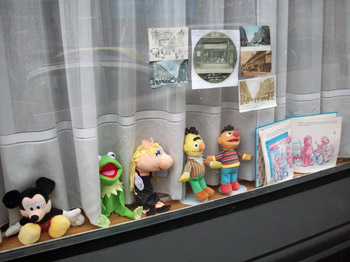 If you enjoyed the liberalism, museums and art galleries of Amsterdam, why not continue on less than an hour’s train ride away in the far less touristy yet decidedly more international ‘city of peace and justice,’ Den Haag (‘The Hague’)? As well as these kinds of attractions, Den Haag’s human rights law courts – the International Criminal Court, International Criminal Tribunal for Former Yugoslavia, and International Court of Justice – offer free, extraordinary experiences that can’t be had anywhere else in the world. Den Haag is also home to the biggest outdoor market in Europe; a gorgeous antique market); old fashioned shop fronts; and friendly locals who decorate their bicycle baskets with ribbons and plastic flowers, and their front yards and apartment window sills with toys and ornaments. Locals also tend to be fluent in English, making it easy for you to get around and to better understand the culture.
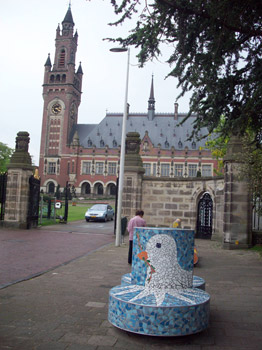 Most people visiting Den Haag visit the Peace Palace. Currently celebrating its 100th anniversary, the Peace Palace established Den Haag as an international centre for human rights. At the visitors centre, Tuesday – Friday, 10 – 5pm (4pm in winter), you can enjoy a free short film and interactive exhibition about all that is housed here: the International Court of Justice (United Nations court that settles legal disputes between the 192 United Nations member states), the Permanent Court of Arbitration, the Peace Palace Library and the Hague Academy for International Law (visit takes 30-45 mins). On weekends, you can tour the palace and its courtrooms for €8.50. Book tickets here (Scroll down to the bottom of the page!). In addition, the International Court of Justice has tours. These are free, but BOOKING IS REQUIRED 6 WEEKS ahead by submitting the online form found here. You can also view the Court’s cases. For some cases, you can reserve a seat, while for those attracting considerable interest, such as whaling, it’s first come, first served. Click here for the latest info.
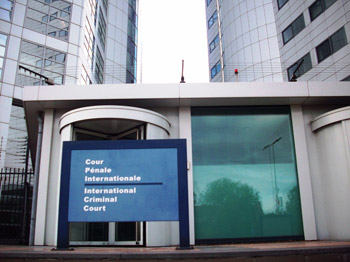 Over in another area of Den Haag, the International Criminal Court – which places on trial alleged perpetrators of crimes against humanity – also offers free tours: Tuesday to Friday, 10am – 12. Incredibly inspiring, the tour gave me an amazing insight into the lengths the court goes to, to enable victims of human rights abuses to testify: from organising visa-free travel to Den Haag, to teaching victims about computers and court rooms, giving them psychological counselling, and allowing them all the time they need to share their experiences with the court. BOOKING IS REQUIRED 1 MONTH ahead (2 months for groups of 5+) by emailing in the form found here. You can also watch cases. No need to book – just remember your passport. Check the court schedule.
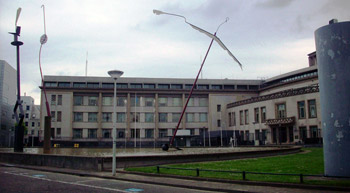 I watched a case, actually two – not at the International Criminal Court but at the International Criminal Tribunal for Former Yugoslavia (ICTY), the first international war crimes tribunal since WWII. If you’ve travelled to Bosnia, Croatia, Serbia or Kosovo, you’ll be very aware of the 1990s conflicts that went on within these regions. Or perhaps you remember the horrific images in the news? Serbian soldiers holding the Bosnian city of Sarajevo under siege for almost 4 years, of refugees fleeing their newly declared nation of Kosovo, of mass slaughter upon mass slaughter. Perhaps while Europe suffered another genocide, you were in a classroom learning about Nazi Germany or in a movie theatre watching the newly released Schlinder’s List? The ICTY is today’s Nuremburg Trials.
 Infamous war criminals such as Radovan Karadžic attract visitors, but for the little-known, I was pretty much it. After passing through security, I was escorted to a small room with a large window into a court room. Watching a live court case of this magnitude was fascinating: two men charged with genocide, a policeman either side; an American lawyer; a British judge; two additional judges; a witness; the British judge instructing the witness to refrain from looking at the accused every time he began to speak; simultaneous language translation into English, French and Bosnian-Croatian-Serbian; the American lawyer defining the word ‘payment’ as a catch-all term in English as opposed to its more specific meanings in Bosnian-Croatian-Serbian.
Then…down dropped a blind, to stop me seeing a confidential piece of evidence. Was I disappointed? No, I found it exhilarating – a sign that I was amidst a real court case. These next few minutes I spent getting to know my security escort. Expecting him to have completed the standard security officer training, I was most impressed to hear he’d served 6 months in Bosnia followed by 3 years in Kosovo. Up went the blind again and I watched on until court adjourned for the day. Again, there’s no need to book – just remember your passport.


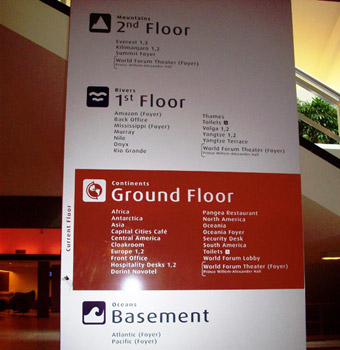
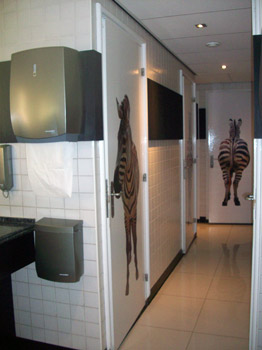 Leaving the ICTY, I notice the World Forum Convention Centre next door and decide to check it out. Glad I did. The interior is very, very interesting! There’s a world map carpet, zebra toilets, a basement themed by the world’s oceans, a ground floor themed by the world’s continents, a first floor themed by the world’s rivers, and a second floor themed by the world’s mountains. Den Haag has a lot of novel surprises like that. Effort seems to be put into making things that extra bit fun, revealing another way the city cultivates all that is good about humanity. You can see it everywhere: in the bike and pedestrian culture, in the bustling historical squares full of cafes and bars, in the parks and forested areas (outnumbering those of any other Dutch city), and in the culturally diverse shops and events. There are so many things to do that I haven’t even mentioned. Visit the official tourist website now!
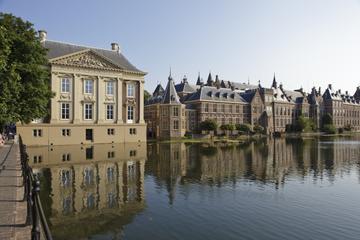
Private Tour: The Hague Walking Tour Including Peace Palace Visitors Center
If You Go:
♦ The Hague Tourism
♦ The Hague Market
♦ To visit the ICTY
♦ Court Schedules
♦ Well connected to Europe, you can quickly reach Den Haag by:
Train – 4 hours from London (2 hours to Brussels on the Eurostar; then 2 hours Brussels to Den Haag on the Thalys) OR 3 hours from Paris (Thalys). See www.bahn.com for the rest of Europe.
Plane – Easiest through Amsterdam’s Schiphol Airport, a mere 22 minute train ride from Den Haag.
Bus – I took a Eurolines bus from London. Megabus also runs buses to Amsterdam. Buses take 10-12 hours. Both offer fares as low as £14.
About the author:
Angela Lapham is a history graduate from Australia with a passion for randomness, travel, world events, and human rights, She found The Hague fascinating. She’s currently enjoying Melbourne but forever looking forward to her next European adventure!
Photographs #2 – 7 are by Angela Lapham.
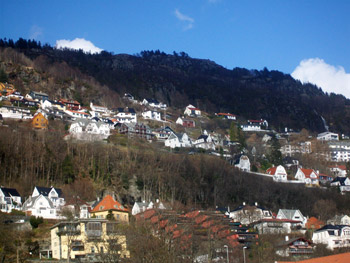
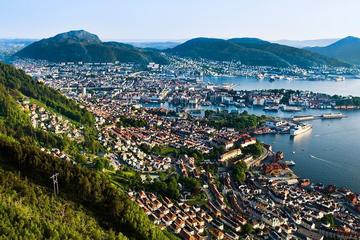
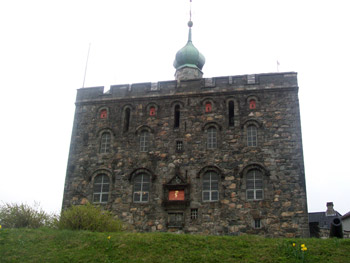 Although the sea seems to stop a long way from the mountains, I realised they meet nearly every day; and that it is an ancient tale painted differently each time. Sometimes the sky expresses itself with bold snow; leaving a picture that demands your attention. Other times it impresses with light brush strokes of ephemeral rain; hiding the boundary between wet and dry land. If you look closely, it often seems to use two hands to do both of the above at the same time. Set against Bergen’s northern mountains, I noticed precipitation falling as snow and rain at the same time for the first time.
 A combination of the visual splendour and memories of past hobo travels inspired me to walk to the Vandrerhjem Montana hostel half way up Mount Ulriken, where I’d booked five nights accommodation.
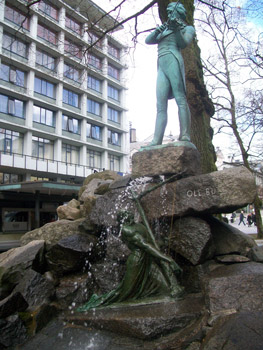 Passing the lake-looking Store Lungegardsvann; which is in fact the sea reaching around Bergen’s centre like a curling outstretched arm and big clenched hand; I walked up past parks decorated with Edvard Greig and Ole Bull statues to the colourful Logen theatre house.

 Bergen’s distinctive docklands buildings are built on the original site of the city, dating from the 11th century. Its strategic location helped Bergen become Norway’s capital and the largest city in Scandinavia during the Middle Ages. It was a member of the Hanseatic League trading confederation, and there is a museum commemorating merchant life from 1360-1754 in the red, green and yellow wooden buildings on the eastern edge of Bryggen.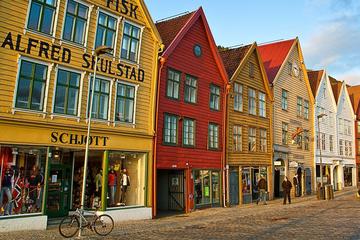
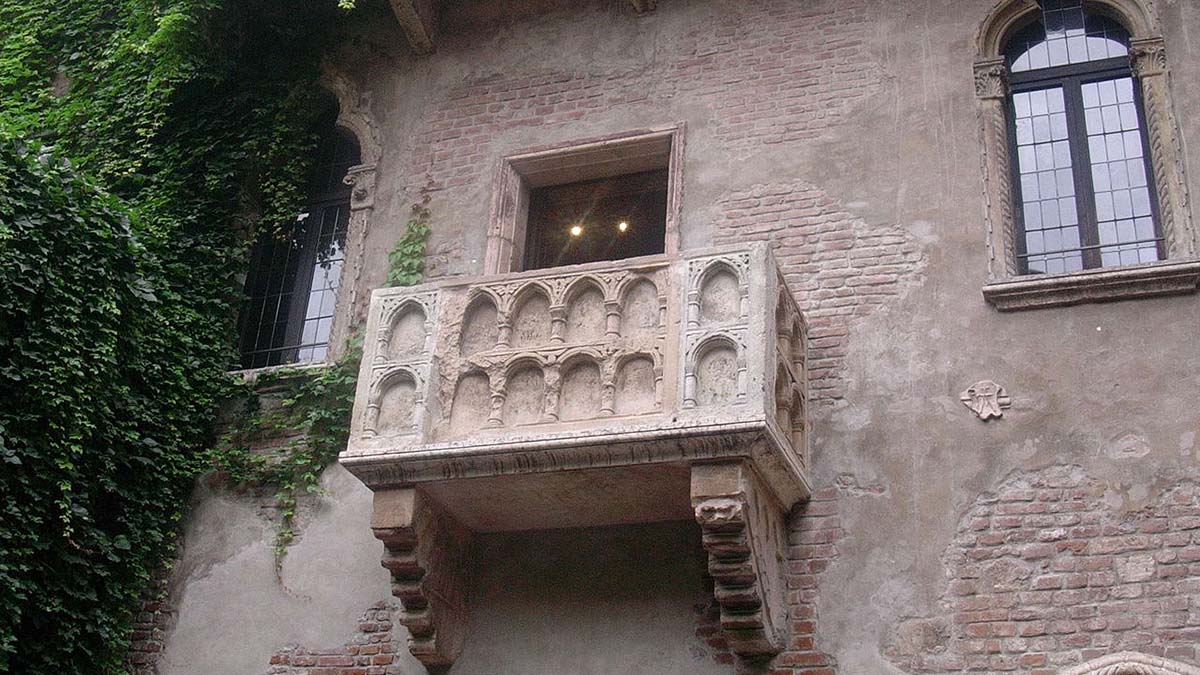
 “Fair Verona” is brimming with historical and artistic treasures, such as the magnificent Arena, whose sands where once stained with the blood of gladiators, but now hosts one of the most spectacular opera festivals in the world.
 The tunnel-like entrance to the courtyard is covered in graffiti and lovers traditionally leave their names, snippets of poetry or messages of love on panels that cover the walls, if they can find space, creating a fascinating collage dedicated to love.
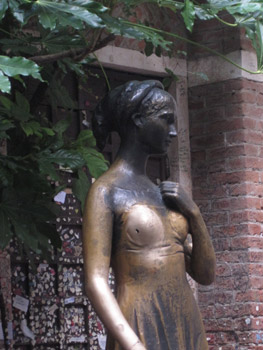
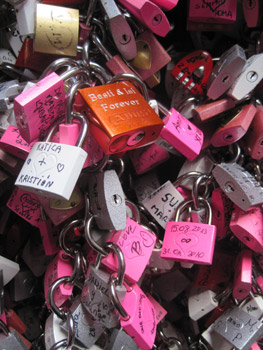 Behind the statue, the railings are covered in padlocks forming a chain created by lovers from all around the world. Couples write their names on padlocks, which can be bought from the handy gift shop, or bring their own, to write their names on and bind their love forever. This gimmick, which the cynical criticize as being solely a source of commercial profit, nevertheless creates a unique piece of living art, which is constantly changing. According to popular belief couples who leave messages on Juliet’s Wall, in any shape or form, will find eternal love.
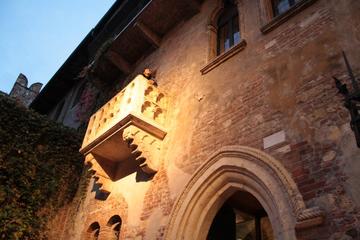
 Although Juliet and her Romeo may never have existed, the places associated with Shakespeare’s tragic heroine have become a memorial to romantic love, a testimony to the hopes and dreams of those looking for love and a symbol of belief in eternal fidelity.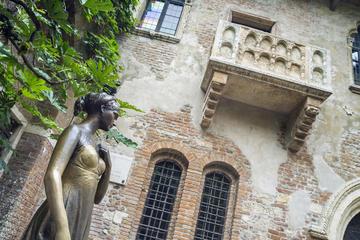


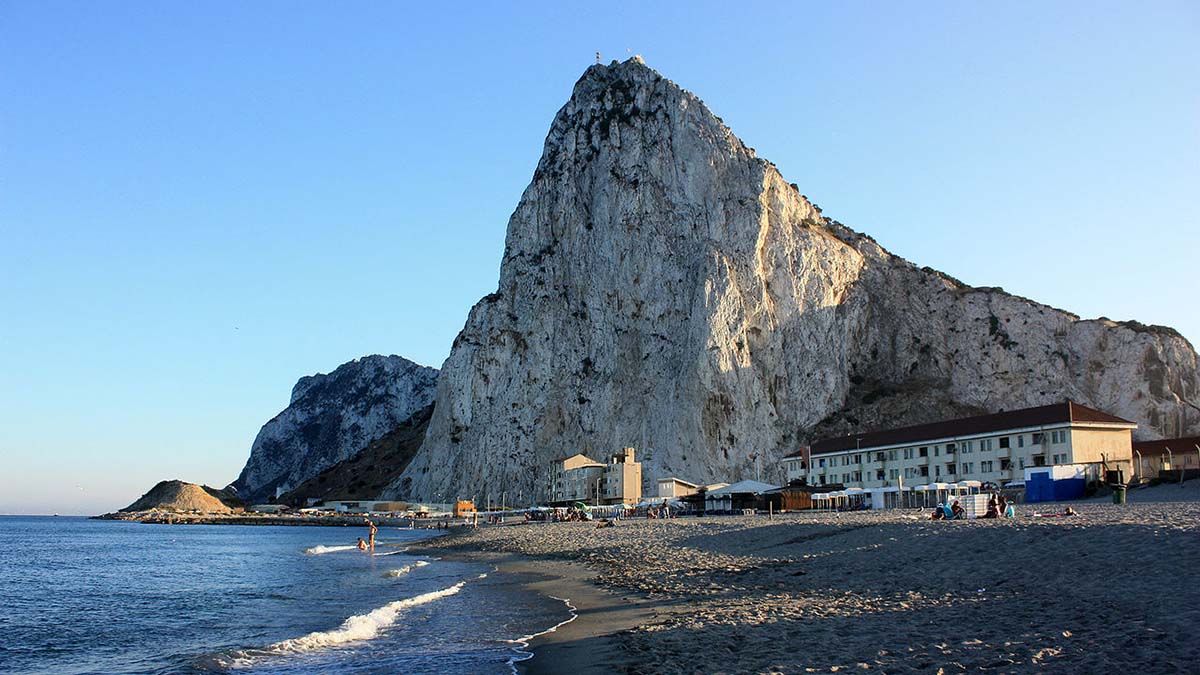
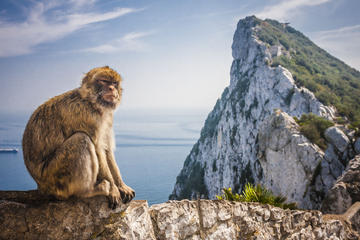
 Then the Rock of Gibraltar, in all its glory, came into view. The Rock rises some 426 meters above the sea. As such, it’s almost a small mountain! Even though it’s a limestone rock, the Rock of Gibraltar is very green. The Rock has lots of vegetation and an abundance of wildlife. On its higher levels there is the Upper Rock Nature Reserve, which includes various migrating birds and the famed Gibraltar Barbary macaques.
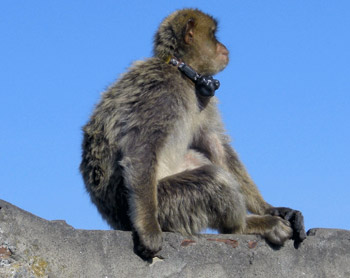 When the taxi stopped, I was some 300 meters above sea level. Upon vacating the taxi, a few of the Rock’s Barbary macaques surrounded the entrance to the cave. Gibraltar is the only destination in Europe where you will find any Barbary macaques.
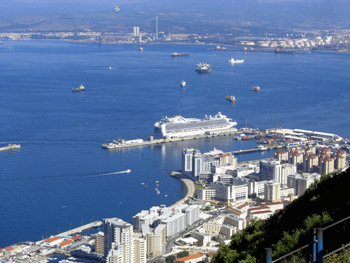 The tour continued towards the northern side of the Rock. It was there that we reached the Great Siege Tunnels which I briefly walked through. Their entrances are located at a point of the rock that overlooks Gibraltar’s airstrip close to the border.
 Gibraltar Beaches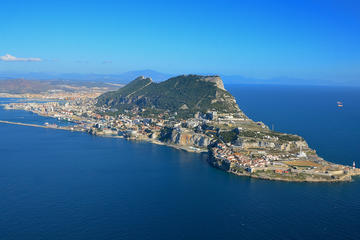
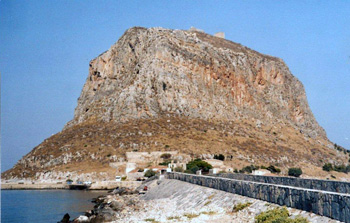
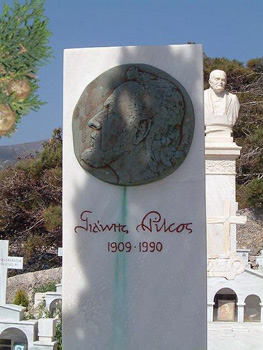 Yannis Ritsos was born in Monamvasia in 1909. An aristocrat by birth, renowned in Greece as an actor and director, he was one of Greece most beloved poets and is considered one of the five great Greek poets of the twentieth century. He won the Lenin Peace Prize in 1956 and was named a Golden Wreath Laureate in 1985.

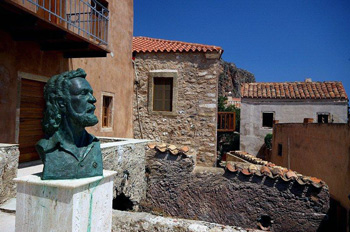 Lying on an important trade route, Monemvasia was occupied by the Venetians after pirate raids caused the inhabitants to ask for their help. There were 90 famous pirates in the Mediterranean at that time. After the Venetians took over, the town became inhabited with knights, merchants and officials. New building and restoration work began. But once Venetian power began to wane it fell to the Turks. When Turkey declared war on Venice, the city was recaptured but it wasn’t until the Greek War of Independence on July 21, 1821 that the town was liberated.


