Barcelona, Spain
by Marc Latham
My plane was on time, but I was twenty-five years late.
In September, 1987 I had spent the afternoon on the E-90 north of Zaragoza hitching to Barcelona. When I got a lift in the evening with a couple who didn’t speak English I’m pretty sure I told them I was going to Barcelona. They couldn’t have understood me, because I saw the lights of Barcelona in the distance to my right; fade in and out of view. It was deep night by then, and I didn’t raise much protest; if any. They took me to Figueres, Salvador Dali’s hometown, and from there I continued north.
Now I’d finally made it to Barcelona; to run a marathon in a few days time. It was experiences like Zaragoza, where I had walked for several miles in intense Los Monegros desert heat, that made me think I could endure running long distances. In my experience, independent travel can be just as grueling as organised events, but achievements usually go unrecognised; taking place with only road and nature as witness; forgotten like desert dust blown off a worn rucksack.
Montjuic Park, Home of Olympics 1992
 I settled in on the first two days, and on Saturday visited Montjuic Park for the marathon expo; to collect my race number and timing chip. The Museum of Arts towers over the front of the park; above cascading fountains framed by rows of steps. Musicians and giant dolls entertained in the square at the bottom of the cascading fountain.
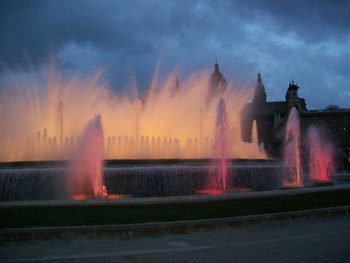 I returned in the night to watch the Magic Fountain show. Every fifteen minutes between 7pm and 9pm the circular fountain at the foot of the hill seems to be awakened by music, spraying water high in the air while changing colours.
The next morning I joined about 20,000 runners below the fountain, with the elite runners setting off at 08.30. About twenty-five minutes later I passed the start line, ran around the twin Venetian towers and half way around the Praca d’ Espanya roundabout. The area had a facelift for the 1929 world exhibition, and provides a nice introduction to Barcelona for those entering the city from the main El Prat airport, about fifteen miles to the south.
Running Thru History
 After about four miles the circuit took us past Camp Nou; the 98,000-capacity home of FC Barcelona is the largest stadium in Europe. That night I joined 68,000 people at the stadium to watch Barcelona beat Rayo Vallecano 3-1. Climbing to a seat about five rows from the top of the 150-feet-high stadium was hard work, but worth it, with the sensation of emerging into the steep-sided seating above the bright green pitch reminding me of the Lost Horizon story of a Shangri-La hidden in the Himalayan mountains.
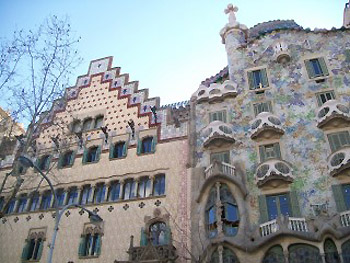
In about ten miles the marathon route returned us to the city centre, running up Gracia past the Modernisme architecture that distinguishes Barcelona. La Pedrera statues pierce the sky from Casa Mila’s rooftop, while buildings such as Casa Amatlla and Casa Batllo seem to shout loud colours from intricately glossed lips.
 Antoni Gaudi was Modernisme’s most famous artist, and a couple of miles later we passed the movement’s crowning glory. La Sagrada Familia is still under construction a century later. The 13,000-capacity cathedral’s size distinguished it from other cathedrals while passing, and on closer inspection so does its blending of nature into the design. Gaudi liked curves rather than straight lines, claiming there were none of the latter in nature; and some spire-tops are decorated with balls of fruit-colours.
After looping north we ran parallel with the Mediterranean Sea, and through Barcelona’s Modernisme-style Arc de Triomf; built for Spain’s first international exposition in 1888; the event an important showcase for the city’s art movement at its peak. The last kilometre returned us to Montjuic Park, where we’d begun.
A good crowd braved rain-showers to cheer runners home, and along with all the drinks-volunteers, musicians and spectators along the way they made the marathon experience into more than just a time and achievement.


Post-Marathon Sightseeing
 The sky cleared the next day, and temperatures rose into the 60s Fahrenheit. I took the train out to Monistrol de Montserrat, and hiked to the Santa Maria de Montserrat monastery. To the north-west, snow-capped Pyrenees signified the border with France, while the Mediterranean Sea was visible to the east.
The Benedictine abbey seems more amazing than La Sagrada Familia in many ways; within nature rather than including nature. The abbey is nestled near the top of the highest Montserrat peaks; like a ship in bottle; hardly noticeable from the train below. I wondered how it was constructed; before the bus, train and cable car that now service Catalonia’s most important religious retreat provided easy access.
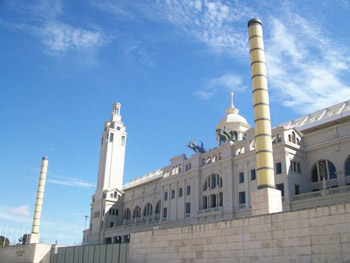
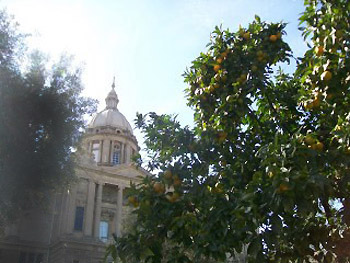 The next day I returned to Montjuic Park, going past the Arts Museum to the Olympic Stadium, which brought back memories of the 1992 Games. I walked past torch-pillars and the Telefonica tower to the tree-filled green zone leading up to Barcelona’s castle. Cannons point up and down the coast and there are great views of the city all the way to Tibidabo Mountain, overlooking Barcelona on the western horizon. The castle has a chequered past, being used to hold and execute prisoners in the civil war and other twentieth-century conflicts.
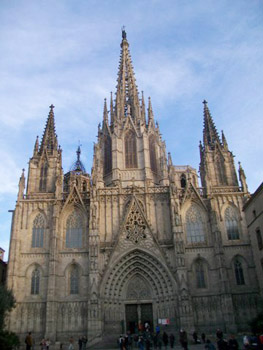
There was time to visit the La Rambla shops, cafes and street entertainers; the Waterfront; and Gothic Quarter’s narrow alleys in the afternoon. The latter also has Roman ruins and La Catedral. On my last full day I visited Gaudi’s Park Guell in the north of the city, before returning to La Sagrada Familia and the other Modernisme masterpieces in L’Eixample; seeing that some have now been converted into designer shops.
I could only walk past and admire; but it inspired a thought. I’d also converted something old into something new in Barcelona; a road-tale memory into a road-running achievement. And as Barcelona continues to craft La Sagrada Familia, I’d also fitted in one more piece of my quarter-century-old original journey plan.
If You Go:
♦ Barcelona is an international hub served by an airport; railway and bus stations; and has a modern metro system. There are tourist buses providing a hop on service to main tourist sites upon purchase of a day’s travel ticket.
♦ Marc stayed in Hostel One Sants, which is nice and friendly, and near the railway station.
♦ There are tourist information offices in many city centre locations. People speak Catalan as well as Spanish, and English is widely spoken. The Euro is the currency.
All photos are by Marc Latham:
Olympic Stadium
Montjuic Park
Magic Fountain
Modernisme
Cathedral
Santa Maria de Montserrat
Arts Museum
About the author:
Marc Latham travelled to all the populated continents during his twenties, and studied during his thirties, including a BA in History. He now lives in Leeds, and is trying to become a full-time writer from the www.greenygrey.co.uk website. Marc has several published and self-published books available on Amazon.
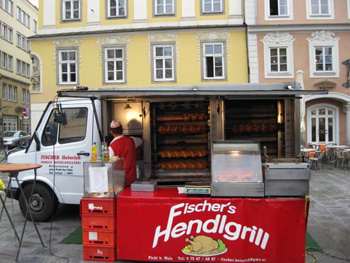
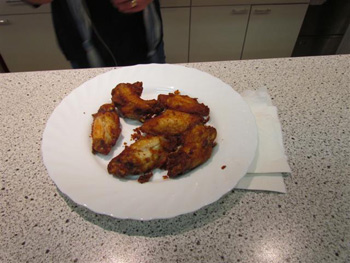
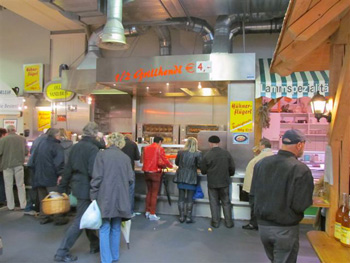 Some of my personal favorite ethnic eats are in Austria. In Wels a small town in the Northwestern section of the country there is a local market which is very similar to the Westside Market in Cleveland, Ohio. A new building was recently constructed to house the vendors. On the outside of the market vendors sell various fresh fruits and vegetables etc. Nothing there is prepackaged. Inside the building the vendors provide various types of fresh food including meat, poultry, eggs, cheese and even schnapps (whiskey). My favorite vendor has barbecue roast chicken on a spit and as of late a new item lightly breaded chicken wings which go well with a stein (a traditional German beer tankard) of beer. Priced by the kilogram (2.2 pounds) US $3.00-$5.00.
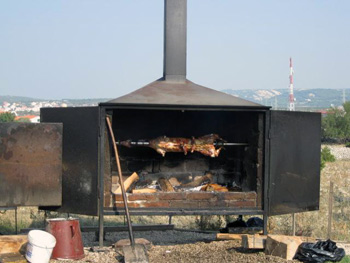
 There are other taste treats to learn about and experience. Crossing from Slovenia into Croatia passing through village after village the signs for roast pork (svinjina) and lamb (jagnjetina grilled lamb both roasted on spit) began to appear. The local Gostionas (Restaurants, Bars) were preparing their grills for roasting. As luck would have it, we always seemed to miss many of these establishments. It might have been sheer luck and or just bad timing. We were either too early or too late for lunch or there was not a Gostiona located in the area where we were.
 Having been in the former Yugoslavia a few times we learned over the years on what to look for when it comes to roast pork and lamb. Normally vendors and restaurateurs post signs advertising their wares along the road. Driving through Split on the Jadranska Magistrala along the coast toward Dubrovnik about lunch time we just could not find an establishment that had roast lamb or pork. Either we missed the signs or there just weren’t any. Finally we stopped at a local restaurant and we were given directions on where to find janjetina. Down the road and up the side of a sparsely covered mountain, we traveled higher and higher on the narrow pebbled road turning this way and that as the road curved back and forth along the side of the mountain, my cousin sitting in the back seat hanging firmly on to the hand strap fixed to the car roof. We drove on and on for over an hour. Finally we found it. The war had taken its toll. It was a bombed out building and on the side of the building a faded wooden sign advertised jagnjetina. My cousin started laughing hysterically!!! Someone was having a good laugh on us. Consequently we did not have roast pork or jagnjetina this day.
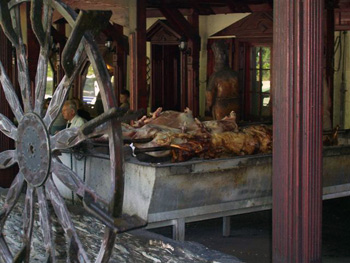
 On another occasion we were traveling by bus from Sarajevo to Mostar we stopped in the town of Jablanica to view the local historical sights. We learned from the locals just on the outskirts about one kilometer south of Jablanica was the restaurant Zdrava Voda (Health Water). There on six roasting spits was lamb grilling on an open fire continuously throughout the day enough to quell the hunger for both the tourist traveling between Sarajevo and Mostar and the local population. The price was US $15.00 which included potatoes, salad, and bread. Jablanica is known for this mouth watering delicacy and that there are over 8 restaurants in the vicinity that serve it. www.zdravavoda.co.ba

 In Sarajevo the restaurant Cevabdzinica Zeljo, on street Kundurdziluk 18, in the Bascarsija seems to be the favorite place for locals to enjoy a “healthy” meal of cevapcici with onions, sour cream and yogurt. Cevapcici is beef minced meat in a roll served with pita bread and priced under US $7.00. Other versions of this delicacy are made with ground lamb, veal, and pork.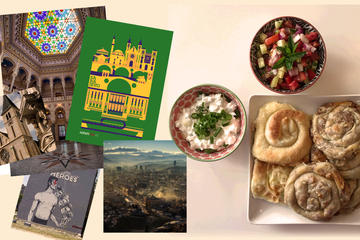
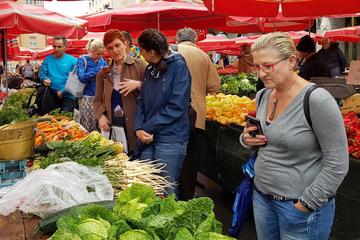
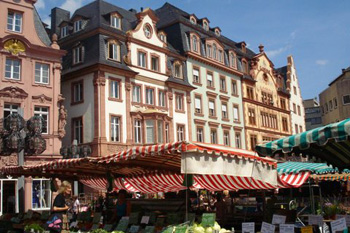
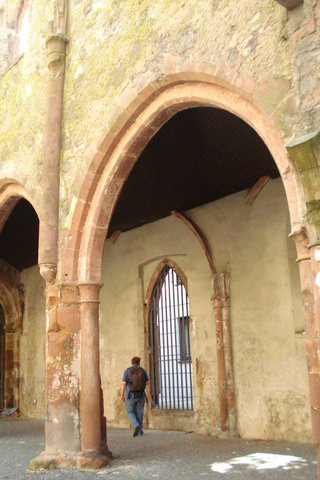 Mainz history goes back to when the Romans built a fort here around the 1st century BC. The name “Mainz” may have derived from the Roman name for the river, Main. But until the 20th century it was referred to in English as Mayence. Besides this temple there are other ruins nearby including the site of the original Roman citadel where there is a cenotaph raised by legionaries to commemorate their hero Drusus. Among the sites are the ruins of an aqueduct and theatre. Some of the artifacts of Roman times can be viewed in the Museum of Antike Schiffahrt and Mainz most important museum, the Landesmuseum.

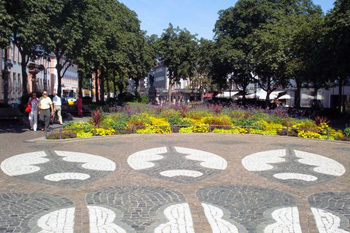 Mainz is home to a Carnival, the Mainzer Fassenacht, originating in the 19th century. We walked around the carnival square where there’s a statue of Friedrich von Schiller, a 19th century writer and poet for whom the Square is named. The Carnival is held on Rosenmontag (Rose Monday), before Ash Wednesday and is one of the city’s biggest celebrations.
 The immense Cathedral of Saint Martin is nearly 1000 years old, built in Romanesque style. It has six individual pipe organs inside all accessed from one large console. The Augustine Church with its magnificent Baroque facade was built originally as a hermit’s monastery in the mid l700’s and is now a seminary church noted for its beautiful interior with ceiling frescoes that provide insights into the life of St Augustine. The Catholic Church of St. Peter is one of the most important Baroque building in the city. Originally a monastery, the present church was built between 1740 and 1756 by architect Johann Valentin Thoman. Inside you’ll see amazing Baroque altars and ceiling frescoes. Christuskirche is an evangelical church in an Italian High Renaissance style. It serves as a music venue as well as church. The old Gothic Church of St. Christoph dates to the 9th century. It contains an original 15th century baptismal font. Johannes Gutenberg, inventor of the first printing press was baptized here.
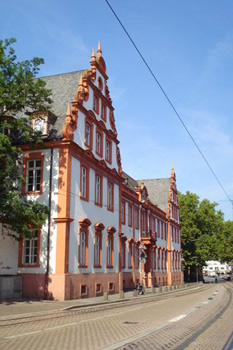 There are several interesting day-trips out of Mainz. The region is rich in variety with idyllic river scenery, historical towns and picturesque villages. The Rhineland-Palatinate is famous as a wine region and the romantic castles along the river and was named by UNESCO as one of the most beautiful landscapes and world heritage sites.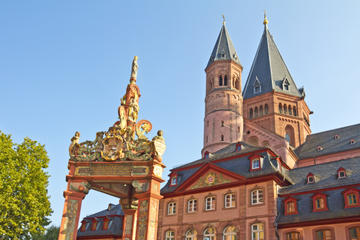
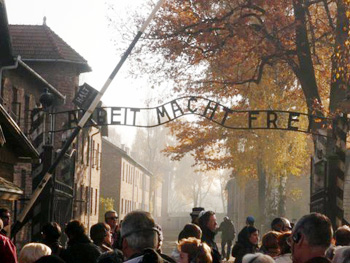
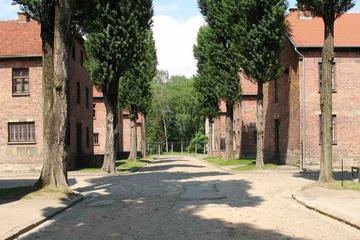
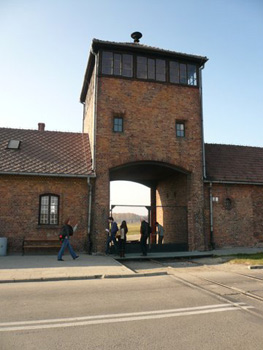 We were part of a continuous line of visitors from around the world who did not need a Silence sign. The only noise came from the shuffling of feet. We were on a tour of Poland and had been visiting Krakow. After making the one hour drive from Krakow, we arrived at Auschwitz I. (Auschwitz II or Birkenau, is a mile away). Admission is free.
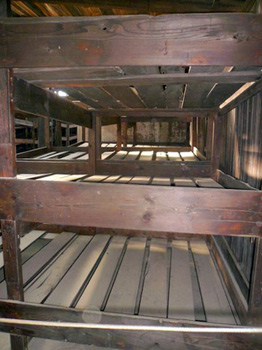 During the early days, the Nazis would take pictures of each inmate. These seemingly endless 8 x 10 glass-covered photographs surrounded a long narrow hall. The inmates looked healthy, for they had just arrived. The name was printed below each photo and included the date of arrival and the date of death—sometimes just days apart. When photography became too expensive, the Nazis started tattooing numbers on the inmates’ arms.
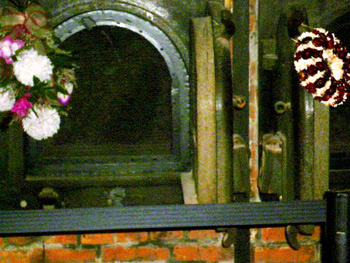
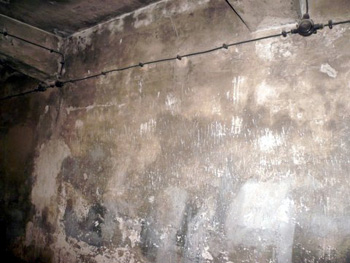 Those who were not selected for the barracks were told they were to take showers. Only Zyklon-B gas was used instead. (The shower heads are still embedded in the cement wall). From there, their bodies were taken to the crematorium The Nazis destroyed evidence of the gas mass killings by blowing up the buildings. Anya told us they liked to use gas because they didn’t have to look at the person while he was being killed.
 This was confirmed by Jerzy Kowalewski, an eighty-eight-year-old Auschwitz survivor. We attended a seminar he had given in Warsaw.
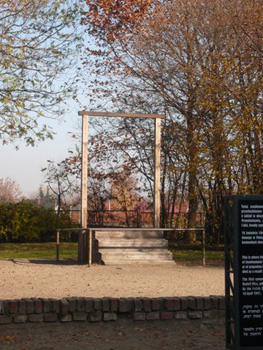
 At the daily roll call, the entire camp stood in their meager rags as the SS guards called out their names. The roll call was given as a collective punishment for the wrongdoing of just one prisoner. The inmates stood for up to four hours in the rain and snow. Some of the extremely weak and sick prisoners would die in the lines during the roll call. After roll call, the prisoners received their ration for breakfast. They were given 10 ounces of bread with a small piece of salami or one ounce of margarine and brown, weak coffee, with no sugar.

 In the Block (or Building 5), on either side of the middle aisle, behind glass, were piles fifteen feet high of human hair on both sides. Rows of long braids popped out at me first.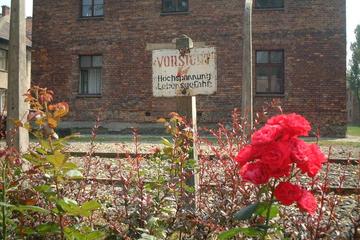
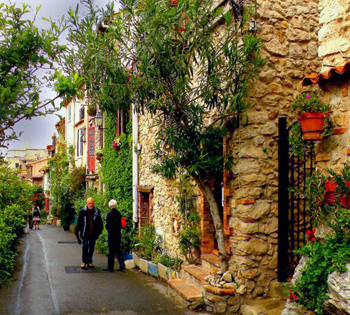 My wife and I are on a Mediterranean cruise along the coasts of Italy and France celebrating our 20th anniversary, sailing on the ultra-deluxe Norwegian ship. Sea Dream I, which carries just over 100 passengers. Sea Dream I is a magic carpet, easing us in comfort and style through a region full of fascinating history. We have been anticipating visits to some wonderful ports and are not disappointed. What we had not foreseen, though, is the many ways that Napoleon, or perhaps just his spirit, would keep making his presence felt, as if popping up unexpectedly in little cameo appearances. These underscore just how completely he dominated Europe in his brief but dramatic era of war and conquest, supreme glory and abject defeat.
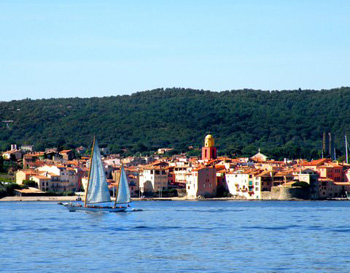 The next planned destination is the Italian island of Elba, the one place where we would expect to find sites intimately linked to Napoleon’s life. It was on Elba that he was forced into exile (along with about 1000 servants and troops as bodyguards) after a series of defeats in 1814.
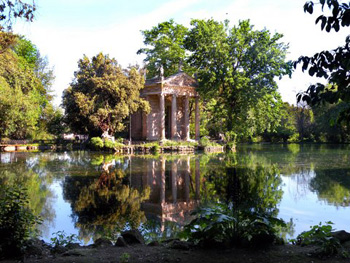 Then we anchor off Viareggio, back on the Italian coast in Tuscany, and take a day trip inland to Florence. We have arranged a walking tour to enjoy the glorious and stunning medieval and Renaissance architecture, monumental public sculptures and inviting pedestrian-only piazzas. It is far too brief, of course, but our personal guide takes us to some special places, such as the studio of a blacksmith who creates fantastic birds, fishes and other creatures in steel, and to the guide’s own favourite and funky “Cafe of the Artisans.” We stroke the snout of an iconic bronze wild boar and share a kiss, thus assuring our return to Florence some day.
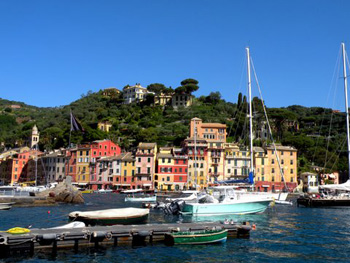
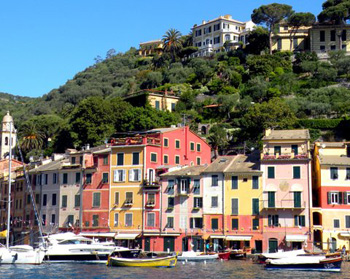 Farther north on the Italian Riviera, our ship anchors off the picturesque village of Portofino, with its brightly painted old houses. Once a simple fishing village, it now has an upscale yacht harbour catering to the rich and famous. Going ashore for a few hours, we hike up to a striking castle that dominates the small bay. And sure enough, Napoleon left his mark here as well during the years when France controlled northern Italy. What we see is an ancient fortification that Napoleon modernized, greatly expanded and equipped with better cannons. Not one for modesty, he renamed the village Port Napoleon.
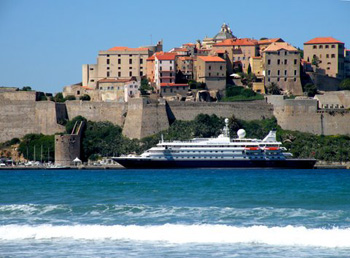 While a student, I had bunked at a unique youth hostel in a little modern castle overlooking Finale Ligure, a lovely stretch of coastal villages on the Italian Riviera only an hour east of Monaco. We decide to return to explore those intriguing shores, with their rich and diverse history. It was here that the 15-year-old Margaret Theresa of Spain stopped briefly in 1666 while on her way to Vienna to marry Leopold I, the Holy Roman Emperor. A triumphal arch commemorating the event dominates the central piazza, not far from ancient fortifications that marked the long-fought-over boundary between Spanish and Genoese-controlled territories. A few miles east is the village of Varigotti with its strikingly Moorish houses. These were built in the ninth and tenth centuries by the Muslim Saracens, who ruled the area for nearly 100 years. Long thereafter, they remained both a threat and a trading partner to the region, bringing such goods as salt from Ibiza when Spain was still under Moorish rule.