Aviles, Spain
by Chris Herbert
The drone of bagpipes echoes up a narrow cobble stone street. You catch a glimpse of a country dancer’s bright white dress across the town square. Not so unusual you say? I would agree if this was the Firth of Forth or we were enjoying a hot toddy in Saint Andrew’s Square Edinburgh. But it’s unlikely you’ll hear a Scottish brogue anywhere near here. This is the city of Aviles in the Principality of Asturias Spain.
We are here for the Beltaine Celtic Festival. That’s right a Celtic festival in northern Spain. Legend tells us that Asturian Celtic history began in the 11th century with a visit to the northern shores of Spain by San Balandran.
Despite our late night research we uncover very little about the festival or for that matter Aviles. So we are going on an adventure trusting that it will be everything that festival co-ordinator Juan Carlos says it will be, or at least what we’re able to decipher from his e-mails and a little the help from Google translator. Its true things do get lost in translation. Juan Carlos speaks only Spanish, and I must admit we speak muy pobre Español. So when our regional flight from Paris arrives at Oveido airport we have a lot of unanswered questions. Luckily Asturians are able and very willing to share stories of their lengthy history.
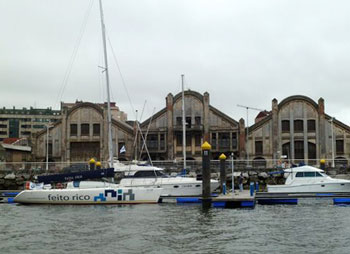 Roman Alvarez Gonzalez is a teacher by profession. We met him during a boat ride along Rio Aviles. Currently he is serving as the Councilor for Culture and Sports in Aviles. Roman’s history 101 lesson includes among other things that Aviles sits on the most northerly tip of Spain and is the third largest city in the Principality of Asturias with 80,000 residents. The natural estuary made it a perfect seaport in the Middle Ages and a key to the salt trade with France, when salt was worth more then gold. Sabugo now a district of Aviles began as a fishing port on the Rio Aviles. In part because of over fishing the fishing industry is no longer a major player in the economy. For a time in the mid 20th century shipbuilding and a steel industry also prospered on the waterfront.
Spain’s long history includes explorers sailing the earth’s oceans in search of new lands, spices and world power. They also saw their share of foreign invaders including the Moors in the 8th century. While they ruled most of Spain for nearly 800 years Asturians take pride in the fact that the invaders never occupied their mountainous home. Asturia stood alone as a refuge from Islamic rule for Spanish Christian nobles. Out of gratitude to this day the heir to the Spanish throne is named the Prince of Asturias. That autonomy is a source of great pride to Asturians but it may be a catch-22, as the principality seems to have been left behind by a more contemporary Spain. Of course depending on your point of view that may or may not be a bad thing.
 El Café de Joey is in old town Aviles. Joey is Asturian/American and a bit of a history nut. Never reluctant to share his knowledge as he rushes about catering to his customers, Joey tells me over a potato tortilla and cold drink that Aviles was a key to Spain’s exploration for new territory. He points out that the 16th century Spanish explorer Pedro Menedez de Aviles sailed from the walled city to the new world where he founded America’s oldest continually populated city of San Augustin (St. Augustine, Florida). San Augustin is their sister city and their patron saint. While he stops to top up my glass Joey expounds on Asturians in Cuba. Spaniards sailed from Aviles to the Caribbean Island where they were instrumental in developing the island country’s tobacco farming prior to Castro’s regime. El Café de Joey now sits where the medieval cities wall once stood.
In the early 20th century Spain fell under the rule of Francisco Franco. From 1937 to 1975 Franco’s regime suppressed political rivals and rights, particularly women’s rights. Much has changed since the 1970’s as Spain transitions to a democracy. But for women it seems that old ways don’t die so easily as this part of Spain is still very much a paternal society.


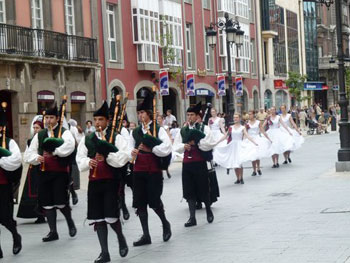
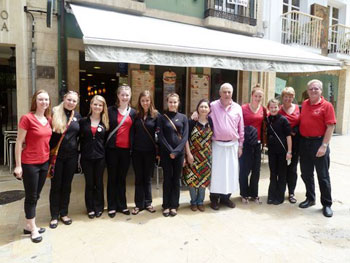 That brings us back to The Beltaine Festival. Celtic music is a big part of Asturian history including bagpipes or gaitas, as they are known in Spain. The Gaiteras are usually accompanied by tamboril (snare drum) and requinta (fife) and folk dancers. The Beltaine Festival attracts Celtic performers from around the Principality of Asturia, Scotland, France, England and this year Juan Carlos took a leap of faith and for the first time invited a Canadian group. From the start of the festival The Inverglen Scottish Dancers performed on the main stage in Parque De La Muelles, in the Plaza De Espana and around the old town to enthusiastic audiences.
Just like those would be invaders of long ago we too found that travelling to Asturias is no simple matter. With no direct flight we arrived in Oveido airport by way of Paris followed by a 20-minute bus trip to Aviles. But if you want to embrace the traditions of Vieja Espana it’s worth the extra effort.
Life moves slowly here. Enjoy it. The siesta, one of the wonderful Spanish contributions to civilization is alive and well in Aviles. By mid-day most businesses have closed their doors. We soon learn not to fight it; instead we join the locals on the patio at La Villa-Arga in Plaza Domingo Alvarez Acebal. Maria Jose the villa’s owner arrives with tapas and a glass of sidra or fortified apple cider. Some siderias serve the sidra from a kupela (barrel) but in a café it’s more likely to be bottled. Holding the bottle well above her head the server fills a glass held at waist height to ensure the sidra is aerated. It is proper etiquette to empty your glass all at once, no sipping allowed. Any dregs can be splashed on the ground. Salud!
In the evening families stroll in the plaza and stop for a drink or dinner with friends. Teenagers play a game of basketball or soccer well into the night at Parque del Quirinal. There is no WII, smartphone or blackberry in sight and yet they carry on.
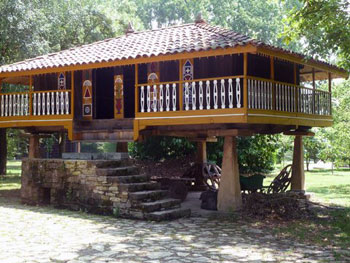
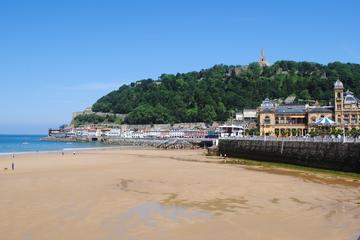
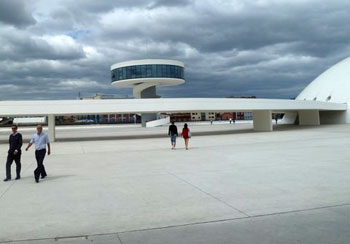 A short train ride away is Gijon, much more touristy then Aviles it is worth a day trip. The Museu del Pueblu d’Asturies preserves the history of the Asturian people and includes a collection of habitats and Horreos from the 17th to 20th century as well as the Asturian Pavilion that was built for the Seville Expo ‘92. It’s well worth a visit. Before catching the train back to Aviles check out the market in Plaza Mayor or just enjoy the sun and sand along Plaza de San Lorenzo.
A prominent Avilesino told me “Asturias is the real Spain.” I was overwhelmed by it’s natural beauty and the people. He added with a shrug that unfortunately in Asturias “news doesn’t travel.” That may in part explain why it is difficult to find information on this part of Spain. There is so much history here, ancient and modern. The Beltaine Festival is all but unknown outside the region as is the Niemeyer Centre, an internationally significant cultural centre. The good news is that Aviles and all it offers is there for you to discover for yourself.
3 nights guided tour Basque Country and Oviedo from Barcelona
If You Go:
There are no direct flights. We flew an Air France regional flight from Paris to Oviedo.
Coach www.alsa.es and rail service www.renfe.es are available to Aviles, Gijon and Santander from Oviedo.
Hotels in Aviles include:
– Hotel La Villa-Arga www.hros.net
– Hotel Don Pedro www.hdonpedro.com
– Hotel Arena
A night will cost you from €65 to €120.
Some of my favourite restaurants include:
– Café at Hotel de la Villa-Arga
– El Nogal de San Francisco
– El Café de Joey
More info is available at www.asturiasguide.com
About the author:
Chris Herbert is a Vancouver BC Canada based travel writer. You can find more articles by Chris in Seniors Living Magazine, The White Cockade, Travel Thru History, The Chilliwack Times and AbbotsfordTimes.com. Your comments can be emailed to stilltravelswell@hotmail.ca.
All photos are by Chris Herbert.
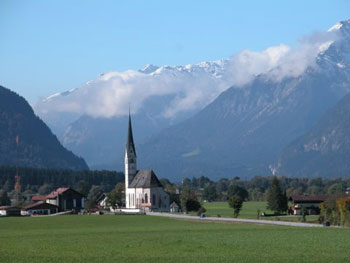
 Joe, my husband, and I arrived in Munich, Germany on a sunny afternoon in September. Using the airport mini bus service we arrived in Kundle an hour and a half later. Anna, the Master Carver’s wife, a small, slim lady with sparkling eyes ran down a flight of stairs to greet us. She whisked us to a spacious second floor guest room with a large deck overlooking gardens and a spectacular view of the mountains. We followed Anna as she ran across the garden and up another flight of stairs that led to a door with an impressive eagle carved in relief. Stepping through the door was akin to entering a tree house filled with industrious wood spirits. Sunlight filtered through floor to ceiling windows of a huge workshop, sharp tools sizzled across fragrant pine. Intricate carvings came to life under Herr Binder’s soft spoken direction and shrewd eye.
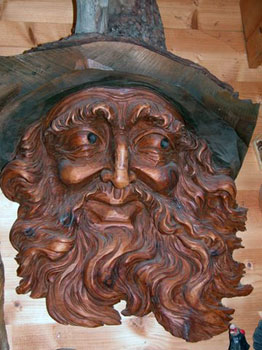 Carving in Kundle was a unique experience, surrounded by beautiful carvings it was impossible not to be inspired. Eagles, wings outstretched, perched near windows as though waiting to take flight. Alpine Ibex, with enormous backward curving horns, seemed ready to leap off craggy, wooden rocks. Larger than life faces with swirling beards, tangled hair and mischievous eyes smiled down from walls as we carved.

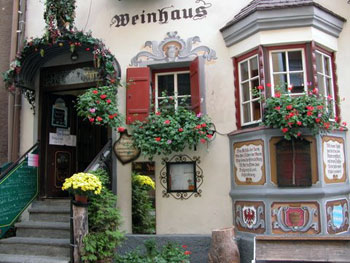
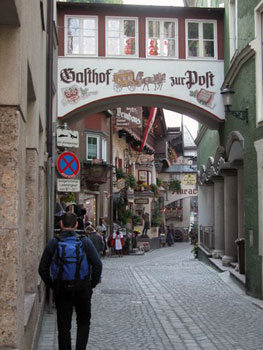
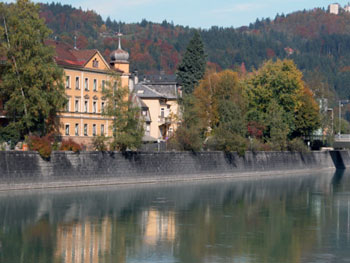 Postcards often depict glimpses of destinations quite unrelated to reality. Kundle is the exception. Intricately carved wooden balconies and eves changed pastel colored walls of houses, shops and restaurants into whimsical gingerbread creations. Geraniums, petunias and ferns tumbled in cascades of color from every balcony and window box. The Hanging Gardens of Babylon could not have looked more beautiful. Narrow winding streets led to fountains where children splashed on their way home from school and towns people gathered to eat lunch. Five restaurants served a variety of food, we enjoyed authentic Austrian dishes in a restaurant where massive wood furnishings, beams and doors were heavily decorated with carvings. Family members gathered in large groups for dinner and men in colorful lederhosen stopped for a pint of lager en-route to festival rehearsals. As the atmosphere filled with camaraderie, clinking glasses, bursts of regional songs and laughter, enhanced by wafts from the kitchen of frying Wiener Schnitzel, Goulash and apfelstrudel, we felt we were on stage, part of the cast in a movie extravaganza.
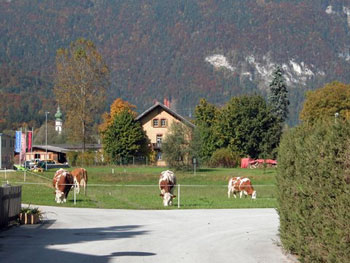
 Strolling home one evening after a delicious meal of smoked trout in a mid seventeenth century Pension we heard the clanging of cow bells. A herd of cows came bustling up a side-street heading for their night quarters in a barn attached to a house. At seven o’clock in the evening it was the duty of anyone passing by to stand at the top of the street and encourage the animals not to make a detour through town.
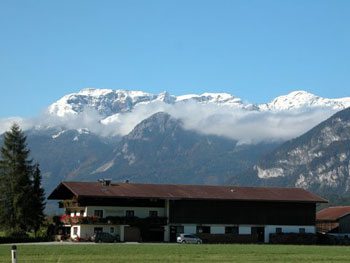 I signed up for three weeks carving instruction, choosing to carve mornings only, leaving time to catch the train to numerous small Tyrolean towns within thirty minutes ride of Kundle. Even the smallest town boasted a castle, large or small, huddled on mountain tops the castles looked down on the inhabitants like benevolent protectors. Rattenburg with a population of 440 is the smallest town in the country. Founded in the 14th century it was built in the shadow of Rat Mountain to protect it from marauders. Following ancient cobblestone streets we stumbled upon a glass blowing demonstration. A cavernous area hewn deep into rock displayed hand blown glass animals, birds, dragons and flowers. Suspended from the cave ceiling lit by soft, revolving colored lights the glass sculptures cast dancing shadows across ancient stone walls. Sparkling Austrian crystal, dazzling rainbows of color, glistened like stalactites in dark corners. This little town, characterized by its medieval ambience is known far and wide as “glass town.”
 Kufstein, located between South Tyrol in Italy and Bavaria in Germany is known as the “pearl of the Tyrol.” It has about 15,000 inhabitants, the majestic Kufstein Fortress, a massive fortification dating from the mid 12th century rears above the town on a precipitous crag. An interesting feature of the fortress is the “Heroes” organ built in 1931 it was the first open air organ in the world. During summer months concerts are played at noon each day in memory of those who died in the two world wars. In both world wars the Fortress tunnels were used for shelter. Sitting in an out-door café by the beautiful Inn River savoring chocolate cream cake while listening to the soulful organ music float down from the fortress and drift through the flower filled historical district below is a magical experience. The music can be heard eight miles away.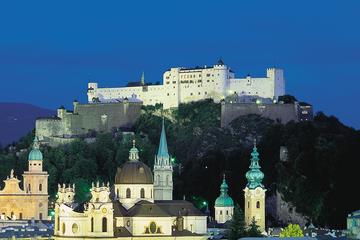
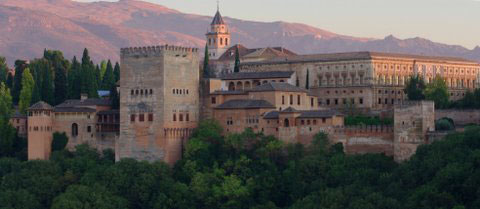


 The year was 1492 and as they rode into town Ferdinand and Isabella were accompanied by a certain Christopher Columbus, there to seek support for an expedition to the Indies.
 Perhaps the royal couple did not pick up on the allegorical design (the original meaning of harem, or al haram, is sanctuary). The four streams of paradise flow from each wing to the central fountain of aforementioned lions. The impression is that of a desert oasis, with the columns lining the courtyard standing in for palm trees.
 The conquest of Granada was of such importance to Ferdinand and Isabella that they commissioned a royal chapel in the city to house their remains. Visitors can still pay their respects here, just around the corner from the muscular Christian cathedral.
 There was to be another brick-and-mortar response to Islam and at much closer quarters, within the walls of the Alhambra itself . When Charles V came to power in Spain, not long after the conquest of Granada, he wanted his residence to be both close to the Nasrid palaces and fit for an emperor.
 It would appear that alongside the religious fervour that was to culminate in the expulsion of all Muslims from Spain in 1609, there was something of a grudging respect for their culture. On the day they entered Granada, Ferdinand and Isabella wore elaborate Moorish costumes which had been commissioned especially.
 Walking up the Caldereria Nueva, a sloped street in the lower Albaicin and within sight of the Alhambra, you could be forgiven for thinking you’re not in Spain at all. That or you are, but it’s the middle ages. The narrow street is lined with souk style North African merchants and Moroccan teterias, or tea houses. The owners sit outside their shops at the quieter times and gossip here as they do in Fez, Cairo and Damascus. From the teterias the aroma of minted tea is accompanied by that of the sheesha, or water pipe. Arabic is the lingua franca in this neighborhood, along with French, Spanish and of course English.
 Coincidence it seems, is to be found at the heart of this city’s defining moments as often as are these two faiths. Across the Darro valley, the Alhambra’s most prominent feature from here is the Comares tower which houses the Hall of the Ambassadors. It’s the most impressive and stately of the rooms a visitor will see on their tour, having just stepped in from the bright light of the Courtyard of the Myrtles, a delight for the ear as well as the eye, its fountains babbling at either end of a mirror smooth pool.
 Some things change, and some never seem to. The centuries that have passed since Columbus’ voyage have frequently been troubled by encounters between Islam and Christianity, between both and secularism. The ramparts of the Alhambra have withstood. In our times of idealogical clash and religious hatred, the Moorish edifice stands all the more alluring; a testament to the shared history of cultures and faiths, if not reconciled then at least intertwined in the stone and tile work of the Alhambra and in the lives of its occupants.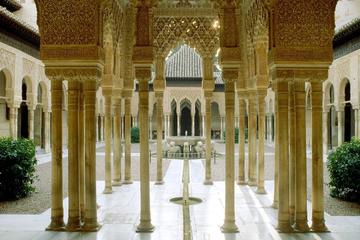
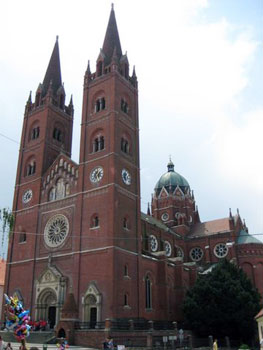
 Pope John XXIII praised the Ðakovo’s landmark as “the most beautiful church between Venice and Istanbul.” We were impressed by the cathedral’s neo-Gothic-Romanesque style even without the Pope’s words. Before we had time to fully appreciate the magnificent cathedral, we had to join in the first program of the day.
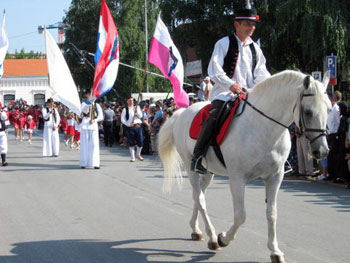
 Religious practices have always been an integral part of all Croatian festivals. Ðakovacki Vezovi is no exception. Mass at the St. Peter’s Cathedral follows the parade.
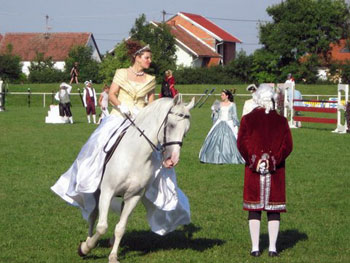 The highlight in the afternoon was equestrian competition and performance held in the hippodrome, showcasing the Lipizzaner breed. Ðakovo’s first official stud farm was founded more than 500 years ago, long before the Lipizzaner horses came to Ðakovo in 1806. But Ðakovo soon shifted exclusively to the breeding of these noble horses. The Lipizzaner breed has made Ðakovo famous beyond the Croatian borders for more than 200 years.
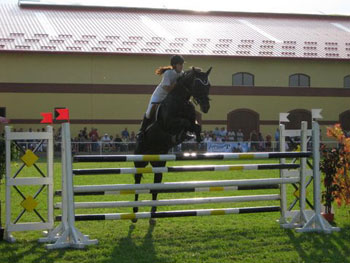 Visitors could go to the stable for a close contact with these beautiful creatures. To my surprise, the horses remained calm even though so many strangers were moving around them. In the meantime, the equestrians were busy preparing the horses for the performances at the hippodrome.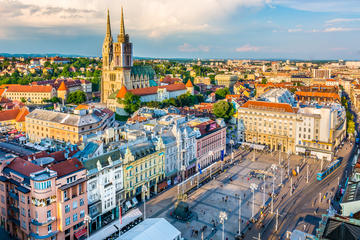
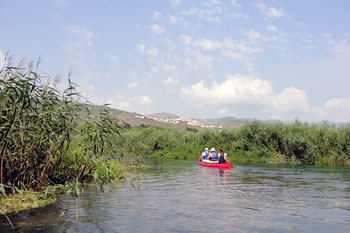
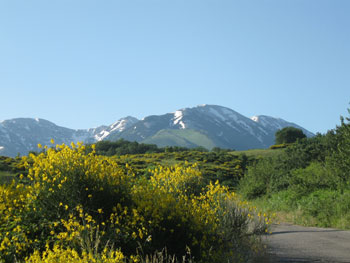
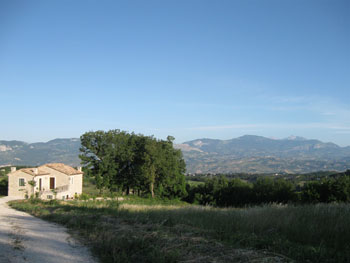 I wonder what it would be like to live here in Abruzzo all the time, far from the pressures of city life, far from tourist traps, close to nature, and to inner peace. Like Celestine. Back in the thirteenth century, he lived higher up these rugged slopes, in a cave, until he was called to the Papacy. But he hated all the glitz and glamour, and missed his life as a hermit, so he swiftly issued a decree allowing popes to abdicate, and returned to his cave.
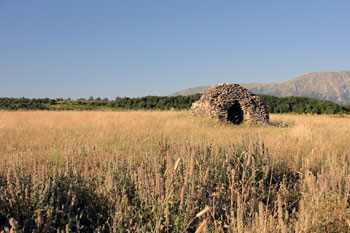
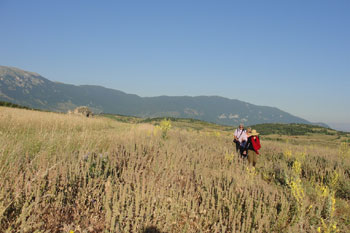 Yes, I think, turning back down the mountain, there’s a spiritual energy here. But I would want a little more material comfort than Celestine had: perhaps I could buy that stone ruin over there on the slope, and convert it. Like Ezio and Mariangela did. A few years ago, they decided to flee the pressures of city life, and bought an eighteenth century property here. They restored it using original materials, and made it into a four-bedroom B&B. They named it Casa Giumentina, after this valley. That’s where I’m staying…and I’m getting hungry. The sun is now warm on the back of my legs. As I approach the house, I see that breakfast has been laid out on the table under the oak tree. I can already smell the cappuccino…and Mariangela’s freshly baked apple cake.
 As I enter the village, I notice that the roads have been recently paved. There’s a feeling of progress, of development. After the war, this was one of the most depressed areas in Italy. People left in their hundreds, looking for work, often in mines in northern Europe. The population dropped from 2000 to 450. But things are changing: people are trickling back.

 ‘My husband died in the war,’ she says. ‘I never married again. I couldn’t have my sons calling another man “papà”.’
 I stroll down to Il Carro, a restaurant which serves local delicacies. I start with an antipasto of salame and pecorino cheese, then have wild boar, with spelt, which is the staple cereal in this area. I accompany it with a glass of Montepulciano wine, and finish up with a fresh strawberry sorbet and an espresso.
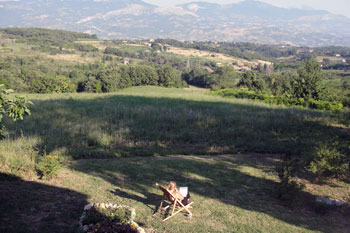
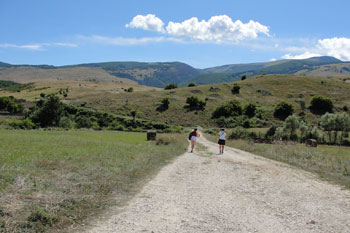 But no, here is where I want to be. The view is too beautiful. I feel warm and relaxed. I’ll sit in a deckchair and read, or write, or perhaps just gaze into space until sunset.
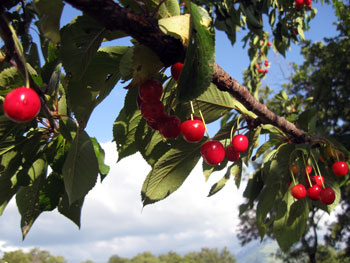 We chop and stir together in the large kitchen. Before settling down to dinner on the terrace I slip on a cardigan. Up here, fifteen hundred feet above the sultry plains below, the evening air is cool.