by Bram Reusen
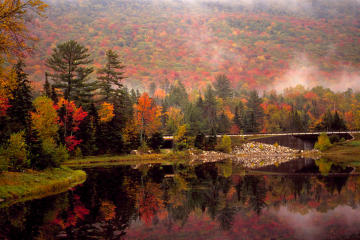
In fall the landscapes in Vermont and New Hampshire are starting to burst with color. As the days get longer and colder, the leaves of maples, oaks and birches start losing their chlorophyll, uncovering the warm yellow, orange and red colors that lie beneath. The sky is either bright blue and dotted with cotton ball clouds, or depressingly grey. The weather changes regularly and this is the time to put on pants, warm socks and jackets. The fall season is an exceptional time of year in New England, a short season that draws in thousands of so-called leaf-peepers during the last weeks of September and the first weeks of October.
Visitors can enjoy the magnificence of soaring mountains or the quietness of a countryside dotted with picturesque farmsteads, barns, covered bridges and sugarhouses. After a breakfast of hot coffee and blueberry and maple syrup pancakes, the great outdoors await. There is nothing like the smell of a New England forest on a crisp fall morning.
New Hampshire’s Soaring Mountains
 The place to go in New Hampshire is the magnificent White Mountains, located in the central and northern parts of the state. Like many destinations in North America, this region is also best explored by car. There is no public transport and cars are simply the only way to reach certain places. And there are several places you will want to reach in the White Mountain National Forest.
Numerous trailheads lie off the main and back roads, offering excellent opportunities to experience the wilderness from close by. Not to mention that higher vantage points in the mountains offer spectacular views. There are many lookout points that can be accessed by car, too, though. Especially the Kancamagus Highway, a designated scenic route, is worth driving. This 34-mile highway runs through the heart of the forest and is regarded as one of the very best fall foliage roads in New England. There are several scenic lookouts on the way.
 Another major highlight is Franconia Notch State Park, a mountain pass with Echo Lake at its northern end. The viewpoint of Artist’s Bluff – what’s in a name – is breathtaking. There are no less than 48 mountain peaks above 4,000 feet in the White Mountains, the highest of which make up the Presidential Range. The tallest peak of them all is the appropriately named Mount Washington, located in the east of the mountains. It is possible to hike up the mountain – but be prepared, the weather can be dangerous –, but also to take the Cog Railway to the summit, or drive up. Either way, the views are spectacular (if it’s a clear day).

Rural Landscapes in Vermont
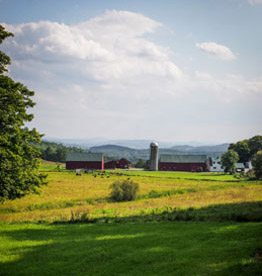 While New Hampshire offers towering mountain peaks and lakes, its western neighbor, Vermont, has a different scenery. A typical Vermont landscape consists of rolling hills – green in summer, orange in fall and white in winter -, picturesque villages, wide valleys and farms. Compared to New Hampshire, it is less rugged and spectacular, but more gentle and friendlier.
Almost every corner of rural Vermont has something pretty about it. Whether it is an old general store, a typical white New England church or a slow-flowing river crossed by a covered bridge, there is a simple beauty to be found anywhere. Vermont has no major tourist highlights or popular destinations. Rather, the entire state is a highlight. That is also probably one of the reasons the state feels so remote and underpopulated. Even the tourists are spread out. The unique calmness of Vermont makes it an ideal fall destination and a great place to get away from it all, relax and get back to nature, to throw in a bunch of clichés. It is a place where even the smallest village store sells local cheddar cheese and – always – bottles of maple syrup.
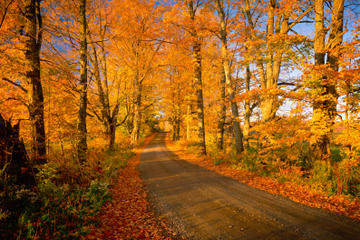
 Just like New Hampshire, the best way to experience Vermont is by driving. Don’t even think about entering the interstate though. The small back roads are where you want to be. And don’t be afraid to get lost; that is exactly when you will stumble upon unexpected rural beauty. After living in Vermont for five months, I do know that that is the truth. Most small roads aren’t on the bigger maps and I have gotten lost several times. However, getting lost in Vermont is never frustrating. Although there is no ‘most popular destination’, there is in fact a suggested thing to do. State Route 100 crosses Vermont from north to south and essentially runs through the heart of the Green Mountains. If you happen to be driving across Vermont in the fall, let it be there. Make sure to allow time for a few detours.
 Imagine the following scenario. After driving on an unpaved road through the woods for a couple of miles, you suddenly find yourself in a narrow valley, crossed by a fast-flowing river and flanked by hills on both sides. The hillsides look as if they are on fire; it is early October and the landscape is made up of all possible yellows, oranges and reds. In the valley, dozens of brown cows graze peacefully in still green pastures. A bright red covered bridge crosses the river, allowing tractors and other farm vehicles to reach the surrounding fields. The road follows the river and leads to a small village. On the way you occasionally pass signs saying ‘fresh berries’ or ‘maple syrup sold here’. The village consists of several wooden houses, most of them painted white, but there are some light yellow and green ones as well. The center of the village is the typical village green, a large lawn fringed with tall maple trees. Two gazebos stand on each end.
 In the fall sunshine a man is raking leaves in his front yard and raises his hand as you drive by. It is a Saturday morning and people are looking for kitsch or antiques at this year’s last flea market. A little further on another guy is chopping firewood. You think about what it must be like in winter in a village like this. You imagine several feet of snow and you can hear the sound of wood knispering in the fireplace. But now, it is still fall and you want to continue your drive through the Vermont countryside. The road leaves the village and climbs up the hillside. Before you turn around a bend, you pull over on the roadside. You grab your camera, get out of the car and snap one last picture of the valley and village below.
This is a landscape that you will never forget.

Fall Foliage Sightseeing Tour from Boston
If You Go:
♦ New Hampshire and Vermont are easily reached by car from Boston, which is where New England’s major airport is located. Alternatively, it is approximately a five-hour drive north of New York City. Both states also have their own small airports.
♦ For additional information on where to stay, what to see and what to do I strongly suggest visiting the website of Visit New England.
10-Day New England Fall Foliage Tour including Cape Cod
About the author:
Bram Reusen is a Belgian amateur photographer, freelance travel writer and the founder of Travel. Experience. Live. He has been wandering the globe since 2010, with the occasional jobs in between, and is now living in Vermont, USA. From backpacking and adventuring to slow travel and city breaks, Bram likes to try different travel styles and he shares his experiences through stories and photography. You can follow him on his blog www.travel-experience-live.com.
All photographs in this article are by Bram Reusen:
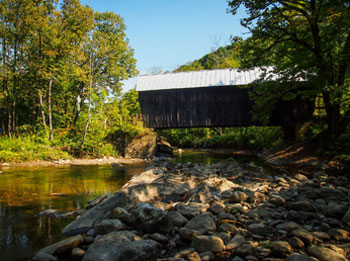
Covered bridge in Chelsea, Vermont.
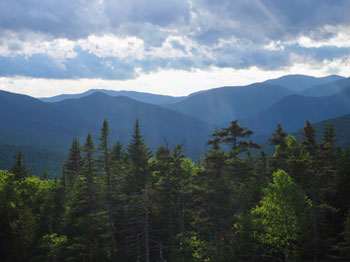
View of the White Mountains along the Kancamagus Highway, New Hampshire
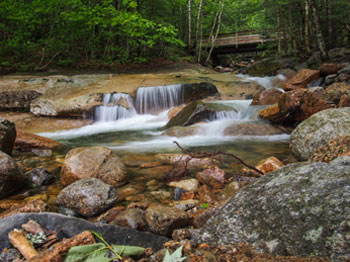
Waterfall in Franconia Notch, New Hampshire
Picturesque farmstead in Vermont
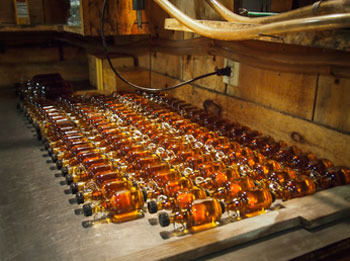
Bottles of maple syrup in a sugarhouse, Vermont
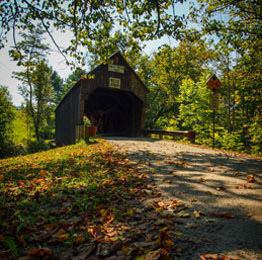
Fallen leaves and a covered bridge, Vermont
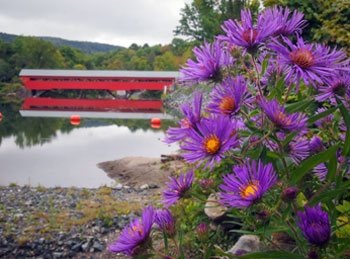
Covered bridge in Taftsville, Vermont
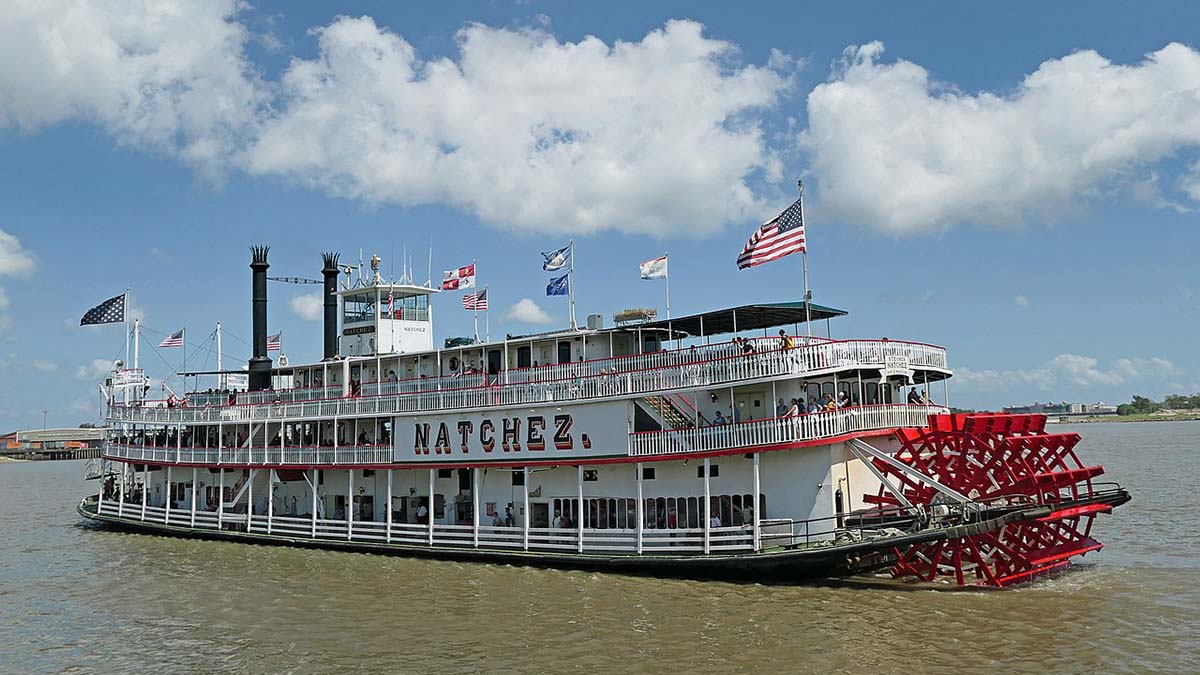
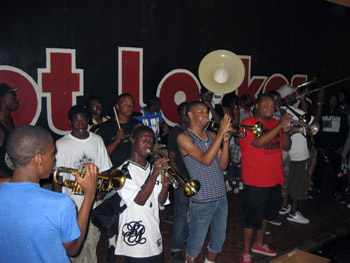 The French Quarter Festival is a free annual music festival located in the historic French Quarter of New Orleans, Louisiana, first held in 1984. It features traditional and contemporary jazz, R&B, New Orleans funk, brass bands, folk, gospel, Latin, Cajun and zydeco played by Louisiana residents. There was an estimated attendance when we attended in 2012 of over 574,000, and over 732,000 for the 20th annual festival in 2014. The French Quarter Festival is funded solely from donations, sponsorships and grants. It is the largest free festival in North America.
 The French Quarter is the oldest neighborhood in New Orleans, founded in 1718. The area includes all the land stretching along the Mississippi River from Canal Street to Esplanade Avenue, and inland to North Rampart Street, an area of 78 square blocks. The district has been designated as a National Historic Landmark.
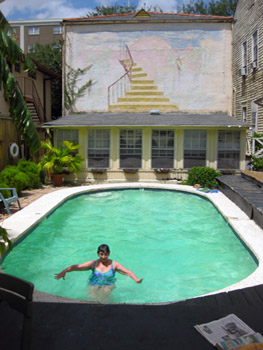
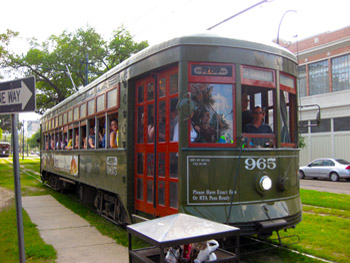 As you would expect with a festival of this size, rooms are at a premium during the festival. There are many accommodations in the Quarter itself, but we feared that it would be too noisy to sleep there. We opted for a small hotel in the nearby Garden District called the St. Charles Guest House. A great example of NOLA faded glory, it featured air conditioning, a lovely pool, antique furnishings and very friendly and helpful staff. Just two blocks away was the famed St. Charles Trolley Line, the oldest continuously operating streetcar line in the world. The totally restored vintage streetcars were magnificent to look at. The fare was $1 (now $1.25), and the cars were jam-packed morning, noon and night during the festival. Despite this, one seldom had to wait very long for a ride.
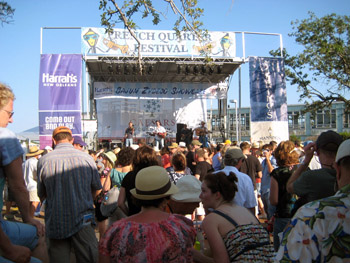
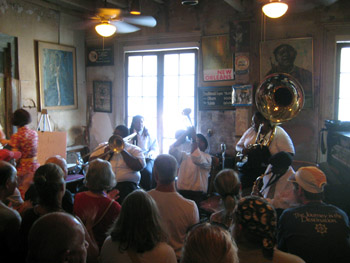 Of course, fascinated as we were by the architecture and the culture, we had come to see and hear the music. Friends who had been before us advised that it was a “great little festival”. We could only assume that they were comparing it to the massive New Orleans Jazz and Heritage Festival, since half a million attendees over four days made it much bigger than any other outdoor event we had ever attended. The total of 21 stages, many of them as large as the largest festival main stage we had ever seen, was a bit mind-boggling.
 There was a lot to see and hear in evenings, after the festival activities wound down, in what is probably the most musical of all cities in North America. We went to a Cajun Fais Do Do with Bruce Daigrepont at Tipitina’s uptown, a regular feature of the club. Several friends told us that we absolutely had to go see Charmaine Neville at Snug Cove, where she had been entertaining for many years. This was about the only real disappointment of our trip – she was much too self-indulgent and tourist-pandering for our liking.
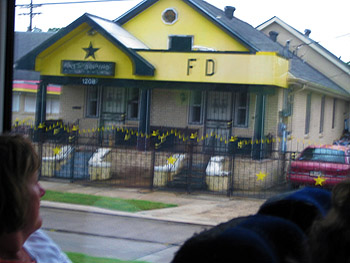 Aside from being unprepared for the enormity of the festival, the other thing that was a bit of a surprise was the temperature. Mid-April in Vancouver is still quite moderate. We knew that it would be a bit toastier in the Deep South, but were still surprised to be greeted by the high humidity and mid-nineties temperatures (about 35 degrees Celsius). We slowly came to the realization that we just couldn’t take tramping around in the heat all day every day, so we decided on a couple of other activities.

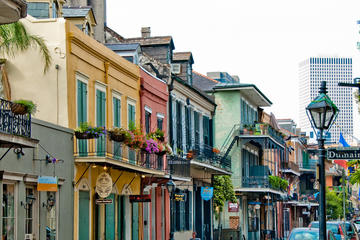
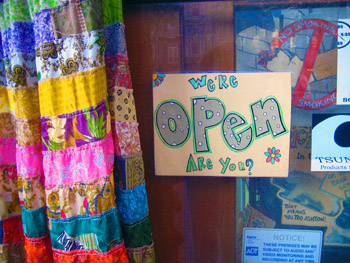 I have been inexplicably drawn to its music and culture of New Orleans for most of my adult life. It’s a fascinating city, full of contradictions such as the enthusiastic celebrations of God and Satan that surround you all the time.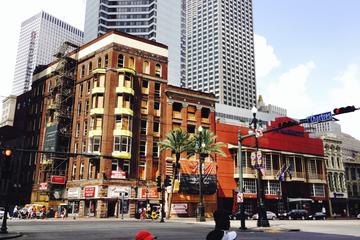
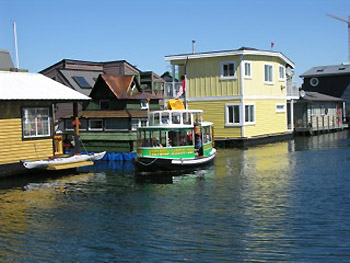
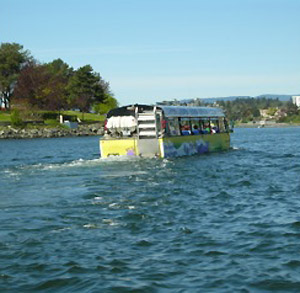 To our right plodded the Hippo bus, an amphibious bus tour wallowing methodically on the water leg of its 90 minute city tour. The excursions are provided by three such vehicles appropriately named Harry, Happy and Henrietta; operated by Victoria Hippo Tours.
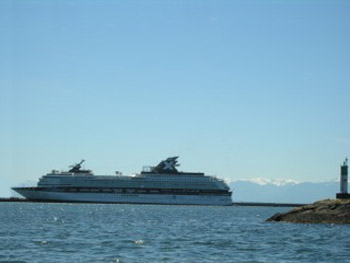 As a float plane began its shuttle to take-off Captain Bob explained how the Inner Harbour is a designated airport with its own control tower and seemingly endless stream of float planes flitting in and out. It is hard to tire of watching these elegant planes slowly lift off and rise gracefully against the horizon or skim to elegant landings.

 As we puttered near the shoreline we again spotted walkers enjoying views and vistas from the shoreline, the odd one waving.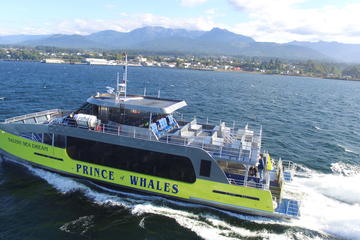
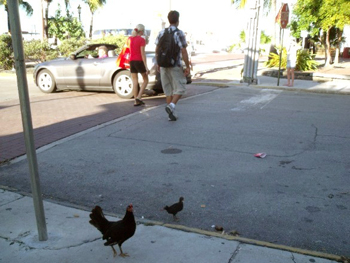 I soon found out while walking in Old Town that one doesn’t just share sidewalks with droves of locals and tourists wearing short shorts, but many other two-footed creatures who have ditched any clothes altogether: chickens. While these fowl have been around for almost two centuries, their numbers especially grew in the 1950s after Cubans fleeing Cuba brought them for use in cock fighting, food, and eggs. Their numbers multiplied over time after cock fighting was outlawed and grocery stores provided easier access to eggs and poultry. The roosters don’t just crow with the sunrise either as I found out at 230 a.m. in my hotel room. Nonetheless, there’s what seems to be an uneasy tolerance for the chickens’ presence here because they do feast on pesky insects, even though they have irritated many locals because of where they choose to poop, trespass, etc. This has resulted in various plans and schemes to deal with them over the years in what’s been called the “Great Key West Chicken Controversy” or “Key West Chicken Wars.”
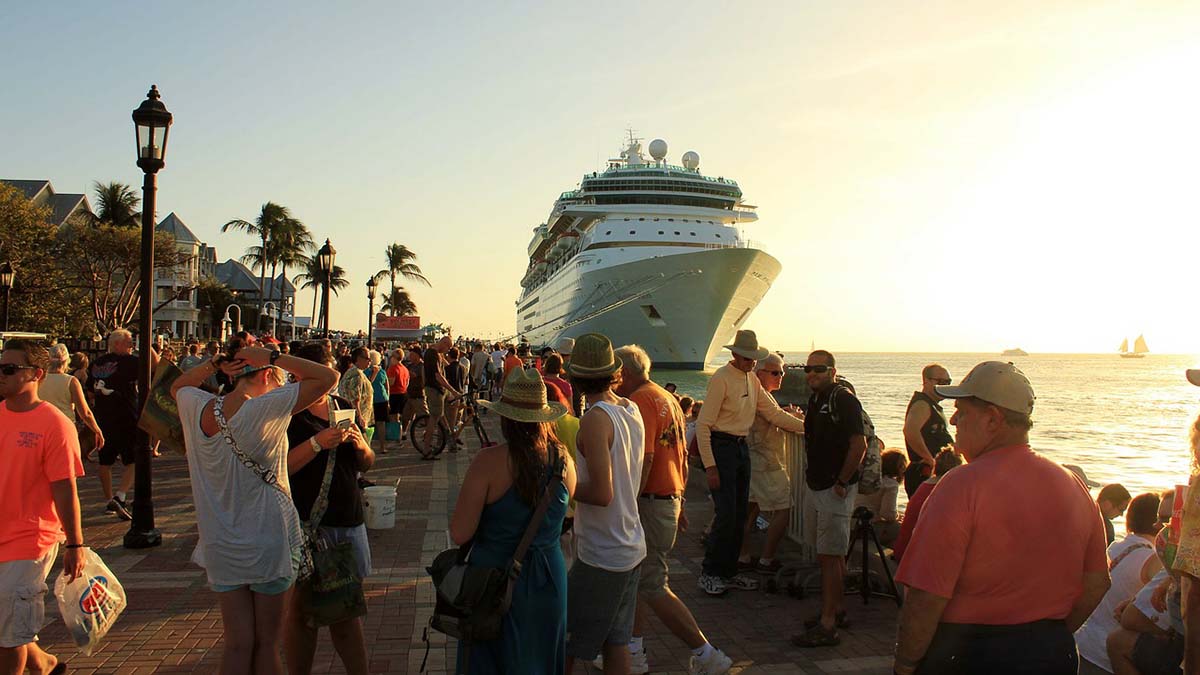
 A setting sun has this ability to captivate the eyes of its admirers. I’ve seen beautiful sunsets in Wyoming, but I must say that the two I saw in Key West really gripped me so unexpectedly, for I never imagined sunsets being that impacting. I first watched one from the brick walkway of Mallory Square, which overlooks the Gulf of Mexico, and the other while on a sunset cruise.
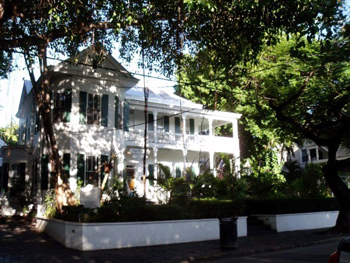 I strongly advise travelers in Key West to get off the beaten path from the touristy Duvall Street, and walk through the surrounding residential neighborhoods of Old Town. It’s here where I found a respite from the hustle and bustle of traffic while getting a glimpse into a unique kind of architecture called Conch Architecture. This style compliments the various plantlife in the area like hibiscus, fiscus, gumbo limbo, and frangipani. Earlier settlers of Key West used lime made from burned Conch shells to help build their homes, which became known as “Conch Houses”, a name which would stick even as wood became the prime building material.
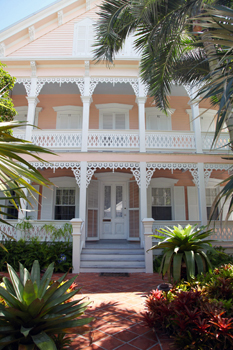 These homes implement different styles, influenced by New England, Gulf Coast, Bahamian, and African influences. To my eyes, they greatly reminded me of the old plantation homes still found in the “Deep South” such as seen in such movies like Gone with the Wind. They are built to help withstand the tropical climate. I especially noticed the sloping roofs, which help reflect the sun better and sent water down to the gutters more efficiently.
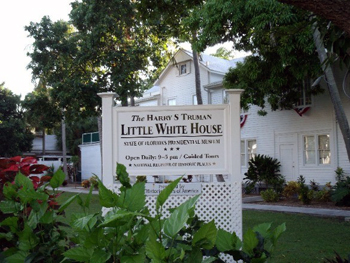 As a U.S. presidential history buff, I was pleasantly surprised to find that I could easily visit a place where numerous Presidents of the United States stayed and performed their duties, most notably Harry S. Truman. He lived and worked at “The Little White House” for 175 days via 11 working vacations from 1946-1952. Even on “vacation” here, he still had to sign his name 200-600 times a day to help keep the country running in a place originally built for the US Navy’s base commander and paymaster in 1890. Unlike the other White House farther north, I didn’t have to make any special arrangements or go through any other fuss to walk around a property containing the 8,700 square foot house and nicely-manicured lawn and gardens. It’s in the midst of a quiet neighborhood, a short walk away from Duvall Street. I can see why our past leaders must’ve found the property to be a respite just as I did from the boisterous tourist crowds.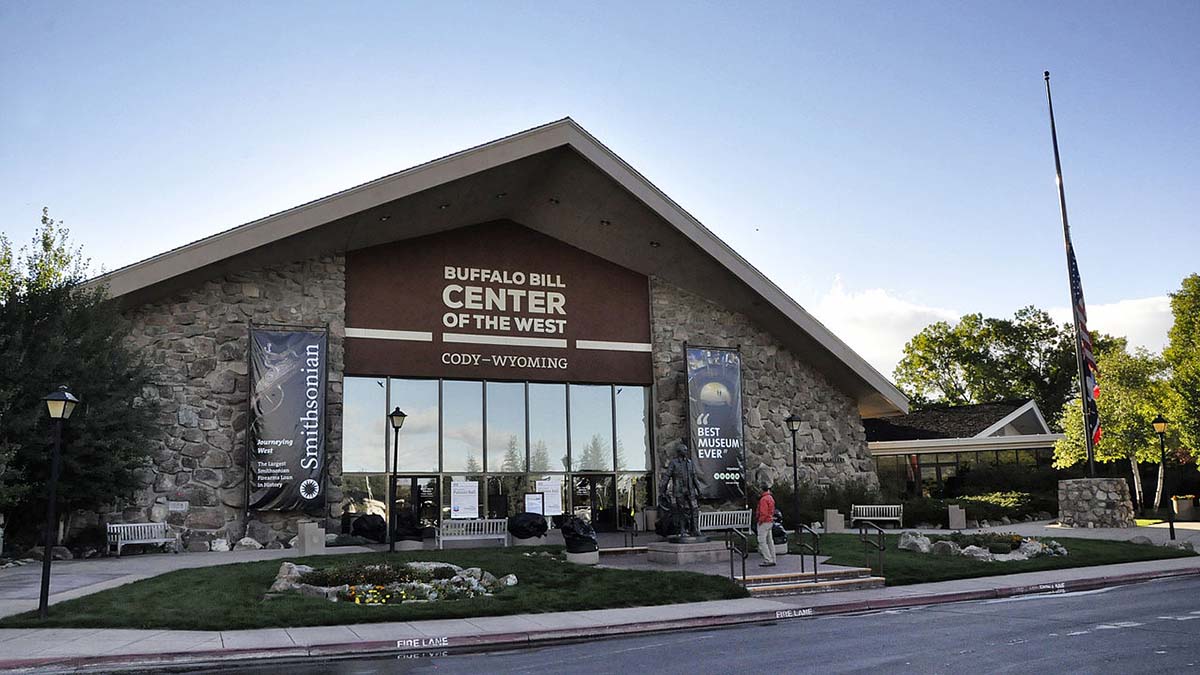
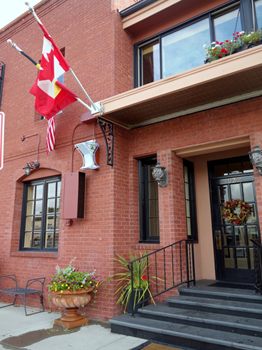 It’s not often in my life that I can say I had a brush with a Prince. In fact, now that I look back on a lifetime of worldly experiences, I can’t ever remember running into royalty. Well, as it turns out, that’s exactly what happened on a recent trip of mine to Cody, Wyoming. To be more exact, I crossed paths with the Prince of Monaco while visiting Buffalo Bill Cody’s old stomping grounds in the town that bears his name – Cody, Wyoming.
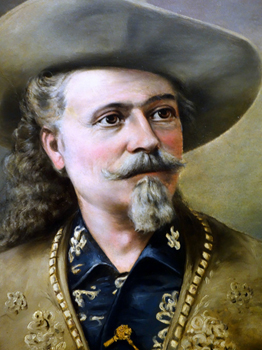 It all started in 1913, when Prince Albert I became the first reigning European head of state to visit the United States. Though the visit was not official but rather a personal one spurred on by the Prince’s scientific interest in weather, his sojourn was marked with occasion and ceremony.
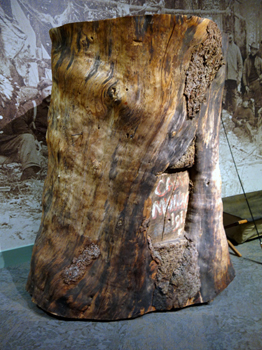 The current Prince of Monaco was scheduled for a public visit to the Buffalo Bill Museum of the West on Thursday, September 19, 2013. And since he shares his forefather’s passion for science and the environment, he would also be awarding a $100,000 scientific prize for biodiversity. (The Prince Albert II of Monaco Foundation-USA is one of the sponsors and focuses on biodiversity, climate change, and water issues.) The award is named the ‘Camp Monaco Prize’ in honor of the previous expedition of Prince Albert I and their hunting camp called Camp Monaco.
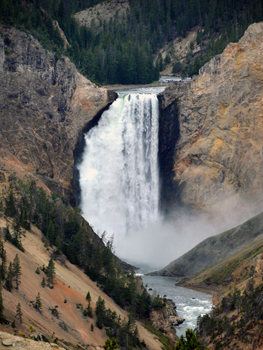 Unfortunately, all my attempts to extend my stay met with roadblocks: There was just no room at the Inn or anywhere, for that matter. Apparently, quite a few people were in town hoping to catch a glimpse of the Prince, just like me. Regrettably, I missed meeting him by only four days.



.jpg)
