British Columbia, Canada
by Glen Cowley
“Busiest float plane airport in North America,” Captain Bob proclaimed as we watched a Harbour Air float plane whine its way to a graceful takeoff and bend its nose to the sky.
And busy is an apt word to describe Victoria, B.C.’s inner harbour, especially as viewed from the belly of a many-windowed ferry operated by Victoria Harbour Ferry.
Victoria Harbour Ferry operates two separate tours plus water taxi services, entitled the H2O taxi, for Victoria’s inner harbour and the long sea-finger that is the Gorge. Their fleet of 14 little ferries shuttle between 18 designated stops providing for both convenience and the uniqueness of a water born perspective.
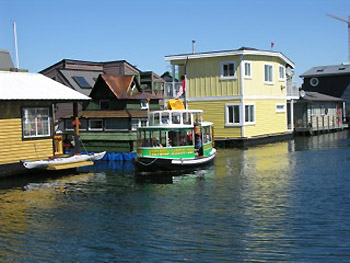
While awaiting the Harbour Tour ferry at Fisherman’s Wharf we mingled with a small throng of visitors strolling the walkways amid the small float home village, indulging in dining and refreshments from the numerous food and refreshment stands, setting off on whale watching tours and congregating for the ongoing seal show. Led by the famous one eyed seal, who has occupied the favoured food source for many a year, a flitting little pod of harbour seals poked their noses and pleading eyes into view for offerings of treats afforded by the huddle of tourists jockeying for a view. Their reward attained they dove into the watery darkness only to return for seconds (or thirds and on and on).
It proved a warm seaside day and the Sun painted the scene with vibrant colour and activity; excited chatter competing with the echoing wail of gulls.
Our ferry eased its way to its birth, effortlessly manoeuvring within narrow confines, and disgorged part of its animated host. We, the replacements, stepped down into the ferry’s belly and huddled together along the wooden benches to await the 45 minute harbour tour excursion. Well windowed there were no real bad seats to be had. Captain Bob launched into narration as soon as we began pulling away.
The harbour exploded with life as we emerged from the shelter of the float home village and marina. A visage one foot in the present, one in the past and an eye on the future.
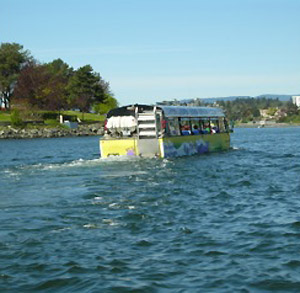 To our right plodded the Hippo bus, an amphibious bus tour wallowing methodically on the water leg of its 90 minute city tour. The excursions are provided by three such vehicles appropriately named Harry, Happy and Henrietta; operated by Victoria Hippo Tours.
Still to our right rumbled the MV Coho of the Black Ball Line loading passengers and vehicles for the journey to Port Angeles on Washington State’s Olympic Peninsula. She has been plying the route since inception in 1959 compiling an impressive record for safety and reliability. Nearby rested the high speed passenger-only ferry, the Victoria Clipper, which has been flying (taking less than 3 hours) the route to Seattle since 1986.
Ahead, the famed Empress Hotel hogged the horizon as we bobbed our way to the tour’s starting point along the regal promenade filled with artists, performers and tourists. The lilt of music in our ears we paid for our tickets and were soon back on board and set for the excursion in full. Captain Bob brought the trip to life with his commentary. Built between 1904 and 1908 on land reclaimed from the bay, he noted the Empress Hotel has been designated a National Historic Site.
He went on to point out the location of the original Fort Victoria dating from 1843, the site of old tunnels boring beneath the streets, the story behind the major buildings being constructed from ballast brought from China, the full tale of the construction of the Empress Hotel and Victoria’s fame as the most haunted place in Canada. In between he bantered easily with passengers.
The harbour was alive long before the coming of the Europeans; who nosed around the harbour in 1790 under the Spanish flag aboard the Princesa Real. Archeological evidence suggests First Nations habitation for at least 4000 years. Gold rush fever swamped the harbour, and in fact the colony, when the Fraser Canyon Gold Rush in 1858 was shortly thereafter followed by the Caribou Rush between 1861 and 1862. The British Navy moved in next door in Esquimalt, the new provincial parliament buildings (off to our immediate right) arose in 1888 and in 1919 came the first float plane.
William Boeing and Eddie Hubbard beached their plane in the harbour as part of the new U.S. International Air Mail Service connecting Seattle, Victoria and Vancouver.
 As a float plane began its shuttle to take-off Captain Bob explained how the Inner Harbour is a designated airport with its own control tower and seemingly endless stream of float planes flitting in and out. It is hard to tire of watching these elegant planes slowly lift off and rise gracefully against the horizon or skim to elegant landings.
The harbour was filled with boats and float planes, a 12 million dollar yacht, its windows darkened, sat aloofly, one of the two period sailing vessels owned and operated by S.A.L.T.S. (Sailing and Life Training Society) rested at its birth, a two man outrigger canoe swept by, a speeding whale tour craft zoomed out to sea, and crafts of all sorts bobbed at their moorings. Colour, sound and movement assailed our senses from a unique water level perspective.
Arching seaward near the Johnson Street Bridge we cruised close to the rocky shoreline, watching and watched by strollers and hikers enjoying the seaside trail. Before long we came in sight of the West Bay Marine Village, its piers crowded with fashionable houseboats and supporting craft. A scheduled stop on the trip we wove our way amid the piers, our captain being hailed and hailing with warm familiarity. On departure he spoke of the prairie folk who come to the coast in their motor homes to wait out the winter in warmer climes at the nearby trailer park, getting a rise from the four Saskatchewanites along for the ride.
Rounding the bend and back into the harbour we passed numerous bird houses affixed to old pilings and learned of a project to support the threatened Purple Martin.
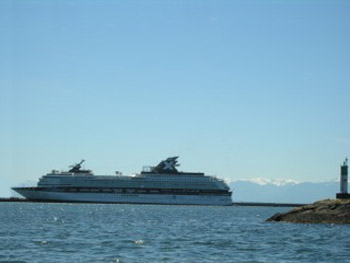
We emerged into the harbour to the vista of the widening harbour mouth and the looming snow clad crowns of the Coast Mountains of the Olympic Peninsula. Silhouetted on the horizon loomed the still form a naval vessel. Of greater clarity and size sat a cruise ship moored at Ogden Point, a small city towering over the pier. In 2001 the Norwegian Sky became the first cruise ship make a cruise visit to Victoria and became the first of many.
Swinging round for home the inner harbour came into broad view just as a departing float plane began its noisy race to ascension; rising steeply as it passed, appropriately enough, between us and the glassed control tower.


 As we puttered near the shoreline we again spotted walkers enjoying views and vistas from the shoreline, the odd one waving.
Fisherman’s Wharf rolled into view and we slid by the crowded marina before slipping into the houseboat village to step ashore, journey complete.
The separate tour up the Gorge is a sixty minute excursion revealing a totally different aspect of Victoria. Where once Victorian age locals paddled and picnicked, conscious of the tidal temperament of the seemingly tamed water course, the tour affords views of historic homes, parks and walking trails. An idyllic atmosphere hangs over the waters and tree shaded banks imbue it with timeless serenity.
Busy is an apt description of Victoria’s waterways yet they are busy in an ever changing way ensuring no two trips are ever the same. Sky, sea and land dance together with a slow grace even as time alters the players on this canvas.
We passed the still feeding seals and they took no notice of us.
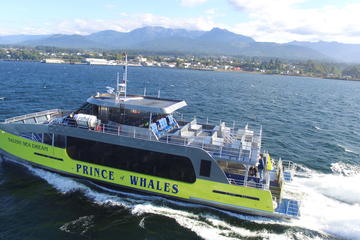
Best of Victoria Tour: Whale Watching, Butchart Gardens and Sunset Cruise back to Vancouver
If You Go:
♦ Victoria Harbour Ferry – provides all the information you will need about fares, schedules and offerings.
♦ Tourism Victoria
♦ Read about S.A.L.T.S. Sailing and Life Training Society
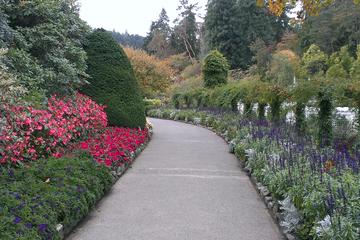
Victoria City and Butchart Gardens Private Half-Day Tour
About the author:
Since 1994 Glen Cowley has parlayed his interest in sports, travel and history into both books and articles. The author of two books on hockey and over sixty published articles (including sports, travel, features and biographies) he continues to explore perspectives in time and place wherever travels and circumstances take him. From the varied landscapes of British Columbia to Eastern Canada and the USA, the British Isles, Germany, Switzerland, the Netherlands, Greece and France he has found ample fodder for features. His present endeavours see him working on a book on unique pubs on Vancouver Island; a sober experience. windandice@shaw.ca
All photos by Glen Cowley.
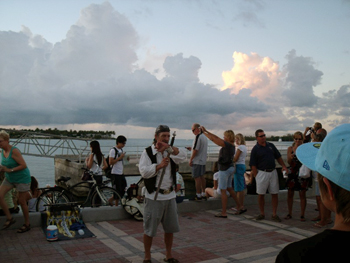
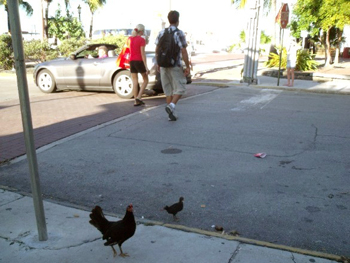 I soon found out while walking in Old Town that one doesn’t just share sidewalks with droves of locals and tourists wearing short shorts, but many other two-footed creatures who have ditched any clothes altogether: chickens. While these fowl have been around for almost two centuries, their numbers especially grew in the 1950s after Cubans fleeing Cuba brought them for use in cock fighting, food, and eggs. Their numbers multiplied over time after cock fighting was outlawed and grocery stores provided easier access to eggs and poultry. The roosters don’t just crow with the sunrise either as I found out at 230 a.m. in my hotel room. Nonetheless, there’s what seems to be an uneasy tolerance for the chickens’ presence here because they do feast on pesky insects, even though they have irritated many locals because of where they choose to poop, trespass, etc. This has resulted in various plans and schemes to deal with them over the years in what’s been called the “Great Key West Chicken Controversy” or “Key West Chicken Wars.”
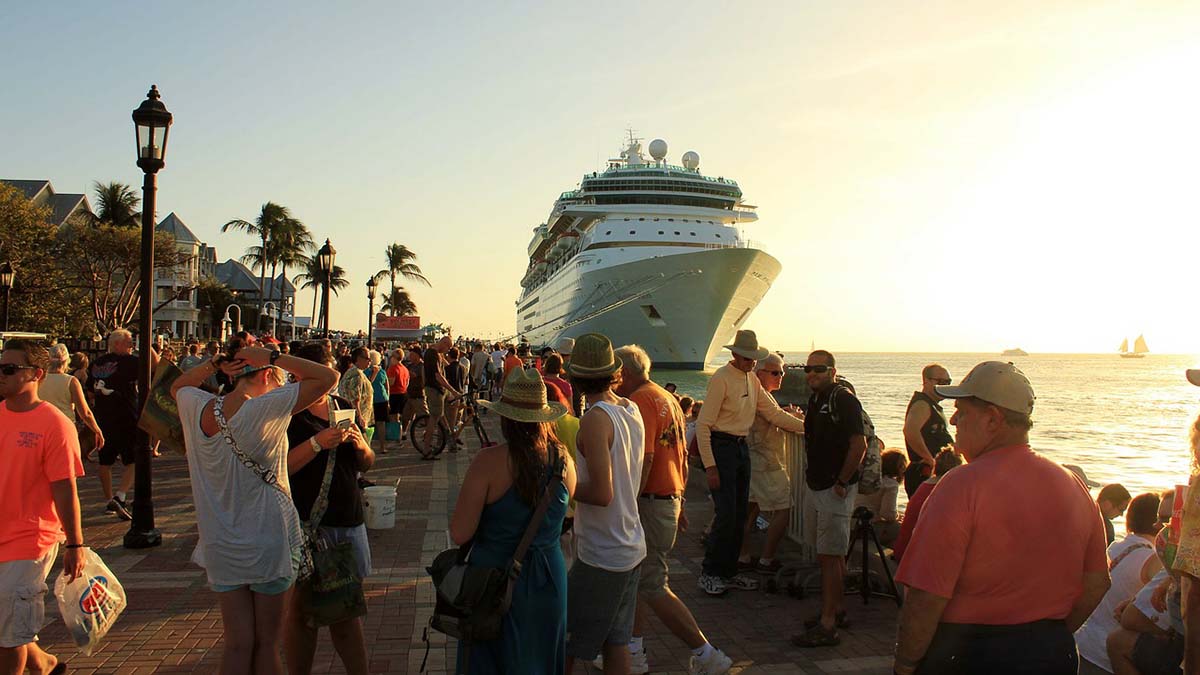
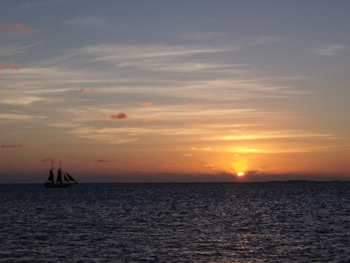 A setting sun has this ability to captivate the eyes of its admirers. I’ve seen beautiful sunsets in Wyoming, but I must say that the two I saw in Key West really gripped me so unexpectedly, for I never imagined sunsets being that impacting. I first watched one from the brick walkway of Mallory Square, which overlooks the Gulf of Mexico, and the other while on a sunset cruise.
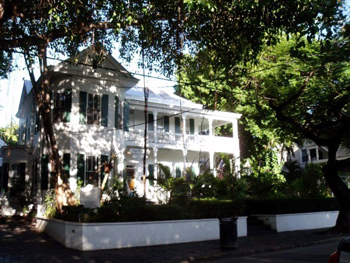 I strongly advise travelers in Key West to get off the beaten path from the touristy Duvall Street, and walk through the surrounding residential neighborhoods of Old Town. It’s here where I found a respite from the hustle and bustle of traffic while getting a glimpse into a unique kind of architecture called Conch Architecture. This style compliments the various plantlife in the area like hibiscus, fiscus, gumbo limbo, and frangipani. Earlier settlers of Key West used lime made from burned Conch shells to help build their homes, which became known as “Conch Houses”, a name which would stick even as wood became the prime building material.
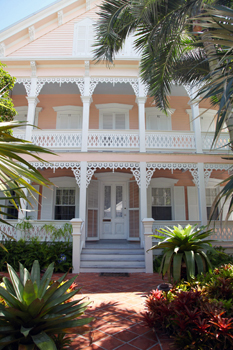 These homes implement different styles, influenced by New England, Gulf Coast, Bahamian, and African influences. To my eyes, they greatly reminded me of the old plantation homes still found in the “Deep South” such as seen in such movies like Gone with the Wind. They are built to help withstand the tropical climate. I especially noticed the sloping roofs, which help reflect the sun better and sent water down to the gutters more efficiently.
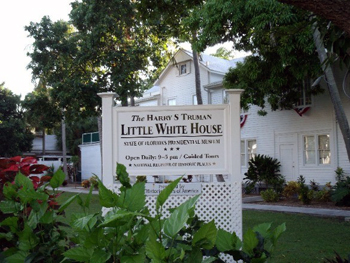 As a U.S. presidential history buff, I was pleasantly surprised to find that I could easily visit a place where numerous Presidents of the United States stayed and performed their duties, most notably Harry S. Truman. He lived and worked at “The Little White House” for 175 days via 11 working vacations from 1946-1952. Even on “vacation” here, he still had to sign his name 200-600 times a day to help keep the country running in a place originally built for the US Navy’s base commander and paymaster in 1890. Unlike the other White House farther north, I didn’t have to make any special arrangements or go through any other fuss to walk around a property containing the 8,700 square foot house and nicely-manicured lawn and gardens. It’s in the midst of a quiet neighborhood, a short walk away from Duvall Street. I can see why our past leaders must’ve found the property to be a respite just as I did from the boisterous tourist crowds.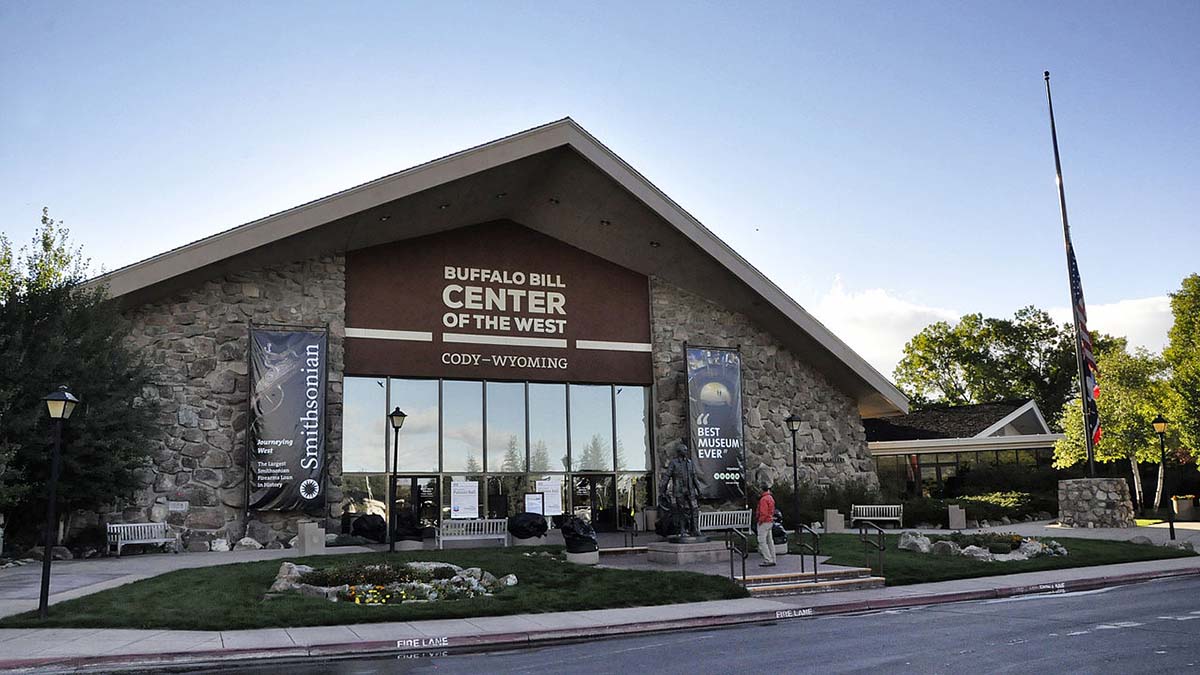
 It’s not often in my life that I can say I had a brush with a Prince. In fact, now that I look back on a lifetime of worldly experiences, I can’t ever remember running into royalty. Well, as it turns out, that’s exactly what happened on a recent trip of mine to Cody, Wyoming. To be more exact, I crossed paths with the Prince of Monaco while visiting Buffalo Bill Cody’s old stomping grounds in the town that bears his name – Cody, Wyoming.
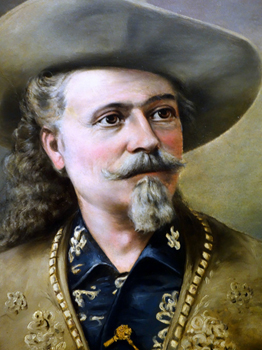 It all started in 1913, when Prince Albert I became the first reigning European head of state to visit the United States. Though the visit was not official but rather a personal one spurred on by the Prince’s scientific interest in weather, his sojourn was marked with occasion and ceremony.
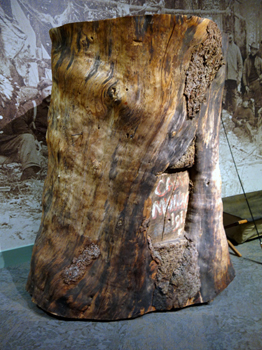 The current Prince of Monaco was scheduled for a public visit to the Buffalo Bill Museum of the West on Thursday, September 19, 2013. And since he shares his forefather’s passion for science and the environment, he would also be awarding a $100,000 scientific prize for biodiversity. (The Prince Albert II of Monaco Foundation-USA is one of the sponsors and focuses on biodiversity, climate change, and water issues.) The award is named the ‘Camp Monaco Prize’ in honor of the previous expedition of Prince Albert I and their hunting camp called Camp Monaco.
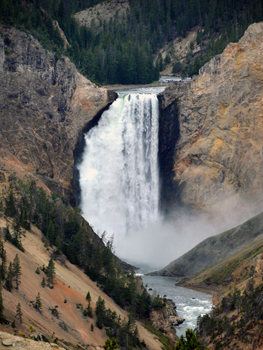 Unfortunately, all my attempts to extend my stay met with roadblocks: There was just no room at the Inn or anywhere, for that matter. Apparently, quite a few people were in town hoping to catch a glimpse of the Prince, just like me. Regrettably, I missed meeting him by only four days.

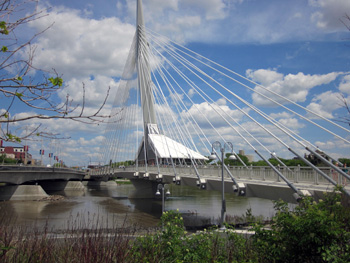
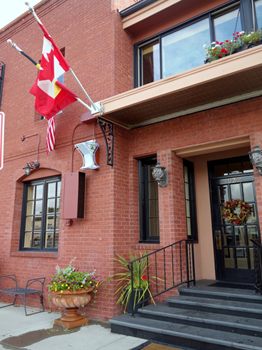
 The best place to start exploring St. Boniface’s heritage is at the former St. Boniface City Hall, which now houses a tourism office. It is also the starting point of a guided walking tour of old St. Boniface. The red brick building dating back to 1906 is the first item on the tour. Other points of interest include an outdoor sculpture garden beside the tourism office, a Romanesque-revival style brick firehouse built in the early 1900s, a cultural center, a train station built in 1913 that now houses a restaurant, a French-speaking university, and St. Boniface Cathedral. The tour ends on the grounds of Saint-Boniface Museum.
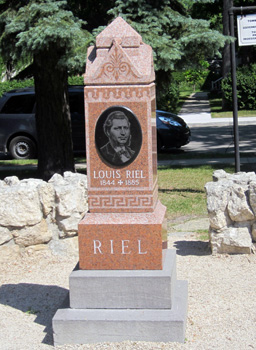 Louis Riel, a controversial figure in Canadian history, was one of Université de Saint-Boniface’s most famed alumni. He is considered a hero by some and a traitor by others. Born in 1844 in St. Boniface, he became a leader of the Métis people, a recognized Canadian aboriginal people of mixed European and First Nations heritage. In the late 1860s unrest grew among the Métis in the Red River area, fearing their livelihood and way of life was threatened by the planned transfer of land from the Hudson’s Bay Company to Canada. In 1869, Riel’s forces took control of Fort Garry, the headquarters of the Hudson’s Bay Company. From 1869 to 1870, he led a provisional government, a government which would eventually negotiate terms leading to Manitoba becoming a Canadian province and ensuring some protection of French language rights. He is frequently called the “Father of Manitoba”.
 During Riel’s provisional government, his forces arrested men who had plotted to recapture the fort. Thomas Scott, one of the men arrested, was court-martialed and executed by firing squad. The outrage over this incident led the Canadian government to send in forces and regain control of the region. With a bounty on his head, Riel fled to the United States. He returned to Canada, to what is now the province of Saskatchewan, in 1885 to help Métis obtain legal rights. His peaceful petitions produced little result and the Métis rebellion turned violent. Canadian government troops squashed the rebellion. Riel was put on trial for treason. A jury found him guilty but recommended his life be spared. The judge ignored the jury’s recommendation and sentenced Riel to death. He was executed and buried in the cemetery at St. Boniface cathedral. A granite tombstone now identifies his grave, initially marked by a wooden cross.
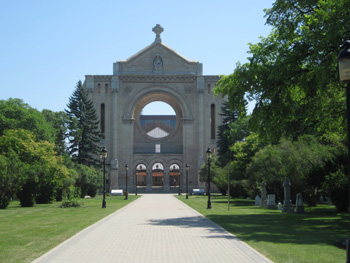
 St. Boniface Cathedral is a major Winnipeg architectural landmark. A fire in 1968 destroyed the 1894 church, leaving its historic stone walls. Behind the facade of the ruined church sits a newer, modern church, a cathedral within a cathedral. Stained glass windows designed by architect Etienne J. Gaboury decorate the new church. Old and new coexist in a quiet and peaceful setting.
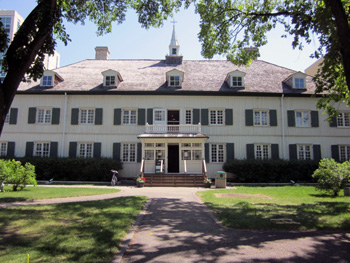
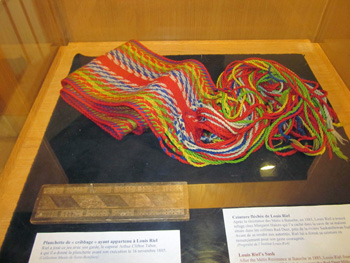 Inside the museum, exhibits reveal the lives and culture of Manitoba’s Francophone and Métis communities. The large collection of artifacts in the Louis Riel exhibit include his trunk, a lock of his hair, his shaving kit, his cribbage board, his moccasins, and the coffin he was originally laid in. Louis Riel’s sash, or ceinture fléchée, is also on display. The ceinture fléchée is a traditional piece of French-Canadian clothing, widely worn in the 18th and 19th centuries, wrapped twice and tied around the waist. Other exhibits include depictions of fur trading life, clothing from the 1800s, artwork, and a chapel. My favourite part was the rooms depicting life in days past, complete with weathered wood beams, hooked rugs on wood plank floors, white metal-framed bed, and cast iron stove.
 La Maison Gabrielle-Roy, to the east of old St. Boniface, provides glimpses into the life of a middle class Francophone family in the early 1900s and insight into renowned author Gabrielle Roy. Gabrielle Roy was the recipient of many prestigious literary awards and her books, written in French, were translated into many languages. Roy’s father, a colonization officer, had the house built in 1905. Gabrielle Roy was born in 1909, the youngest of 11 children. The house now functions as a museum and rooms have been restored to look as they would have during Gabrielle’s childhood. The floors are original and the wall colours authentic to what would have adorned the Roy household. The furnishings are not the original Roy family furnishings, but are true to the period. The piano in the parlor is a Bell piano, the same kind that had a prominent place in the Roy family’s life.
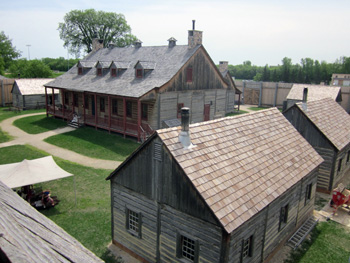 Fort Gibraltar is a replica of the original fur trading post built in 1809. The fort was abandoned in 1835 and destroyed by flood in 1852. The replica was built in 1978 to reflect key elements of life in the Red River valley from 1815 – 1821. Inside its wooden walls, costumed interpreters relive daily life of the original inhabitants. They are behind the counter in the general store, forging metal at the blacksmith’s shop, sewing, tending to an outdoor fire, and working in the workshop. Fur pelts hang in the warehouse. A fur press sits along one wall. It was used to press the fur into 90 pound bales for transport in canoe. A voyageur would typically transport two bales at a time.
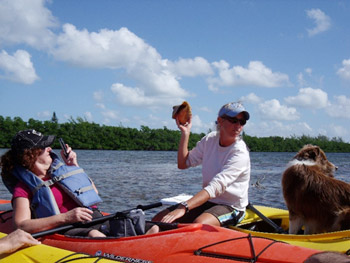
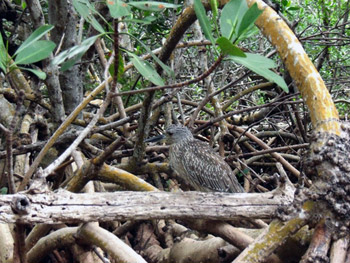 Just four miles off of US 1 at MM 30, I found a more isolated, off the beaten path world, where I kayaked roundtrip over a couple of hours in waters 1-18 feet in depth from Big Pine Key to the No Name Key (where the 1961 Bay of Pigs invasion was staged). The winds whistled through the palms on a mostly cloudy morning and afternoon, helping to keep the heat and mugginess in check. Our guide from Big Pine Kayak Adventures was Bill Keogh. He’s kayaked 800-plus of the Florida Keys.

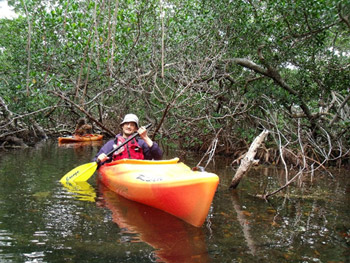 “Kayak Dave” said this about how one paddles a kayak, “It’s like sex, so long as you’re having fun, it doesn’t matter how you do it!” He admonished me to turn my body more instead of my elbow during my three mile roundtrip to and from Boot Key (where Radio Marti broadcasts to Cuba take place) as light to moderate rain pelted me from above the first half of my journey. Thunder and lightning thankfully weren’t part of the storm. We started out at Sombrero Beach on Marathon’s Vaca Key, facing the Atlantic. This Key is named for “the cow of the sea,” the manatee. Vaca is Spanish for cow.
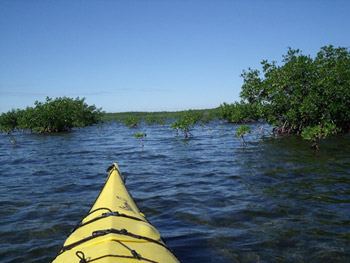 I’d never forget the challenges I faced over 1.5 miles using a sea kayak the first time. One of the realities of this sport is that weather plays a pivotal role on one’s experience. I set off from Key Largo into Garden Cove in a Current Designs 17 foot, 52 pound sit-in model. The 25 knot winds immediately caused me to drift about in the rough waters either because my foot pedal adjustments (foot pedals move the rudder) made on shore didn’t lock in and/or I didn’t keep my feet fully on them.