
by Ellen Johnston
Very few people are indifferent to Mexico City. Love it or hate it, it truly is a megalopolis – the sprawling, carbon monoxide spewing juggernaut of Latin America, but also its cultural heart. And while its exterior might seem grimier than Eurocentric Buenos Aires or less fashionable than beach-ready Rio de Janeiro, the city contains a great soul buried just beneath the surface: one that reaches far back beyond the time of the Spanish conquistadors and continues on today, forever trying to balance modernity with the past, and the New World with the Old. Mexico City bears the torch of progress in a conservative country, and as such, has always attracted artists, activists, intellectuals and writers from all over Mexico, Latin America and the outside world, all looking to draw upon the cultural wealth of the mestizo nation and to find a place for themselves within it.
 Over sixty years ago, two members of America’s Beat Generation did just that. First William Burroughs, then Jack Kerouac, came to Mexico City, searching for freedom, beauty and surreal inspiration in its storied, hallowed streets. They were drawn to a neighbourhood called “La Roma”, an enclave with a spirit that remains decidedly bohemian to this day, despite rising prices and gentrification spilling over from the neighbouring Colonia Condesa (“colonia” is the word that denizens of Mexico City, Chilangos, use for “neighbourhood”.)
Located just southwest of the city’s historic centre, La Roma is a locale of French-inspired architecture, built largely by the Francophile dictator Porfirio Diaz at the turn of the 20th century. To walk in the footsteps of Burroughs and Kerouac is to trod a path laden with shady public plazas, dusky mezcalerias, and galleries filled with young people basking in the promise of one of the biggest cities on earth. And while La Roma is not, by any means, the cheapest neighbourhood in Mexico City these days, it remains wonderfully affordable in comparison to more famous Beat haunts like North Beach or Greenwich Village, where artists were priced out years ago.
 La Roma is still the kind of place where a drag queen can live off the proceeds of her costume designs. Believe me, I met her. She lives in a small apartment off of Avenida Insurgentes and a red light shines from her window day and night, like a beacon, signalling to those who are wild and crazy and wonderfully artistic that they still can, unlike their Gringo counterparts, afford to live in a beautiful, central and historic neighbourhood.
William Burroughs moved to Mexico City in 1949 because he was on the run from the law. But he stayed there for five years because it appealed to his sensibility, being, as it was, a melting pot of New World mysticism, cheap sex, liquor, and the drugs that fuelled him to write and live voraciously. While Mexico City has changed a great deal since then, there are still a few traces of Burroughs and his fellow Beats to be found. On Orizaba street in La Roma, a sign indicates his most famous address, Orizaba 210, where Kerouac visited him, and where they became known for late night drug-fuelled rambles through the neighbouring streets, and to Plaza Luis Cabrera nearby.
 Today Calle Orizaba is one of the most beautiful in the neighbourhood, and the walk from 210 Orizaba north to the Insurgentes metro station is fantastic, taking you past historic homes, galleries, and the previously mentioned Plaza Luis Cabrera. It also passes the even lovelier Plaza Rio de Janeiro, where a replica of Michelangelo’s David towers above the square. Several intersecting streets are also worth exploring along the way, especially Colima and Durango, for their brightly coloured buildings, independent boutiques and art-filled watering holes. Casa Lamm, at the intersection of Orizaba and Alvaro Obregon is a cultural highlight, as is MUCA Roma on nearby Tonala street, a satellite gallery of the National Autonomous University of Mexico. Located in an old historic home, it contains several floors of modern art, as well as one of the few free public washrooms in the area. These institutions are a testament to the dichotomy between historic preservation and gentrification that is now occurring in La Roma. On one hand they have kept art thriving and alive in the neighbourhood, and on the other, they have made it easier for businesses like American Apparel (Mexico City’s only outlet) to move in. It’s a double-edged sword, and you can pick your side amongst the al fresco dining options that surround nearby Plaza Rio de Janeiro. Orígenes Orgánicos, a corner café, represents the new, serving healthy vegetarian organic options on a private patio, bucking the trends in a country known for its love of meat. The dishes are not cheap by Mexican standards, about 90-120 pesos each (8-10 dollars), though they can provide welcome relief to travellers weighed down by a lack of plant-based options. For a new take on an old favourite, try their Nopales Huichapan: grilled cactus served with organic cheese, tomato and avocado. If you’re feeling more traditionalist, however, you can load up on birria tacos, made from stewed goat meat, around the corner for 6 pesos each, and eat them in the more democratic shade of the Plaza. Both are delicious.


 For a less trendy, more downhome perspective of La Roma, head to Roma Sur, which, for those of you who are Spanish-deficient, is the southern section of the neighbourhood. Centred around the Chilpancingo Metro station, Roma Sur is less pretty than its northern neighbour, but offers many cheaper, more authentically Latin American experiences. Right outside the Chilpancingo Metro station, on Avenida Baja California, La Espiga, a Mexican bakery, serves up delicious pastries for around five pesos, and fresh out of the oven Bolillos (buns) for even less. Walk a few blocks east and you hit Calle Medellin, home to Colombian restaurants and bakeries, and the Mercado de Medellin, a huge indoor market where you can do your produce shopping, buy fresh juice, or, if you feel like it, sit down to a delicious meal of chilaquiles con longaniza or enchiladas verdes for less than four dollars.
While you could spend several days in La Roma alone, there are numerous places nearby that are also worth exploring if you’re looking for a Burroughsesque fix of art and dissolution. La Clandestina, a five minute walk away, in Colonia Condesa, is one of the best watering holes in the city, serving up Mezcal to the young and creative Chilangos who flock here. Mezcal is Tequila’s smoky and rough-around-the-edges cousin, and Clandestina serves it as it should be, not in bottles, but draft, from large plastic jugs that look like they were produced in the owner’s backyard. More than sixty varieties are on tap, and glasses are served with chile-sprinkled fresh orange slices on the side, to cut the liquor’s bite.
If Condesa’s “fresa” scene (Chilango slang for the upper class trendsetters who frequent the neighbourhood) seems too trendy, head over to Plaza Garibaldi in the historic centre, where Mariachis play late into the night and public drinking is allowed. Jack Kerouac famously began a late night ramble here in the 1950s, and it’s still popular today, a place to bring your friends and a bottle of tequila, and to simply sit back and enjoy the live music. The Centro Historico can be easily reached from La Roma and Condesa by Mexico City’s efficient, clean, and shockingly cheap metro (only three pesos.) Keep in mind, however, that both the Metro and buses stop running around midnight, so unless you want to mimic Kerouac and take a very long walk home, get in a taxi.
Mexico City Food Walking Tour: Pozole, Tacos and Quesadillas
If You Go:
♦ Mexico City is called the city of eternal spring for a reason! The weather is almost perfect, thanks to its high altitude. But beware, it can get cold at night, especially in winter. Central heating is not common, so bring layers.
♦ Don’t believe the hype! Public transit is safe, especially the Metro and the Metrobus. The trains can get very crowded, however, so if you’re a woman traveling alone, take advantage of the first three subway cars, which are designated women-only during rush hour.
♦ Walking alone at night is safe in the Condesa and Roma neighbourhoods, however it’s worthwhile to watch your bag if you head into the Historic Centre, which tends to be more deserted after hours.
♦ For information about Mexico City’s current writers-in-exile, check out Casa Refugio Citlaltépetl, in Colonia Condesa. Founded in 1988, it houses writers from all over the world who have had to leave their countries of birth. They host lectures, poetry readings and other literary events.
Mexico City Private Tour with Teotihuacan, Murals, Guadalupe Basilica
All photos are by Ellen Johnston:
Art in the couryard of Casa Lamm
En route to San Angel
The National Autonomous University of Mexico, now a designated UNESCO World Heritage Site.
A bus set up next to Plaza Luis Cabrera to host alternative theatre performances
The classic “Porfiriana” architecture of La Roma
About the author:
Ellen Johnston is a cultural nomad — a traveller, writer and musician who bounces all over the world. Originally from Vancouver, Canada, she has West Coast roots, a Mediterranean soul and a Chilanga heart, thanks to a recent stint in the Mexican capital. She currently resides in the San Francisco Bay Area, trying to soak up a little of all three. You can find links to her other writing and photography at www.chamacaloca.wordpress.com
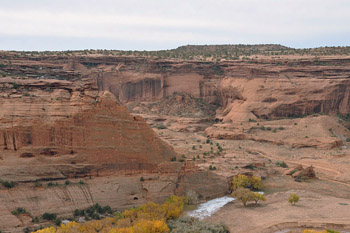
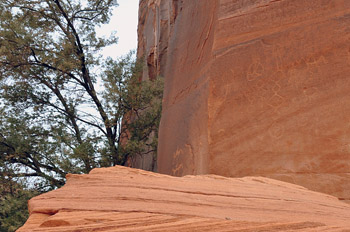 I smiled at the typical mono-syllabic answer, but Amanda and I kept up our lines of questions. When pressed, he finally told us of the time he had been sent out in the middle of the night to find a group of Park Ranchers who’d gotten lost here in Canyon de Chelly (pronounced de Shay). He’d talked them down one cliff and walked them up another. He knows this place by heart, even in the dark.
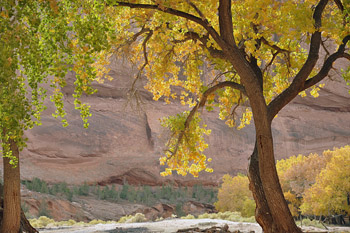 This is a rule that I can get behind, especially after Calvin pulled our 4×4 from the mud and told us about pulling hikers from of flash flood waters. But the guided-only rule isn’t just for safety. It’s a respect thing. The Navajo’s don’t want anyone else messing with their land. They’ve had enough of that. Bitter stories of conquistadors or explorers had made their way through my tours of the Zuni and Acoma pueblos, but Calvin’s story of The Long Walk hit me the hardest.

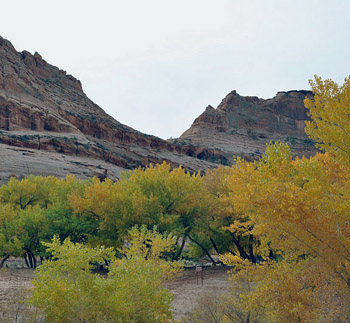 Kit Carson knew how to solve this canyon problem though. Fire. In 1863 his “Scorched Earth Campaign,” burned all Navajo property in and around the canyon was burned. Traditional hogan homes, peach trees, and grazing animals were all destroyed. With no crops, little food, and only the charred remains of their homes, Navajo’s fled up the walls of Canyon de Chelly. But without canyon protection, they were easy targets for Carleton and Carson’s men and the many Ute Indians who were working with the colonels. Navajos spotted were giving a choice to make at gunpoint: surrender or be shot on site. Although a few people escaped, the majority of the tribe surrendered. Kit Carson’s plan worked.

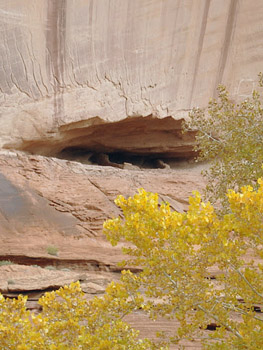 But Calvin knows all his grandma’s stories – even the sad ones. According to Navajo tradition, the grandmother chooses one grandchild (out of dozens, in Calvin’s case) to keep in the ancestral home and instruct in traditional Navajo ways. So as Calvin’s parents and siblings eventually left the enclosed walls of Canyon de Chelly for jobs in Gallup and Phoenix, Calvin stayed behind. He played in the prehistoric cliff dwellings high in the canyon walls and he tended to goats on the valley floor. He hunted skinwalkers and slept in hogans and learned from his grandmother. When he was twelve, the US government discovered that there was an un-schooled child living down in the canyon and officials came to take him to school at Fort Wingate. Upon overhearing that his long hair would be chopped off the next day, Calvin embarked on a mini-long walk of his own, finding his way back to his grandmother and those orange canyon walls. She had breakfast waiting for him.
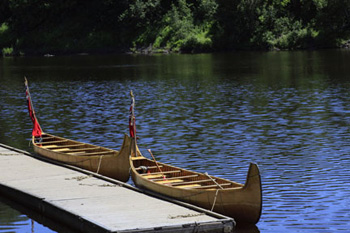
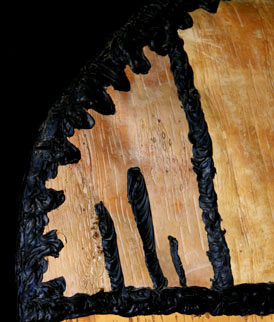
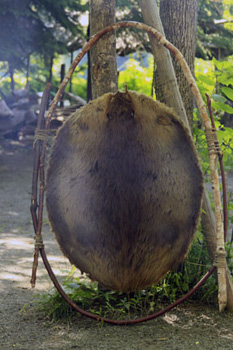
 To get the furs to Fort William, the 90-pound bales of furs were loaded into 25-foot Northwest birch-bark canoes, along with the outpost’s agent and supplies needed for the trip, and paddled on the liquid highway by four to six voyageurs. Each canoe carried up to 1-½ tons of cargo and people. The canoes were developed by the Ojibway Indians in the area and the Northwest Company went to great lengths to keep their competition from having access to that flat-bottomed canoe, the perfect watercraft vehicle to navigate the shallow rivers and streams of Northern Minnesota and Lower Canada. The Hudson Bay and American Fur Companies use the less efficient “York” canoe.
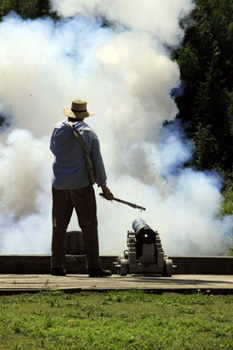 The brigades coming in from the Yukon in the far west stayed about a week at Rendezvous before they had to start back to the outpost before the rivers froze. Those coming in from closer outposts, such as one of the Fond de Lac’s outpost on Minnesota’s Snake River (near modern day Pine City, MN), stayed longer.
 Today, you can experience Grand Rendezvous the second weekend of July each year or explore the fort anytime. I wanted to experience what is was like paddling a Nor’west canoe on the Kaministiquia River just as the voyageurs did in the early 1800s. Free 20-minute trips leave the wharf several times each day between 10:00 am and 2:00 pm. Don’t worry – each of the six to eight modern “voyageurs” per canoe must wear a lifejacket and learn the commands of paddling. Each canoe has a period-costumed experienced bowman in the front and a steersman in the back.
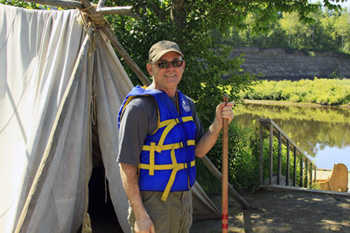 Once back at the wharf, I walk toward the main gate leading into the fort. Just before going under the gate archway, on the right is a small voyageur encampment. One of the voyageurs just finished cooking some fish over the campfire. The voyageurs were not allowed to stay inside the fort palisade. The fort interior was reserved for gentlemen, such as clerks, bourgeois and tradesmen, along with the elite of the company – the company partners.
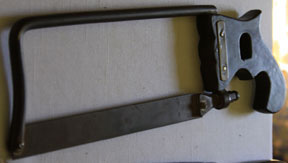 I scanned the room looking at his equipment and “medicines” and noticed a saw lying on a table. Doc explains the limb amputation process and that he used it as a last resort – the success rate is not good as only about one out of every two ever healed and lived. Most of the amputees succumbed to infection. Those requiring long-term convalescence were moved to the hospital on the other end of the square. An amputation ended the person’s employment as a voyageur. Voyageurs needed both strong arms to paddle for weeks on end and both strong legs to haul the equipment over portages, some as long as 14 miles.

 In the kitchen and bakery, three “cooks” are busy preparing fare for the noon meal. With fowl hanging and some already cooking in the reflector oven, one cook is breaking home-baked bread into pieces in preparation for making bread pudding. Another is cutting scallions as one ingredient for use in a prepared dish. With 1,200 in camp, it was a busy two months for the cooks keeping up with the hungry demands.
 Our final stop is at the Wintering House of Kenneth McKenzie and his family. McKenzie was the Northwest’s chief operating officer at Fort William. Officially established in 1784, NWC was actually a loosely knit coalition of independent traders based in Montreal that operated under an arrangement of agreements with fur traders and Indians in the interior. They never did have an official charter as did their rival the Hudson Bay Company. At the head of the company was Simon McTavish, a Scottish Highlander, who ran the company from its beginning until his death in 1804. Each summer for a couple of weeks, he would come out from Montreal to visit Fort William. In the Great Dining Hall, a room off to the side was always kept ready for his arrival. McTavish brought three of his nephews William, Duncan and Simon McGillivray into the fur business. William rose to head the company after his uncle’s death.
 Northwest’s interior headquarters was not always located on the Kaministiquia River near Thunder Bay. Before 1803, their depot was located on the shore of Lake Superior. However, being a British company and with the border between the United States and Canada not yet drawn, they feared they would end up as part of the United States and end up paying large pay custom duties, so they moved north so they would be well inside Canada. It was a wise move as Grand Portage did end up in the United States. In 1821, the Northwest Company ceased to exist as they were swallowed up by the Hudson Bay Company, a chief rival of theirs since 1793.

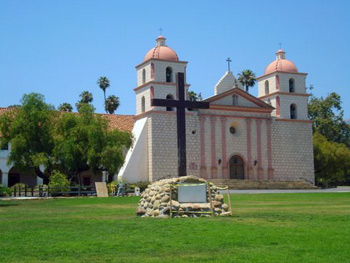
 On this sunny afternoon I have a special destination in mind: a visit to the Old Mission Santa Barbara to discover the city’s past. I hop onto a tourist trolley down by the Presidio. On the way through the picturesque streets, the handsome driver tells us that he’s a descendant of the Chumash Indians who occupied this land long before the arrival of the Spaniards. In 1602 a Spanish explorer named Sebastian Vizcaino sailed up the channel between the coast and Channel Islands, and claimed the land in the name of the king of Spain. He gave it the name “Santa Barbara” because it was the Saint’s Feast day.
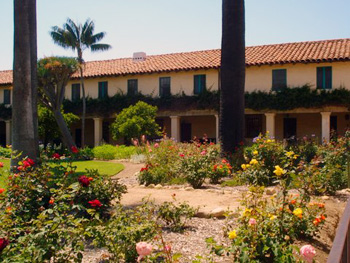 Over time the original buildings were damaged or destroyed by earthquakes. The present friary was restored then later built after another quake in 1927. The church represents an amazing engineering achievement combining the efforts of the Chumash, Spanish and Mexican artisans. I tour the rooms where the missionaries slept, the kitchen where a meager menu is shown: little more than beans and rice. In the chapel room are displays of skills taught there including candlemaking, pottery, weaving and ironwork. Galleons from Manila and China clippers brought Asian culture to the area and some of this reflects in the artifacts and embroidered silk vestments displayed in the chapel museum. The church itself is decorated with Mexican art, some 200 years old.
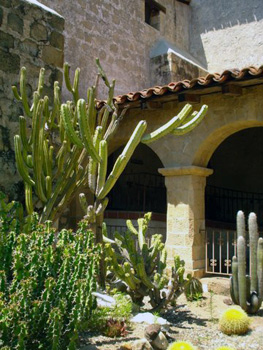 Passing under a low doorway decorated with skulls I enter the mission cemetery where Santa Barbara‘s culturally diverse early settlers are buried along with Chumash Indians. When the Presidio was formed in 1783 the Spanish soldiers were of varied ethnic origins including Mexican Indians, Sephardic Jews and Africans. The heritage of Santa Barbara is reflected in the names and backgrounds of those buried there.

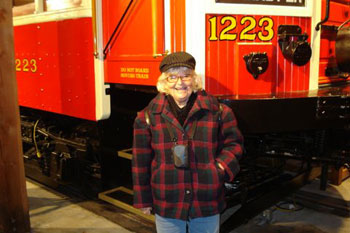
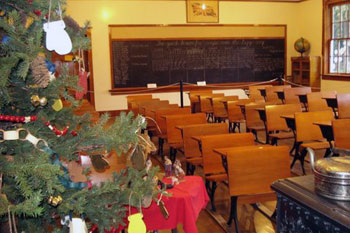 There are various ongoing events throughout the season including a theatre where you can watch old silent films, a blacksmith demonstration, carolers, a Christmas scavenger hunt, rug hooking demonstrations, children’s crafts and even a visit from Father Christmas. When you arrive at the ticket office, they’ll give you the day’s scheduled events and the location of where you can see them.
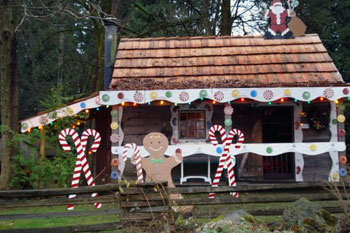 At the Elworth house it’s Christmas eve at the 1922 home of the Bateman family. It gives you a real sense of stepping back into the past. There’s also a replica of a log house decorated to resemble a gingerbread house, straight out of Hansel and Gretel (there’s no witch inside, though). Traditional Christmas decorations including a tree decorated with handmade ornaments are displayed in the Jesse Love farm house (circa 1893). And there’s a group of mannequin carolers in period costume in the living room ready to sing in a caroling diorama. In one of the bedrooms the bed is covered with a hand-made quilt demonstration the quilting skills of women in those days.
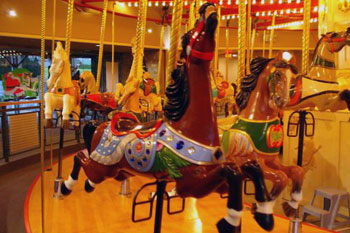 A ride on the vintage C.W. Parker Carousel is a must no matter what age you are. This is my one of my favourite activities at the Museum. The carousel originally operated at the PNE for many years and I remember riding it when I was a youngster. It was later restored, with each pony or sled carefully painted and repaired by donations from various people or organizations. Ride on the beautiful prancing horses, accompanied by the tunes of an original Wurlitzer organ. Great fun! At the gift shop next door you can buy those last minute trinkets to fill the Christmas stockings.
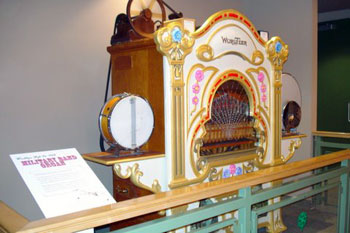 There’s lots to see at the Heritage Village, with hirty-two displays as well as the scheduled events. The afternoon I visited, a musical duo from Guatemala was playing “Feliz Navidad” and other seasonal songs inside the little church. After my tour I refreshed myself at the ice cream parlour with some lemon cake and a hot cup of cocoa. They also provide full meal service.
