by Jewel Fraser
When Catherine Cordelle told me she had found an artist’s residency in Provence that was willing to have me for a couple weeks, I was thrilled. I had read Peter Mayle’s ‘A Year in Provence
As a Caribbean writer, now making her way in the world (before going to France, I was to first present a short story at an international writer’s conference in Wales, UK), it seemed the ideal time to experience the continent after years of parsing French at school and dreaming about one day visiting the land of champagne, Moliere, and the Mona Lisa.
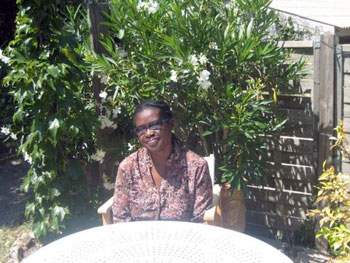 One week didn’t seem like a lot of time, my host at the residency pointed out, after circumstances required I cut my stay by a week. But it turned out to be one of the most productive for my writing in a long time. The residency, located just outside Aureille, provided plenty of uninterrupted time for reading, thinking, and writing, all of which I did copiously.
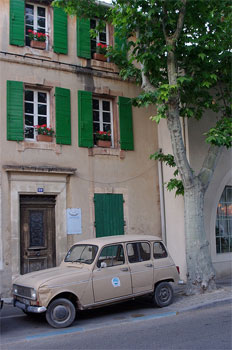
My first day at the residency was spent sleeping during the morning, since I had passed the night in Marseille’s airport lounge; then going for groceries in the afternoon at a small French supermarket where I was able to practice my limited French. The owners of the supermarket were gracious and friendly. It was a delight to find the equivalent of one week’s groceries came up to 63 euros, just as promised when I googled to find out how much I would have to spend. I had been hoping to focus on seafood during my trip but was somewhat turned off by the locally cooked prawns, packaged with heads and tentacles still on. My host informed me the French just screw off the heads before dipping the prawns in sauce and eating. Not to my Caribbean tastes since we routinely gut and shell all our seafood.
 I spent my second day working on a short story, the concept for which I had been nursing for a while. The entire day, off and on, was spent working on this, and by the evening I was pleased to have finished the first draft. As I lay in bed that night, I contemplated how best to revise and improve my story. Falling asleep, however, did not follow naturally. My hosts keep no locks on their doors, since apparently in Aureille crime is practically unheard of. Unlocked doors always appear like an invitation to trouble for me and I braced the handle of my bedroom door with a chair and kept one of the lights burning to allow me a little peace of mind and some sleep.
The next morning it was time to visit the doctor to have a blood sample taken. An English doctor who lived in Provence provided me with this service. On my way to the conference in Wales the week before, after a ten-hour flight from Trinidad, I had developed a pulmonary embolism that had required a week’s hospitalization in the UK and ongoing treatment with Warfarin. It was necessary to monitor the state of my blood every so often to ensure it remained at the right consistency. Interestingly, the cost for a non-EU national was only 22 euros for the doctor’s visit and 7 euros for the blood test. I mentally blessed the heavily subsidized medical system in France that keeps prices this low. Another artist at the residency, Jill, from Michigan, USA, told me that when she fell ill in Germany the doctor’s visit alone cost 40 euros.
 That evening the hosts held a dinner for the artists around the pool. They wanted to hear my story that I had unfortunately been unable to present at the conference in Wales, having fallen ill. The warm approval on everyone’s faces and their requests to hear the story I was currently working on at the residency even though it was unpolished told me that perhaps I do have something to offer as a writer.
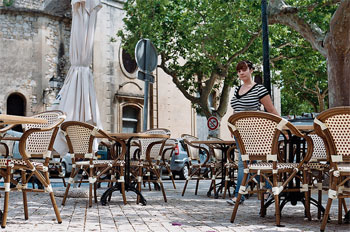
My last day in Provence was spent in Mausanne where I had a Salad Fontaine consisting of duck meat, apple julienne, lettuce, potatoes au gratin and mushrooms, served with a quarter litre of rosé presented in a small flask along with the wine glass. The cost was 16,50 euros. Not bad I thought and the meal did taste good. Later that afternoon I bought two pastries at a price of 2 euros each and ate them with some coffee at the same café where I had had lunch. The waiters were charming and polite at all times. I never felt odd, though the only black person sitting there eating.
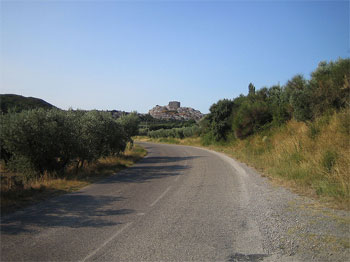
After getting off the bus that took me back into Aureille, I began the half hour walk back to the residency. I stopped after about 12 minutes to inquire of a man offloading articles from his car for directions to the residency. He was helpful and I continued on my way. About three minutes later, a young woman named Leticia came along in her car and asked if I was going to the residency. I was intrigued. How did she know? No, she told me, she was not from the residency. Yes, she was an artist herself “un peu”. She told me the residency was a little difficult to find. After dropping me off, she turned around and went back onto the main road. I was left to wonder at the kindness, and whether the man I had asked directions of had alerted her to my situation.


 The following morning it was time to leave the residency. As I disposed of the garbage from my apartment, Angela, a Northern Irish artist who was also staying at the residency, was standing outside drinking her morning coffee. She asked me for my last name and thanked me for having shared my short story with the other artists on Saturday evening. “I will look out for your name,” she told me.
As I made the trip back to Paris, then London, before heading home to Trinidad, I was already making plans to visit France in the next two years for another writer’s residency. During my week at the residency I had written and revised a short story, completed a humorous essay about the hazards of driving in Trinidad and Tobago, and emailed a query to a travel magazine as to whether they would like a short feature on my experience with pulmonary embolism. For one week, that was plenty of writing I would say.
If You Go:
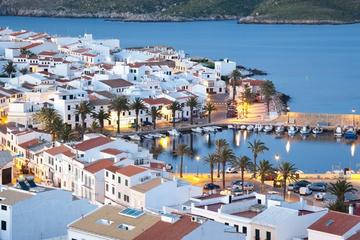
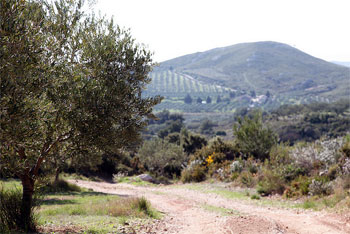
Ateliers Fourwinds is an artists’ residency and a member of Res Artist, the international organization of Fine Arts centers and residencies. It is located in Aureille, Provence, in the south of France and is surrounded by olive groves and vineyards. It also bottles its own wine for sale. To get there from London, you can take a Eurostar train to Paris, then a TGV train to Marseille. From there, you can catch a bus for about 10 euro to the airport in Marignane, where someone from Ateliers will meet you.
About the author:
Jewel Fraser is a freelance writer and copy editor who lives and works in Trinidad. In 2010, she completed a graduate certificate in creative writing with Humber College, Canada. At this year’s national creative arts festival in Barbados, she won two silver medals and a bronze for three short stories.
Photo credits:
Photographs from Flikr Commons: credits to Patrice Fender, Philippe F, Richard Price and Larenjordre.
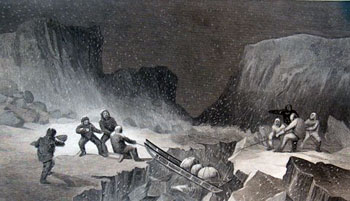
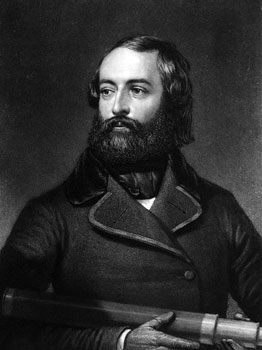 But on September 10, one day after it did so, we sailed into Rensselaer Bay, where in the mid-1850s, explorer Elisha Kent Kane spent two terrible winters trapped in the ice. And three days after that, as on Day Thirteen of our voyage we approached the island town of Upernavik, I went to the bridge. As the staff historian, I needed to announce the surprising news.
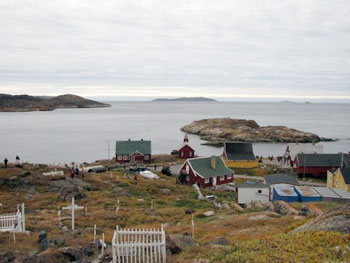
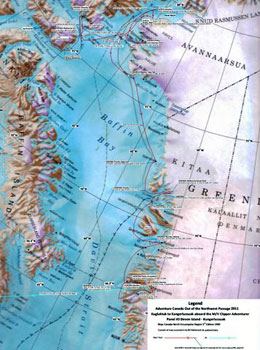 What drove me to the bridge was that our voyage had just become the first to trace Kane’s escape route from Rensselaer Bay to Upernavik, where Danish settlers welcomed the explorer, and now their posterity welcomed us.
 The change gave us extra time. We hoped now to sail north through Smith Sound into Kane Basin. Perhaps we could reach Etah on the west coast of Greenland, situated at a northern latitude of 78 degrees 18 minute 50 seconds. Etah was as far north as Adventure Canada had yet ventured along “the American route to the Pole.”
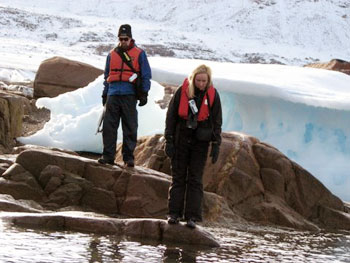
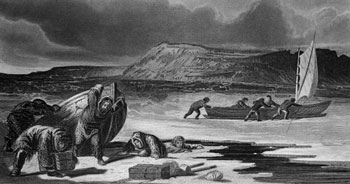 While most voyagers went ashore in zodiacs to explore beaches and ridges, five of us — an archaeologist, a geologist, an artist-photographer, an outdoorsman, and an author-historian (yours truly) — spent three hours searching small rocky islands for relics of Kane’s expedition. We found what I believe to be the remains of his magnetic observatory. And from the zodiac, prevented from scrambling onto slippery rocks by a receding tide, we spotted what I believe to be the site on “Butler Island” where Kane buried the bodies of two of his men.
 Ice conditions here have always been difficult and unpredictable. And in recent decades, recorded visits have been few. A 1984 article in Arctic magazine describes a study undertaken by scientists who helicoptered in from the American airbase at Thule to investigate the long-term decline in the caribou population. And an exhaustive archaeological study of northwest Greenland by John Darwent and others, detailed in Arctic Anthropology in 2007, turned up 1,376 features, including winter houses, tent rinks and burials — but sought and discovered no bodies in Rensselaer Bay.
 In Kane’s time, Etah was a permanent Inuit settlement, home to several extended families. Today, it serves as a temporary hunting camp. We stayed six hours and hiked to Brother John Glacier, a natural wonder that Kane, oblivious to Inuit nomenclature, named after his dead sibling.
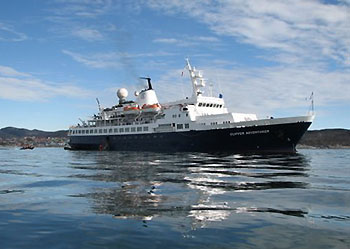
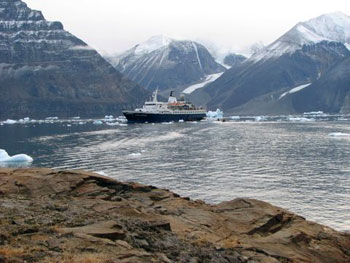 On the Clipper Adventurer, dining variously on Greenland halibut, veal marsala, and braised leg of New Zealand lamb, we retraced Kane’s perilous voyage in two days. We called in at Cape York, where the explorer overcame a last great barrier of protruding shore ice, and from there gazed out over open water.

 After a few days of checking out the architecture in the bustling capital Bucharest, we board a train for Transylvania – one of the largest and most picturesque regions in the centre of Romania known for its historical mix of flavours of the old Austro-Hungarian Empire, Saxons and brief Ottoman rule.
 The Black Church (Biserica Neagra) towers in its dusky beauty in Council Square. Called St. Mary’s from the time the first stone was laid in 1385, until it was renamed in 1689 after its walls were blackened by the “Great Fire” that levelled most of the town. Five richly decorated portals grace the outside. On the inside over 100 Persian rugs are hung from the walls (given to the church by Saxon merchants returning from shopping-sprees to Ottoman lands). In 1839 a 4000-pipe organ was installed. It is a thrill to hear it being played; its thunderous chords setting off tremors in the air waves.
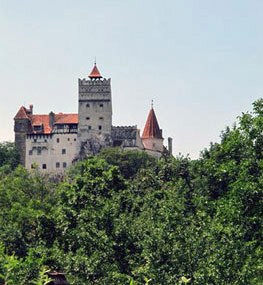
 Vlad III was the ruling prince of the Romanian state of Walachia from 1456-62, and from 1476-77, who offered a strong resistance to the westward expansion by the Ottoman Turks. His moniker Dracula was inherited; it means “son of the dragon” after his father Vlad II Dracul, who was a knight in the Order of the Dragon established to protect Christianity in the land. The symbol of this medieval order was a dragon, or “dracul” which at the time had a positive import, but after the 5th century became a symbol for the Devil. Vlad III’s infamy and his acquired moniker “Tepes” or Impaler, arose from his inhumane method of dealing with his enemies; foreign invaders and also rebellious countrymen, including noblemen (along with their families) who he felt were traitors and conspirators in the death of his father and brother. It is said dozens at one time were skewered on a wooden stakes in such a manner that instead of instant death, the victims suffered excruciating pain for up to 48 hours before their earthly farewell. It is believed that Vlad Tepes never set foot in Bran Castle….but there is a historic mention of his troops passing through Bran in 1459, and if going along on military manoeuvres was the Count’s modus operandi…who knows?
 Built in 1377 it was mainly a fortress over the centuries to protect Romanian borders. In the early 20th century the town of Brasov gave the castle to Queen Marie of Romania. She absolutely loved each of its 57 rooms and she made it a summer retreat for her family of six children and King Ferdinand, when he wasn’t called away with kingly duties. She hired Czech architect, Karel Liman who imparted the castle with its romantic appeal and added to the comfort with heating stoves of Saxon tile, running water, electricity, three telephones and an elevator.
 We make our way up creaky wooden staircases, through narrow passage carved into the rock, and in and out of the high-ceilinged rooms, several of which overlook the courtyard dotted with potted red geraniums to enliven the castle’s sombre tones. Queen Marie’s bedroom and study are restored with ornate hand-carved furnishings, but not in the least opulent. The combined music room and library converted from an old attic is the largest room, and is as cozy as this stone edifice can be with a fireplace, a bear-hide rug and padded furniture.

 It is then on to Rasov, well at least to the bottom of the hill where it is perched, as the fortress was closed to renovations. Leaving the town of Rasov, Maxim points and says, “Gypsies”. We pass a rickety canvas-covered wagon pulled by two hefty steeds. A swarthy young man in a wide-brimmed hat jiggles the reins from the driver’s seat. His dark good looks are matched in the gypsy woman we later encounter. Alas, the romanticised lore of the Roma being free-spirited nomads is far from true – strong-spirited would be more fitting.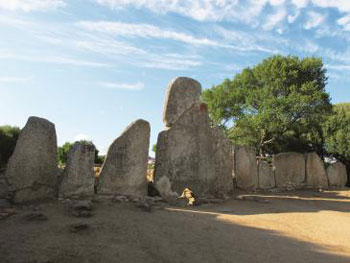
 Today, there are more than 8,000 nuraghes still standing from what is estimated to have numbered more than 30,000. They were most prevalent in the northwest and south-central areas of the island and are usually located in a panoramic spot – strategically located on hilltops to control important passages.

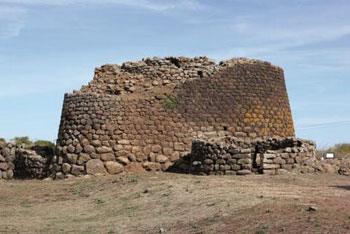 They all are incredibly accessible and available to explore. When you enter a nuraghe, stand in the middle of the cone and stare up at the opening above you, the presence of it’s former inhabitants is almost palpable. The stone stairs to the various interior levels wind-up the sides of the structure leading to antechambers and strange rooms. There is a strong sense of design and intention.
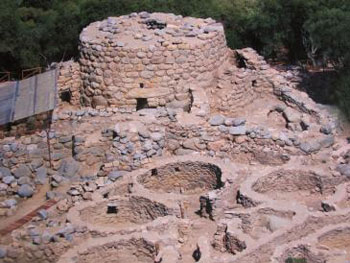 Having stated that, it remains a complete mystery as to who were the Nuragic people. Some clues can be found at The National Archeological Museum in Cagliari. It holds most of the materials discovered in the Nuraghes. They did produce art in the form of beautiful small bronze statues; typically representing Gods, the chief of the village, soldiers, animals and women. There are also stone carvings or statues representing female divinities.
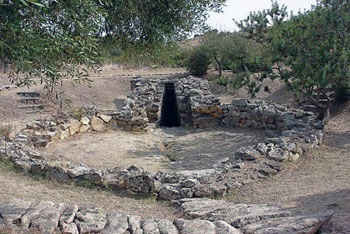 The sacred well of Santa Cristina has a hole in the vault. Every 18 and a half years, when the moon reaches is lowest point in orbit, the moonlight strikes the hole and is reflected on the surface of the water. Sunlight is also reflected during the autumn and spring equinoxes. Through these processes we know they possessed a great knowledge of celestial cycles.
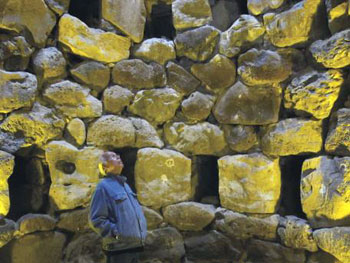 But that is where the certainties end. Scholars are not even sure of the correct name for the civilization, or even the real meaning of nuraghe. The name itself derives from the meaning of mound and cavity, and the nuraghes are built by laying big stones of similar size on top of each other, leaving a cavity in the middle which is then covered by a stone domed roof. For lack of a more informed identification, scientists accordingly have called them the Nuragic peoples.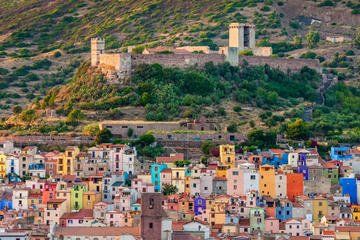
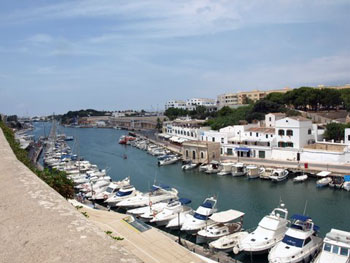
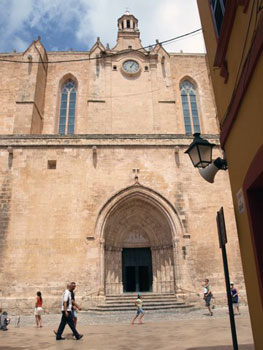 The 14th century Cathay Gothic cathedral in the Plaza de Pio XII, and its surrounding area, miraculously escaped destruction in 1558 when Barbarossa, the pirate Red Beard, attacked and destroyed the town with his Turkish mercenaries. The cathedral’s ornate Baroque style Chapel of the Souls was added in the 17th century, when much of the town was finally rebuilt. Then in the 19th century, it was finished with a neo-classical front facade. It still also contains a small minaret from the mosque that occupied its space before it was turned into a cathedral on the orders of King Alfonso III of Aragón, who took the island from its ruling Moors in 1287.
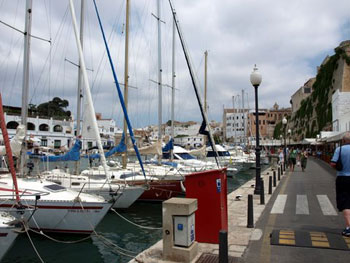 The square is edged with grand palaces on the cathedral side opposite the imposing Town Hall and theatre. Next to the theatre is a magnificent viewpoint looking out over the harbour. A couple of pavement cafes sit beyond this next to the corner that leads to the steps down to the harbour, which is lined on this side with popular restaurants.
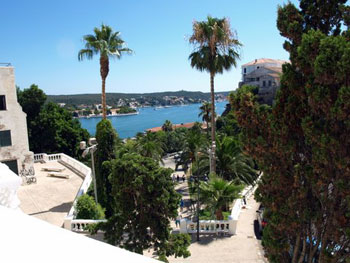 The natural advantages of the waters of Mahon meant that the British based themselves there and declared it the new capital of the island. But the clerics of the time refused to move, so Ciutadella retains its cathedral and its religious superiority.
 Unlike Ciutadella, Mahon town occupies only the southern side of the port. The opposite side houses the naval base. It is also where new resorts are being developed alongside some wonderful villas that include one where Admiral Nelson and Emma Hamilton are said to have had some romantic trysts.
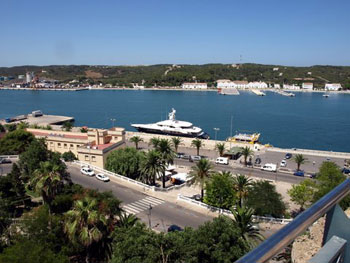 Back on the harbour side of Mahon, if it’s time for a tipple, you can head for the centuries old Xoriguer Gin Distillery, famous for supplying unique Menorcan gin to Admiral Nelson’s British sailors. Or there are plenty of good bars and restaurants on the landward side of the harbour road, or up in the town above.