Turkey
by Paola Fornari
‘What to do in Ankara if you come from Istanbul.’ That was one of the first presentations offered by the participants at the Turkish Ministry of Foreign Affairs where I was giving some training courses recently. Apparently Ankara is such a dump that the only ways people from Istanbul can survive are a) hit the shops, b) hit the bars, c) hit the station and get a train to Istanbul every weekend.
I was in Ankara for three weeks, and I wasn’t interested in shops or bars. And Istanbul was not practical: I had two short weekends ahead of me, during which I had to do a lot of preparation work. I was in Ankara, and I love being in new places. The city must have something to offer, and I would find it.
During the first week, I became familiar with taxi route between the hotel and the Ministry: busy wide boulevards flanked by huge buildings, and pedestrian bridges. I occasionally ventured out in the evening, and learnt my first few words of Turkish: ‘hello’, the two sorts of ‘goodbye’ (one for leaving and one for staying), ‘please’, ‘thank you’, ‘orange juice’, ‘entrance’, ‘exit’, ‘water’, ‘what’s your name’ and ‘car wash’ (well, Oto Kuaför is simply too memorable, even if not particularly useful).
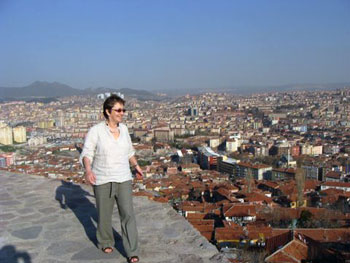 At the weekend, I decided I would see two of the three highlights recommended in my Lonely Planet Guide, saving the third till the following weekend. I wandered up to the Citadel, the oldest part of the city, the walls of which date back to the 7th century. The narrow winding streets were packed with carpet stalls and little restaurants. Women chatted by the side of the road, crocheting handbags. A family, gathered on a few steps outside a crumbling house, invited me to join them for chai. Seeing their shoes all lined up neatly to one side, I took off mine, and we smiled and giggled at each other and sipped tea for a while.
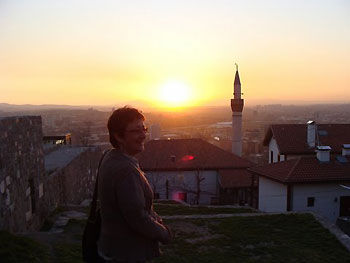
Later, from the castle walls, I enjoyed the superb view over Ankara and the snow-capped mountains beyond. The sunset was stunning.
On Sunday morning I went to the Museum of Anatolian Civilizations. It won the ‘Best European Museum of the Year’ award over ten years ago, and is still superb, displaying archaeological artifacts from the Stone Age through the Assyrians, Hittites, Phrygians and Lydians. And my guide spoke reasonable English.
That afternoon I went off to a hammam – a Turkish bath – in a fancy area of town, recommended by one of my trainees, and then had a manicure next door. A wonderfully relaxing way to end my weekend, and I added a few more less-than-useful words to my list: ‘soap’, and ‘pearly pink’.
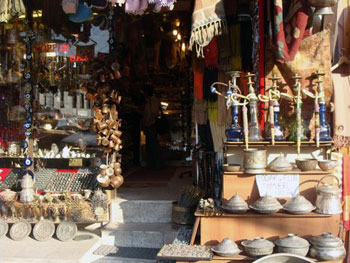 The second weekend, I visited the Citadel and the Museum of Anatolian Civilisations again: this time the only guide I could find that I would be able to understand spoke a mixture of Italian and Spanish.
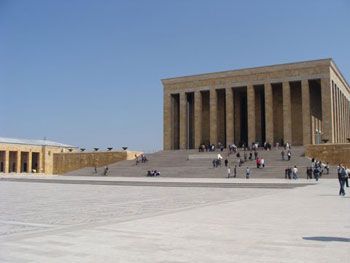
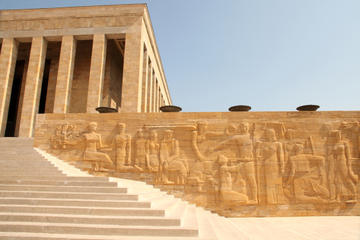
And then I walked to the site I had been saving: Anit Kabir, Ataturk’s mausoleum. Ataturk (1881 – 1938) was an army officer who led the Turkish national movement after the fall of the Ottoman Empire, and defeated the allied forces, thus preventing partition. He was the founder of the Republic of Turkey and transformed the vestiges of the Empire into the modern, secular state Turkey is today. The beautifully kept monumental structure is packed with visitors paying their respects to the great man, and you really sense the hold he had over his adoring people.
By this stage I had added ‘yes’,’ no’, ‘minute’, ‘left’, ‘right’, ‘lovely’, ‘big’, ‘small’ and ‘stop’ to my list of Turkish words.
At the end of my three weeks’ work, I had an extra Saturday to fill before my flight home. I wandered off to a wonderful four-storey book and music shop with a café on top and bought some traditional music, and the number one bestseller called ‘Last Train to Istanbul’, which turned out to be a fascinating but badly translated novel set in wartime Turkey. On the way back to the hotel I bought some Turkish Delight. My bargaining skills had certainly developed over the past three weeks: I would always know to bargain in markets, but here it worked even in highly respectable shops.


So what does one do on one’s third weekend in Ankara?
 It just had to be a genuine ancient hammam. The Lonely Planet recommended Sengül Merkez Hamami. At the entrance to a quiet alleyway, below the hammam sign, two women sat on the ground sipping tea. A child played nearby.
I approached. Three women jammed the space between the double doors. I squeezed past, into shabby high-domed room bordered on two levels by cabins. Women milled around, some in long dresses and headscarves, others in very little. Around a large table several women sipped chai and chatted. One sorted a large pile of underwear into neat piles.
‘Hammam?’ I asked. An enormous smiling woman wearing black underwear came over and led me by the hand to a cabin, and gave me a wrap and a pair of enormous clogs.
‘Epilasion?’ she asked. I hesitated. She lifted my arm and peered into my armpit.
‘Epilasion,’ she stated firmly.
It was an amazing experience, with women coming to chat, watch, compare results, giggling as I yelled the two most important words in the Turkish language, ‘stop’ and ‘no’, while my hammam lady plied, kneaded and moulded her lump of glutinous chewing-gum wax all over me.
 After that, I was ready to be pampered. I understood that the even larger lady whose job it was to scrub me was the sister of the epilasion one. I lay on the marble slab. And very quietly, she began to sing, the volume gradually increasing, until her haunting, deep, sad song filled the steamy air and brought tears to my eyes – no, not tears – floods. I look up at her closed eyes, her furrowed brow, her look of concentration as she drew the cheap, hand-crocheted, garish flannel up and down my arms, her blubbery stomach filling the space between us. ‘Benli benli, benli benli,’ she sang, as I imagined a story of lost love, war, pain, death, disaster… Then a young woman beside me – yes, someone spoke a few words of English here – said ‘Hello!’
‘Please tell me what the song is about,’ I said.
‘It’s a traditional song. It says it’s difficult to live with someone who is ugly.’
How banal, I thought, rather embarrassed about my emotional display.
‘Ugly inside,’ she added, as the hammam lady sang, and I burst into tears again. Lovely. A perfect end to my three weeks.
Private Tour: Ankara Sightseeing
If You Go:
Where to stay: I stayed at the Ankara Plaza Hotel, which was comfortable and friendly. See www.tripadvisor.com
Things to do:
• Museum of Anatolian Civilisations, anadolu Medeniyetleri Muzesi, daily 8:30 am – 5:15 pm, entrance 10 Turkish lira.
• Ataturk’s Mausoleum, Gazi Mustafa Kemal Bulvari (Mon 1:30 – 5:00 pm, Tues – Sat 9:00 am – 5:00 pm, free) • Sengül Merkez Hamami,Ulus,, 6:00 am – 8:00 pm daily, recently restored, see sengulhamami.com/icerik-93.html.
About the author:
Paola Fornari was born on an island in Lake Victoria, and was brought up in Tanzania. She has lived in almost a dozen countries over three continents, speaks five and a half languages, and describes herself as an “expatriate sine patria”. Wherever she goes, she makes it her business to get involved in local activities, explore, and learn the language, thus making each new destination a real home. At present she is living in Bangladesh.
All photos are by Paola Fornari.
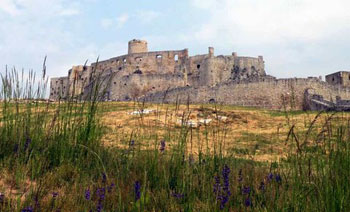 Our hosts, the Filip family, take us by car on day-long outings to towns and sites of particular historic and personal interest. In the foothills, the lush green rolling countryside is planted in canola, maize and barley. Narrow country roads are lined with evenly spaced apple trees. And to the Northwest, the serrated peaks of the High Tatras are always in view.
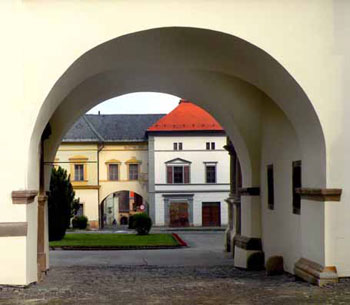
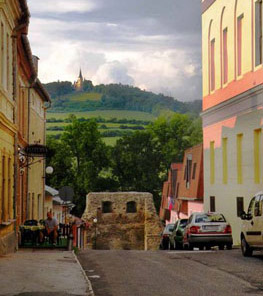 A wonderful surprise is the lovely walled town of Levoca, a former royal city and cultural centre of the Slovak national Enlightenment in the late 18th century. There are arched gateways and streets lined with medieval buildings in pastel colours. Among its landmarks are the 14th century St. James church, with the highest wooden altar in Europe, the 18th century theatre, the multi-columned 19th century town hall, and the open-air “shaming cage,” where transgressors were publicly punished. A basilica and field on a nearby hill is a traditional pilgrimage site, where Pope John Paul II once celebrated mass for over 600,000.
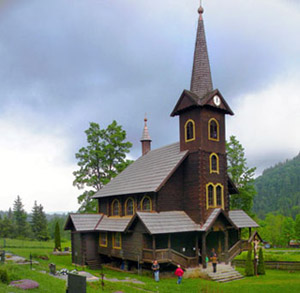 Robert himself felt the oppression as a bright high school student near the end of the Communist period, when church attendance was still discouraged and he was warned that openly practising his faith could hurt his chances of going to university and having a successful career. But then came the Velvet Revolution and the independence of predominantly Catholic Slovakia. One Sunday morning we watch as a stream of proud parents, decked out in their finery, lead their children to the local church in elegant white robes and muster them for a procession and their first communion.

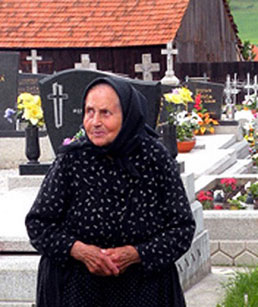 Then we visit an elderly relative who lives in a tiny village and wears the black shawl and somber dress of mourning. A closer look reveals that, although dark, the fabrics and stitching are incredibly ornate and detailed. Opening her closet, she displays her extensive wardrobe and admits a bit sheepishly that women like to appear in church in the finest and most elegant clothes. And she has sewn everything herself, all her life. She takes us to the cemetery and shows us the grave of Annie’s great-grandmother, which she regularly tends with flowers and devotion.
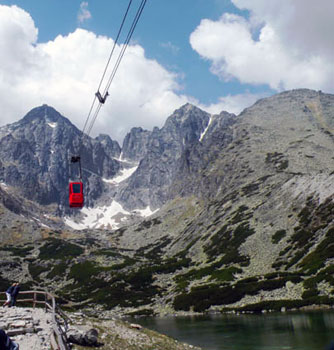
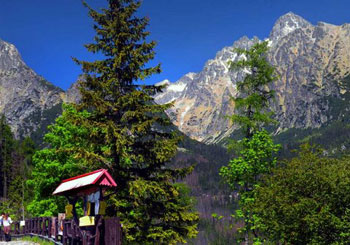 We also spend glorious days in the High Tatra mountains. We ride a funicular railway up into Tatra National Park and hike through the forest of red spruce to a remote waterfall on a major stream. Thunderous water spirals into deep gurgling holes as we sit on a gigantic weathered boulder and enjoy a picnic. There are no mosquitoes to spoil things, even in early June.
 The Tatra region is known for its enchanting alpine villages. Log-built and chalet-style houses feature large balconies, colourful window shutters and other fanciful and ornate woodwork. There are centuries-old wooden churches and attractive, affordable boutique hotels that are popular in summer with hikers, campers and lovers of wildlife. In winter, they host skiers from all over Europe. We spend a night in one of them, in a romantic top floor room with dormers, and eat in a restaurant that serves local wild game and freshly caught fish from the lakes and streams. But most evenings, Terezia pampers us with her Slovak home cooking, a rich cuisine that starts with tasty soups and moves on to pork or chicken main dishes, plus potatoes from their large garden, or pirogies, or dumplings with butter or gravy. And then comes dessert. They say that if you don’t gain weight while visiting Slovakia, you have not been treated to true Slovak hospitality. And so we do.
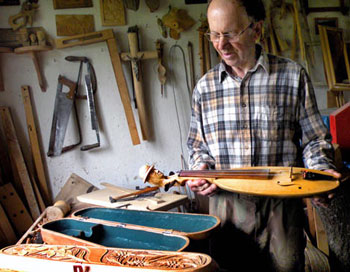
 Our final day, we visit Michlik, the carver and instrument maker, a long-time friend of the Filips, who has been featured in documentaries on Slovak national television and played his stringed instruments in a local folk music group. In his village, Zdiar, people speak a dialect, Goral, that is closer to Polish than to Slovak, a vestige of centuries of Polish rule over the region. He regales us with stories about his life. For many years, he was part of a hunting club with access to some of Europe’s most pristine alpine wilderness, where boar, lynx and mountain goat still run free. During the Communist period, he supplemented his carving income by keeping sheep and renting out rooms, mainly to tourists from East Germany. He takes us through his workshop, where antique hand tools coexist with a modern lathe and band saw. His latest violin, and its ornately carved wooden case, will be an 18th birthday present for his grand-daughter. We see racks of carefully stacked wood that has to air dry for three to five years. Most of it is now earmarked for his grandson, Marek, who apprenticed under him and is carrying on the proud tradition.
 provides a clear, accurate overview. Useful websites include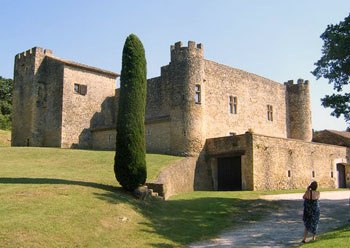
 Medieval Fontaine-de-Vaucluse nestles among chalky cliffs to the east. After strolling to its renowned spring, the largest in France, we savor luscious crepes at an open-air bistro overlooking its emerald stream. From picture-perfect Gordes, a white stone village clustered atop a hilltop, we hike the rugged trail to enchanting Abbey of Sénanque, set among perfumed lavender fields and golden wheat that undulate in warm breezes. And inside walled Pernes-les-Fontaines, a self-guided walking map guides us to many of its forty treasured fountains.
 Entering the Palais des Papes through enormous portals, we meander through its arched courtyards and into halls with vaulted ceilings, huge treasury rooms and even the colossal kitchen tower. Exhibits and illustrated storyboards explain how in 1309, Pope Clement V escaped the turbulence of Rome to reside in Avignon. A subsequent pope bought Avignon from Queen Joanna I of Sicily for 80,000 gold gulden. And over a span of 68 years, this vast fortified religious fortress protected and pampered seven consecutive popes until the papacy officially returned to Rome.
 Delighting in cool breezes off the Rhone, we later approach this bridge. Humming the catchy children’s song immortalizing St. Benezet’s bridge, we zanily sing, “Sur le pont d’Avignon, l’on y danse, l’on y danse,” over and over. Circling round and round, we dance our way across the remains of this fabled structure…to the amusement of others strolling there.
 Along many others, we stream back along this angel-inspired bridge and imagine those alluring bygone days. We then thread our way down cobbled streets to other shaded plazas and discover venerable cathedrals displaying resplendent artistry including refurbished mansions serving as fine art museums. Lingering in open-air bistros over buttery croissants thick with local cheeses and pungent lattes, we contemplate the extravagances of Avignon’s past glory days.

 Mature plane trees shade the ancient forum, today bustling with shops, hotels and bistros, including Le Cafe la Nuit depicted by Van Gogh in Cafe Terrace at Night. The brilliant yellow walls, awnings and tablecloths recreate this acclaimed impressionist’s luminous effect of shimmering evening lights. Sipping café-au-lait and munching flaky-fresh croissants there, we notice a chunk of the original Roman Forum in the façade of Nord-Pinus Hotel across the way. And just off the square, Hotel d’Arlatan incorporates thick walls from Emperor Constantine’s extravagant royal residence.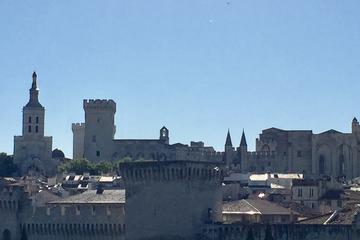
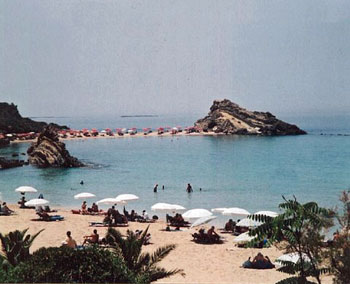


 As I watched the glorious sunset from the Venetian-style lighthouse, Fenari, I contemplated the many tragedies that have befallen this beautiful island.
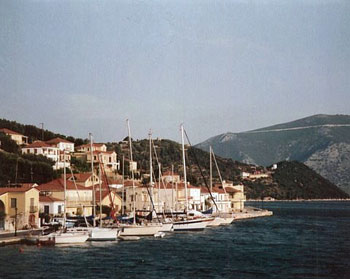
 The harbor of Vathi is surrounded by houses with red-tiled roofs. Cafes animate the waterfront. The summer evening is scented with the smoke of grilling kebabs and fresh-caught fish grilling over charcoal coals. There is a curious atmosphere here. Ithaka’s hillsides are scented with wild sage and oregano, dotted with vibrant wild-flowers and silvery olive groves. Surrounding the tranquil orchards and vineyards are the high menacing mountains.
 It’s an Odyssey in itself just getting off Ithaka. The taxi picked me up as scheduled in order to make the sailing to Lefkada. I enjoyed the scenic drive and arrive in plenty of time, but fifteen minutes before the ferry was due to arrive, I discovered that the ferry that had broken down, and we must leave from a different port. After a hair-raising wild race by taxi on a twisting road with hairpin curves and precipices, I arrived at the port just minutes before the ferry sailed.
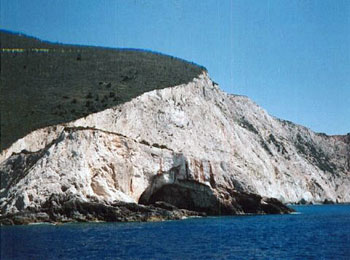 Sailing past Cape Doukas, the towering white cliffs rise from a sea that is as blue as a robin’s egg. The Cape looks like a gigantic wedge of cake with a lighthouse on top for a candle.
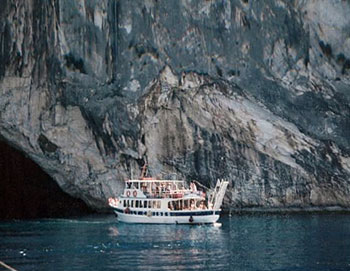 The boat circled the island of Skorpios, a small island, densely wooded with cypress and pine trees. The red-tiled roofs of the Onassis’ villas are half-hidden behind the trees. In each little cover there are piers, each with a palm tree planted at the end. Around the dock areas, the grounds are landscaped and showers of magenta bougainvillea spill over the stone fences. One of these villas was a gift to opera singer Maria Callas in the days before Onassis abandoned her in favor of Jacqueline Kennedy.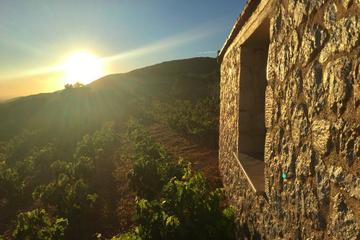
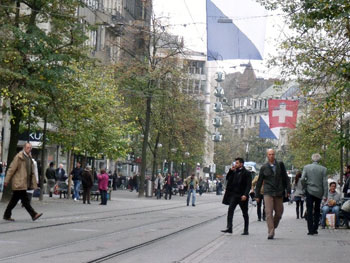
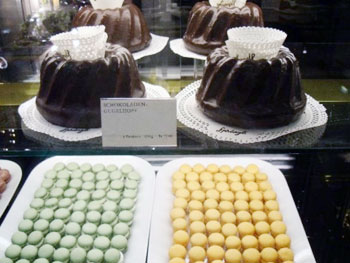 Because the Swiss are known for their quality chocolate making, and combined with my passion for the confection, it was on my agenda to check out some of the shops, nestled among other outlets selling high line fashions, watches, and jewelry. Two chocolate shops, Confiserie Sprungli and Teuscher produced a hearty scent of cocoa that pleasantly flowed through my nostrils. It was a chocolate feast for my eyes, as meticulously-decorated items with such names like Pariser-Konfekt and Gianduia-Rustica lined the shelves of delights, many of which are handmade at Confiserie Sprungli.. Even though chocolate prices range around $50 a pound here, one can keep things more budget-friendly by purchasing the treats in 100 gram increments (around 3.5 oz).
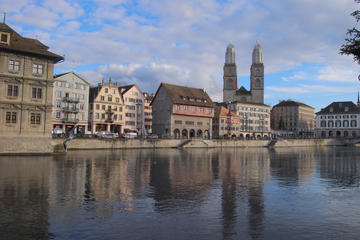
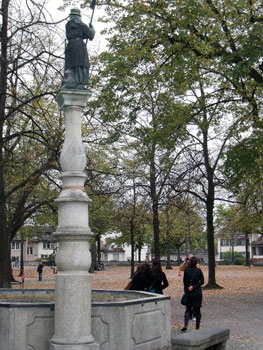
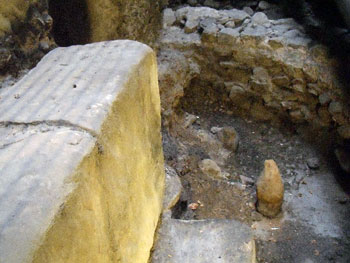 Switzerland is one of the most expensive countries in the world to visit, but ironically, Zurich gives away one of the most important staples of life: water, via its 1,200 public fountains that dispense the crystal clear liquid (my taste buds noticed no chemical taste) from unique statues that have needles on top of them so as to keep pigeons away. I couldn’t help but notice St. Peter’s church, one of the conspicuous landmarks of the area, for its 28 foot in diameter clock face, the largest in Europe. I wanted a nice vantage point of the Old City, and got it a few blocks north at the Lindenhof. It’s called that because of the Linden trees that dominate the park area that overlooks the river, offering great views of the Old Town. It’s the highest point of the Old City that dates back to pre-Roman times, when the Celtic Helvetti resided here. Across the river, I spotted the double Neo-Gothic domes of the towers of the Grossmuenster, which dates back to the 12th century, and where the Reformation began in the country.

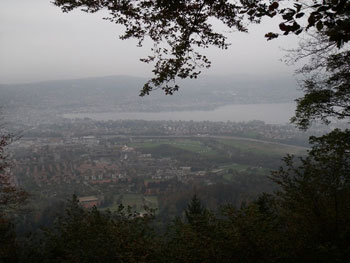 The beauty of a place truly shows through, not when the weather is picture perfect with the sun a blazing, but when the weather isn’t ideal, as was the case with my ascent to Uetliberg to get a bird’s eye view of the area. Once again, with my Swiss Pass, I was able to take a 22 or so minute commuter train ride from the Hauptbahnhof (Tracks 1 or 2) to the base, taking in chalet homes, green soccer pitches, and Switzerland’s own brand of autumn foliage that complimented the greenway paths along the tracks. From the station above, I proceed upwards for about ten minutes on dirt paths “beautifully-littered” with fallen red, green, brown, orange, and yellow foliage. As I ascended the mountain top, I noticed tall giraffe-like figurines whose antlers serve as lights. There are numerous hiking and biking paths that cut through lush greenery that makes getting lost a pleasant experience.
 Even though Zurich West is a just a few minutes away from the Haptbahnhof by numerous S-Bahnen commuter trains to Hardbrucke station (including the S9) or around ten minutes by tram, it was as if I stepped out into a totally different world. After disembarking, I noticed I was close to 415 foot high modern skyscraper called the Prime Tower. It’s a world that’s a cross between a post-modern and old Communist-style city mixed uniquely with new ideas in design that cherishes the old remnants of Zurich’s past going back two centuries. This area was once made up of factories and foundries that produced soap, various mechanical parts, etc. In the early 1990s, Zurich West began to revitalize itself, using the skeletons of its industrial past as a basis for what it is today, a bustling multi-cultural melting pot containing trendy clubs and bars with names like “Supermarket”, retail and second hand shops (there’s a nicely-stocked Salvation Army thrift store that’s called “Heils-Armee”), and offices full of white collar workers glued to their laptops.
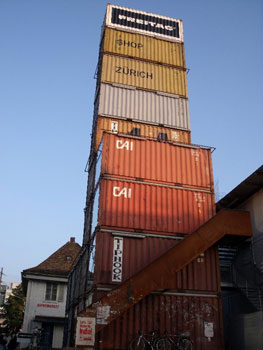 As I walked on the wide walkways among the edifices, I took in such bizarre sights as the the Freitag shop which uses 19 old shipping crates stacked nine stories high to sell handbags and wallets made out of recycled industrial components. And down the street, the outlets in a strip mall called Im Viadukt are nestled inside the arches of a railroad bridge that was built in the late 1800s.