California
by W. Ruth Kozak
Santa Barbara California is a city of white-washed Spanish style buildings with red tile roofs tucked between the mountains and sea. The palm-lined streets and long stretch of white sandy beach give it an exotic allure. There were no trees here when the Spanish came; no palms lining the beaches and boulevards, no wooded hillsides. It was simply a barren swath of coastline occupied by the Chumash people who were hunters and gatherers oriented to the sea.
 On this sunny afternoon I have a special destination in mind: a visit to the Old Mission Santa Barbara to discover the city’s past. I hop onto a tourist trolley down by the Presidio. On the way through the picturesque streets, the handsome driver tells us that he’s a descendant of the Chumash Indians who occupied this land long before the arrival of the Spaniards. In 1602 a Spanish explorer named Sebastian Vizcaino sailed up the channel between the coast and Channel Islands, and claimed the land in the name of the king of Spain. He gave it the name “Santa Barbara” because it was the Saint’s Feast day.
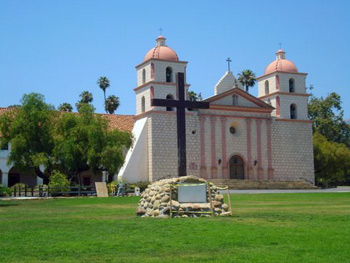
The tour bus passes by various historical buildings in the old town and heads up the winding road. On the outskirts, a majestic building crowns the hillside, glowing like an opal in the bright California sun. This is the Queen Mission, the tenth founded by Franscisan Padre Junipero Serra, established December 4, 1786.
Disembarking from the trolley I stand in awe as I observe the impressive building with its twin bell towers and the imposing architecture that combines Moorish, Mexican, Chumash Indian and Spanish design.
In the mosaic-paved entryway a Moorish fountain dating back two hundred years burbles with a spray of water. The large basin in front is the lavandaria where Chumash women washed their clothes. The crude lions head at the front of the lavandaria was carved by a Chumash artisan. Nearby is a botanical garden dedicated to native plants used by the Chumash people.
I set off on a self-guided tour. Inside, the small, dark rooms contain a colonial art collection of the baroque or neoclassical eras, imported from Mexico and South America that demonstrate the life of the Franciscan monks and the pioneers who lived there alongside the Chumash Indians. Three stone statues depict St. Barbara and the Virtues, carved by a mission Indian who used pictures in books as a guide.
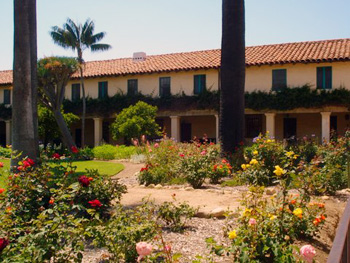 Over time the original buildings were damaged or destroyed by earthquakes. The present friary was restored then later built after another quake in 1927. The church represents an amazing engineering achievement combining the efforts of the Chumash, Spanish and Mexican artisans. I tour the rooms where the missionaries slept, the kitchen where a meager menu is shown: little more than beans and rice. In the chapel room are displays of skills taught there including candlemaking, pottery, weaving and ironwork. Galleons from Manila and China clippers brought Asian culture to the area and some of this reflects in the artifacts and embroidered silk vestments displayed in the chapel museum. The church itself is decorated with Mexican art, some 200 years old.
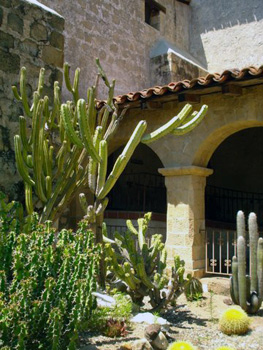 Passing under a low doorway decorated with skulls I enter the mission cemetery where Santa Barbara‘s culturally diverse early settlers are buried along with Chumash Indians. When the Presidio was formed in 1783 the Spanish soldiers were of varied ethnic origins including Mexican Indians, Sephardic Jews and Africans. The heritage of Santa Barbara is reflected in the names and backgrounds of those buried there.
In the tranquil Mission garden I pause and imagine what life for the Chumash people was like back then. This garden was once a work area where many of them learned trades. Their workshops and living quarters were located in the surrounding quadrangle of buildings. Today many descendants of the Chumash, such as the driver of the tour trolley, still live in Santa Barbara. Fortunately their customs didn’t die out and today local native communities provide support for the preservation of their ancient culture.


The Mission’s original purpose was the Christianization of the Chumash but once Spain lost California to Mexico in 1822, it was secularized although missionaries were allowed to conduct services. Eventually it was returned to the Catholic Church and used as a school and seminary. Today it is used by the Parish of Santa Barbara and stands as a monument to the cultural diversity of California’s heritage.
Santa Barbara Wine Lovers Tour
If You Go:
♦ www.sbmission.org
Mass celebrated daily 9 – 5; Sunday 7.30,9 and 10 a.m. and noon.
Admission $4. adults.
2201 Laguna St. Santa Barbara CA
Phone: 805-682-4713
♦ Santa Barbara Trolley Tours
www.sbtrolley.com
805-965-0353
About the author:
Ruth is a travel and historical fiction writer and one of her favorite North American destinations is California. On a visit to attend her grandson’s graduation from the Santa Barbara University, she made this fascinating visit to the old mission of Santa Barbara.
All photos are by W. Ruth Kozak.
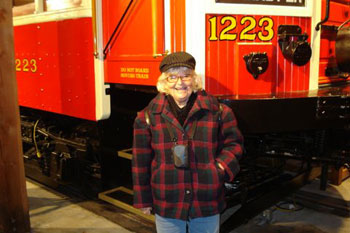
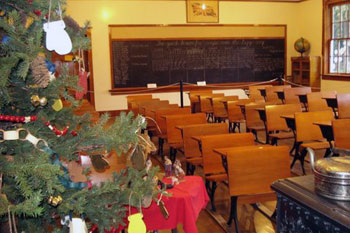 There are various ongoing events throughout the season including a theatre where you can watch old silent films, a blacksmith demonstration, carolers, a Christmas scavenger hunt, rug hooking demonstrations, children’s crafts and even a visit from Father Christmas. When you arrive at the ticket office, they’ll give you the day’s scheduled events and the location of where you can see them.
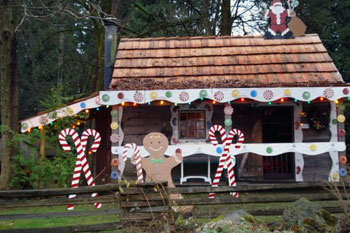 At the Elworth house it’s Christmas eve at the 1922 home of the Bateman family. It gives you a real sense of stepping back into the past. There’s also a replica of a log house decorated to resemble a gingerbread house, straight out of Hansel and Gretel (there’s no witch inside, though). Traditional Christmas decorations including a tree decorated with handmade ornaments are displayed in the Jesse Love farm house (circa 1893). And there’s a group of mannequin carolers in period costume in the living room ready to sing in a caroling diorama. In one of the bedrooms the bed is covered with a hand-made quilt demonstration the quilting skills of women in those days.
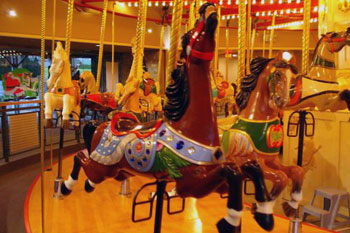 A ride on the vintage C.W. Parker Carousel is a must no matter what age you are. This is my one of my favourite activities at the Museum. The carousel originally operated at the PNE for many years and I remember riding it when I was a youngster. It was later restored, with each pony or sled carefully painted and repaired by donations from various people or organizations. Ride on the beautiful prancing horses, accompanied by the tunes of an original Wurlitzer organ. Great fun! At the gift shop next door you can buy those last minute trinkets to fill the Christmas stockings.
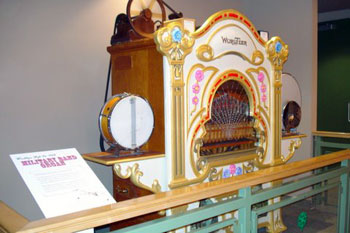 There’s lots to see at the Heritage Village, with hirty-two displays as well as the scheduled events. The afternoon I visited, a musical duo from Guatemala was playing “Feliz Navidad” and other seasonal songs inside the little church. After my tour I refreshed myself at the ice cream parlour with some lemon cake and a hot cup of cocoa. They also provide full meal service.
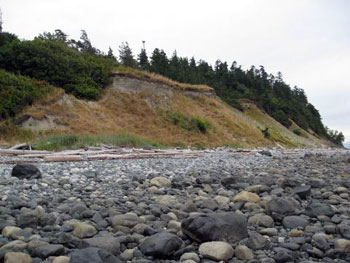 There are not many places on the Pacific Coast where we know for certain Vancouver walked, but this is one: the beach of Cape Mudge at the southern tip of Quadra Island, across Discovery Passage from Campbell River, British Columbia. In 1792, while charting the coast, Captain Vancouver visited here with his two ships, the Discovery and the Chatham. At that time, a Coast Salish village known as Tsa-Kwa-Luten thrived atop the sandy cliff. While the British ships sat at anchor on July 13, 1792, the natives paddled out in canoes and greeted the crews with fish and wild fruits in exchange for European articles of trade.
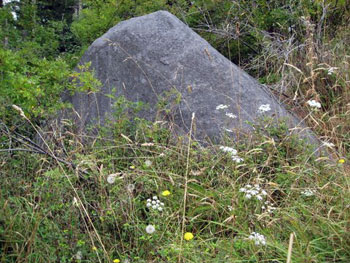
 Captain Vancouver’s log mentions a distinctive giant boulder in the village and I find it half-obscured by grass and shrubs. I imagine Salish children’s laughter as they clamber up this boulder and slide down its sloping sides, their mothers admonishing them to keep back from the precipitous cliff. I envision cedar-plank houses over-looking the sea, racks of salmon drying over wood-fires.
 An array of masks is the main feature: ravens, wolves, bears, killer whales, mosquitoes, double-headed serpents, all used in potlatch dances. Included in each description is the original owner, and some of their photographs are also on display. Many have Anglicized names such as Billy Assu and Amos Dawson, but their Kwakwaka’wakw names translate to honourifics such as “Always Giving Potlatches” or “High Ranking in Feasts”.
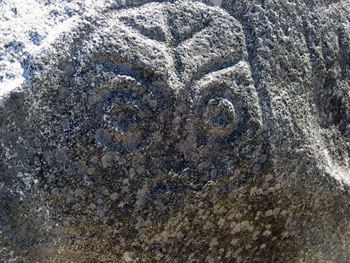 I learn that after Captain Vancouver’s voyage, a branch of the Kwakwaka’wakw known as the Lekwiltok descended from the north in their war canoes, with firearms acquired from European traders. Between 1792 and 1850, they raided and occupied numerous Salish villages and eventually commanded all of Discovery Passage—all save Tsa-Kwa-Luten, the village atop the sandy cliffs at Cape Mudge. So well fortified by nature, the Lekwiltok decided it was impossible to attack.

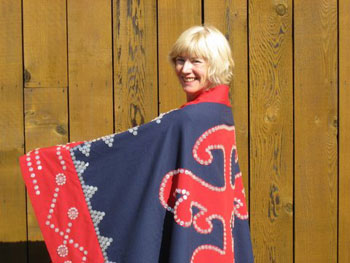 Tsa-Kwa-Luten Lodge is one way the native people of Cape Mudge have met the challenge of living in today’s society. The spacious lounge is designed like a Big House with a vaulted ceiling, the walls decorated with traditional art, including cedar paddles and button-blankets. The dining room features contemporary First Nations art. I feast on cedar-planked salmon, sip local Quadra Island wine, and gaze at the sunset over Vancouver Island.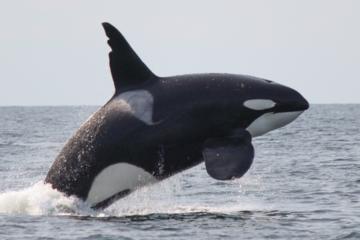
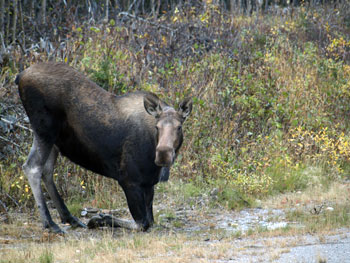 I recently returned from a summer of woofing around Alaska and can vouch for the spiritual aspects of farming. Feeding chickens and pigs can be a messy and tiring business, when you see those animals eye’s light up at the sight of you “it makes you feel good for some reason” one fellow woofer recounted to me.
 I stayed on three different farms over the course of my summer, and each revealed some of the advantages and pitfalls of the business.

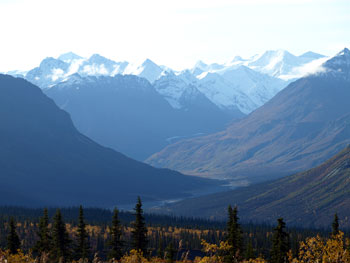
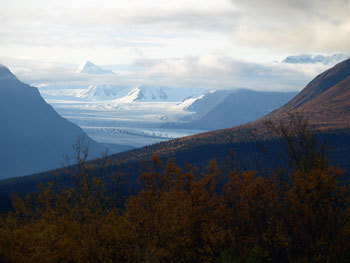 While the rustic setting was attractive, the ultra-basic facilities were the things that made me leave in the end. I was housed in an authentic Alaskan log cabin about a mile away from the owners’ cabin, and had no washing facilities after a long day of shoveling goat poop and the like. There is only so much bathing in a freezing creek one can do before it gets old, so after three weeks I moved on, though not before they took me on a ride in their bush plane across the Chugach mountain range and over the sparkling blue Prince William Sound.
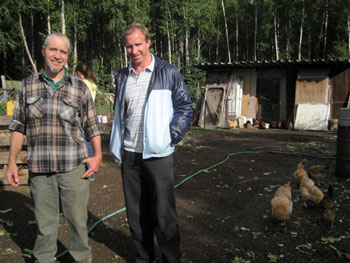 The third and last woofing destination was with a couple who owned both a small 2.5 acre farm in the city of Anchorage itself, as well as a 20 acre farm in Homer, a beautiful town on the sea about four hours away. Bill and Judy were unbelievably good to me, and really helped me enjoy my time in Alaska. They were very interesting people, being ex-hippies while Bill was a Vietnam war veteran and an outspoken anti-war and Green Party spokesman.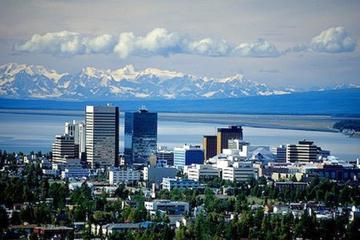
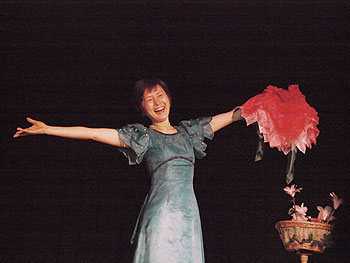
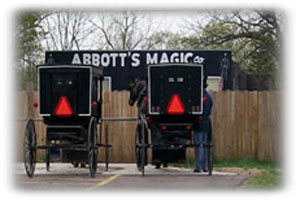 Stop by the Abbott Magic Shop off Colon’s main street any time of year for a $5 coloring book that colors itself, or a magic wand for a Harry Potter wannabe – Abbott sells over 25 different models ranging from $8 to $150 as well as illusions that costing thousands of dollars. On Saturday afternoons during the summer the Abbott Magic Shop presents live shows in its 50-seat theatre.
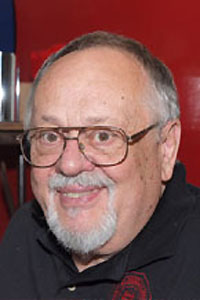 Hank Moorehouse, an award-winning magician, travels the world evaluating magic acts, inviting the best magicians to perform in Colon, Michigan. This year’s line up includes, among others, Yumi, Japan’s favorite female magician and Kerry Pollack who Teller of Penn & Teller calls “One of the most powerful and charming performers I know”. Hank, a perennial favorite of magicians and magic fanatics, will perform his hilarious version of Houdini’s famous straitjacket escape.
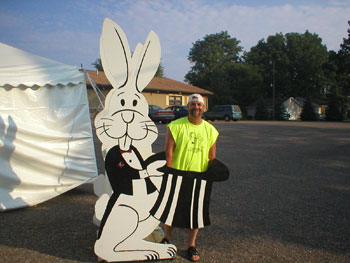 The entire town celebrates its heritage during the festival. Churches and civic groups host fundraising dinners and Tammy Johnson serves up dishes of Blue Moon ice cream and bowls of Buckshot Chili at her retro-café. The Chamber of Commerce provides an evening fireworks show. The library sells gently used books collected during the year at the annual arts and crafts fair.


