Ireland and Scotland
by Troy Herrick
After six years, I arrived in Dublin under gray overcast skies. The quest was about to be completed; the circle was about to be closed and loose ends tied together. With the Indiana Jones theme playing in my mind, I was all set to gaze upon the most decorated manuscript to survive from the Early Middle Ages in Europe – the Book of Kells.
Old Library, Trinity College Dublin – 2012
 Anticipation slowly rose as I traversed each room, stopping to read every detail about this holy book and its convoluted history. Entering the dimly lit Treasury Room at the end of the hall, I discovered four books displayed inside a glass case. The Book of Kells, divided into two tomes, was accompanied by the Book of Durrow and the Book of Armagh. Clearly the jewel in the crown was the four Gospels assembled into the Book of Kells.
Visitors see four vellum pages of this ancient manuscript – one volume open at a major decorated page and the other open to show two text pages with smaller decorations. As I studied the detail of each image with naked eye, I wished that I had a magnifying glass to better appreciate the complexity of design. I envisioned cross-eyed monks drawing each image using only a quill.
As many as ten different colours have been utilized in these illustrations. Many of these pigments had been imported from the farthest corners of the world almost 1200 years ago. The lapis lazuli in particular came from the area that is now present-day Afghanistan. One can only imagine the exorbitant cost of these paints given that this region of Europe was at the end of the trade routes. Furthermore the island of Iona in Scotland, where work on the Book of Kells began, was quite isolated at that time. Suddenly I had a flashback to the island of Iona in Scotland.


Iona, Scotland – 2006
 A chilly wind and a gray overcast sky greeted Diane and me as we set foot on Iona, the birthplace of Christianity in Scotland. St Columba (Colmcille) and twelve companions founded the first monastery here in 563 CE. Almost nothing remains of that original settlement because it had been replaced by St. Mary’s Cathedral, a Benedictine abbey church dating to 1200 CE. You might be surprised to find that this is a working abbey today, operated by an ecumenical community known as the Iona Commonwealth.
Set outside the abbey church to the left of the front door, you find a little greyish brown stone building known as St. Columba’s Shrine. Reconstructed in 1962, the lower portion of this structure may date to the 8th century. Tradition holds that St. Columba’s relics were once housed in this structure (he died in 597 CE and his relics were divided between Scotland and Ireland).
 A short distance in front of St. Columba’s Shrine, you find St. John’s Cross. This is a copy of an 8th century high cross displayed in the nearby Monks’ Infirmary now serving as a museum. The original cross was painstakingly reconstructed from fragments found on site. Another item of note in the museum is St. Columba’s Pillow, a stone with a ringed cross carved into it. This treasure is stored inside a small metal cage. There is no proof that the saint’s head ever rested on this pillow however.
Also associated with 8th century Iona is the Book of Kells. Columban monks began transcribing the Gospels around the year 800 CE but never completed them on site. The monks were displaced from Iona in 802 CE when Vikings torched the monastery. Returning to Ireland accompanied by their precious work-in-progress, the monks settled in Kells in 804 CE to re-establish another Columban monastery founded by the saint in 550 CE. Almost twelve centuries later, Diane and I followed them to the Emerald Isle and Kells.
Kells, County Meath, Ireland – 2012
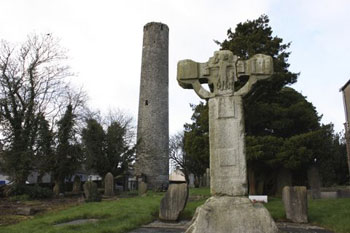
 It was déjà vu all over again; a chilly wind and a gray overcast sky greeted Diane and me at St. Columba’s Church in Kells. This church, set on the site of the original Monastery of Kells, dates to 1778. The churchyard also contains a number of high crosses and a 26-meter round tower all dating back to the early monastic period and the arrival of the Book of Kells.
Round towers were a symbol of a monastery’s power in early Ireland, often serving as bell towers and repositories for sacred items. At the same time, the “conspicuous” towers identified monasteries as attractive targets for the pagan Vikings. The Norsemen raided the monastery at Kells several times during the 10th century.
During times of attack, the monks retreated inside the round tower through an entrance 3-4 meters off the ground and then pulled up the ladder. Paradoxically these towers do not appear to be very defensible because all the Vikings had to do was build a large fire below the doorway and smoke the occupants out.
History does not record that the Book of Kells was ever part of any Viking booty but it was stolen by the locals in 1009 from a small church that once existed in the churchyard. The book was eventually recovered but the cover was damaged beyond repair and had to be replaced.
 Learning their lesson, the monks constructed St. Colmcille’s House across the street from the present day churchyard as a more secure location for their precious manuscript and the relics of St. Columba. This dimly lit, empty stone building served as a monk’s dwelling and a scriptorium. The monk’s sleeping quarters in the loft above is still accessible by ladder.
The holy book remained in Kells for over 800 years until 1653 when it was transferred to Trinity College in Dublin. Since the mid 19th century, the Book of Kells has been on public display in the Old Library and now Diane and I had the opportunity to see this historical treasure in Dublin and complete the quest.
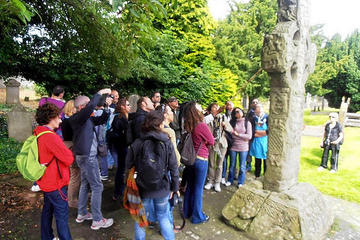
Boyne Valley Hill of Tara and Kells Private Tour from Dublin
If You Go:
The Book of Kells Exhibition is located in the Old Library at Trinity College in Dublin. Admission was 9 Euros. Check out the Trinity College website for more details. Visitors are not permitted to photograph the Book of Kells.
Purchase the Heritage Island Tour Guide at the nearest Tourist Information Office for a discounted admission to the Book of Kells exhibit. www.heritageisland.com
Admission to Iona Abbey is £4.70
St. Columba’s Church of Ireland is located on R 163 in the center of Kells, just west of the intersection of N3 and N52. Admission to the churchyard is free.
St. Colmcille’s House – for admission, follow the directions provided on the gate. Admission is free but a tip is customary. For more information about Ireland, visit www.plan-a-dream-trip.com/discover-ireland.html. and Scotland, visit www.plan-a-dream-trip.com/scotland-tours.html Plan your vacation at: www.plan-a-dream-trip.com
Photographs:
All photographs are by Diane Gagnon. A freelance photographer, she has traveled extensively in North America, the Caribbean, Europe and parts of South America.
Contributor’s Bio:
Troy Herrick, a freelance travel writer, has traveled extensively in North America, the Caribbean, Europe and parts of South America. His articles have appeared in Live Life Travel, International Living, Offbeat Travel and Travels Thru History Magazines. He also penned the travel planning e-book entitled ”Turn Your Dream Vacation into Reality: A Game Plan for Seeing the World the Way You Want to See It” – www.thebudgettravelstore.com/page/76972202 based on his own travel experiences over the years. Herrick’s articles are in Live Life Travel, Offbeat Travel and Travel Thru History magazines.

 London it isn’t – nor Edinburgh. There’s nothing twee, contrived, touristy or pretty-pretty about Glasgow. Glasgow is down-to-earth, has real character. It’s smart, gritty, witty, vibrant and alive. It’s the genuine article.
 The Necropolis lies on a hill overlooking the city. All of Glasgow stretched out before us: the Tennent’s brewery close by, isolated tenement blocks, smaller brick-built houses, concrete offices and wind turbines on the moors, far on the horizon. Alan pointed out the place where his tenement home had once stood, long gone now. It had survived an incendiary bomb during the war (His mother, an ARP warden, had hosed down the fire in the attic herself) only for the building to be later demolished.
 The gravestones are filled with story and history. I could have spent hours there uncovering lives like John Ronald Ker’s: accidentally drowned while shooting wildfowl from a small boat off Contyre of Ronaghan at the early age of 21 – of a generous and amiable disposition and endearing qualities which made him so agreeable a companion, so good and true a friend. (July 1868)

 A stained glass tells the story of St Mungo and the miracles associated with him (symbols that form the Glasgow coat of arms):
 “I know,” said Alan. “It’s a mistake. Charlie took great delight in showing people his name on the memorial, claiming he was one of the living dead. He thought it a great joke.” “But how did he end up on the list?”
 We visited the Clydeside, currently being regenerated with its smart new Riverside Museum, a theatre – the Armadillo, and the science museum tower. Over in the West End we discovered a vibrant hub of fine eateries, trendy boutiques and night clubs set among the cleaned-up sandstone Victorian buildings; handsome historic university buildings and museums set in leafy parks and hilly bluffs.
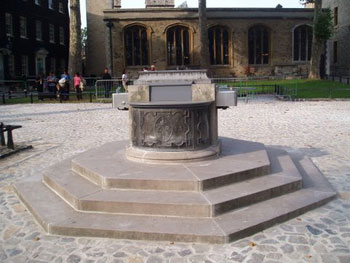
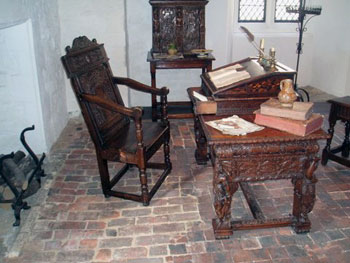 This massive twenty-one-tower complex built by William the Conqueror shortly after he came into power in 1066 served a variety of functions, including a fortress against foreign attack, a repository for the crown jewels, and a refuge for the royal family in times of civil disorder. However, the Tower of London remains notorious as the site for some of England’s bloodiest bits, a living testimony to the hell that happened when certain royals ruled the roost.

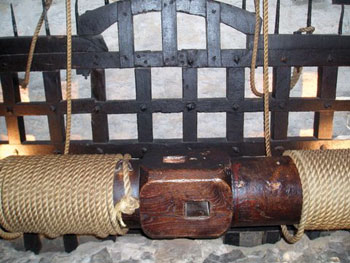 After I passed by Traitor’s Gate, the famous entry to the Tower where prisoners would enter from the River Thames to the Tower, I took a counterclockwise tour of the various towers. Passing by a sequence of cells and chapels, I almost felt as though I was traversing through a medieval monastery. That is until I stumbled upon a display of torture instruments clearly designed to stretch someone into submission.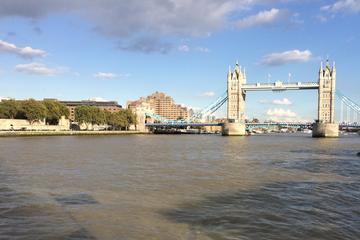
 , with a seventh book in development. In addition to penning a book on pilgrimages for Zondervan (a subsidiary of Harper Collins), she has written articles about destination travel and travel products for several publications, including 52 Perfect Days, Yahoo, Sportsology.net and Killing the Buddha. Visit


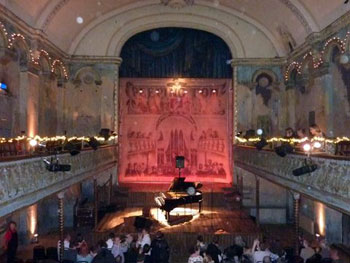
 Wilton’s, the world’s oldest surviving music hall, was opened in 1858. If its disintegrating walls could talk, they would have a few tales to tell. It began its life as a sailor’s club (and possibly a brothel); then became a music hall. The burlesque lyricist and performer, George Leybourne, aka Champagne Charlie stepped onto the stage here, as did the dancers of the risqué can-can (only to be promptly banned). Sadly, Wilton’s only initially survived a short 20 years as a music hall. In 1877, the hall had to be rebuilt after a disastrous fire. Soon after, this place of twilight glamour was closed down and it took on a series of very different functions from Methodist mission hall, soup kitchen, refugee centre, safe house (from the fascists) to a sorting house for rags.
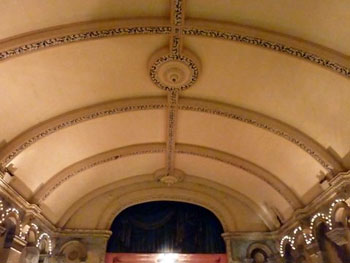 It’s an almost impossible task, and the building (in its unsafe state) has come very close to closure. When I was there, I could see daylight appearing through the rafters in places. There were unsafe electrics, leaking plumbing, and floorboards in the bar so rotten that the number of people permitted at any one time restricted. The whole of the second floor was boarded up, unfit for public use. Even the stone walls were eroding in places. Yet, it’s this forgotten, neglected state that’s given Wilton’s its indescribable atmosphere. It has the feel of Miss Havisham’s mansion in Great Expectations – as if someone had stopped the clock on time and left the building in a state of decaying beauty.
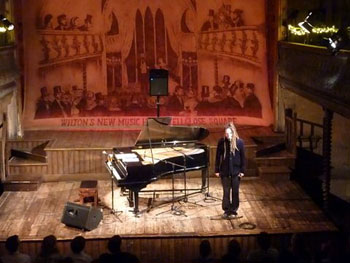
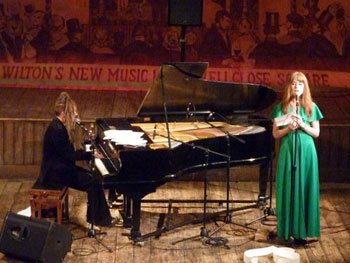 I head upstairs and into the Great Hall. I’ve walked into a Victorian fable. From the gallery a hundred fairy-lights cascade outwards from the centre of the ceiling. Yet more fairy-lights line the gallery’s railings. Pastel frescos fill the peeling walls between great arches. The gilt banister is decorated with delicate, intricate detail. A red silk curtain drapes the stage. Musician and artiste Duke Special enters the stage, eyes black with kohl, long dreadlocks, draping shirt cuffs and velvet jacket. To his left sits a string quartet: Behind him a projector screen. For two hours, he sings and plays the piano – songs he has written to accompany the black and white photos of the renowned early twentieth century American photographers, Stieglitz, Steichen and Strand. The music (commissioned by the Met Museum in New York) is heart-wrenchingly moving, the images haunting. The beauty and timelessness of the music and the photographic images fit perfectly in this magical, ethereal building. A great deal of thought is put into the theatre pieces and concerts that are produced at Wilton’s. The art, like the building, is sumptuous. So the next time you are in London, take the tube out to Wapping and to Wilton’s Music Hall and step back in time. Book a tour, or better still, one of their exceptional shows. You won’t regret it.