by Wynne Crombie
The seconds ticked by until the massive tower clock of St. Mary’s Basilica in Krakow’s Old Town Square (the Rynek Glowny) struck twelve. Our cameras were ready. A bugler appeared in the tower window. For ten seconds he blew his best before abruptly stopping. Legend has it that his 14th century predecessor was warning Krakow of an approaching enemy, when an arrow slammed into his neck. The bugler waves and disappears before repeating his performance in another direction. Twelve local firemen on twenty-four hour shifts perform this civic duty.
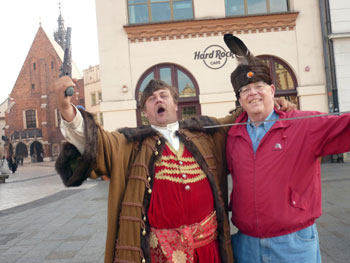
Krakow’s Rynek Glowny is the pulse of the city. A self-appointed citizen who calls himself, Pawl Jan (Paul John), appears on the scene in his Magyar/Tartar uniform. His heavy fur hat and gold-buttoned red velvet vest (plus matching culottes) are topped off by a long fur coat. A three-foot long curved sword along with a pistol accessorizes his outfit. Naturally a flowing moustache is in place. Of course, we had a photo op with him. (Pawl Jan has a counterpart in Warsaw’s Old Town Square named Wario.)
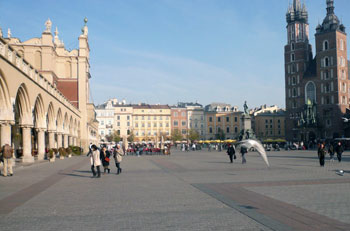
 The main function of the Rynek Glowny through the centuries has always been commerce. During Krakow’s early history, citizens were not allowed to sell goods on the street, only in the Rynek Glowny. It is still surrounded by old brick buildings (kamienica) and palaces, almost all of them several centuries old. The first plans were drawn up in 1257 and have been retained to this day.
In 1038, Krakow became the capital city of Poland. The city was destroyed two hundred years later by the Mongol invasion. The Rynek Glowny was rebuilt in 1257; in the 13th-century it was Europe’s largest market square.
Unlike Warsaw, Krakow was not destroyed during World War II, mainly because the Nazis had set up headquarters there. Therefore, the Rynek Glowny looks pretty much the same as it did in the 13th century.


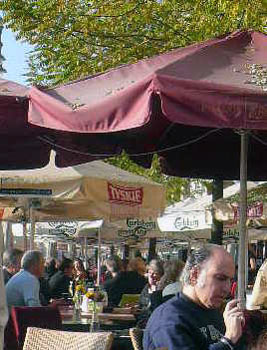
 Even though it was November, the venders on the Square, were holding court amidst the yellow umbrellas and tables. Outdoor eating was in full swing. A young man popped up in front of us and handed us a list of his restaurant specials for the day. There is no problem if it is a chilly day, the heat lamps are simply turned on. Should the temperature really drop, blankets are brought out.
Krakow had two sets of city walls in the 14th century plus a moat ringing the city. There were so much pillaging and plundering that all the fortifications were rendered useless. Besides the moat had a most terrible smell. At the beginning of the 19th century, Krakow’s Senate decided, Enough! They pulled the Walls down, got rid of the moat and planted a park around Krakow. Today it is a great place for strolling and picnics.
 If visitors tire of walking around the Rynek Gwony they can simply seat themselves at one of the numerous outdoor cafes and view the relics of history around them. One side is taken up by the many arched Cloth Hall (Sukiennice) It is considered the world’s oldest shopping mall, The present Renaissance structure dates from 1555 and features in its interior many food stalls, small shops, terrace cafes and flower stands The two-storied structure is a bonanza for souvenirs, handmade Polish crafts and stalls of flowers. The Gallery of 19th Century Polish Paintings is an interesting find on the upper floor. If you get tired, another café is just around the corner. Items tend to be more expensive here than in the Rynek Glowny itself.
 After ordering bowls of cabbage soup (with sausage) my husband Kent and I settled ourselves under one of the heat lamps to take it all in.. Sipping and people watching is the norm. Nuns in habits rounded the corner, while across the Square stood a line of buggies and horses patiently waiting for fares. Their drivers were perusing the daily newspaper. School children, wearing neon vests, filed by led by their teacher. The pretzel and cotton candy sellers were doing a brisk business with pigeons busy picking up crumbs on the cobblestones, Outdoor art exhibits added to the flavor along with impromptu musicians.
After lunch, we wound our way over the two blocks to 16 Kanonicza, the residence of Pope John Paul. Above the door was a giant photograph of the Pontiff. Here, he would often lean out the window to talk to passers by. Inside there’s a massive courtyard with a statue of the Pope in the center. A photograph gallery of his life circumvents the courtyard.
It is worth the time to take the twenty–minute walk (or take the #7 or #13 tram) from the Rynek Glowny to Kazimierz to further extend your knowledge of the town’s fascinating history. Here are the remnants of the 14th-century fortifications and the medieval Kazimierz with its ancient synagogues. Until the 1880 Kazimierz was an island, forming the Jewish quarter of Kracow. In the Second World War the entire Jewish community of 64,000 individuals was deported to the nearby concentration camps at Auschwitz; only 6,000 returning at the end of the war.
 Today Kazimierz is mainly a blue-collar neighborhood. With communism’s fall, Kazimierz has changed beyond all recognition. Buildings such as art galleries and cafes have been renovated and museums opened. There has also been a reawakening in the importance of the Jewish settlement in Krakow. The film, Schindler’s List, was largely shot in Kazimierz in spite of the fact that very little of the action historically took place there.
After our sojourn to Kazimierz, we ventured back to the Rynek Glowny and had dinner at a delightful restaurant, the Wesele. (the wedding) It reminds you of an old country inn. The prices were moderate for a restaurant on the Square. I had zurek (sour rye soup) followed by goulash in a bread bowl. It was superb and the perfect way to end a perfect day.
In 1978 UNESCO entered the whole of Rynek Glowny in the list of world cultural heritage.
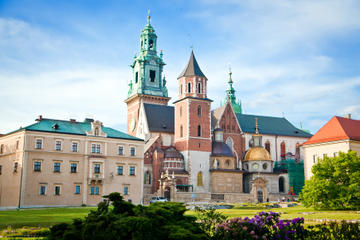
Private Tour: Krakow City Highlights Tour
If You Go:
EATING
♦ The Wierzynek. This restaurant is right on the Rynek Glowny and goes back to 1364. The décor fits the time period. The Wierzynek is formal and a bit more expensive than other eateries on the Rynek Glowny. Well worth it.
♦ The Wesele Again, right on the Rynek Glowny with delightful country décor. Moderate prices. Recommend goulash in a bread bowl.
LODGING
♦ The Radisson Blu Krakow A few minutes walk to the Rynek Glowny. A large urban hotel with many amenities (sauna, fitness center etc)
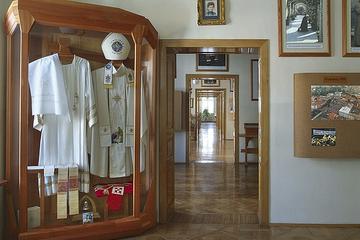
In the Footsteps of John Paul II from Krakow
About the author:
Wynne and her husband Kent have been traveling for many years. They met in Berlin in 1967; Kent was with the US Air Force and Wynne was teaching at the base school. Wynne has a master’s degree in adult education and teaches ESL at a Chicago community college.
All photos are by Wynne Crombie:
The Rynek Glowny
Carriage rides
Kent Crombie with new BF, Pawl Jan
Pretzel vendor
Pope John Paul residence
Outdoor cafe
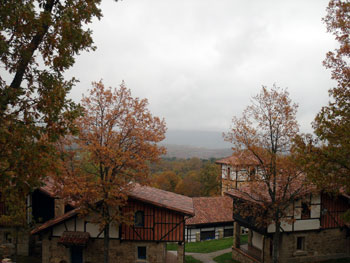
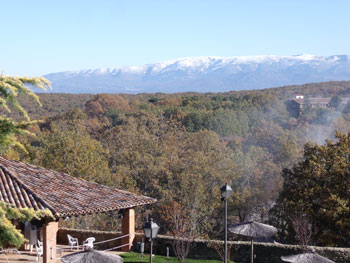
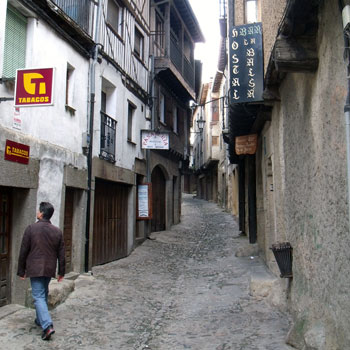 It had been five long years since I had participated in the program at the hotel-resort Abadía de los Templarios Hotel, a 15- to 20-minute walk from the town center of La Alberca, which is located in the western Spanish province of Salamanca amid the Sierra de Francia mountain range.
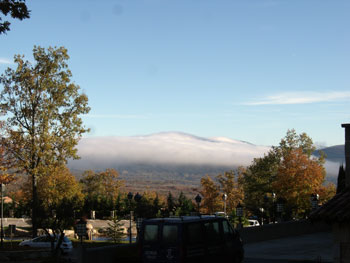
 The program officially started on Friday morning in Madrid, where some 36 participants (including myself) headed to La Alberca via a three hour-plus bus ride (or personal automobile for some Spaniards) through rolling pastures and farmlands after leaving the urban sprawl of Spain’s capital city. On the bus, Anglos and Spaniards were paired up, so the latter could begin their intensive language exposure.
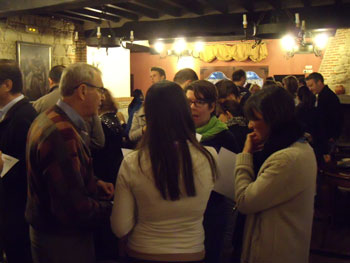 Who are these Spaniards who are there at the behest of their company or their own volition? Typically, a group is made up of professionals from various fields such as IT, production, and other fields. They are generally in their 20s or 30s, but some are older. One such Spaniard, Angel, an IT professional, was actually on his fifth program. Before taking part in Pueblo Ingles, he commented, “I didn’t understand anything,” but the intensive exposure time had increased his confidence and understanding of the language’s nuances. Another Spaniard, Rocio, who works for an energy renewal company, had studied English since high school, but remarked on her primary reason for coming, “My biggest problem is my listening. My listening is very bad.”
 Rick, a 74-year old former teacher and coach who’s taught English in China, heard about the program via word of mouth when he was in Germany (the method which has brought many Anglos to the venues). He emanated a common sentiment among the Anglos, “I want to learn more about the Spanish culture, the food. I want to help them speak English.”
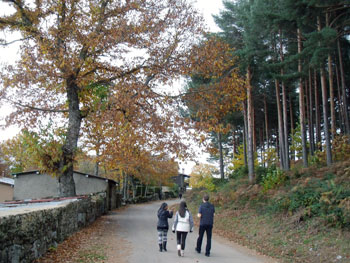 During one of our two-hour siestas and one of the one-to-one sessions, we took walks to the center of town, full of half-timbered houses and shops where one could obtain many things, from a can of Coca-Cola to a scarf, hat, and gloves, the latter three which my new Spanish friend found himself in need of. Our brisk walking on winding roads amid the captivating autumn foliage kept us warmer as chilled afternoons gave way to darkness. He gave me more insights on the activity since his ability to run 26 miles-plus puts my ability to run only around six miles daily to shame. As we walked back on the road leading back to the hotel through woodlands, pasture, and small farms, we could hear the soundtrack of baaing sheep and oinking pigs.

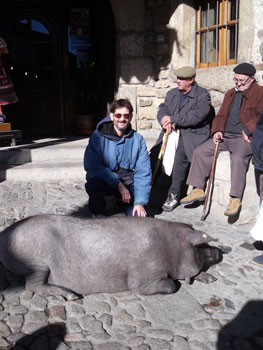 Ignacio and I were lucky enough to catch a common spectacle of a pig that’s allowed to run freely around town to garner handouts from the 1,000-plus locals (plus tourists) as it fattens up so it can be raffled off. We saw some girls being chased by the pig after they stopped giving it handouts. Salamanca is an area where ham products, especially from the limbs of the pig, are considered delicacies.
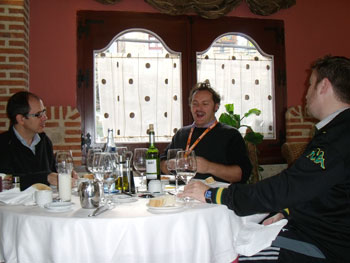 Some of the most connective moments between the participants take place during the meal times, where the table wine (lunch/dinner), tasty cuisine and conversation generously flow. Breakfasts can be a bit more laid back, given the Spanish penchant for kicking up one’s heels well into the wee hours of the morning with willing Anglos. After all, to a Spaniard, 8 p.m. is still considered “afternoon.”
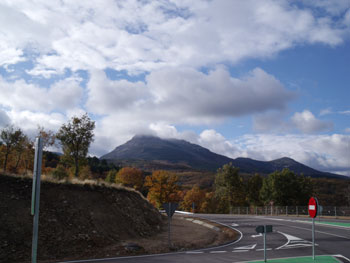 As a seasoned veteran of this program, I couldn’t get over just how perfectly put together this group was, which is credited to the Anglos Dept. in Madrid, who do their best to match the participants up based on the application they must fill out online to be considered for a holiday that sees their room and board covered over the course of the program for their volunteer service.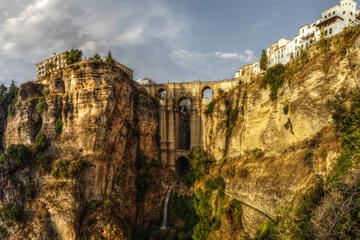
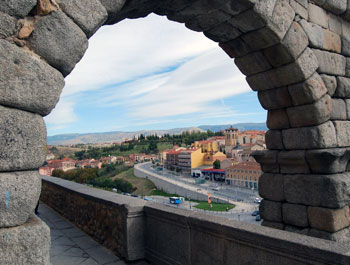
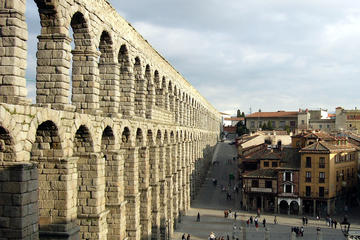
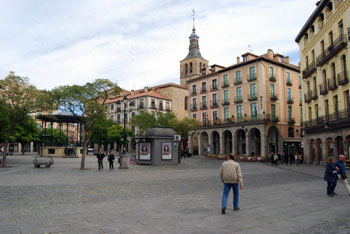 But, how to get water supplies up there? The water from the Rio Clamores was insufficient for their needs, anyway. So, in the middle of the 1st Century AD, during the reign of the Emperor Domitian, an ambitious project was begun. A canal was dug, to bring water from the Rio Frio, 18 kilometres (12 miles) away. The valley of the Rio Clamores would be spanned by a massive aqueduct 800 metres (about 2500 feet) long and, at its highest point, reaching nearly 30 metres (100 feet) high.

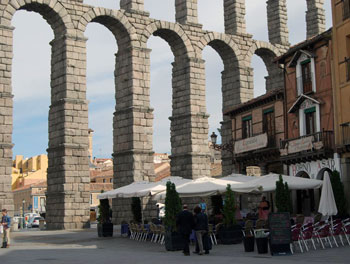 The aqueduct was built from 25,000 stone blocks and, notwithstanding its size, no mortar at all was used in its construction. It took over fifty years to built, was completed in the early 2nd Century, by which time the Emperor Trajan had ‘taken the purple’. However, a much later folk-tale told that it had been built overnight, by the Devil himself … hence its alternative name of Puente de Diablo, or ‘Devil’s Bridge’. It’s said that the Evil One was after the soul of a local woman, to achieve which, he had to complete the bridge in a single night … in which task, he failed, because he was unable to find the last block before the sun rose.
 by Mara Baudais
 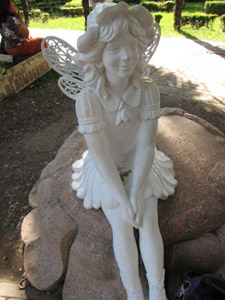 Suddenly it appeared … the fairy wishing well which held the Russian currency we had been looking for! My companion had greatly wanted Russian coins for his grandson’s collection back in Canada. We had been thwarted at every turn. The banks and exchange kiosks were all closed on Sunday. But just as suddenly as the coins had now appeared, a policeman now also appeared, watching as my companion quickly reached forward to exchange American currency for Russian currency from the wishing well. I held my breath, imagining my companion being dragged off to the police station. However, in his hand were the coins he had wanted for his grandson’s collection and, if anything, had given much more than he took.
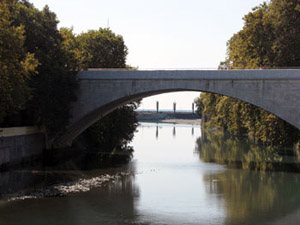 Besides this experience with the fairy wishing well, a few other memorable times are remembered. The pool and fountain housed a single gorgeous pink water lily. A simple foot bridge with a gentle brook below it was graciously set against the afternoon sun and the waters of the Black Sea. We had a great time admiring a portrait artist’s work in the park and befriending a father and his child with our smiles and nods of acknowledgement.
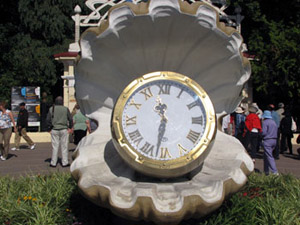 It is favourable climate — April to November — with summer — July and August — being around l8 degrees in temperature. The warmest sea temperature for swimming is in July and August at 26 degrees. Many subtropical plants flourish—magnolia, eucalyptuses, palm trees, oleanders, rhododendrons, azaleas and yuccas. Citrus such as tangerine and lemon also grow here.
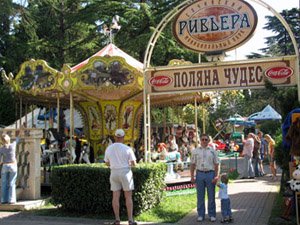
 Vendor side stalls, artist’s displays, games, amusement park rides, art galleries, sports facilities, a cinema, numerous cafes, statues, a pool with a fountain and the Green Theatre, a venue for outdoor music performances fill the park. A pedestrian bridge connects the harbour to the park.
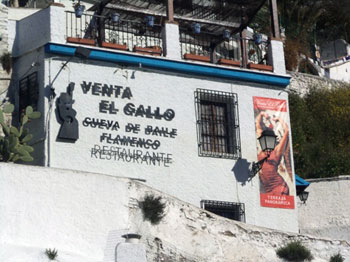
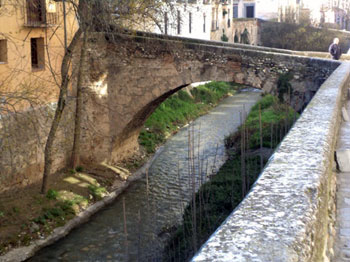 “Tourist traps,” `he sniffed,” and anyway the performances are only at night”. Little did he know what I found.

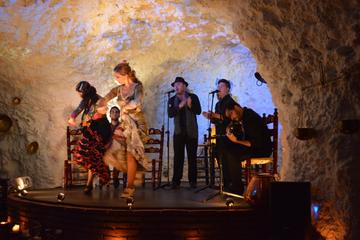
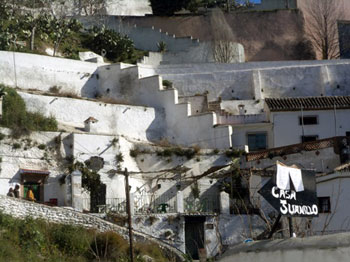 Many of these caves, warm in winter, cool in the summer, are still inhabited today, well appointed and furnished. Climbing white washed stairs from one level to the next, I came past many tablaos, the venues where nightly performances of Flamenco take place and which earned Sacromonte the byword of tourist trap. Up to a point this is justified, but if you know what to do and where to look you get to experience the real thing.
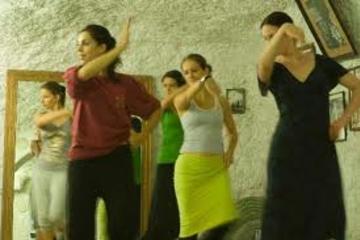
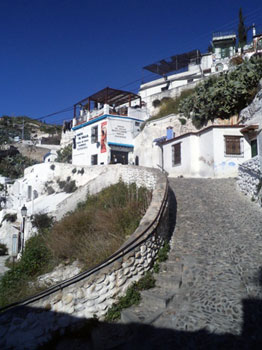 They waved me inside and I was the recipient of a performance just for me and definitely a spell bound spectator to the real thing.