by Matthew Adams
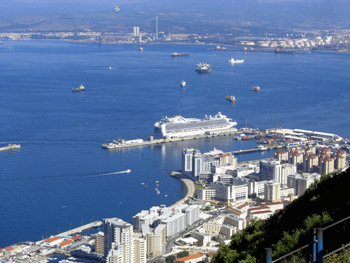
I arrived in Gibraltar aboard the Crown Princess Grand-class cruise ship. It was returning from Corsica back to Britain. Gibraltar, a U.K. overseas territory on the south coast of Spain, was the final stop on the way back. On a sunny morning in May, I disembarked from the ship along the Western Arm in northern Gibraltar.
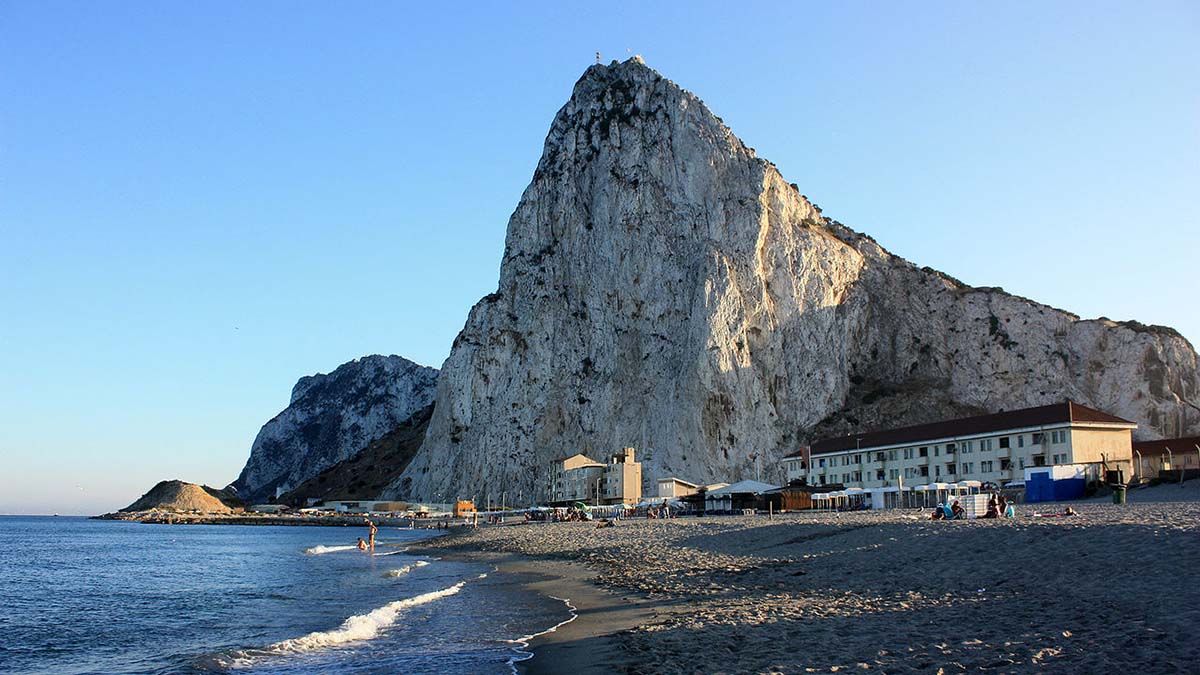
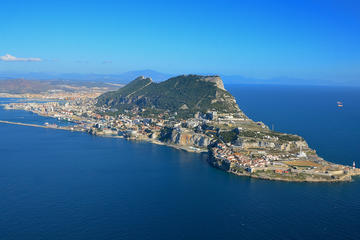
 Then the Rock of Gibraltar, in all its glory, came into view. The Rock rises some 426 meters above the sea. As such, it’s almost a small mountain! Even though it’s a limestone rock, the Rock of Gibraltar is very green. The Rock has lots of vegetation and an abundance of wildlife. On its higher levels there is the Upper Rock Nature Reserve, which includes various migrating birds and the famed Gibraltar Barbary macaques.
After disembarking from the ship, I strolled through a cruise terminal building en route to the North Mole. Within the terminal building there was a sculpture of the magnificent rock. Thereafter, I arrived at the North Mole where a line of taxi vans had parked. As the taxis were providing short tours I boarded one as an alternative to climbing the Rock via the cable cars which link to the Signal Hill near its summit. They rise some 387 meters to the Water Catchment Area which provides various vantage points from the Rock.
Soon after getting in the taxi, it began the ascent up the Rock after passing through Gibraltar. The taxi van clambered up the somewhat narrow Rock of Gibraltar lanes. It stopped at the Pillar of Hercules. That’s a monument that flanks the Strait of Gibraltar which is the gateway to the Mediterranean.
St. Michael’s Cave
After a brief stop the taxi continued the climb up the Rock of Gibraltar. The next stop was St Michael’s Cave. These are a network of limestone caves located in the Upper Rock Nature Reserve.
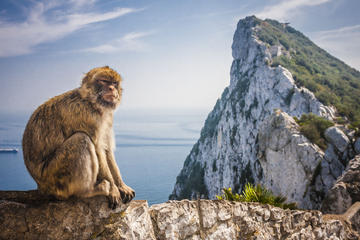
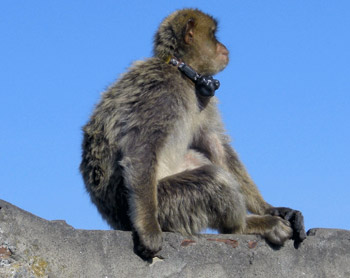 When the taxi stopped, I was some 300 meters above sea level. Upon vacating the taxi, a few of the Rock’s Barbary macaques surrounded the entrance to the cave. Gibraltar is the only destination in Europe where you will find any Barbary macaques.
I went inside St Michael’s Cave. It’s a very finely preserved, and colourfully lit, cave with plenty of stalactites hanging from the ceiling. After entering I strolled down to the cave’s auditorium stage. With a number of plastic chairs at the higher level of the chamber this cave has been a venue for various concerts.
After leaving the cave, I returned to the taxi. We continued up the Rock and stopped somewhere close to the summit. I was probably some 350 – 400 meters up. When close to the summit of the Rock the coast of Africa is visible on a clear day.
The Great Siege Tunnels
 The tour continued towards the northern side of the Rock. It was there that we reached the Great Siege Tunnels which I briefly walked through. Their entrances are located at a point of the rock that overlooks Gibraltar’s airstrip close to the border.
Given Gibraltar’s position as the gateway to the Mediterranean it was a notable strategic outpost of the British Empire, and today a Royal Navy base is still located there. As such, the British dug a network of military tunnels through the Rock during the Great Siege of Gibraltar to ensure that it remained a part of their empire. The tunnels provided cover for Gibraltar’s defenders from both naval and air bombardments. The Spanish and French never did take it, and today you can go inside the tunnels which include small windows and artillery pieces.
Grand Casemates Square
The tunnels were the last stopping point of the tour before the taxi left the Rock. We bypassed the Moorish Castle located along the north-west of the Rock. The taxi returned to Grand Casemates Square, the largest of two main squares within the city centre of Gibraltar. This square is at the northern end of Gibraltar’s Main Street. At the northern end of the square there is a bomb-proof barracks.
Here you may as well be back in England. Gibraltar is, after all, U.K. territory. Consequently, there is no requirement for Euros; and all of Gibraltar is in English! Pubs align the square which is a gateway to Gibraltar’s town centre. Further down the Main Street you can find NatWest and Barclay branches, and at the end you can board the cable cars located beside La Alameda Gardens. Those are six hectare botanical gardens.
When at the square I stopped off at the Gibraltar Glass Museum. It is here that a variety of glass is crafted by glass blowing. In the museum glass blowers craft the glass for visitors. There are also plenty of glass Rock of Gibraltars included at the museum.

 Gibraltar Beaches

 Gibraltar Beaches
Although I never found them, Gibraltar also has a few beaches along its coastline. Not far off the North Front Airfield there is the Eastern Beach. Further south there are the sandy Governor’s Beach and Windhill Beach. In total there are six beaches along its eastern coastline, of which the Eastern Beach is the longest.
After a stroll down the Main Street, I returned to the ferry terminal to board the ship. The climb up the Rock of Gibraltar had provided some dazzling views of the Bay of Gibraltar and beyond. If visiting Spain this is one destination not to miss.
Full-day Gibraltar Tour from Seville with Rock of Gibraltar, St. Michael´s Cave
If You Go:
♦ Gibraltar Beaches
♦ Visit Gibraltar
♦ Info Centre
♦ La Alameda Gardens
♦ St Michael’s Cave
Gibraltar and Vejer Private Day Trip from Málaga
Photo credits:
Top Gibraltar Eastern Beach by Gibmetal77 / CC BY-SA
All other photos by Matthew Adams:
The summit of the Rock of Gibraltar
A Barbary macaque
The Crown Prince cruise ship
About the author:
Matthew Adams is a freelancer that has produced a variety of articles for various publications and websites such as Swing Golf Magazine,TripAdvisor, Captured Snapshot, Coed Magazine the Washington Post and Vagabundo Travel. Matthew also has his own golf blog at: amateurgolfer.blogspot.co.uk/.
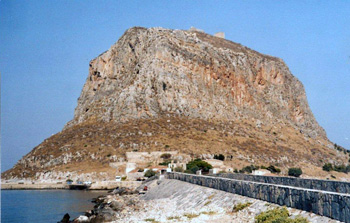
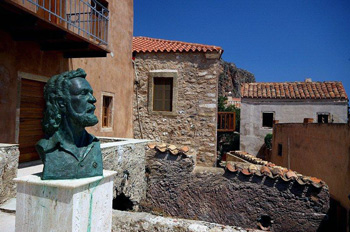
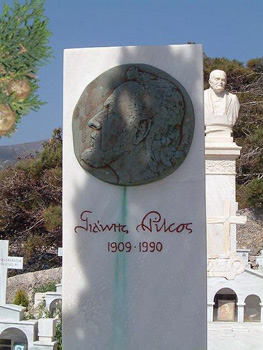 Yannis Ritsos was born in Monamvasia in 1909. An aristocrat by birth, renowned in Greece as an actor and director, he was one of Greece most beloved poets and is considered one of the five great Greek poets of the twentieth century. He won the Lenin Peace Prize in 1956 and was named a Golden Wreath Laureate in 1985.

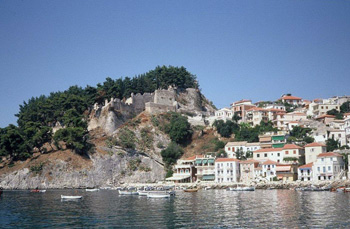
 Lying on an important trade route, Monemvasia was occupied by the Venetians after pirate raids caused the inhabitants to ask for their help. There were 90 famous pirates in the Mediterranean at that time. After the Venetians took over, the town became inhabited with knights, merchants and officials. New building and restoration work began. But once Venetian power began to wane it fell to the Turks. When Turkey declared war on Venice, the city was recaptured but it wasn’t until the Greek War of Independence on July 21, 1821 that the town was liberated.


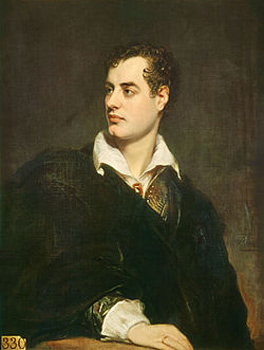 At the corner of Lysikrattis and Vironos Streets in Athens Plaka, stands a choreographic monument awarded to a choir at a Festival for Dionysos in ancient Athens’ Dionysos Theatre. Once, next to this monument, the last of its kind in Athens, was a French Capuchin convent. The poet, George, Lord Byron, stayed here when he was in Athens. At that time, the panels between the columns of the monument had been removed, so Byron used it as his study and wrote part of Childe Harold here in 1810-11. This was once the theatre district of ancient Athens, so it seemed appropriate that the flamboyant poet should choose to spend his time there. In Greek, “Vironos” means “Byron” and this is Byron’s street. I used to live there and spent much of my leisure time at the little milk shop, now a posh coffee shop, at that corner. The convent was destroyed in a fire, but there’s an inscribed monument on the spot where it once stood honouring Byron. His presence always seemed near.
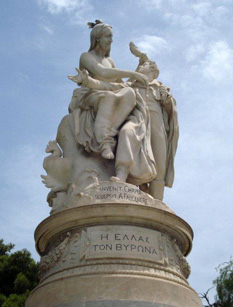 The street adjacent, is Shelley Street, named for his poet colleague Percy Bysshe Shelly who tragically drowned in Italy. Both poets are honoured in Greece, especially Byron, who became a national hero when he joined the Greek resistance movement during the War of Independence.
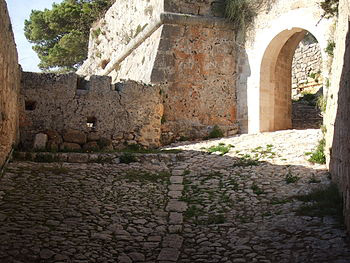 He lived for awhile on the island of Kefalonia (Cephalonia) in the tiny village of Metaxata, near Argostoli, where he enjoyed exploring the ruins of a Venetian castle at Ayios Yeoryios, once the Venetian capital of the island.
 During his travels around Greece, Byron not only grew to love the country but was also impressed with the moral tolerance of the people. He became involved in the rebellion against the Turks, joining forces with Alexandros Mavrokordatos, the leader of the forces in western Greece to take part in the War of Independence. In spite of Byron’s lack of military training, together they planned to attack the Turkish-held fortress of Lepanto at the mouth of the Gulf of Corinth. The Greek struggle against the ruthless Turks was supported by many intellectuals and poets like Lord Byron who volunteered to fight and become leaders of the revolution. They were known as the Philhellenes (friends of the Greeks). Although many became disillusioned by the pettiness and greed of the Greek klefth leaders others, like Bryon, took up the cause, arriving in Messolonghi , a squalid little port on the Gulf of Corinth, the western outpost of the resistance movement against the Ottomans. He was greeted with a 21 gun salute. In spite of despairing “in this realm of mud and discord” he donated 4000 pounds of his own money to prepare the Greek fleet for sea service and employed a fire master to prepare artillery as well as paying the Souliot soldiers who were reputedly the bravest of the Greek resistance fighters.
 There is no better place to begin your exploration of this, too seemingly real, walled city. Here beneath the gaze of a serene statue of Saint Louis, actually King Louis IX of France, the city’s ascribed founder, you can sit under the shade of Plantain trees at one of the many outdoor cafes and ponder over the self-guided walking tour pamphlets available at the bordering tourist information centre.

 In 1270 Louis once again led his crusader forces from Aigues Mortes reputedly taking service at the still standing Notre Dame de Sablon (Our Lady of the Sands), alongside Place Saint Louis, ere departing. It was his last foray as he died within months from typhus on the shores of North Africa. His new city however fared much better.
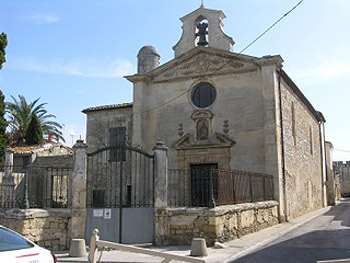
 Visit La Chapelle des Penitents Gris (Grey) [TOP PHOTO] and La Chapelle des Penitents Blanc (White); ancient orders rooted in Christianity’s dim past. Their simplistic exteriors belie the more ornamental interiors.
 Crossing the only bridge spanning the moat surrounding La Tour de Constance brings you to the awe inspiring edifice which harkens back to the very beginnings of the Aigue Mortes fortress town. With the revocation of the Treaty of Nantes (a tolerance act allowing for French Protestants) in 1685 the tower began its long years as a prison. Exploring its bright rooms and walkways it takes some effort to recreate in mind the jailhouse conditions of so many years before. The tower rises above the rampart walls and is topped by an rooftop adorned with a beacon which once served the mariners as a lighthouse. From here you can see the encircled city in its entirety. Here, above the world, its long gone sentries could breath the light Mediterranean air likely much appreciated during odour rich Medieval era.