by Karoline Cullen
“I’ll light this candle,” the guide explains, “so you’ll be able to see this as the artist did.” The dim flame wavers as he crouches below a painting and holds the candle close to the wall. In the flickering light, a huge, powerful beast is revealed. A rough curve of rock gives dimension to its rounded haunch. Its nostrils flare and beady eyes stare, its ochre colour as vibrant as the bison itself must have been.
We are in a narrow cave called Font-de-Gaume, near Les Eyzies in the Dordogne Valley of southwest France. This is the cradle of prehistory, where 10,000 to 20,000 years ago Cro-Magnon man celebrated the world around him with cave paintings. Font-de-Gaume is the first of three different caves we visit for a glimpse into the lives of our relatives from distant times.
 On the climb to the entrance of Font-de-Gaume, we are told Cro-Magnon man was not so different from us. If he was in a suit and got on a bus today, you would not think twice about it, the guide delightedly relays. In the cave, one of the last in France with polychrome paintings still open to the public, the guide constantly reminds us to not touch the walls or brush against the paintings. Many have deteriorated with age and some are marred by graffiti. It’s dark and damp but when the lights shine on a frieze, there are audible gasps of appreciation at the vitality, colours, and exactness of scale of the animals. Some outlines are engraved while others make use of the rocks’ curvatures to give depth. Bison, reindeer, mammoths, and little black-brown horses are mixed with a variety of undeciphered symbols. Some figures are static and others portray motion quite effectively. A favourite scene features a long-antlered reindeer licking the head of another kneeling opposite in a moving display of tenderness. After leaving the darkness of Font-de-Gaume, we meander northwards along the Vézère River to Lascaux II, a cave near Montignac.
 Grotte de Lascaux’s streams of ochre and black bison careening over its walls are the classics of cave paintings. They are the earliest known examples of representational art at a mind-boggling 17,000 years old. Access to the originals is highly restricted as the cave was closed to the public in 1963 to protect the paintings from further deterioration caused by visitors’ body heat and breathing. The French government built Lascaux II nearby, a precise centimetre-by-centimetre replication of two galleries of the original cave. The public can again browse the tableaux detailing the story of a hunt. In some places, entire sections of the walls and ceiling are teeming with stampedes of stags, horses, ibexes, and long horned bulls. As stunning as the display is, it is difficult to forget we are not in the original and the visit feels somewhat stilted. I want another “real” cave to visit.
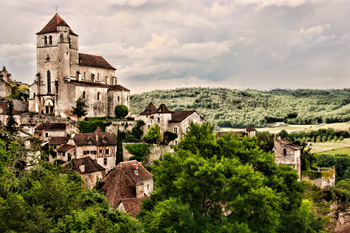
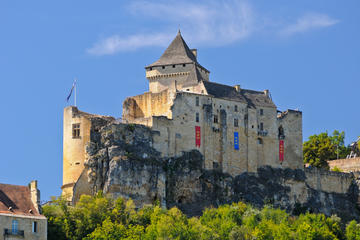
 We head for Grotte du Pech-Merle by the Lot River. Photo 2 On our way south, we pass through towns perched precipitously on hilltops; golden-stoned Turenne and the pilgrimage destination of Rocomadour. Photo 3 & 4 The region is known for truffles and foie gras so food is elevated, as only the French can, to almost impossible culinary standards. Even small country restaurant menus have one or both of those luxurious ingredients prominently featured. Did our prehistoric relatives hunt for truffles to garnish their bison?
The French prehistorian Abbé Breuil describes Pech-Merle as “the Sistine Chapel of the Lot district, one of the most beautiful monuments in Palaeolithic pictorial art.” The cave’s silence is broken only by the sound of water, whose drips created the sculptural stalactites, stalagmites, and other free form backdrops for the paintings. Friezes of horse, bison and mammoth in black charcoal outlines date from 16,000 years ago and there are some red markings about 20,000 years old. A wonderful painting uses a thin outcropping of rock shaped like a horse’s head to portray a spotted horse with a black mane. Human handprints outlined in black are signatures from another time. It is a visual feast in a series of caverns of surreal rock forms decorated with evocative figures.
The cave paintings provide an ephemeral connection to our prehistoric relatives. Thinking of that bison lit by candlelight in Font-de-Gaume almost makes me scan for thundering herds as I emerge from the cave’s darkness into the sunlight of modern day France.
Half day Tour of The Villages of the Dordogne
If You Go:
♦ Reservations at Lascaux and Pech-Merle, particularly in summer, are necessary.
♦ Grotte de Font-de-Gaume, Les Eyzies-de-Tayac, France – eyzies.monuments-nationaux.fr
♦ Lascaux II, Montignac, France – vimeo.com/40849516
♦ Grotte de Pech-Merle, Cabrerets, France – www.pechmerle.com
Full Day Tour Dordogne & Vezere Valley
About the author:
Pursuing superb travel experiences to later share in words and photographs keeps Karoline travelling. She is a freelance writer and award winning photographer and regularly contributes articles and photos to a variety of newspapers, magazines, and websites. www.cullenphotos.ca


All photos by Cullen Photos.
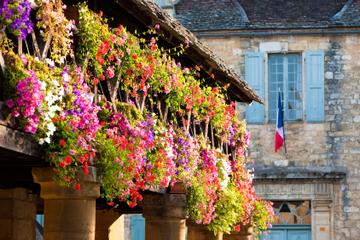
Hill town in the Dordogne. [K. Cullen photo]
At Font-de-Gaume entrance. [G. Cullen photo]
Along the Lot River. [K. Cullen photo]
Evening in Rocamadour. [K. Cullen photo]

 I believe the title of that conference couldn’t have been more appropriate and topical. The island of Cyprus is divided into two parts, despite the international community does not approve this division. The north has been occupied by the Turkish army in the Seventies, and since then there is a government that totally depends on Ankara.
 Later on, the south of the island gained its independence but Turkey never gave up the northern territories despite the international community condemned the occupation. That’s why no international flights are scheduled to Northern Cyprus (complete name: Turkish Republic of Northern Cyprus) and Ercan Airport is not listed in any official document that regulates the international air traffic. All the flights to Ercan originate from Turkey and, according to the international law, they technically invade the air space of a sovereign country (the Republic of Cyprus, member of the European Union) and land there illegally.
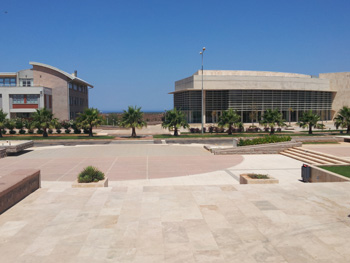 Early in the morning I walk from the guesthouse to the conference center. At eight o’clock it is already warm and the valley which extends beneath the campus towards the south seemed a strip of desert painted in watercolors that gently merged with the Troodos mountains. To the west, the deep blue of the Mediterranean Sea pops up from a remarkable distance. The sunbeams reflected by its surface must have looked exactly the same way 10.000 years earlier when human settlements were already spread throughout the island, making it one of the oldest signs of civilization.
 Kyrenia is probably the Cypriot town that better shows this extraordinary heritage at once. On the initial slope of the mountains located right on its back, an imposing Gothic structure known as Bellapais Abbey offers a 3 miles view over an unexpectedly luxuriant vegetation, white villas and turquoise sea. Bellapais is also famous because it’s linked to the British novelist Lawrence Durrell, who lived in that village for some years while he wrote an autobiographical work titled Bitter Lemons of Cyprus.
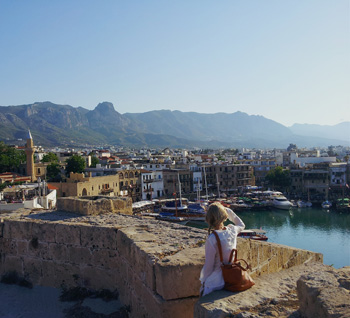
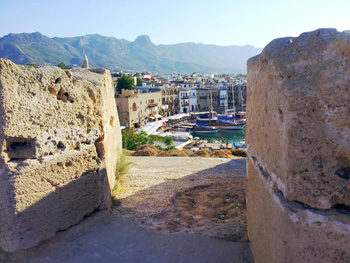
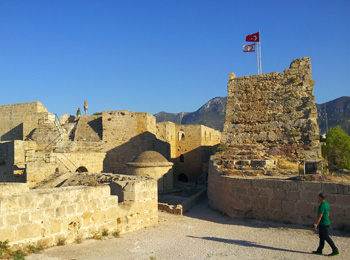
 The inner courtyard of Kyrenia castle is vast and adorned by blossoming plants and palm trees, which grow at the margin of a dusty field. Somewhere, in a privileged position, it is possible to spot two imposing loggias with lancet arch from which the king and the queen used to watch the games organized on this big open space. The first level of the castle hosts the living quarters, a shipwreck museum and some amazing rooms that offer an authentic medieval atmosphere. Finally, from the circular bastion on the upper level it is possible to admire the picturesque harbor, usually full of ships docked next to the terraces of many bars and restaurants. It’s a lively image of people and colors, hectic tourists walking back and forth or lazy patrons sprawled on wicker chairs sipping cocktails in the mid-afternoon.

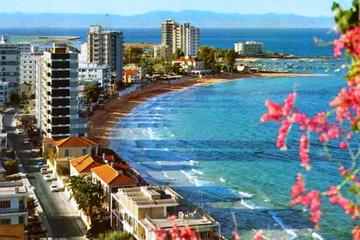
 Once the conference was over, it was time for me to fly back home. The taxi drove along the motorway through the countryside. The dominant color was due to the yellowish vegetation; the light outside was blinding even despite the tinted glasses of the car. I passed the security check and boarded. The plane took off and climbed out of Ercan’s runway. I tried to spot from that height the campus, the castle and olive groves but something else caught my attention instead: a pair of giant flags drawn on the mountains. The drawings depicted the Turkish flag on the left and, next to it, a rectangle with reversed colors that has been adopted by the Northern Cyprus as their national symbol. A motto accompanied the flags: Ne mutlu Türküm diyene (“How happy is the one who says I am Turkish”).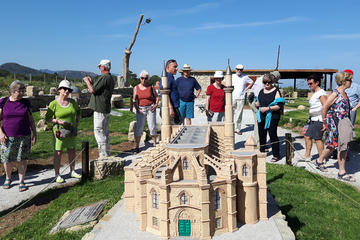

 The Tour will start near Leeds Town Hall, built between 1853-1858 to the design of the Paris-trained Hull-born architect Cuthbert Broderick. The 225-feet high building was the tallest in Leeds for nearly a century. It was opened by Queen Victoria, and copied across Britain and the British Empire.

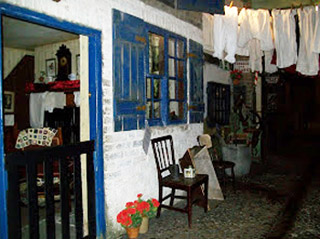 The museum is housed in the old Mechanics’ Institute, which was also designed by Broderick. The City Museum dates from 1821, but moved and closed several times, before reopening in its current home in 2008. It has free entrance.
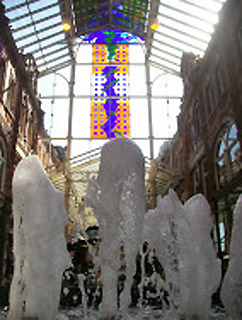 Returning to the city centre, the Corn Exchange is another Broderick-designed building. It is one of only three Victorian corn exchanges still being used for retail, with stylish shops and restaurants now trading under the oval glass roof.
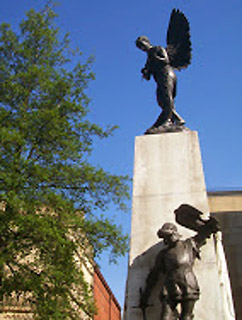 Leeds races fundraising in honour of Jane Tomlinson usually pass down Briggate. Her athletic achievements and fundraising efforts while battling cancer between 2000 and 2006 raised the profile of Leeds endurance events, and along with several Leeds and Yorkshire medallists at London 2012, helped bring the Tour de France to Leeds. Leeds is also home to the Yorkshire cricket team, with the English and Welsh league formatted around counties. Yorkshire has won the most county championships in the league’s history. The last was in 2001.
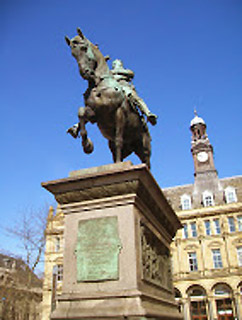 There is now a Brownlee triathlon in support of Macmillan cancer support at Harewood House, and this is an example of how nature and sport go hand in hand together in Leeds and Yorkshire.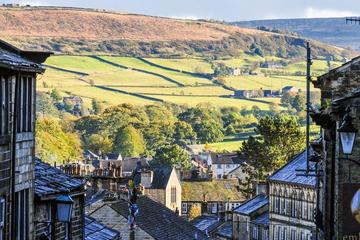
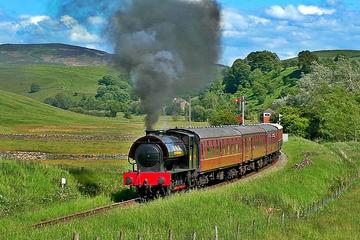
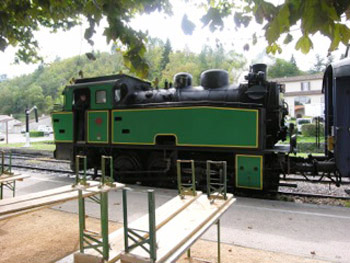
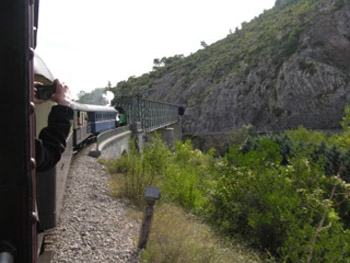
 Our trip began with a short walk from the bus stop at Saint-Jean-du-Gard, treading the bridge over the historic Gardon River, to the the small square abutting the quaint train station. Our locomotive was already huffing and puffing in anticipation; its passengers choosing their carriages with puzzled analysis. Chatter proved easy between travellers and we struck up conversation with a gentleman from a small town in England who popped down to the south for a brief one week junket as he was wont to do on occasion.
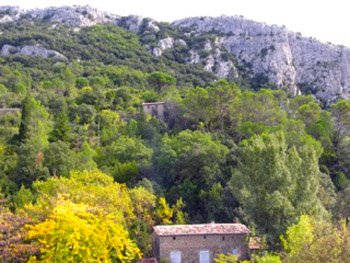 Slowly we ground to a halt for the Bambouseriae (Bamboo Garden) where those wishing to do so disembarked for a tour of this unique jungle that pulls in 150,000 visitors per year. The 10 hectare walk can eat up an hour and half easily so a visit takes some planning and scheduling. Fortunately the return trip comes through two hours later. From our perch high above the park we could espy the tangled canopy and winding trails.
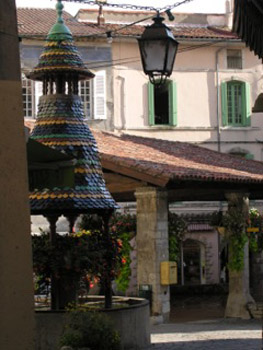
 We were catching the bus back to Nimes from Anduze and so had leisurely time to explore this historical gateway to the Cevennes. For those taking the train back they had time for at least a quick stroll about town. Home to a population of 3000, down from its formative years, the Anduze area has evidence of habitation from prehistoric times and was a Gallo-Roman settlement. Here, in the 10th century, the Siegneurie of Anduze was established.

 Anduze and its area was long a Protestant holdout during the terrible religious wars of France and suffered for it.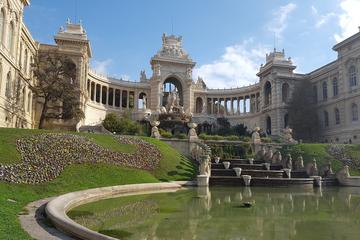

 The rich history of Málaga goes as far back as the 8th century BCE when the Phoenicians founded the trade settlement here they named Malacca. The name is derived from the Punic, malac meaning ‘salt’, as Málaga was founded as a fish-salting settlement. The Phoenicians, Greeks, Romans, Visigoths, and Moors all left their mark here and throughout the centuries, Málaga continued to thrive as a chief settlement and established harbor. Today, the port of Málaga stands as the second largest in Spain after Barcelona.
 The first time I landed at the Pablo Picasso International Airport, I was pleasantly surprised by the display of reproductions of the Málaga-born artist that adorned the walls of the corridor of Terminal T2 known as Pablo Ruiz Picasso. Art-lovers can visit the Museo Picasso Málaga located in the city center dedicated to exhibiting over 200 of his works. At the nearby Plaza de la Merced, stands the birthplace or Casa Natal where the famous artist was born in 1881. Just over a century later, it was declared an official heritage site and today, it stands as a foundation promoting his works.
 Although, I am not a fan of the sport, I decided to visit at a time when no bullfights were scheduled. I ventured out into the vast bullring and I have to admit that it was quite impressive and strangely peaceful. After a few minutes, I noticed two young boys in the middle of the ring who were practicing or training to become bullfighters or matadors. The boys had cleverly attached what looked like set of horns to a type of cart that was wheeled by one boy as he constantly rammed his way towards the other who was gracefully dodging and darting his way, almost as if dancing, while maneuvering his cape. I smiled and thought to myself that I much rather preferred to have seen this than an actual bullfight!
 The wine museum is housed in an 18th century building where guided tours teach you about the history and culture of the wines made in the province. The 5€ entrance fee covers the cost of two wine samples of the more than 100 different varieties available. Wine-tasting tours to the wineries on the outskirts of town can also be arranged. Amusingly, a particular chain of bodegas situated in the province of Málaga are named Quitapenas, or “sorrow-removers”.
 A 10-minute walk from the wine museum will take you to the magnificent Roman and Moorish vestiges located in the eastern part of the city. The Moorish structures include the 11th century fortress or Alcazába and the 14th century Gibralfaro Castle; both built by the Moors over Roman ruins upon a hill overlooking the city and harbor. The Alcazába is considered as one of the best preserved Moorish fortresses in the country. The fortress once stood as the royal residence of Sultans and today stands as a true landmark of the city adorned with Caliphal arches, majestic courtyards, tiled patios, look-out towers, and jasmine-scented gardens. Ornamental fountains and pools decorate the tranquil grounds leaving one with a sense of peace from the soothing sounds of trickling water that can be heard throughout the grounds as is customary to Muslim tradition.
 The Gibralfaro Castle is actually older than the Alcazába as it dates to the 10th century, however, it was during the 14th century when it was rebuilt and enlarged in order to protect the Alcazába that was otherwise vulnerable to attacks approaching from the hills. During the days of Muslim rule, the sea reached all the way to what once were the lower ramparts. Today, spectacular views of the city, bullring, and port can be appreciated from the Gibralfaro Castle.