Bremerton, Washington
by Mike Howard
I’ve traveled extensively over the last few decades, but have treated my own back yard a bit cavalierly – commuting to work in the early hours and not getting home until dark. Now that I’ve retired, I am constantly astounded by local treasures hidden in plain sight.
Ten years back, while researching material for a centennial history of Bremerton Masons, I was particularly struck by a funeral oration delivered on December 26, 1909 by Lodge luminary, William Seymore. “We have met here this afternoon to pay the last tribute of respect for Brother Gudmund Gudmundsen, and render the last service that the living can offer the dead,” said Seymore. “As there are no relatives in the community, it is peculiarly fitting that the Fraternity of which he was a respected member, should perform that service, and to me has fallen the duty of expressing—as well as I am able—the sentiments of the Lodge regarding our Brother, who has passed away.”
 Seymore went on to report Brother Gudmundsen’s birth in Stevanger, Norway on December 11, 1851; that he came to San Francisco in an English ship at the age of seventeen, and followed the sea – as mate of sailing vessels plying between San Francisco and Honolulu. He came to Bremerton in the year 1901 – a skilled workman in the Shipyard – petitioning for and taking the degrees of Freemasonry in the Bremerton Lodge. “We know that he enjoyed the privileges of Lodge membership and that Masonry had meaning for him. Honest his life, faithful his work, peaceful his death,” eulogized Seymore. “And now, my friends, as he lies here so still and silent, these cold lips are teaching us a lesson, if we could but realize it; and that is: to put our house in order, for no man knows when the reaper cometh. With our house in order, we can meet death, not as a grim tyrant, but as a kind friend who has come to give us rest.”
Lodge minutes record that the funeral procession was then formed and the body escorted to the Bremerton cemetery, the lodge altar was draped in mourning for thirty days and an acacia was planted at the head of Brother Gudmundsen’s grave.
 Bremerton Cemetery? I remember puzzling over just what had happened to that old pioneer’s cemetery – not enough to do any serious research to find where it had been – but still, more than just idle curiosity – and mystery. Then, this last summer – while aggravating over a traffic revision that forced a detour off of Eleventh Avenue to Naval Avenue – Eureka. There it was: Ivy Green Cemetery, over fifteen picturesque acres of peace, tranquility, history and memories.
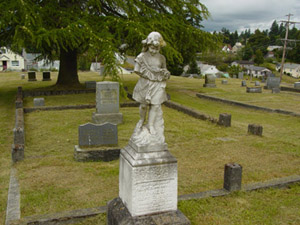
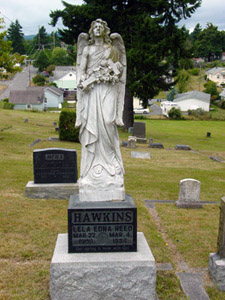
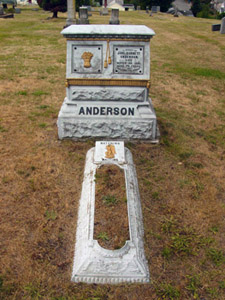 I strolled among stone lambs, angels and books, crosses, broken columns and scrolls. I found the imposing stone obelisk of Thomas Wren Gorman, born April 12, 1841 at Tulicrimin Kerry County Ireland, died August 31, 1929; and the simple stone of Dr. Carrie E. Logan, PH.D. NYU, “born Mt. Shaster, Calif., 1873-1914 – Daughter of a Union Soldier and a Descendent of a soldier, War of 1812 and the Am. Revolution.” I found Bremerton’s own Tomb of the Unknown Soldier; and the plot dedicated to the Grand Army of the Republic and the final resting place of John H. Nibb, Civil War hero and one the first recipients of the Congressional Medal of Honor. A plot dedicated to U.S. War Veterans of the Spanish American War commemorates veterans of “Cuban, Porto Rico and the Philippine Island campaigns.”
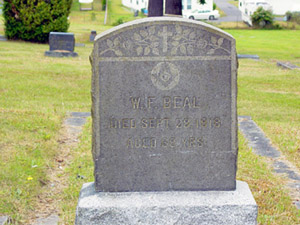
I found Worshipful Brother William Seymore’s polished and impressive stone – engraved with the Square and Compass of the fraternity he’d dedicated his life to. But Brother Gudmundsen?
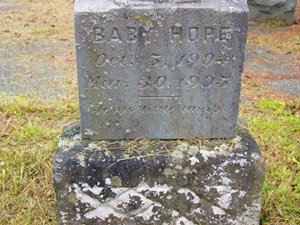 The fifteen acres were surprisingly easy to cover – and I pretty much visited every grave site, without success. Well – without that particular success. I found the last resting places of many Masons who have gone before. I found sites commemorating Matildas, Cornelias and Getrudes – names once as common as Heather, Kimberly and Keisha may be today. I found Woodmen of the World, and I found Leda Nelson, born September 20, 1838, died September 20, 1902, “A little time on earth she spent, Til God for her his angels sent,” and little Baby Hope, October 5, 1904—March 30, 1905, “Jesus’ Little Lamb.”
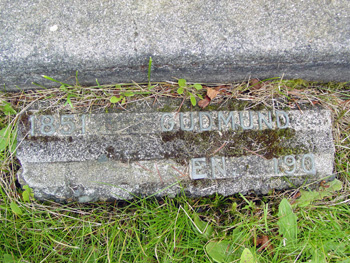 But still no Brother Gudmundsen—until I ran into City of Bremerton Parks Department Specialist Chris Smith. After a brief consultation with the Register, Chris led me to RI 962, Lot 08, North Side and there, just below the Pederson Column and an inch from the stone border of another family plot, was a modest stone marker, maybe 18 inches by six inches – much eroded and defaced by time: 1851___Gudmund ____en ____19___. Brother Gudmundsen died just days after his 56th birthday, and was respectfully interred through the disinterested friendship of his brother Masons over one hundred years ago. The acacia tree was long gone, but the grave marker remains, weathered—but readable.
As I returned to my car, an epitaph caught my eye, “Love’s memory lasts forever.” I couldn’t help thinking that forever is an awfully long time – but that as long as they can take refuge in stone in sanctuaries such as Ivy Green, thoughts and sentiments survive.


If You Go:
The park is open to the public every day from 8:00 a.m. until dusk, 1401 Naval Avenue, and the Bremerton Parks & Recreation Department stands ready to assist visitors interested in learning more about Ivy Green Cemetery. Office hours are 8:00 a.m. to 5:00 p.m. (360) 473-5305.
All photos are by Mike Howard.
About the author:
A native of Seattle, Mike Howard has traveled extensively in Europe, Africa, the Caribbean, the South Pacific, China, and Southeast Asia. Recently retired after 35 years in government public affairs and communications, he has doubled down on his passion for travel—sharing his discoveries with fellow travelers. In between more extensive jaunts, he enjoys exploring historical sites up and down the Kitsap Peninsula and ocean coasts. michaelsigrid@cablespeed.com


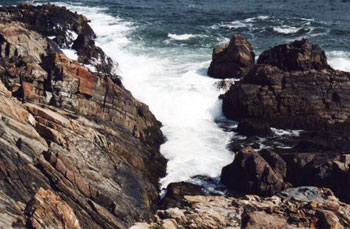 In Ogunquit the attraction of the Maine coastline with its powerful, relentless sea is no better advertised. The long marshy estuary of the Ogunquit River is a tended conservation area playing home to the restoration of endangered wildlife while at the same time a secluded and quiet finger of tranquility hidden behind the long sand bar facing the pounding Atlantic.
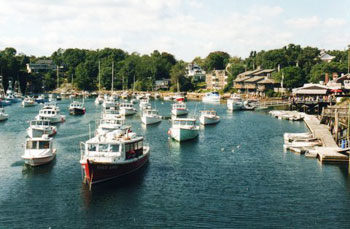 Perkins Cove housed all the trappings of a tourism centre, its protected harbor filled with a broad assortment of sea craft from sailing vessels to fishing boats. At the end of the sheltering peninsula a village of restaurants and gift shops wound along a narrow street. A salt water taffy shop tempted us, and more than a few others, with bin after bin of differing flavours .
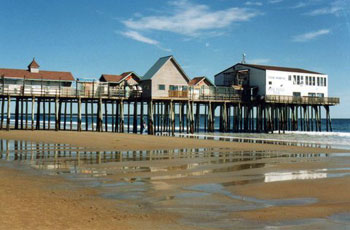 The commercial centre of Ogunquit, stretched in large part along Shore Road and Main Street, suggests a community taking pride in itself and its environment. Gardens, well kept homes, sea views and a lighted downtown evening atmosphere complimented the well cared for beach, estuary and Marginal Way. Ogunquit is much more than a summer holiday land or Kodak moment.
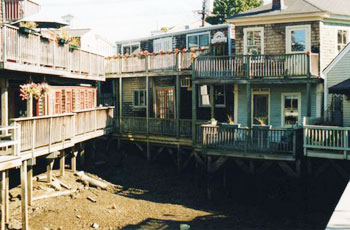 No trip to Maine would be complete without a visit to Kennebunkport and a drive by of the Bush’s summer home where we joined others snapping pictures of the home of two US presidents. Even without a peak at the primary attraction there were lots of other spots to visit along the winding seacoast or in the small town of Kennbunkport where the tides leave exposed naked pier pylons supporting an array of buildings like some fishing village of old.
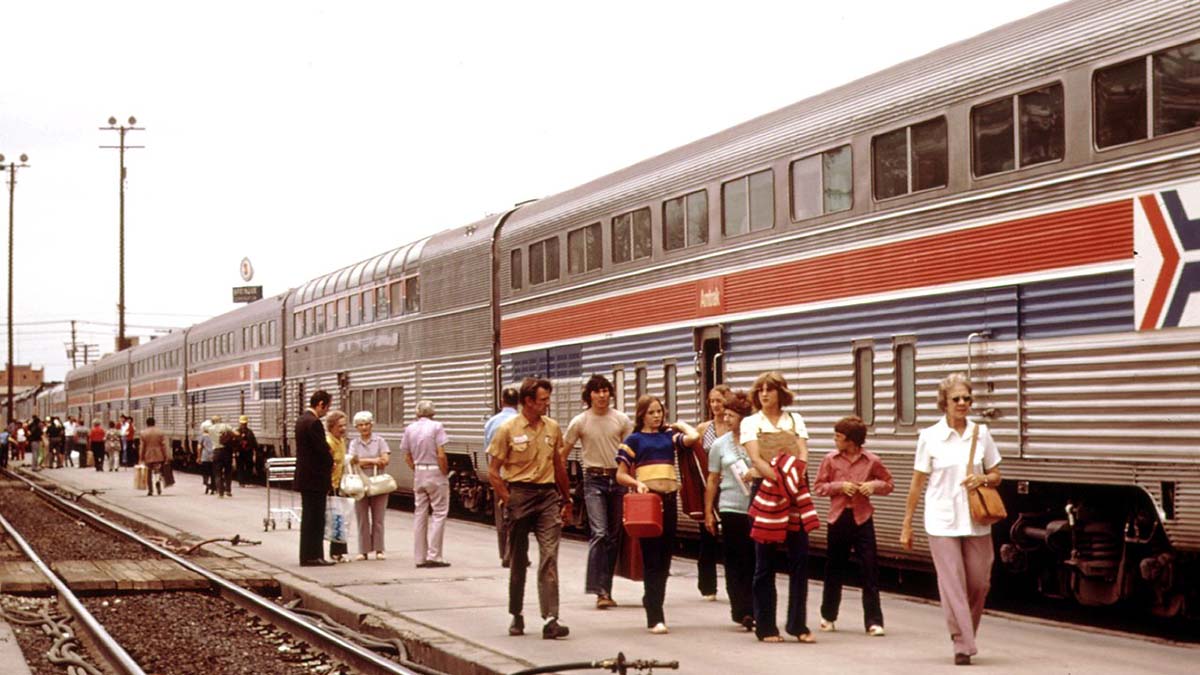
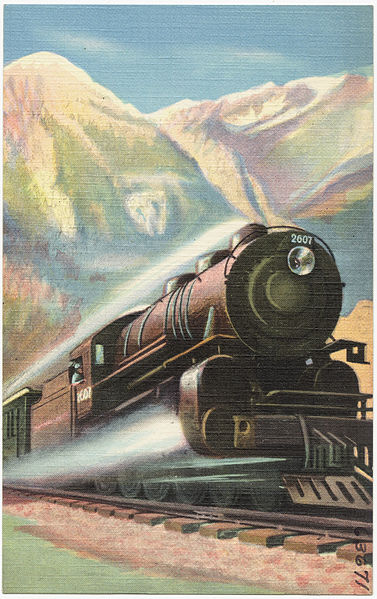

 Make no mistake here; the Northern Pacific was in it all the way to make a profit – an idea that rankled historian Haines no end. What the motive of the railroad should have been he did not say.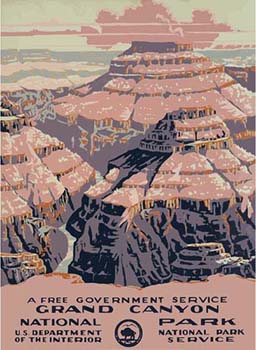

 So, while the famous delightful over-night experiences of comfy beds and pillows, expertly prepared meals, and the perfect pace for traveling are available on precious few Amtrak trains, the National Parks are still there, beckoning with their ageless wonders. And, if you plan it correctly, you can still fall asleep to the rhythm of the rails. So, Happy birthday National Park Service; Happy birthday Amtrak!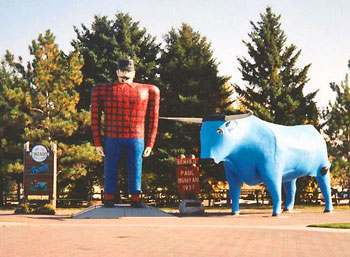
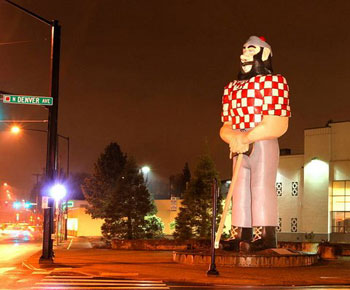 A ‘tall tale’ is one that exaggerates, and the Paul Bunyan tales are among the tallest. Paul was the imaginary hero of the strong men who felled trees, the lumberjacks of the North Woods of America. Tales told how he used whole pine trees to comb his grizzled hair and dark beard. The griddle for his pancakes was as large as Lake Bemidji (Minnesota), which resembles Paul’s giant footprint; lumberjacks greased it by skating over it with strips of bacon strapped to their feet. And it took two acres of brush fire to heat the griddle..
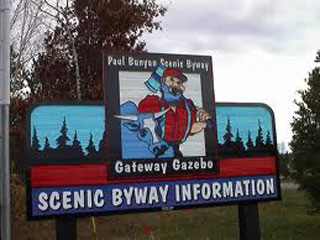 Babe the Blue Ox was Paul’s best friend. According to legends Babe was found during the winter of the Blue snow, the year that it was blue with cold. He was measured forty-two ax handles and plug of tobacco between the horns; he lived in harmony with his mate Bessie, the Yaller cow. Legend has it that Babe together with Paul Bunyan had footprints were so large that they created Minnesota’s ten thousand lakes. Babe when thirsty could even drink a river dry.


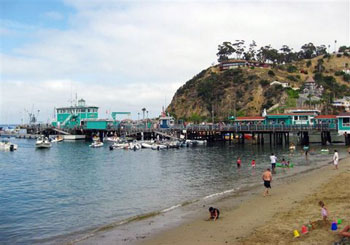
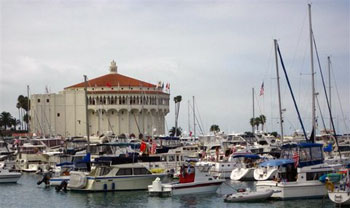 The island is now operated by the Santa Catalina Conservancy. The county of Los Angeles provides administration, including firefighters (who are barged over from the mainland when needed; the local force is voluntary), and police (which are hardly required, according to locals, because crime on the island is seldom a problem due to the lack of escape routes).
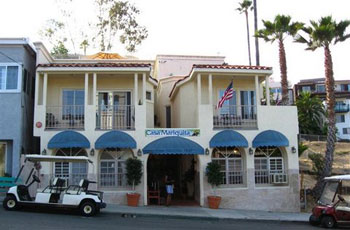 My wife and I, her sister and a friend, booked a package deal in Avalon which included a night’s stay at the Casa Mariquita Hotel on Metropole Avenue and two ferry tickets from Long Beach. This saved us about $20 a couple over booking them separately. Note that when you’re doing your online research to make sure the hotel has a deal with a ferry company leaving from a location convenient for you; they don’t all. Long Beach is closest to Los Angeles.
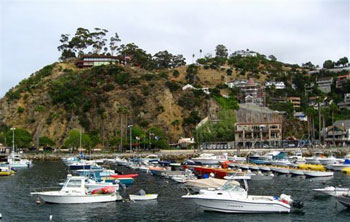 There is a good selection of hotels, as befits an island almost entirely geared to tourism. Our one-night stay at the Casa Mariquita was $175 and represented the lower to mid level what you might expect to pay. It was entirely satisfactory. There is no dining room, but walking to any of the many eateries down the street just adds to the experience.
 The museum was hosting an exhibit on Marilyn Monroe while we were there. The then Norma Jean spent the first year of her married life on Catalina Island while her husband, Jim Dougherty, was training for the Merchant Marine in 1943. Forensic detective work, largely based on her letters home, suggest that the newlyweds lived in an apartment on Metropole Avenue, but it can’t be proven conclusively – another twist to the Marilyn legend.
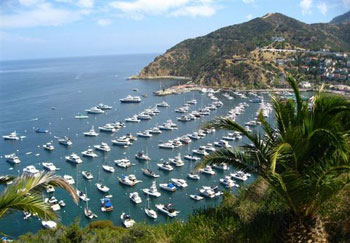 Past the Casino, past the Tuna Club (the oldest sport fishing club in North America, founded 1898), the path continues to wind along the rocky ocean shore to what might be called a “suburb” of Avalon, Descanso Beach, which seems to cater to a younger crowd than the main town with lots of swimming, snorkeling, and kayaking. There is a large restaurant (the Descanso Beach Club) and plenty of boutiques selling beach wear and souvenirs. The area is only open during the tourist season, from mid-April to mid-October.
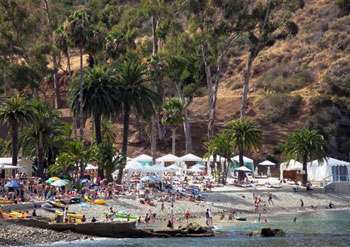 The weather in the summer is typical Southern California: Hot and sunny, low humidity, cool breezes. The locals advised us it “gets cool at night”, but that meant a dip into the high teens Celsius (mid 60s Fahrenheit); what a northerner calls “refreshing”.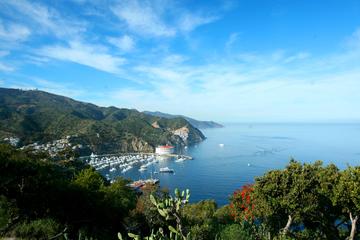



.jpg)
