by Anuradha Goyal
Nepal often evokes the image of Himalayan ranges, of the slow clad highest peaks in the world and of all aspiring mountaineers heading for the base camps. But the cultural Nepal is as enchanting as the nature of Nepal. Nepal is primarily known to be a Hindu nation but it is also the birthplace of Buddha. Nepal is home to four world heritage site, one of which lies in the Kathmandu valley, the valley where its capital by the same name is situated.
Seven ancient sites in Kathmandu valley comprise the UNESCO World Heritage site and interestingly these include both the Hindu and Buddhist site, and they include the palaces, stupas and temples, some of them in the same complex and some far away. Let me take you through these.
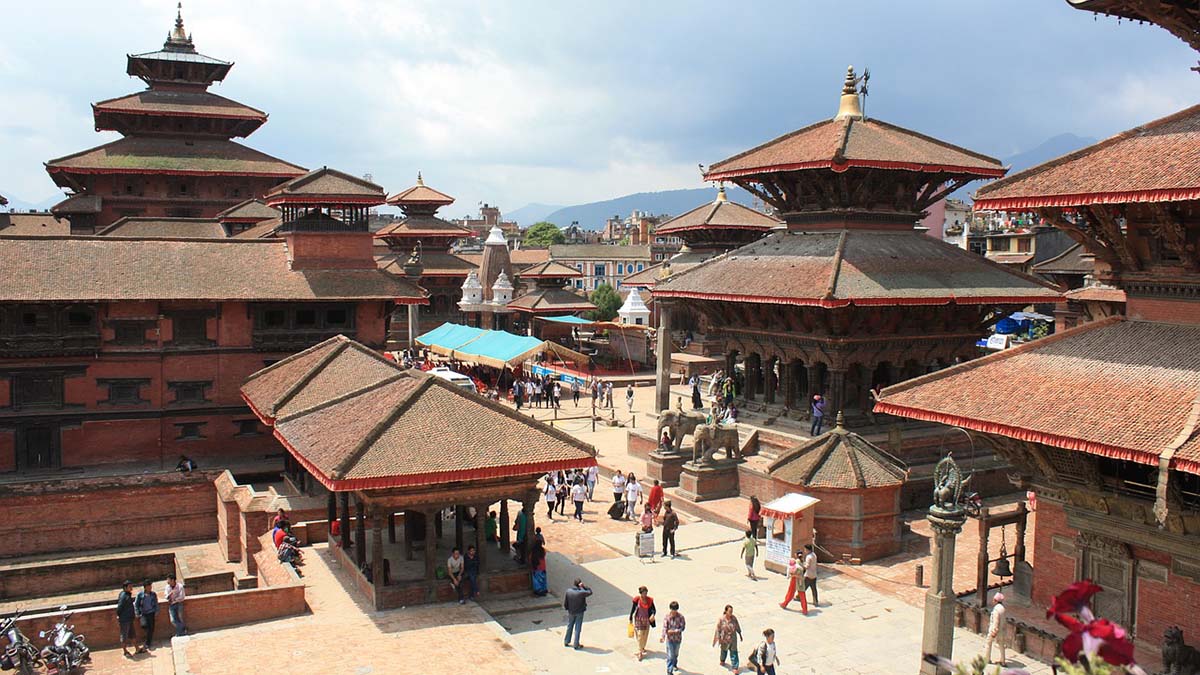
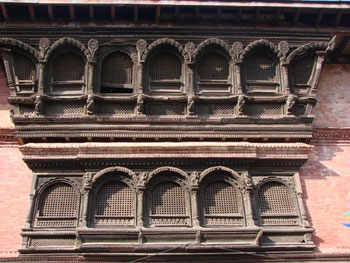 There are three Durbar Squares in Kathmandu valley named Hanumandhoka, Patan & Bhaktapur. A Durbar Square is a settlement with the King’s palace at its centre, surrounded by the temples dedicated to deities of the clan. This used to be the centre of the town and around this everyone else would live. As you see the squares today, you would see how these squares had the beautiful buildings with spaces for people to sit around and how these squares more or less merged with the rest of the town. Even today these squares are very much living spaces and you would see local people sitting on the steps of the temples and on the corridors outside the buildings. There is no formal boundary between the durbar squares and the residential areas. In fact there are no tickets for the locals to visit these places only the foreigners have to pay an entrance fees for all the three durbar squares. Some parts have now been converted into commercial establishments like shops and restaurants. Some of the palaces or their parts have been converted into museums. With Pagoda style architecture all of them are beautiful in their own way, while being very similar to each other. Most of the buildings are in red brick with intricately carved wooden windows, which are the trademark of Nepal.
Hanumandhoka is so called because there are many monkeys in this complex and the name of Hindu monkey God is Hanuman. Otherwise its name is Basantpur Durbar Square. This one is important because until very recently this was the place where the king’s coronation took place. This square houses the Kumari ghar, the house of the Nepal’s principal living Goddess. If there are enough tourists, the guide will give a signal and the Kumari will come out to give you a glimpse of her. There is one building with colonial architecture, which stands out in the cluster of otherwise traditional Nepali architecture.


 Bhaktapur is an old town and is considered the cultural capital of the region. This square actually has three squares. You see the first one as you enter from the main gate called the Durbar Square. Past this is Taumadhi Square, which has the magnificent five-storied Nyatapola temple dedicated to Siddhi Laxmi along with a three-storey Bhairav temple. The steps leading to the temple have huge figurines of animals on both sides. From the top story of the temple you can get a bird’s eye view of the town. Behind this square is a potter’s square where you will see rows of pottery lying in a square and potter’s wheels around it.
Patan Durbar Square is famous for its Krishna temple. It is built in stone in Shikhara or North Indian temple architectural style and is still in practice. There is a shining brass image of Lord Krishna on the first floor of the temple and has carvings of usual Hindu themes on the outer walls. Other attraction of this square is the Golden temple dedicated to Buddha. You can walk across the square and its by-lanes and you will see so many big and small temples, stupas and linga that beauty is the life that exists around them. They are not monuments that are preserved for tourists, but they are a part of everyday life of the people living in and around them.
Pasupatinath temple is the seat of Shiva in the form of protector of animals in Nepal, and he was the national deity until the country decided to call itself secular. It has a chaturmukhlinga i.e. a lingum with four faces on it, in the sanctum sanctorum. Facing the lingum is a huge golden sculpture of Nandi, his vehicle. The current temple is only few hundred years old and is built in the pagoda style with beautiful wooden carvings. The compound has many big and small shrines dedicated to Shiva or his family members. The temple is presided over by south Indian priests called Bhatts. Only Hindus are allowed entry in this temple. Outside the main compound there is a labyrinth made of more than 500 Shiva linga, and you can walk through it. This is also the place where the last rites are performed for the Hindus.
 Swayambhunath is located on a small hilltop inside the city. There is a large stupa surrounded by many temples and lots of Mandalas spread all over the complex. The stupa dates back to 5th century with an interesting story of a lotus being converted into this hill. Apart from the magnificent stupa with intriguing eyes painted on it, you can get an excellent view of the Kathmandu city from this high vantage point.
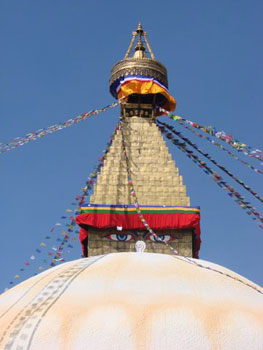
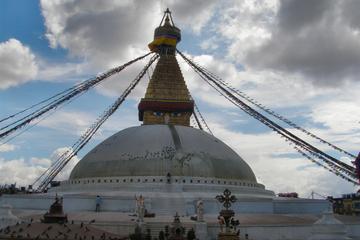
Bauddhnath is the biggest stupa in Nepal with the characteristic eyes painted on the tower on stupa. The base of the stupa is a three tiered crossed rectangles designed in tantric mandala form. Unlike most stupas, which have images of Buddha in all four cardinal directions, this one has only one image in the North. Many smaller stupas surround the main stupa. There is a market encircling the stupa, and you find restaurants, guesthouses and shops selling all kinds of curios and Tankha paintings.
Changu narayan temple dedicated to Vishnu on a hill near Bhaktapur is also a part of the Kathmandu valley world heritage site. This temple dates back to 4th century and is also open only to Hindus. There are many stone sculptures in this temple with the Hindu iconography and many stones with inscriptions telling the story of this temple. It is a single temple with a corridor running along the compound wall.
You need two to three days to do all the sites at leisure. Bhaktapur and Changu Narayan can be clubbed together as they are outside the Kathmandu city and in the same direction. The rest of the five sites are in the city and can be done any time. You can also walk around the streets in the old parts of the city to see how the local life. You can also shop for Tankha paintings, wooden masks and metal sculptures in Nepal.
Private Kathmandu Temples and Palace Day Tour
If You Go:
You can fly to Kathmandu from quite a few major cities in the world, if not you can take a connection from New Delhi, India. From India, you can also enter Nepal via road.
There are hotels of all ranges available in Kathmandu. You can hire local taxis to move around in the city, which are readily available.
About the author:
Anuradha does Innovation consulting for living and travel writing for passion. She has been blogging about her travels on the road and through the books on her blog for more than 6 years now. She has lived in various parts of India and overseas and at the moment calls Gurgaon her home. You can read more of her writing at anuradhagoyal.blogspot.com
Photo Credits:
Durbar Square, Kathmandu at top by: Wolfgang Reindl from Pixabay
All other photos are by Anuradha Goyal.
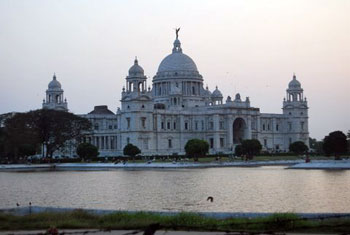
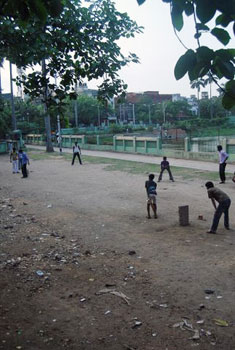
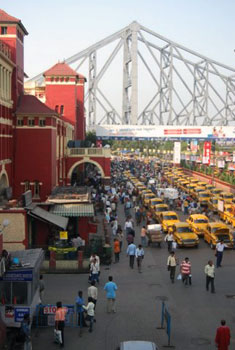
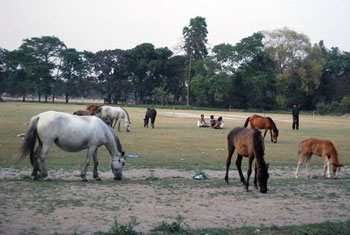 Kolkata is best seen from the footpath. A walk around these streets is a constant zigzag from the denoted path back onto the street to avoid the myriad obstacles of shopkeeper’s and vendors who occupy almost every square inch. The footpaths can be landmines filled with unstable bricks and others simply dug up with no discernable pattern, despite all this around every corner is the time honoured tradition of boys playing cricket. Street children, millions of homeless, goats, cows and other assorted stray animals all fill the footpaths in hopes of finding a new life. With so many people jostling for space it is hard to imagine how these people live and survive. However one of Kolkata’s reputations is correct, it is a shock to the senses. Fittingly it has long been described by many as a “Gateway to the East.” Nothing it seems could be further from our daily routine.

 We get off from the beautifully tiled Metro platform and see one of ubiquitous scales that are located at train and metro stations across India. These scales are run by various companies around the country and could remind one of an old style jukebox. The customer steps up onto the scale and for the price of two rupees is treated some snapping neon Christmas-like lights with a bit of music and finally a piece of paper with your weight and a horoscope emerges. Sometimes in place of a horoscope advice is given directly from a Bollywood star! I vowed to use one on our return trip.
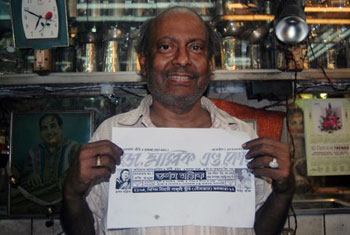 We passed arrays of food vendors, shops selling all types of wooden furniture and famous Bengali sweet shops. Finding a jeweler was proving to be harder than we thought. We wandered some more and turned around and tried to find street signs, which isn’t the easiest task anywhere in India. We asked for directions which resulted in us getting more turned around. This is where India can be its most infuriating, its at these moment where the tropical heat and horns blaring and the roundabout footpaths can make you question your sanity. We finally found a street that was studded jewellers and darted into one.
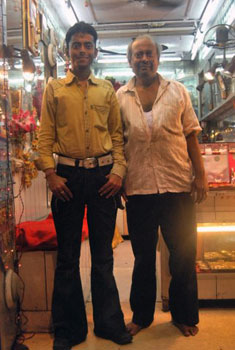 The shop wasn’t your typical jeweller but more like a junk/trinket store. The shop was owned by a vivacious Bengali man and his son. It looked like it had been there during the days of the original banyan tree. Instead of pulling out any particular rings the owner pulled up several big red boxes while the son turned around and grabbed a silver tray filled with miscellaneous junk. It took several attempts to make ourselves understood about what exactly we wanted done.
 He seemed to warm to us and expressed gratefulness to be able practice his English, which wasn’t as bad as we originally thought. Along with being a shop keeper he seemed a very well cultured man and regaled with quotes about his heroes and favourite music.
 We begged him to sing us a song, a real Bengali song. He refused. We begged more, we asked him how a beautiful man with a beautiful voice could not sing us such a song for our wedding.
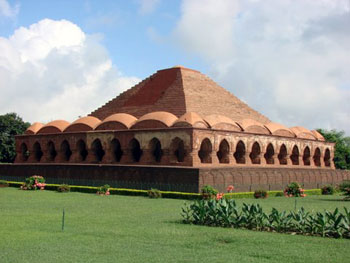
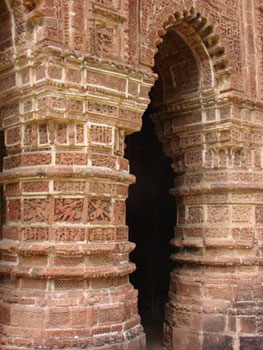
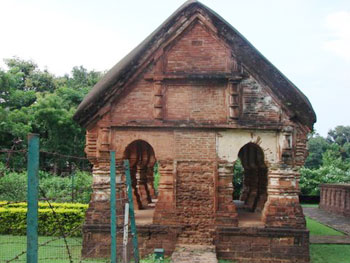
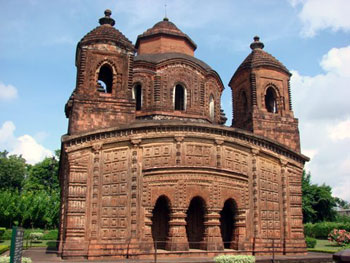 This region was ruled by the Malla dynasty from 8th CE to 19th CE, more than 1000 years and 55 generations. Now there are not many dynasties that have ruled for that long. The origin of the dynasty though lies outside Bengal, in distant Rajasthan from where the first king landed here and sowed the seeds for this dynasty. The dynasty was Shaivaite i.e the worshippers of Shiva, one of the Gods in famous Indian Trinity of Brahma, Vishnu, Mahesh aka Shiva. During the early 17th century, kingdom was under king Bir Hambir. He converted to Vaishanava sect and became a devotee of Vishnu. Ram and Krishna are two popular incarnations of Vishnu. He started building temples for his new faith. Most of the temples are dedicated to Krishna and his beloved Radha. Temples are names after various names of these deities. The terracotta was chosen as the base material for the temple, as there is no native stone in this region, so they had to depend on the clay that is amply available. Unfortunately the life of Terracotta is 300-400 years and you can see the corrosion that has already started happening in the temple tiles.
 There are three primary styles of temples architecture in Bishnupur. The most common is the Ratna style with domes on top of slightly curved temple roof. Traditionally there are one, five or nine domes called shikharas. Single shikhara is in the center of the roof and the temple is called Ek Ratna. Temple with five shikharas will have four shikharas at the corners along with a central one and is called Panchratna. If there are four more shikharas it is called a Navratna temple. Shyam Rai temple with five shikharas is the best example of this temple style. Madan mohana temple is a good example of Ek Ratna style. The most peculiar style is Chala style that resembles the Bengali thatched roof, triangular in shape with a shikhara on top of that. Jor Bangla temple with two triangular roofs joined together is an example of this style. Then there is simple Duel style that you see very often in Orrisa temples, with long tapering Shikhara. There are not many temples of this style left here.
 Rasamancha is a unique structure in Bishnupur, again built by Bir Hambir in 1600 CE. It is a pyramid like structure on a huge square platform. The circumambulate corridors have huge arches with lotus motifs, that create a labyrinth like way to the central point, where probably a deity was worshipped. It is a place that was used for a local festival called Rasa festival. During this festival all the images from temples of neighboring villages were brought here and displayed in these galleries for the public. The festival still continues to be celebrated here but probably in a more contemporary way. It is said that it is one of its kind structure in the world and no parallel or a similar structure has been found anywhere.
 Artisans of Bishnupur and around excel in the metal craft. They make various items of decorative as well as everyday use in brass. The art form resembles the tribal art from other tribal regions of India. The artists still make the metal ware with the lost wax method, which is the oldest known way of making metal ware. Look for conch shell bangles that are hand carved in tiny shops on both sides of narrow lanes along with the carved conch shells that look beautiful. You can also shop for the Ganjifa cards that are the origin of modern day playing cards and are now hand made by only one family here, the Fauzdar family. If you get a chance, indulge yourself in the classical music that belongs to the gharana or tradition of this town.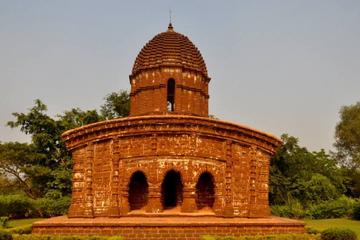
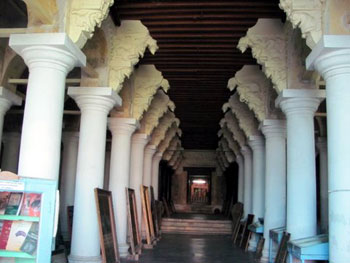
 The palace gates opened into extensive grounds with the remains of a once beautiful fountain straight ahead. Beyond this was ‘Ramalinga Vilasam’, the grand abode of the Sethupathy Kings who ruled almost one fifth of Tamil Nadu, South India from 1601 to 1948 AD. A temple built by the Kings of this empire in honor of their family deities can be seen on the southern side and still functions as a place of worship. Ascending several stone steps, I entered the royal dwelling. A small section on the right has been converted into a ticket counter and paying a small fee, I commenced a tour of this fort.

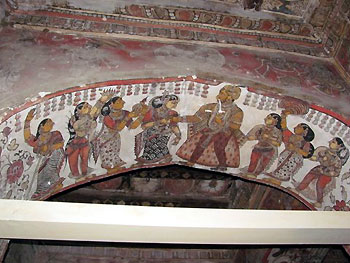
 The biggest merit not just to the Durbar Hall but the entire palace is the murals that span across every inch of the walls and ceiling. These indelible prints have braved the ravages of time and stand a colorful reminder of the life of the Sethupathy Kings. They narrate stories of love and war, courage and devotion. The walls of the Durbar Hall portray the King’s war triumphs among others. Several relics from the past are on display in this Hall. Pieces of armory like swords, spears, daggers, rifles and knives which have rusted in time and deprived of use have been showcased as a reminder of the Kings’ valor and bravery.
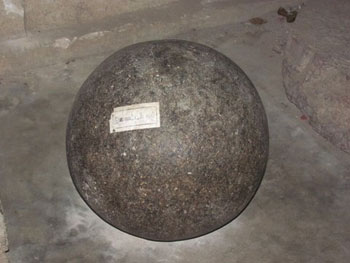
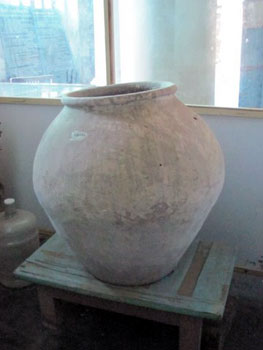 The Durbar Hall also houses antiques that bring to light the strange customs and practices that were in vogue during the reign of the Sethupathy Kings. I was fascinated by a gigantic stone ball that weighed a ton and a massive mud pot. The purpose of the stone ball was to test the strength of a prospective groom in days gone by. Only those young men who could fling the mammoth ball over their shoulders qualified for wedlock. An impossible feat for grooms of today! The mud pot or ‘Mugavai Thali’ on the other hand is a reminder of the gruesome ancient practice of burying the aged alive when care became impossible. I shuddered looking at the harmless mud pot which was actually a coffin from the past!
 The Sethupathy Kings are renowned for their religious fervor and this can easily be seen from the mural depictions and the prominence to deities just beyond the Durbar Hall. The walls of the sanctum here mostly talk about Hindu scriptures and the King’s zeal in adhering to them. Though serene in its settings, this hall holds a secret that can easily escape the naked eye. Hidden behind the deities is a secret escape route that was elaborately constructed to lead into seven South Indian temples. Though the tunnel tingled a sense of adventure and evoked my curiosity to look in, this was impossible as much of the passage had caved in.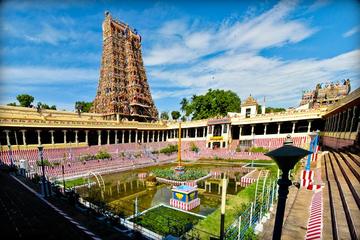
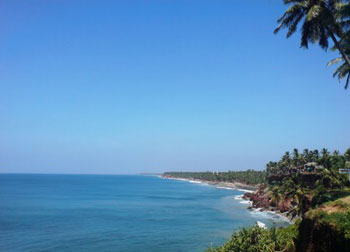
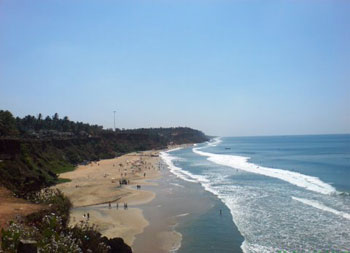
 The auto rickshaws will drop you near the helipad from where you can see the clear blue sea. The south cliff is towards the left where you have a couple of resorts. However all action happens on the north cliff which is towards the right of helipad. I would recommend that any tourist who visits here should head for the north cliff rather than the south cliff in order to be in the middle of the action.

 Do not expect the markets to shut down with the sunset as the night life is simply amazing and it goes on till midnight (Bengaluru needs to learn a thing or two from Varkala). All the shops remain open and the restaurants display their fresh catch for the day to lure the tourists in the evenings.
 Rarely do you find a cliff next to a beach, but, Varkala is where you can say, YES…its right here. From the top of the cliff steps take you down to the clear blue waters. Must appreciate the authorities for the way they have maintained the beach. It is the most well kept beach that I have ever been to. The waters are not very deep for about 100 meters. However the tides are quite strong. The tourists frolic the beach from the morning. I found people doing yoga, practicing karate, taking a sun bath, jogging etc. I actually found many just playing with the tides the whole day. With safe guards always roaming around tourists found it all the more safe.