by Glen Cowley
July 30, 1792. This day the long finger of Columbus reached Quadra Island. Be the legacy fair or foul it changed the island forever.
The summer of 1792 saw Captain George Vancouver of the Royal Navy exploring about the waters of the now titled Discovery Islands in his two ships the Discovery and the Chatham; setting his eyes on Quadra Island for the first time. By the time the Europeans returned the Coast Salish peoples they had initially met had been chased out by the We Wai Kai peoples whose descendants still call the island home and there guard their rich legacy. Unfortunately the return of the Europeans brought with it disease and vice which were to decimate the First Nations peoples.
We gazed across the short sea gap from the ferry dock at Campbell River to emerald cloaked Quadra; steaming with ragged wisps of clouds clinging in tatters to an endless army of trees. The day was to prove temperamental but the island proved no less endearing for its moods. At 35 kilometres long and 9 wide it is far from small island.
The Island eventually took on the name Quadra in honour of Captain Vancouver’s Spanish friend and fellow explorer Juan Francisco De La Bodega y Quadra (beats me why they don’t use his whole name?). The largest of the Discovery Islands Group Quadra is home to about 3500 individuals, most of whom reside in the southern portion of the island, and who represent a wide array of occupations. Three community cores exist at Quathiaski Cove (the ferry dock), Heriot Bay (from whence the ferry to Cortes Island sails) and the First Nations’ community.
Quadra may have a more sedate atmosphere now but it was a thriving economic site in its earlier years. Beginning in the 1880’s came logging, then a fish cannery in the early 1900’s, which employed anywhere from 200 to 300 people, and the Lucky Jim Mine (gold and copper) which opened in 1903 and operated until it was burned out in 1925. The cannery went up in flames in 1941 and was not rebuilt. Word is the island experienced three devastating fires which depressed the economy until well after the end of the Great Depression.


 The 10 minute ferry ride from Campbell River, which has been running since 1960, deposited us at the tail end of an armada of vehicles unloading at our destination; which proved ideal as it allowed us a leisurely drive and opportunity to gawk. That in turn gave us the opportunity to pull in for a coffee at the Cafe Aroma and drink in a little island atmosphere, replete with eclectic decor, local folks chatting, laid back pace and friendly servers. We garnered a coffee and discussed our touring route.
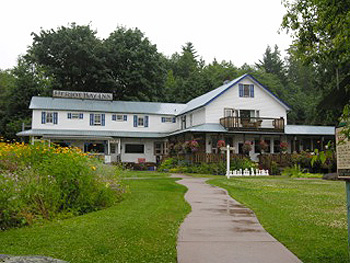
That route took us first to Heriot Bay where we got to see the ferry to Cortes pull away and begin its 45 minute cruise into the misty overlay of islands and mountains populating the horizon. After exploring the shoreline on foot we wound our way back to the Heriot Bay Inn seeking sustenance at the pub housed therein.
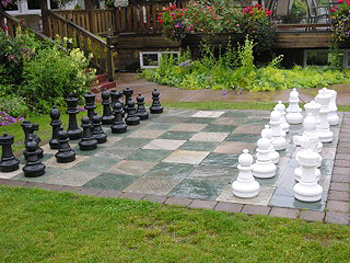 The hotel has been serving the island in one form or another since 1895 when Hosea Arminis Bull built the first incarnation. It lasted until a 1912 fire wiped the slate clean and it was rebuilt. Bull sold the place in 1926, two years after his wife had passed away and it remained in private hands until 2008 when it was purchased by the Community Custodial Concept Group with the stated desire of maintaining the edifice and service for the residents of Quadra and visitors. The stately lodge contains much of the old 1912 building but has been modified and expanded over the years. It gazes out over the bay and to the distant coast mountains beyond; enfolded in its gardens and lawn complete with a giant sized and manned chess board.
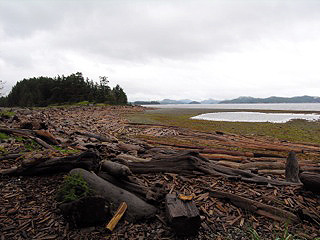 Our server at the pub suggested a trip to Rebecca Spit Provincial Park for a great look-back perspective. So informed we found and took the gravel roadway onto the thin two kilometre spit of land and found ourselves the chance to explore beach and trail; offering panoramas on either side of the spit. Driftwood and sea-lost logs were strewn about the seaward shoreline, like pick-up sticks, whilst the opposite shore hid the protected inner anchorage of Drew Harbour. A defined trail led through the trees running the spine of the spit and chanced us an opportunity to meet and chat with a local dog and his valet. None of us hurried in such a setting we chatted for a considerable while before returning to our respective treks.
Friends of ours had visited the Nuyumbalees Cultural Centre (meaning “The Beginning”) and urged us not to miss this unique treasury of First Nations artifacts and their setting. After first stopping at the band office to get directions to the centre, apparently not an uncommon experience for first time visitors, we found our way to the centre. Emerging from the car we were reprimanded by a lone bald eagle surveying the scene from high atop his tree perch. Then, as if co-ordinated, two other eagles swooped low over a field, starkly outlined against the deep green of the forest back drop, their banter echoing in the island silence.
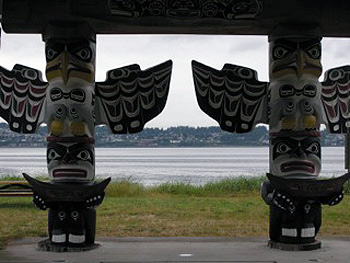 Putting aside our camera, as no photos are allowed in the building, we paid our admission of $10 per adult and began the experience. Cultural artifacts seemingly incorporating every conceivable aspect of the surrounding natural environment filled glass enclosures with captions telling of their story, purpose and people associated with them. Stories of the great potlatches, their purpose, nature and persecution by non Natives and eventual rebirth spelled out. We learned how the ceremonial treasures and regalia had been repatriated from museums and galleries throughout North America and a new home built for them overlooking the waters of their home, opening in February 1979. The present day centre was re-opened in May 2007. It is recommended you allow at least 45 minutes to make your way through this stunning collection and display of First Nations’ culture and artistic skill.
The modern day explorer ideally comes to this island to observe, learn and respect people, culture and environment knowing from history what can transpire when we fail to do so. It is not a place to hurry.
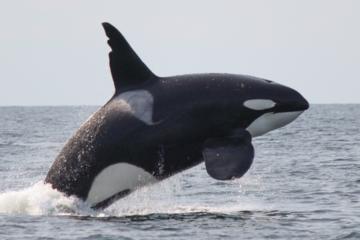
Open Boat Nanaimo Whale Watching
If You Go:
Heriot Bay Inn provides detailed information on the Inn and on things to see and do on Quadra
B.C. Ferries – for ferry schedule from Campbell River to Quadra Island
About the author:
Since 1994 Glen Cowley has parlayed his interest in sports, travel and history into both books and articles. The author of two books on hockey, a booklet on French Canadian influence in British Columbia’s history and over sixty published articles (including sports, biographies and travel) he continues to explore perspectives in time and place wherever travels take him. From the varied landscapes of British Columbia to Eastern Canada and the USA, the British Isles, Germany, France, Switzerland, the Netherlands and Greece he has found ample fodder for features. A return to Europe in 2014 is guaranteed to reveal new tales to tell.
All photos by are Glen Cowley.
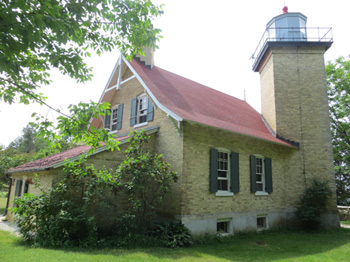
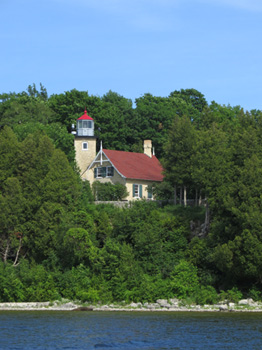 Severe weather, jagged shorelines and increasing shipping traffic led to the construction of Door’s first lighthouse in 1836. Pottawatomie Lighthouse was built high on the dolomite bluffs above Lake Michigan on Rock Island. The lighthouse was named after the Native Americans living in the area; it means ‘keepers of the fire.’

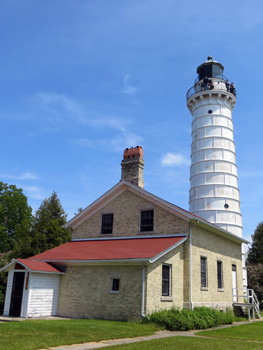 William Jackson became the first keeper on Cana Island in November 3, 1869. His wife Caroline was the assistant keeper. William was paid $600/year for his work; Caroline received $400. These wages would remain the same for all keepers and their assistants for the next 30 years. William and Caroline left their positions in 1872.
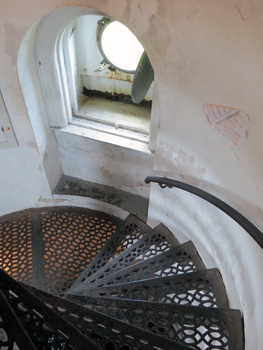 The one and a half storey keeper’s house was set up as a duplex – with the keeper and his family living on the first floor and his assistant and family on the second. In 1945, the light was automated and the last keeper left the island.
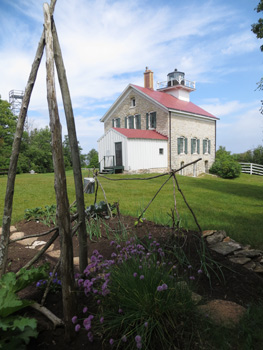 Volunteers spend a week at a time living (and working) in the restored lighthouse. They guide visitors through the building in addition to keeping the building spotlessly clean. The lantern room was removed in 1988 and the light now shines from a tall steel frame set away from the house. A replica lantern room is now open in the lighthouse and visitors can scramble up the steep wooden steps for view.
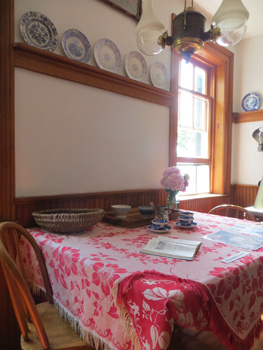 Walter Duclon’s guitar and his mother’s piano can be seen in the lighthouse today – refurbished by the Door County Historical Society to include a few of the Duclon family heirlooms. The walls are now whitewashed instead of the traditional layers of green or grey paint, but otherwise the restoration has taken the building back to what it looked like in the early 1900s.




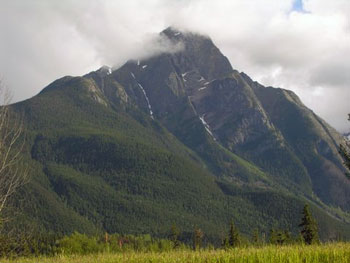 Turning off the Yellowhead Highway (Highway 16) at Hazelton, under the majestic gaze of the Roche de Boule Mountain Range, we journeyed 29 kilometres over breathtaking single lane bridges spanning jaw-dropping gorges and chattering rivers, wending tree-lined ways (largely paved) to emerge at the Kispiox Festival grounds hard by the Kispiox River. On the way we disturbed a solitary black bear strolling leisurely along the road.
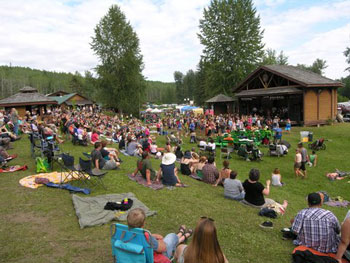
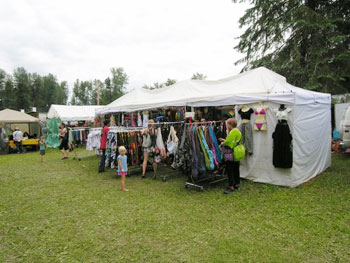 We arrived at the main River Stage in time to experience the large, colourfully attired, and local Twisted String Band, pumping out lively pieces which had audience members up and dancing while others watched from benches, personal seating or the natural amphitheatre overlooking the stage. The crowd, itself awash in colour, was composed of folk of all ages, hair lengths and attire. Nearby the Hall Stage, housed appropriately in a building with a hall, afforded entertainment free from the warming hand of the Sun.
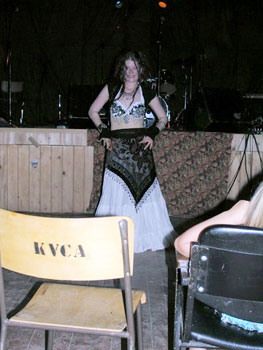 The 2018 headliners included The Tequila Mockingbird Orchestra, Jacki Treehorn, Fish and Bird from Victoria, multi-faceted CR Avery, the “post-modern Vaudeville duo the Cromoli Brothers, Hannah Epperson, Joanna Chapman-Smith, Jenny Ritter, the Harpoonist and the Axe Murderer, childrens’ performer Angela Brown of the Ta Daa Lady Show, Liron Man playing the hang drum and Bocephus King.

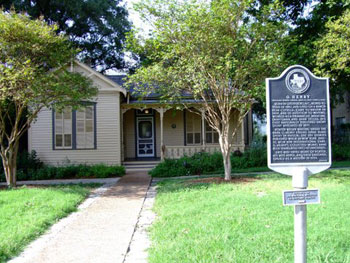
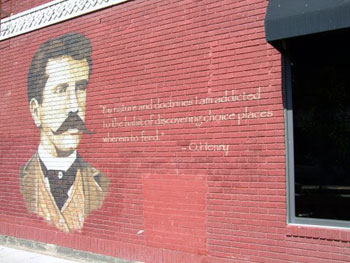 Before moving to Houston to work full-time as a writer for the Houston Post, Porter collected some unique information and experiences in the Texas capital, which later appeared in his works Bexar Scrip No. 2692, Georgia’s Ruling and Gifts of the Magi. Inspired by his work in the Texas General Land Office, Bexar Scrip No. 2692 takes its name from a land grant file that Porter accessed during his daily duties, which had somehow gone astray. In O. Henry’s fictional story, the file goes missing because a rich railroad owner steals it in order to illegally obtain a poor homesteader’s land. Porter’s real-life boss, however, was adamant that such a crime could never have actually occurred, based on the office’s own rules and regulations. Whether you are interested in the historical angle of the document or the writer’s literary take on ordinary events, the original land grant can be viewed online at the Portal to Texas History at
 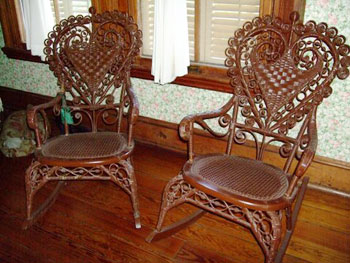 Returning to the O. Henry Museum, visitors can glimpse two more objects that provided inspiration for Porter’s writing. The home showcases two wicker chairs, which were allegedly the inspiration for O. Henry’s best known story, Gifts of the Magi. The author’s wife, Athol, apparently bought him the chairs as a present to decorate their rented home, using money he had saved to purchase her tickets to attend the World’s Fair. Inspired by his wife’s generous act, he wrote the ironic Christmas story in which two lovers buy each other gifts that neither can use, having sold off their most prized worldly possessions in order to pay for the other’s gift. Though the moral is that it’s better to give than to receive, O. Henry’s infamous twist ending provides a bit of dark humor amidst more typical seasonal tales of sharing and caring.

 , based on her days as a sex columnist in the Sin City of the North.

.jpg)

